
AFAB and AMAB Realities: The Impact of Gendered Expectations on Trans Lives


Being transgender does not, and has not ever meant just one, defined experience. Transness comes from within countless numbers of diverse individuals, all with unique experiences and identities. One of the ways the trans experience may vary between person to person is the ways they’re socialized, particularly pre-adulthood. Those who are assigned male at birth often have very different experiences than people who are assigned female at birth.
Individuals assigned female at birth are often given a bit more leeway with gender expression as children, what with the “tomboy” archetype. Both Elliot Hughes (24, he/they) and Jay Lee (24, he/they), who were AFAB, experienced this role as they were growing up.
Hughes recalls being allowed to play on an all-boys baseball team because their dad was the coach. “During this time he treated me as any other boy on the team, and I was subject to the same sexist platitudes as the rest of the boys, (ie. boys don’t cry, stop throwing like a girl, etc.),” he said.
Things changed as they grew older. The expectation for them, both from family and friends, was to adhere to the feminine stereotype.
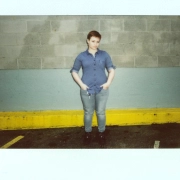
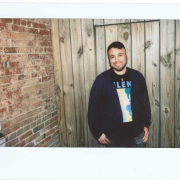
Meanwhile, Lee grew up on a farm, where they were able to use the term “tomboy” to have a reason to dress in a more masculine style. This, though, did not remove the expectation to display femininity, being the only child AFAB in the family.

photo provided by Jay Lee.
Alternatively, in rural American society, the hegemonic ideal is that those assigned male at birth are to have very masculine traits and behaviors: they will not cry, they will like getting dirty and enjoy violence, they will solve problems with their fists, etc.
Emily Elizabeth Reesor, (36, she/her), who was AMAB, said that masculine socialization in her childhood had an overwhelming effect on her life. “My entire life my family tried to shoehorn me into a male role,” she said. “Math, science, and physical prowess were highlighted over and over again as the metric for my success in life.”
Robin Westerman, (24, she/her), discussed the part her family expected her to play due to her sex assigned at birth. “They gave me a middle name that I got rid of,” she said, referring to a name that was passed down to the first born male of each generation. “My aunt actually thought… that it was my duty to carry that on.”
In adulthood, these ideas perpetuate in different ways, such as defining what spaces welcome trans people, and vice versa, which are unsafe.
This story exists because of readers like you. Give $5 a month to keep Queer Kentucky free.
An important topic in today’s world is that of reproductive rights. Decisions are regularly being made about and for people with a uterus, often without the inclusion of everyone that could be affected.
For trans people who were AFAB, these conversations can feel alienating. Lee said, “I feel that as an AFAB person people sometimes forget that these things affect us too… major people in our local queer community like Sarah Brown, Dolly D. Votion, and Trashique… make sure our spaces feel inclusive by actively discussing gender inclusivity and keeping hygiene products in all of the bathrooms.”

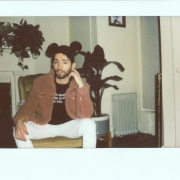
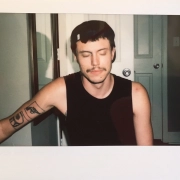
photo provided by Elliot Hughes
Hughes, too, recognizes the importance of advocacy in creating trans-inclusive spaces. They said that, “I wish we lived in a world where I felt completely comfortable going to the gynecologist as a transmasc person, but that’s not going to be a reality without some brave trans folks demanding space, and some true cisgender allies refusing to allow care to be gatekept.”
Creating these spaces is not without its challenges, and can feel unsafe for trans people. For trans individuals that were AMAB, the bathroom and the stigma surrounding it creates an environment of fear. Westerman said, “It creates a lot of tension… knowing if we go into other spaces and we have to go to the bathroom or…split people up by gender, it would make things really awkward and uncomfortable, and puts me in a situation where I feel vulnerable.”
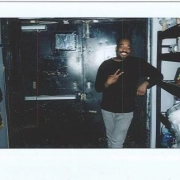
As Westerman has progressed in her transition, she has been able to find more friends as she feels her identity is finally being expressed outwardly. Though she is wary due to concerns of her safety, she said that, “It’s a lot easier to look in the mirror. It’s a lot easier to dress the way that I want. It’s a lot easier to just go about life in general… I feel like I made significant progress.”

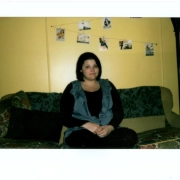
photo provided by Emily Elizabeth Reesor.
For Reesor, too, things have improved as she has opened up about her identity and found like-minded people to surround herself with. “I’ve been lucky… and gifted with at least an online community and the support of my current friends,” she said.
While there is much to be understood about the trans experience, one aspect is always most important. Trans people deeply value community, and look to it when generating change. Hughes said, “The most revolutionary thing we can do is continue existing as our authentic selves…do what you can to find community for yourself…We keep us safe, and I feel that now more than ever.” Despite alienation in both childhood, and certain spaces in the adult sphere, trans people are determined to create spaces for one another where safety and love are a guarantee. As Lee said, “Your community exists, you just have to find it. Loving and being yourself is what being human is.”
Keep reading
 After Death Before Detransition, Trans Youth Across the River Make a Magazine of Their Own
 Rural Appalachian LGBTQ+ students shouldn’t have to choose between opportunity and belonging
 JustFundKY to host first Obsidian Ball, a masquerade gala in Lexington
 ‘They Can’t Legislate Community’: Henderson KY Pride’s Haunted Haus of Drag Returns Oct. 23
 Kentucky Black Pride Turns 10 in the Park That Sheltered Queer Lexington