KEEP. Subject. Additive. Pair with Beat: Health. Slug stays hiv so existing links keep working.

Tag Archive for: Subject: HIV/AIDS

Lexi Love enters rehab for substance abuse, emotional therapy

Editor’s note: This story was published in May 2025. Some details may have changed since then.

Lexi Love, Louisville’s “Roller-Derby Doll” and RuPaul’s Drag Race Season 17 finalist, has entered rehab for substance abuse and emotional therapy at a treatment center in Texas.

Yesterday, Love posted on her Instagram saying, “I was brave enough to take my mental, physical and emotional health serious for the first time ever. I am in rehab and will be gone for a while.”

After the post went public, longtime friend and manager TJ Liedel told Entertainment Weekly that past trauma led to recent issues with substance abuse and her current treatment.

In a recent exclusive interview with Queer Kentucky, Love discussed her previous decision to practice harm reduction rather than complete abstinence, but Liedel has confirmed to EW that her perspective has shifted and she is seeking abstinence from all substances. He adds that Love may seek an additional 30 days in rehab once she completes her first month in the Texas facility.

Love, who was forced out of her home as a teenager after her family discovered she was queer, says the family rejection enabled her to slip into the world of hard drugs. With nowhere to go and no support system, she found herself on the streets.

“Once you’re homeless, and once you have no running water, electricity…[using drugs] just becomes a way to distract yourself from everything,” she said. “Something turns into a distraction, and then it turns into a lifestyle, and it’s very difficult.”

Love was open about her struggles with addiction on Drag Race, referring to herself as a “frequent flyer”—a term for regular meth users; however Liedel said that meth was not a factor in her decision to enter rehab. 

Not long after she took home the title of Season 17 second runner-up, she announced on her Instagram that she was going to take a step back from the spotlight to nurture her mental, physical, and emotional well-being while also transforming her relationship with her “inner-saboteur.”

“This journey isn’t one I can take alone,” she writes. “I know I’ll need help, guidance, and grace along the way — and I’m so grateful to have the love and support of this incredible community behind me.”

A few days after sharing her message with fans, she posted a stitched video featuring Amy Winehouse singing, “They tried to make me go to rehab and I said…,” which then cuts to a clip of Lexi responding, “OK, let’s go.”

Love promises to come back stronger for her fans, writing, “Y’all better get ready for what’s coming.”

Love, who is living with HIV, would also love to let the Queer Kentucky audience know about HIV resources for those struggling to find care. She would like to direct people to Mistr.com, ViivHealthcare, and Planned Parenthood. If you or someone you know is struggling with substance abuse, please contact the SAMHSA helpline at 1-800-662-HELP.

Lexi Love Opens Up about Meth Experience and Power of Self Love

Earlier this year, Queer Kentucky spoke with Lexi Love about substance use and harm reduction. This story is part of a digital issue of Queer Kentucky surrounding Harm Reduction and its intersection with the LGBTQ+ community. Read the whole issue here.

Sobriety and recovery look different for everyone, whether that means living “California sober,” cutting out one or two substances, or choosing full abstinence. With methamphetamine (colloquially, meth) holding a growing number of LGBTQ+ people in a vice grip, one queer activist and newly rising star is destigmatizing harm reduction through personal awareness and her own safer practices.

Lexi Love, Louisville’s “Roller-Derby Doll” and RuPaul’s Drag Race Season 17 contestant, says it’s time for LGBTQ+ people to have hard conversations about substance use disorder, particularly chemsex or to some known as, party-and-play (or PNP) culture. And Love herself isn’t excluded from those hard conversations, having faced homelessness and battled addiction before her time on Drag Race. 

“I have had my hands in every single recreational drug that you can think of—I’ve tried it all,” she tells Queer Kentucky. “But I think what’s most prevalent in our community is, of course, the use of crystal methamphetamine, GHB and those types of party sex drugs.”

Love, who was forced out of her home as a teenager after her family discovered she was queer, says the family rejection served as the catalyst for her slipping into the world of hard drugs. With nowhere to go and no support system, she found herself on the streets.

“Once you’re homeless, and once you have no running water, electricity…[using drugs] just becomes a way to distract yourself from everything,” she recalls. “Something turns into a distraction, and then it turns into a lifestyle, and it’s very difficult.”

Love struggles to pinpoint her darkest moment because she says there were too many. But she recalls her late friend, Cody, who introduced her to the darker, more dangerous side of the LGBTQ+ meth scene—an experience so unsettling it ultimately scared her away from that world. Love credits Cody’s actions for ridding meth from her life and wishes she could have helped prevent his death with the knowledge she now has.

photo by Josh Astor

“We are gonna have to have a long, hard conversation about intimacy, love, and sex,” Love says, “because these are the three main problems that the gay community [will try to fix] with crystal meth.”

In Love’s Meet the Queens video, she shared that everything she does is “surrounding love and making others feel loved,” emphasizing the importance of human connection in a world where it’s increasingly slipping away.

For her, using meth was the missing puzzle piece during a time when she struggled to love herself and with intimacy. And what does RuPaul say? “If you can’t love yourself, how in the hell you gonna love somebody else?”

“People that have been missing certain types of love and affection in their life, and now they’re searching for it in other ways so a lot of this stems, I think, from love and affection and not receiving it,” she says. “Meth is an upper and makes you feel uninhibited. You’re all of a sudden not worrying about all of your concerns and worries in the world.”

Having moved away from meth, Love explains that she isn’t “Sober Judy,” but has paved a way for a happy life through practicing harm reduction. For Love, sobriety isn’t about abstinence, but stability. She defines sobriety as the ability to be a functioning part of society. She believes that addiction isn’t just about using substances but about finding effective coping mechanisms. Working in clubs and bars, Love says she is often offered every drug imaginable and as a result she must be careful in her own workspace.

Love has been candid about her struggles with addiction on Drag Race, referring to herself as a “frequent flyer”—a term for regular meth users—yet her openness has made her a target for ridicule.

In RuPaul’s Drag Race Season 17, Episode 9, titled “Heavens to Betsy,” theater and flapper queen Suzie Toot joins the other contestants in the iconic “Reading Challenge.” When it’s her turn to take a jab at Love, she said, “You’re just steps away from reaching your dreams—12 steps exactly,” referencing the Alcoholics Anonymous program. She follows up with, “I’ve never met anyone who works harder than Lexi Love’s liver.”

While the reading challenge is a playful chance to throw sharp, below-the-belt digs at fellow contestants, Toot’s words also reflect a broader stigma faced by those practicing harm reduction rather than full abstinence—often dismissed as not being “truly” sober.

Photo provided by MTV

“It doesn’t affect me,” Love says about judgment from others. “You don’t know what you’re talking about. This isn’t your problem, and therefore I really don’t care about your opinion because those people are the ones that have always judged me and never wanted me to succeed—so they can suck my big toe.”

Substance use is a serious issue across the U.S., with 1,984 Kentuckians losing their lives to drug overdose in 2023 — a rate of 45.9 deaths per 100,000 residents. The 2023 Kentucky Drug Overdose Fatality Report shows fentanyl was involved in 79.1% of overdose deaths, while methamphetamine contributed to 55.2%, making them the leading substances in overdose fatalities across the state.

Queer people, like with most progressive social movements, are at the forefront of promoting harm reduction, often disbursing Naloxone and fentanyl test strips in sacred queer spaces to prevent overdose deaths. Love says that bars that understand that drug usage may happen within their facility are being smart and want to keep their patrons as safe as possible.

“I see lots of things happening. I see lots of little baggies being passed around, and that does make me extremely nervous for the people I’m performing for, she says.

The Season 17 second runner-up recently announced on her Instagram that she is taking a step back from the spotlight to nurture her mental, physical, and emotional well-being while also transforming her relationship with her “inner-saboteur.”

Lexi Love’s Instagram

“This journey isn’t one I can take alone,” she writes. “I know I’ll need help, guidance, and grace along the way — and I’m so grateful to have the love and support of this incredible community behind me.”

A few days after sharing her message with fans, she posted a stitched video featuring Amy Winehouse singing, “They tried to make me go to rehab and I said…,” which then cuts to a clip of Lexi responding, “OK, let’s go.”

Queer Kentucky reached out to Love’s public relations team at Metro Public Relations to confirm whether she is entering rehab, but they have not responded.

And for those still struggling? Lexi Love has a message for you:

“I love you. I’m sorry. And whenever you feel like this is too much or thinking ‘what am I doing?’ And maybe thinking that it’s too late to turn back? It’s never too late to turn back, never too late to turn back one more time. It is never too late to turn back. Ever, ever, ever, ever, ever, ever.”

Love, who is living with HIV, would also love to let the Queer Kentucky audience know about HIV resources for those struggling to find care. She would like to direct people to Mistr.com, ViivHealthcare, and Planned Parenthood.

Louisville Pride Foundation Launches LGBTQ+ Support Group for People Living With HIV

The Louisville Pride Foundation (LPF) has launched a support group for LGBTQ+ individuals living with HIV. 

Funded by the Ryan White Foundation, Positive Vibes, which meets every second Thursday of the month from 6 to 8 p.m. at 1244 South Third Street, began as a response to the lack of resources for the HIV community in Louisville.  Anthony Munger, LPF’s community health manager, said their staff had received inquiries from people looking for a specific queer HIV support group.

“To our knowledge, there were none locally, and certainly no active groups that were queer focused,” he said. “We looked for opportunities to start our own, and the resources to do so finally presented themselves toward the end of 2024.”

While national HIV rates have seen a slight decline in recent years, HIV rates in Kentucky have been relatively “stagnant”, with approximately 300 new infections reported annually.

As of 2022, an estimated 8,464 Kentuckians were living with HIV, with the highest rates in Jefferson, Fayette, Christian, Hopkins and Franklin counties. About 80% of cases involve men, with most transmissions occurring through male-to-male sexual contact. Black men who have sex with men are disproportionately affected, with Black males accounting for 29.4 percent of cases in Kentucky while white men account for 83.2 percent.

With the majority of HIV cases occurring within the LGBTQ+ community, Munger emphasized the importance of connection and camaraderie among those living with HIV to promote healthy lifestyles and healing. And although a small group of under 10 participants currently, Munger said the intimacy offers intentional one-on-one conversations that participants normally wouldn’t have outside the walls of LPF.

One participant, Michael, said he had repressed all of his emotions about living with HIV before joining Positive Vibes. Now, he said, he feels more connected, seen and heard.

“Like maybe I’m not broken, maybe I’m just human,” he said. “I’m just glad I found it when I did ‘cause I don’t even wanna think about where my head would be if I hadn’t.”

Attendees include a diverse mix of people — mostly queer and transgender adults — who are either newly diagnosed, long-term survivors or somewhere in between. In addition to open dialogue, participants are offered connections to care, including referrals to health care providers addressing both mental and physical health.

Munger said that one participant hadn’t talked about their HIV diagnosis for over a decade until they came across Positive Vibes.

“Many people told us they wanted a space where they could talk openly about identity, relationships, stigma, and health without needing to explain themselves first,” Munger said. “This group centers those experiences and creates a judgment-free space for real connection.”

He adds that LPF is hoping to expand the group’s reach through more outreach, include guest facilitators like queer therapists or folks with lived experience, and eventually build out a network of positive peer support across the state. 

“Our long-term vision includes more one-on-one peer mentoring, and even virtual offerings for folks in rural areas,” he said.

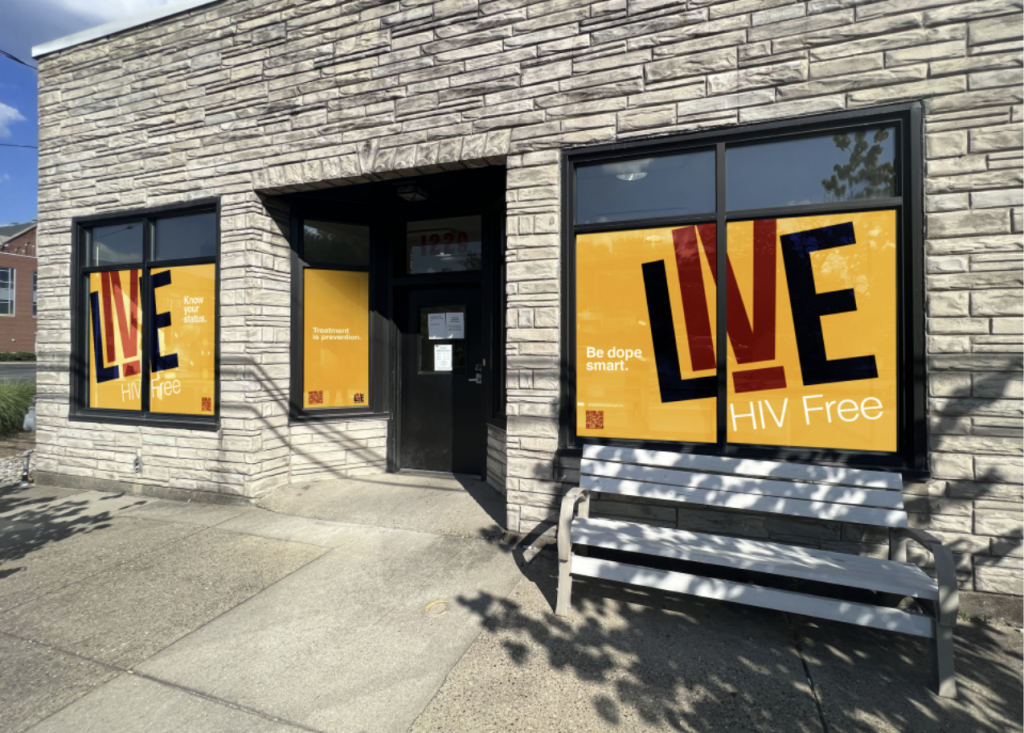
In an effort to prevent HIV transmission, LPF also connects the public to PrEP providers and offers HIV testing.

Testing Locations

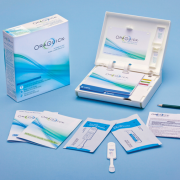
Queer Kentucky, along with the Louisville Pride Foundation, have partnered with the Ryan White Foundation to raise awareness for HIV in Kentucky. Below, you will find HIV testing sites. If you wish to add any known consistent/regular testing sites, please email us at [email protected]⁠

⁠

Louisville Locations⁠:⁠

⁠Volunteers of America – Monday – Friday 9 a.m. – 3 p.m. 2820 West Broadway⁠

⁠Sweet Evening Breeze – every Thursday from 11 a.m. – 3 p.m. 801 Barret Ave Suite 211⁠

⁠Shawnee Christian Healthcare – regular business hours – 234 Amy Ave, Louisville, KY 40212⁠

⁠Derby City Prep Clinic regular business hours – 1101 E Washington St Suite A⁠

⁠Park DuValle Community Health Center – regular business hours – 3015 Wilson Ave⁠

⁠

Lexington:⁠

AVOL Kentucky offers free testing in Lexington at the following times at 1824 Hill Rise Drive STE 100 in Lexington⁠

Monday, Tuesday, Thursday 9 a.m. to 5 p.m.⁠

Wednesday 9 a.m. to 5 p.m.⁠

Friday 9 a.m. to 1 p.m.⁠

⁠

UK TARGET 4 LOCATIONS⁠

UK Target 4 – Second Tuesday every month 4 PM – 8 PM 3101 Beaumont Centre Circle, Lexington KY 40513⁠

UK Target 4  – Thursday 12 PM – 4 PM 376 N. Main Street, Stanton, KY⁠⁠

UK Target 4 – Tuesday 8 AM – 3:30 PM and Thursday 8 AM – 4:30 PM 341 E. Main Street, Paris, KY 40361⁠

UK Target 4 – On Demand in Boyle County- Amy Anness 859-324-0114⁠

UK Target 4 – On Demand in Fayette County- Dawson Fee 859-200-9688


Queer Kentucky, Moore Lab launch interactive data dashboard featuring experiences of 3,000+ LGBTQ+ Kentuckians

Curious about what is important to LGBTQ+ Kentuckians? Check out this groundbreaking survey.

Louisville Pride Foundation pauses remaining $100K in vaccine program due to DOGE budget cuts

LOUISVILLE — The Louisville Pride Foundation has paused its vaccine program which provided preventive care, vaccines, education, and employment for more than a dozen LGBTQ+ community health workers, after the Trump administration’s Department of Government Efficiency cut $149 million in COVID-19 public health funding in Kentucky and Indiana.

The vaccine program, “Immunity in the Community,” is funded through a reimbursement grant in partnership with the Cabinet for Health and Family Services and the Centers for Disease Control. With a total budget of $250K, $150K has already been spent, and it is unclear if the remaining $100K will be received.

According to a statement emailed to Queer Kentucky from LPF Executive Director Ebony Cross, Immunity in the Community launched in February 2024 with the goal of increasing vaccine access and health equity among LGBTQ+ Kentuckians. The program prioritized culturally responsive, affirming care by meeting people where they are: physically in bars, festivals, community events, and digitally through apps and social platforms.

“On March 28, 2025, we received official notice from the Kentucky Cabinet for Health and Family Services that the funding stream supporting this program had been ‘terminated with cause,’ retroactive to March 24,” Cross said. “This decision eliminates more than $100K in resources and immediately halts several months of planned public health programming.”

During the course of the program, LPF has administered 1,000 free vaccines for mpox, COVID-19, influenza, and HPV. In addition to immunization, the initiative connected individuals with tools to monitor their health, understand potential side effects, and seek compensation in the rare event of serious adverse outcomes.

“Our outreach was grounded in public health data and informed by the lived experiences of LGBTQ individuals, particularly those at higher risk,” Cross said.

At least $11K of the cut funding had supported the employment of LGBTQ+ community health workers. Health workers, many of whom are also drag performers, would attend events at bars or pride events and educate the public about vaccines, PrEP and other public health topics.

Gov. Andy Beshear acknowledged some of the grant cuts and said Kentucky will fight them.

“We have received notice of grants being cancelled,” Beshear said. “It’s an unlawful cancellation and we’ll challenge it. These are contracts that we have. The contracts can only be terminated for cause, which means somebody did something wrong and they are trying to define cause as the pandemic. That’s not a legal argument.”

While the loss of funding creates unique challenges and uncertainty for LPF, Cross said they are looking for other funding source to make up for the loss and stay focused on increasing the health equity of Kentucky’s LGBTQ+ community.

“We extend our gratitude to the many individuals, volunteers, and partners who supported Immunity in the Community and reaffirm our dedication to advancing health access for all,” she said.

Proposed cuts to CDC’s HIV prevention funding could devastate Kentucky, Ohio efforts

CINCINNATI – Reported federal cuts to HIV prevention programs would have “deeply alarming” impacts on work in Kentucky and Ohio, according to organizations doing the work here. 

On March 18, NBC News cited an anonymous source claiming the Trump administration planned to cut more than $1 billion from the Centers for Disease Control and Prevention (CDC) budget, effectively gutting its HIV prevention division.

The source claimed the plan was still in preliminary stages and could involve moving some of the division’s responsibilities to other Department of Health and Human Services divisions. Another plan, according to the source, would cut about $700 million from the budget.

That CDC division is responsible for tracking infections, supporting testing and prevention methods, doing research, and expanding access to federal funds.  

“Prevention is kind of the silver bullet that we think will, you know, drive the momentum to end the epidemic,” said Janiece Jones, president and CEO of Cincinnati-based Caracole.

Caracole provides a slate of services including HIV testing, prevention services like pre-exposure prophylaxis (PrEP) guidance, case management, and supporting housing.

The organization reports CDC funding cuts would impact all prevention efforts, specifically testing.

“We immediately activated our networks,” Jones said. Staff members will be in DC for AIDSWatch in early May. Jones said the existing executive orders and ongoing rumors of cuts are making long-range planning more difficult.

Hamilton County, home to Cincinnati and Caracole, is one of the target areas for a 2019 plan called Ending the HIV Epidemic in the U.S. (EHE), proposed by President Donald Trump’s first administration. The goals included a 75% reduction in new HIV cases nationwide by 2025 and a 90% reduction by 2030.

Jones told Queer Kentucky that Hamilton County saw a 40% decline in new HIV cases from 2019 to 2023.

“We want to keep moving,” Jones said. “We want to keep the momentum and these types of funds are what we need to do that.”

Across much of Kentucky, prevention services are largely handled by public health departments and the Cabinet for Health and Family Services. There are other groups, including Lexington’s AVOL, which are working toward prevention goals. AVOL did not return a request for comment by publication time.

The cabinet said it had not received any official notice of cuts. In a statement to Queer Kentucky, a spokesperson added the cabinet has helped ensure those county health departments have access to HIV testing and has increased self-testing across the state. The cabinet also has a strategic plan aligned with the federal 2019-era EHE plan.

“Funding reductions that could affect Kentucky’s ability to diagnose, prevent, treat, and respond to HIV could put entire communities at greater risk,” a cabinet spokesperson wrote.

Ohio-based Equitas Health also serves the Greater Cincinnati/Northern Kentucky area. In a news release, its president and CEO David Ernesto Munar called the rumored cuts “counterintuitive.”

“The CDC’s tracking, research, testing, and prevention programs are critical tools in the nationwide, interconnected efforts of organizations like ours,” Munar wrote. “The government should be in the business of removing barriers to the success of public health programs, not creating instability and fear with broad, abrupt funding cuts.”

Equitas Health joined 10 other organizations nationwide in a unified condemnation of the possible cuts earlier in March, calling it “costly” and “devastating.”

A group of 100 Senators and representatives on March 21 sent a letter to President Trump urging full funding for HIV/AIDS prevention.

The lawmakers noted that under the passed Continuing Resolution, funding continues at 2024 levels, including for the CDC’s HIV prevention division. They also expressed concern that the flagship Ryan White HIV/AIDS Program, also under HHS, would be the sole remaining program. Statute does not allow that program to provide prevention services, according to the lawmakers, it is focused on those living with the disease.

They wrote in part, “Prevention provides a large return on investment for the federal government – adjusted for inflation, a lifetime of medical costs for a person with HIV can be over $500,000.”

Caracole’s Jones agreed, also noting other executive action by President Trump. 

“I think that the cost is just astronomical,” Jones said. “I’m sure many economists would agree with me that our goal is to have healthy, thriving communities where folks are able to contribute to themselves, their dreams, their education, their children, their communities, and anything that creates a barrier to that, I think, is harmful to all of us.”

That includes a January executive order directing federal agencies to terminate diversity, equity, inclusion, and accessibility (DEI/A) programs and policies. The CDC shortly after pulled down HIV surveillance reports and other data. Per a court order, some sites have been restored, but with a note from the Trump Administration rejecting transgender data.

As of March 18, an HHS spokesperson told NBC News there had been no decision yet on “streamlining” HIV programs.

The Mpox Issue

From the Queer Kentucky archive. This digital special issue is one of our past special projects. Today Queer Kentucky is Kentucky’s LGBTQ+ newsroom, reporting every day. Read the latest news.

Digital special issue, 2025

Strengthen, Inform, Protect

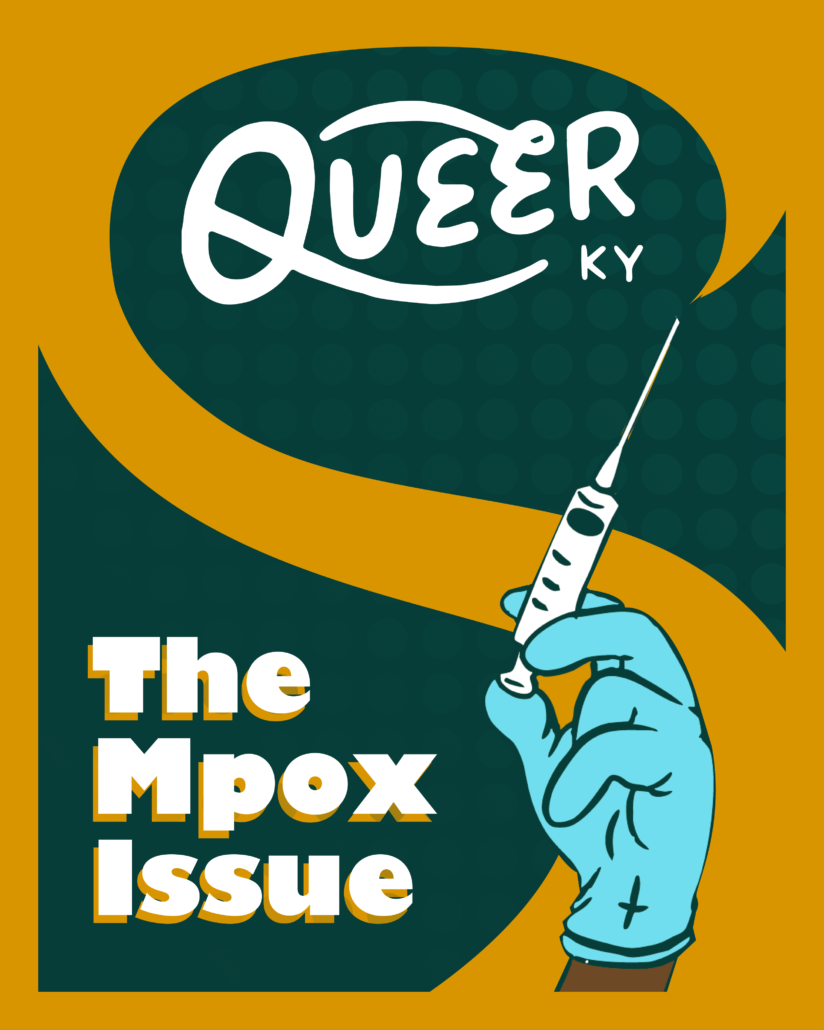
Cover of The Mpox Issue

The Mpox Issue is a digital magazine Queer Kentucky launched in March 2025 to address the ways mpox, formerly known as monkeypox, affects the LGBTQ+ community. Mpox has disproportionately affected queer men, trans people and other groups who already face health disparities and stigma, and the issue treats it as a question of visibility, inclusion and care as much as disease.

Its ten articles cover prevention tips, mpox variants, vaccine history and how to talk about queer health risks without shame. Joshua Brown writes on DoxyPEP, HIV testing in rural Kentucky and Grindr’s 2022 mpox campaign, Olivia Krauth explains what to know about mpox, Richie Goff shares two men’s experiences of the illness, and Deanne Revel offers tips on hand hygiene and cleaning sex gear. Executive Director Missy Spears introduced the issue, which also offered free graphics for organizations working to improve LGBTQ+ health.

Inside this issue

11 stories you can read online, free.

See all special projects

An overview of HIV history and its Queer criminalization

Editor’s note: This story was published in March 2025. Laws, data and resources may have changed since then, so some information here may be out of date.

by Bryan C. Moore, Ph.D., J.D.

While the human immunodeficiency virus (HIV) does not discriminate in its transmission when an individual comes into contact with it, data suggest that HIV has a disproportionate impact on the queer community, especially young, queer people of color in the South. 

According to the Center for Disease Control, an estimated 1.2 million people are living with HIV in the United States. Around 13% who are HIV+ are unaware of their status. In 2022 alone, there were just under 38,000 individuals newly diagnosed with HIV. Of those individuals: approximately two-thirds were gay, bisexual, or men who have sex with men, nearly seventy percent Black or Hispanic, over half were under the age of 35, and over half lived in the South. 

In June of 1981, an article published in the New York Times under the headline “Rare Cancer Seen in 41 Homosexuals” was one of the earliest instances of media coverage related to acquired immunodeficiency syndrome (AIDS.) 

At the time, little was known about this novel disease. In fact, it was not even referred to as AIDS until the Center for Disease Control coined the term in 1982 and it was not known that AIDS is caused by HIV until 1984. In large part due to this lack of information that we now consider basic facts about HIV/AIDS, stigma spread quickly in the 1980s against individuals infected with the virus. Due to its early prevalence in the gay community, gay men bore much of the brunt of abuse and stigmatization.

By 1983, over 3,200 individuals in the United States had been diagnosed with AIDS and nearly 1,200 had died. Though numbers were markedly increasing, AIDS was not acknowledged by the Reagan administration until 1985. As the number of infections climbed and the fear of HIV infection spread, law and public policy measures were implemented with the goal of protecting the population from this threat. By the mid to late 1980s, bathhouses in large cities had been closed and gay men were prohibited from donating blood. 

Since that time, there has been a great deal of advancement of knowledge related to HIV/AIDS. Awareness of how it is spread (and can be prevented) as well as treatment have drastically lowered the number of individuals diagnosed with HIV and individuals who die of AIDS annually. However, while the number of new HIV diagnoses per year is considerably down since its peak of 3.3 million in 1995, HIV still has a significant impact on the wellbeing of many Americans and is a seriously stigmatized issue, especially in the queer community.

One unfortunate byproduct of the stigma of the HIV scare is the misguided and discriminatory treatment of individuals with HIV in the criminal justice system. In some ways, one could categorize this as the criminalization of HIV. According to the Williams Institute at UCLA Law School, there has been a history of prosecuting individuals in Kentucky based in large part on their HIV status. While sex work is already banned by law, an individual diagnosed with HIV who engages in sex work is in jeopardy of additional, enhanced felony criminal charges. Kentucky law makes it a criminal offense (a class D felony) for individuals with an HIV diagnosis to donate organs, skin, or tissue. Additionally, prosecutors have brought felony wanton endangerment charges against individuals who have failed to disclose their HIV diagnosis to sexual partners. 

Individuals familiar with the criminal justice system know that felony convictions have serious impacts on an individual. Beyond the possible imprisonment or fines faced in sentencing, collateral consequences, such as lack of voting rights and hardship in acquiring housing, employment, and a variety of benefits, follow an individual well beyond the time of conviction.

When one considers these potential consequences and what we know about HIV now, one may very likely question whether these laws do anything more than discriminate. For instance, we are aware that individuals with HIV who are receiving treatment for the virus and are undetectable do not carry high enough of a viral load of HIV to transmit it to others. Additionally, one may question why HIV is treated with such a harsh penalty in the aforementioned scenarios when there are not similar penalties for a variety of similarly dangerous communicable diseases that are known to be spread through sexual contact or the sharing of certain bodily fluids.

It appears that these laws that were adopted in response to the HIV scare do not hold up under close scrutiny. When one considers that one disease, which has long been stigmatized and attributed to the queer community, is treated more harshly than similar diseases in spite of the fact that advances in medicine have made individuals who are undergoing treatment physically unable to spread the disease, one could easily draw the conclusion that these laws are byproducts of discrimination and should be reconsidered.

Painting a Picture of HIV Prevalence in Rural Kentucky

The article is from our special issue on Mpox. You can access the full issue here.

In a previous article, we saw that only an estimated 28.8% of Kentuckians have been tested for HIV at least once in their lives. This means that around a quarter of Kentuckians know their status … or have known it. STI testing, like any other form of responsible self-improvement, is best performed routinely and with intention. One doesn’t go to therapy once and declare himself trauma-free or take a look at the weather one day and declare that it’s always sunny from now on—so why are we so quick to take one test and be done with the whole affair? The answer is a complex web of cultural stigma and access to healthcare in the Bluegrass state. 

Stigma around HIV rages strong due to its connection with the LGBTQ+ community (let’s not forget that HIV/AIDS was originally called “gay cancer“) and intravenous drug users. In the United States, anti-LGBTQ+ sentiment rages strong due to flame-fanning from right-wing evangelicals, politicians, and social media personalities. Similarly, the public’s association with intravenous drug users and those living with addiction is very negative—particularly in areas where drug use is pervasive and heavily associated with violent crime. The negative associations people have with these two communities translates to stigma—literally “a mark of shame.” If one’s only understanding of HIV is that it’s a disease for “queers and addicts,” but your math teacher or your congressman comes out as HIV+, one is likely to transfer those associations onto them: to stigmatize them, or apply that mark of shame. The prospect of suddenly losing reputation or standing within one’s community is terrifying, and that deters people from getting necessary care. While there are some protections in place for people taking and receiving results of an HIV test, they may not be enough to ensure people feel safe enough to test in the first place. 

Add to this fear of stigma to the legal ramifications of knowingly spreading HIV—which is still a Class-D felony offense in the state—and there are very real ramifications to being diagnosed with HIV. You can’t unknow something like that, so diagnosis opens up a whole can of worms beyond one’s individual health. 

All of these compounding issues mean that getting tested isn’t as simple as it may seem for Kentuckians. Up until June 2023, even selling or distributing home HIV tests was considered a felony. This was overturned thanks to the work of the HIV Is Not A Crime Coalition, powered by the Fairness Campaign. At-home testing provides the privacy, ease, and accuracy necessary for more Kentuckians to be regularly informed about their status, and to act accordingly.

Beyond the issues of stigmatization, legal persecution, and access to testing, Kentucky faces an additional barrier to effective HIV treatment and prevention: an epidemic of intravenous drug use. A 2019 by Kentucky Public Health and the CDC found that of 220 U.S. counties at risk for an HIV/HepC outbreak among intravenous drug users, 54 of those (24.5%) were in Kentucky. 

via TheKentuckyLantern

A number of concrete steps have been taken to reduce harm within the region, namely increasing the accessibility of syringe services programs (SSPs). Syringes are single-use tools—they should not be used more than once or, even worse, shared. Generally speaking, people using intravenous drugs are focused on other things and don’t have tens of spare needles lying around in sterile conditions. SSPs allow them to reduce the potential harm associated with these activities by safely disposing of used needles, getting access to clean ones, and ultimately offering screening, treatment, and support. These, too, were illegal until 2015. 

As we’ve seen, the statistics paint a negative picture of HIV in Kentucky—low STI literacy rates, stigmatization, legal barriers, and other factors have often blocked meaningful progress. But in the last decade, Kentucky residents on both the local and state levels have organized to make meaningful strides in preventing, treating, and destigmatizing HIV across the state. But there is still work to do! If you’re inspired by all this progress and want to ensure we keep moving forward, join local activist groups like the Fairness Campaign or AVOL and carry on the work that has been done in the name of health and wellbeing. 

The article is from our special issue on Mpox. You can access the full issue here.

Six groups uplifting Black LGBTQ voices in Kentucky, Appalachia

Editor’s note: This story was published in February 2025. Some details may have changed since then.

Across Kentucky and Appalachia, advocates and organizations are working to make LGBTQ community members feel welcomed and seen.

That is especially true for organizations making a particular effort to celebrate the Black LGBTQ experience, through art, entertainment and advocacy.

Queer Kentucky has compiled a list of six groups across the region that are uplifting Black queer voices and fostering community for Appalachia’s Black LGBTQ residents.

Kentucky Black Pride Inc.

Based in Lexington, Kentucky Black Pride brings both advocacy and entertainment to Kentucky’s Black queer community.  In recent months, the group has participated in educational events on PrEP and sexual health, hosted a masquerade gala and brought community members together for a game night on World AIDS Day.

The organization’s flagship annual event is the Kentucky Black Pride Festival, scheduled this year from Sept. 11 to 14. The festival will feature documentary screenings, a meet and greet, food, entertainment and an evening gala.

This year, Kentucky Black Pride aims to raise $30,000, the organization announced in a January Facebook post. For more information, visit the Kentucky Black Pride Facebook page.


Pride Games

Pride Games brings recurring parties, festivals and nightlife events to Louisville’s Black LGBTQ community and beyond. The organization focuses on entertainment and sports events, while also hosting local performers 

Each year, the organization also hosts Melanin Pride Weekend, a celebration of Kentucky’s Black LGBTQ community that features music, food, dancing and fun. Pride Games has also hosted open mic events, karaoke nights and card game tournaments in the past.

Learn more about Pride Games at the organization’s Facebook page.

Faulkner Morgan Archive

The Faulkner Morgan Archive is a collection of historic and cultural materials surrounding LGBTQ life in Kentucky across the last two decades. While the archive incorporates the history of Kentucky’s wider LGBTQ community, this month it is spotlighting Black queer voices with a special exhibit.

“Here, Black, Femme & Queer” is a traveling exhibition that has made stops around Kentucky, incorporating both archival and present-day images of Black queer life in Kentucky. Some of its materials were even collected through Facebook and social media.

To learn more about the exhibition, visit its webpage.


Bluegrass Black Pride

Lexington’s Bluegrass Black Pride is a nonprofit organization that aims to educate community members, advocate for Black LGBTQ residents and demand change.

In the past, Bluegrass Black Pride has hosted drag shows, co-presented panels on the trans experience in Kentucky and held legislative look-aheads on the future of LGBTQ rights in the state.

You can find more info about the organization on its Facebook page.


Louisville Pride Foundation

The Louisville Pride Foundation serves all members of the LGBTQ community, but says it is also equipped to support the specific needs of Black LGBTQ community members.

The group hosts Pride events and community gatherings, but also can help Black LGBTQ residents connect with identity-inclusive mental health resources and support groups.

To learn more, visit the Louisville Pride Foundation website.


West Virginia Black Pride Foundation

Although located beyond Kentucky’s borders in Charleston, W.Va., the West Virginia Black Pride Foundation is working to create spaces and resources for Black LGBTQ Appalachians inside the capital city and beyond.

In addition to hosting events like the West Virginia Black Pride Festival, this organization operates as a drop-in center, with zen rooms and bathroom facilities for community members in need. The foundation also simply serves as a space for community gatherings and conversations among Black LGBTQ West Virginians.

The West Virginia Black Pride Foundation is located at 1442 ½ 3rd Ave. in Charleston, W.Va. To learn more about the West Virginia Black Pride Foundation’s work and the resources they offer, visit the organization’s Facebook page.

HIV in Kentucky: Interactions with Mpox, Vaccines, & Public Health

The article is from our special issue on Mpox. You can access the full issue here.

The 2022 mpox outbreak disproportionately impacted gay men and those living with HIV. Was this some cosmic hate crime or just a side-effect of our community’s tendency to spread our love far and wide? In this article, we’ll unpack the relationship between three diseases—smallpox, mpox, and HIV—and their role in contemporary vaccine research and public safety. 

Routine vaccination for smallpox ended in the 1970s due to the WHO’s declaration that smallpox was eradicated. No more disease meant no more worries—we thought. Global vaccination rates against smallpox fell dramatically, sometimes as dramatically as 95% to 5% of the total population (based on studies from Denmark and Spain). We know there is at least some cross-immunity to mpox generated from smallpox; one study even found a connection between smallpox vaccination and resistance to mpox, even when the vaccines were administered a decade or more earlier. If we connect the dots, diminishing vaccination rates for smallpox could mean diminishing immunity from mpox. This is one reason current vaccination efforts are so important—if you haven’t been vaccinated against smallpox, you’ve got a heightened risk of contracting mpox. 

While prior mpox infections had been relatively constrained to regions of Africa, the 2022 outbreak was an anomaly. These new variants disproportionately targeted gay men (94% of total infections) and those living with HIV (41% of total infections). This isn’t due to some cosmic hate crime (though I haven’t personally ruled that option out), it’s likely due to the connection between multiple sexual partners and mpox transmission. More sexual encounters means more chances to contract, statistically speaking. 

For those with HIV, mpox vaccines have shown very few possible reactions with HIV medications. While there is no demonstrated connection between being HIV+ and one’s odds of contracting mpox, the immunocompromisation that comes with longer-term HIV and AIDS would put them at greater risk for experiencing a severe and potentially fatal mpox infection without the vaccine. While some “live” vaccines may pose a risk to the immunocompromised, both major vaccines on the market today—Jynneos and ACAM2000—use “dead” viruses which are incapable of causing infection. Vaccines which use a weakened, as opposed to dead, virus may lead to further infection to those with weakened immune systems, but this is highly dependent on the individual and their specific health factors. Being immunocompromised may also reduce the efficacy of certain vaccines, since vaccination’s primary goal is stimulating the immune system.  

HIV and vaccination have a long history, going back as far as 1984 when HIV was identified as the cause of AIDS. At this time, government officials declared a 2–3 year window between this discovery and the development of a functional vaccine. This estimate has proved wrong, to the tune of decades. There was indeed a trial in 1986, though this was fraught with controversy. Daniel Zagury, leader of the trial, was the first person to try the vaccine and would later have charges levied against him for medical misconduct when three of the trial participants, in the late stages of AIDS, died during the trial. These charges were ultimately dismissed, with the understanding that all medical trials carry with them some amount of risk and the participants all gave informed consent regarding that risk. Since this initial trial, there have been several subsequent attempts to develop a vaccine against HIV, each powered by new discoveries around the virus’s structure, behavior, and interaction with other systems within the body. 

While we don’t have a vaccine to eradicate HIV just yet, we do have preventative PrEP and many treatments for treating an HIV infection before it can develop into AIDS. In Kentucky, only an estimated 28.8% of residents have been tested for HIV at least once in their lifetime. Combine this with an estimated 8.6% of those Kentuckians testing positive for HIV, and we get a clearer picture. If there are 4.5M residents in Kentucky, 28.8% of whom know their status one way or another (1.3M), we’re left with 3.2M who don’t know and who may not be engaging in preventative measures. PrEP use has been steadily climbing since its release in 2012, with an estimated 4,500 Kentuckians routinely using it. Those who have more sex with more people and who use intravenous drugs may be at higher risk of contracting HIV—but regardless, not knowing your status (and perhaps not being aware that you don’t know) is an issue of community safety. HIV may have had its terrifying, pandemic-era time in the spotlight, but it is no less of a concern than mpox, COVID, or any other disease that draws attention, resources, and action. We can all do our part in preventing the spread of HIV by using PrEP, knowing our status, and keeping one another safe and healthy. 

The article is from our special issue on Mpox. You can access the full issue here.

Chemsex: Understanding the Risks, Realities, and Resources for LGBTQ+ Communities

Editor’s note: This story was published in January 2025. Data, programs, meeting times and contact details may have changed since then, so check with the organizations listed for the latest information.

Have you heard the term “chemsex?” Maybe you’ve seen phrases like “party and play” or been asked, “you PnP?” or “parTy?” Perhaps during a late-night scroll, you’ve noticed a “🎉” next to a Grindr profile and questioned what it meant. Whatever the coded language, it all boils down to one thing: getting high and having sex.

Let’s talk terms and definitions:

Chemsex: refers to using drugs to enhance and intensify sexual experiences. While “chems” can include substances like poppers, marijuana, or alcohol, the term primarily centers around four main drugs: ketamine, GHB/GBL, cocaine, and of course, crystal methamphetamine.

Ketamine is a dissociative anesthetic used medically for pain relief and anesthesia, and recreationally for its hallucinogenic and euphoric effects, with emerging applications in mental health treatment.

GHB/GBL: GHB (“liquid ecstasy”) and its stronger cousin GBL (a cleaning solvent-turned-party drug) are used for euphoria and relaxation—but mess up the dose, and it’s less party, and more falling out of consciousness…and possible death.

Cocaine: OK, we probably all know a little about coke, but for the sake of argument, let’s define. Cocaine is a powerful stimulant that gives a quick energy boost and heightened alertness, but can quickly lead to intense crashes and cravings once it wears off. 

Methamphetamine: We’ve all seen Breaking Bad, right? Meth is a supercharged stimulant that hijacks your brain unlike any other stimulant, flooding it with an insane rush of dopamine. A high to remember, but a steep price to pay each time. If you’re a millennial, I know you’ve seen the Montana Meth Project, you know what this drug can do to a human.


Prevalence

Anthony Munger, community health manager for the Louisville Pride Foundation, said there is a lack of data focusing on substance use within the LGBTQ+ community in the United States, particularly concerning methamphetamine use and chemsex activities.

“Accurate data about LGBTQ individuals and substance use, particularly around chemsex, is essential because our experiences are unique yet often universal within our community,” he said. “Substances as a coping mechanism against daily discrimination, and without data, policies and resources can’t effectively help us. This data makes our struggles visible and helps create safer practices that are tailored and evidence-based.”

According to the 2020 National Survey on Drug Use and Health by the Substance Abuse and Mental Health Services Administration, approximately 3% of lesbian, gay, or bisexual adults aged 26 and older in the U.S. reported using methamphetamine in 2020.

Adam Neff, M.D., internal medicine and pediatrics primary care physician, Baptist Health, says he sees several LGBTQ+ patients and only a small number of them have come forward about their addictions or participation in chemsex and methamphetamine activities.

“It’s something we don’t ask about as providers whether it’s from a lack of knowledge or hesitancy,” he said. “There is a lot of shame that comes along with this and it can be hard for patients to open up.”

Neff adds that general education to the community, but especially providers would benefit those struggling with chemsex and addiction.

“It’s a tricky area to navigate without the patient feeling super shamed,” he said.

According to a 2023 report from the  Kentucky Office of Drug Control Policy and Kentucky Agency for Substance Abuse Policy, methamphetamine was found in 1,095 drug overdose deaths, representing 55.2% of the total drug overdose deaths and out of those overdoses, 840 involved Fentynal. What does this mean? Meth is being cut with fentanyl…allegedly. 


Health Risks

Chemsex poses significant physical risks, including a heightened likelihood of sexually transmitted infections (STIs) and HIV due to impaired judgment and condomless sex. Prolonged sexual activity, which can happen while under the influence, can cause physical trauma, such as tearing or bleeding, increasing infection susceptibility.

Neff noted that individuals engaging in chemsex may make it more likely to  neglect essential routines like taking daily PrEP or HIV treatment, which reduce the risk of acquiring or transmitting HIV, respectively, or using doxy-PEP, which reduces the risk of gonorrhea, syphilis, and chlamydia. 

“Set an alarm to ensure you don’t miss medication doses as you come down,” he advised.

Drugs like GHB and GBL carry additional risks due to their narrow safety margin, increasing the likelihood of overdose, unconsciousness, or death.

The mental health impact of chemsex can be as severe as its physical consequences. The highly addictive nature of chemsex can lead to dependency, creating a cycle that is difficult to break. The comedown from these drugs often results in anxiety, depression, or even psychosis and paranoia, contributing to ongoing mental health struggles.


Harm Reduction and Resources

If someone is going to participate in chemsex, there are a few things they can do to reduce the harm that can occur during the experience:

Plan Ahead: Set boundaries around substance use, sexual activity, and time limits.

Know Your Substances: Understand the effects, dosages, and interactions of the drugs you’re using. Avoid mixing substances, especially depressants like GHB/GBL and alcohol.

Utilize PrEP, Doxy-PEP: Stay consistent with preventive medications to reduce the risk of HIV and STIs.

HIV treatment: If HIV-positive, stay consistent with medications.

Inform a Trusted Friend: Let someone know your plans and check in periodically.

Stay Hydrated and Nourished: Drink water regularly and eat light meals to maintain energy levels.

Use Protection: Use condoms and lubricants to reduce the risk of STIs and physical trauma.

Use clean supplies: Supplies like syringes and water should be sterile to reduce the risk of HIV, Hep C and other bacterial infections.

Monitor Doses: Keep track of how much and how often you’re using substances to avoid overdosing.

Have Naloxone and fentanyl test strips on Hand: If opioids are involved, ensure someone knows how to use naloxone in case of an overdose. Test strips can help identify if fentanyl is present.

Set Alarms for Medications: Don’t skip doses of PrEP, antiretrovirals, or other necessary medications.

Practice Aftercare: Rest, rehydrate, and nourish your body. Plan for mental recovery, including coping with potential anxiety or depression.

Seek Support: If struggling with dependency or mental health, reach out to harm reduction organizations or support groups.

If you are seeking support in quitting chemsex / methamphetamine or practicing harm reduction please know that there is help locally and internationally.

The Louisville Pride Foundation has a “Queer Men and Meth” support group that meets every Thursday at 7 p.m. at 1244 South Third Street (The LGBTQ+ Center)

Harm reduction supplies including fentanyl test strips and narcan can also be obtained at the LGBTQ+ Center. They will also connect you with therapists and substance use disorder treatment if desired.

Crystal Meth Anonymous Meetings

Harm Reduction Services in Louisville (Syringe exchange and more)

Northern Kentucky Harm Reduction Services

A Community Coming Together: HIV/AIDS Activism in Kentucky 

FEATURE PHOTO: Back of Postcard from Frank Close to Bob Morgan, July 14, 1983, Collection of Faulkner Morgan Archive.

In 1983, Lexington artist Frank Close sent a postcard from Lexington to the artist Robert Morgan, who was living in Florida at the time. The first line, casually, reads “shall we start to worry about AIDS?” The postcard, almost prophetic, depicts the crypt of Capuchin monks in Rome. As if Close’s postcard was a sign of what was to come, the bodies did indeed pile up. Queer people across Kentucky would be lost and, while the exact numbers are still not known, it is certainly in the thousands. 

Going back a few years to the 1970s, after the Stonewall riots, the sky really seemed the limit for LGBTQ+ people. The tides had begun to shift, and the queer community was demanding space in society. But as the 1980s progressed, a dark cloud was on the horizon. At first it seemed so distant, just a blip on the screen—a rare disease, “a gay cancer,” popping up in major American cities. 

When we talk about the devastating impact of the HIV/AIDS epidemic, the story is often told through urban centers like New York City and San Francisco. However, this impact reached throughout the country and was just as prevalent and crippling here in the Bluegrass state—perhaps even more so. At the Faulkner Morgan Archive, we have been particularly keen to record the stories of this lost generation.


Shea Metcalf’s Memorial Service handout, 1991, Collection of Faulkner Morgan Archive.

At this time, though, there was a deep connection between Kentucky and those major metropolitan centers. Many queer individuals moved out of Kentucky in pursuit of their dreams, and ended up in the “gayborhoods” of cities like NYC. Shea Metcalf, who moved to New York City in the 1970s, grew up in Lancaster. Through his modeling career, he soon became friends with legendary artists such as Paul Cadmus, Keith Haring, Jean-Michel Basquiat, and Andy Warhol. Being in NYC during the height of the epidemic, though, Shea sadly passed away in 1991 due to AIDS complications, preceded by his boyfriend Drew Holbrook in 1990, and was later buried in his hometown. 


Darryl Brannock (left) and Chris Sloane (aka Christina Serpentina) (right), photo by Bob Morgan, circa 1987, Collection of Faulkner Morgan Archive.


Local queer folks, even those who participated very little in earlier gay liberation movements, become extraordinarily politicized in the midst of the devastation of AIDS. Friends became caretakers, and strangers became patients. Darryl Brannock was the first Lexingtonian to go public with HIV/AIDS and, in 1986, was likely the first Kentuckian to begin receiving AZT medications. 


Charles Williams in his home in Lexington, Photo by Robert Morgan, Date unknown, Collection of Faulkner Morgan Archive.


The HIV/AIDS epidemic was especially hard on communities of color due to the overlapping of homophobia and racism. One local artist, Charles Williams, dealt with this firsthand. Born in Blue Diamond, Kentucky, Williams worked avidly on paintings, drawings, assemblages, sculptures, and furniture until his untimely death in 1998, the result of AIDS-related complications and starvation. Along with the difficulty of living with HIV/AIDS, there was also simply a lack of widespread support for those suffering. Those in our community who became caretakers were stretched thin trying to battle the overwhelming devastation of the crisis.


The LGBTQ community of Kentucky mourned their dead, both near and far, and fought the disease as best they could. Despite these important and sometimes life-saving efforts, Lexington was also a difficult place to be during AIDS. The local police began enforcing the sodomy laws in a much more draconian fashion—a direct response to the local fear of AIDS. 


LGBTQ historic marker #2545 commemorating “Commonwealth of Kentucky v. Jeffrey Wasson” on Water St. in Lexington, KY. Photo by Brett Barnett, June 3, 2018.


In 1986, during an entrapment sting in the back parking lot of The Bar Complex in Lexington (the oldest continuous LGBTQ gathering place in Kentucky), numerous men were arrested, including a young nurse from Stanton —Jeffrey Wasson. Wasson refused to quietly go along, challenging his arrest. Although his case lasted seven years, defended by a group of local lawyers, Wasson’s defiance led to the overturn of Kentucky’s sodomy laws, making us the first state to do so after the advent of AIDS. 

As an inadvertent result of the HIV/AIDS epidemic, there was a major mobilization that happened in the LGBTQ+ community. Before the late 1980s and early 1990s, the idea of being part of an “LGBTQ+” community was not an understood part of being a queer person. However, in the face of such a devastating disease that showed the disdain of the U.S. government, queer people realized that no one else would care for them except each other. There was a huge shift with the queer community coming together which was not there before. Having to literally fight for your lives does that to a group of people. 

Grassroots activism began to turn into official organizations and nonprofits, many of which are still helping Kentucky communities today. Political conversations grew, especially the desire for basic protections under the law, such as not being fired or thrown out of housing because of one’s sexual orientation or gender expression.  


The Fairness Campaign at Lexington’s 4th of July Parade in 1992, photo from Laura Kaplan, Collection of Faulkner Morgan Archive.


After years of activism throughout the 1990s, Louisville became the first city in Kentucky to protect its gay and lesbian citizens through the Fairness Ordinance, passed on January 26, 1999. Although the ordinance did not protect gender expression for trans Kentuckians until later, it was a major step in LGBTQ+ rights. A few months later, on July 8, Lexington became the second city in Kentucky to pass a Fairness Ordinance, and the first to include trans people in the ordinance. Now, a growing number of cities across the Commonwealth have passed Fairness ordinances protecting queer Kentuckians. 

These stories not only represent the national and international connections of Kentucky’s queer community, but are also a testament to all those who were lost in the AIDS crisis. The modern successes in HIV/AIDS prevention serve as a celebration of their legacy. We are now the bearers of their stories and the continuation of their activism.

My HIV is 20: A Lexington Man’s Journey Living with HIV

My HIV is 20 this year. I tested positive in September 2004. It was my habit to get tested during my birth month, and start my new year with a clean bill of health. The day I tested positive was a work day. At the time, the AIDS Volunteers of Lexington (AVOL) was in downtown Lexington and I walked there during my lunch, assuming I’d test negative like all the other times I’d been tested. The test was new — rather than having blood drawn and going through the two week nightmare of waiting for results, AVOL used a saliva test, where a cotton swab was run around your mouth, followed by just a few minutes of waiting.

I don’t remember what was said to me by the volunteer after he told me I’d tested positive. I walked back to work, told my boss, and fell apart. She hugged me as I sobbed and then let me go home for the rest of the day. 

Ben and Paul (not their real names), my two best friends at the time, were both HIV+, and both were my ex’s. I was lucky to have them when I tested positive. They helped me get settled in my new reality, and through those friendships I saw that being HIV+ was not what I was taught it would be. Though Ben started taking AZT when he was first diagnosed in the 1990s – 17 pills a couple of times a day – by 2004,  HIV was no longer the disease of Kaposi Sarcoma and young men turning into skeletons. By the time I contracted the disease, living with HIV was akin to having diabetes – a manageable chronic disease. However, unlike diabetes, HIV was still a disease shrouded in fear, hyperbole, and misinformation. (I can’t think of another disease in which I would feel the need to use pseudonyms to talk about other people with that disease.) I talk a lot about being HIV+, and often don’t realize how uncomfortable it makes other people for me to do so. It is still another closet that I have to come out of when I choose to.

My relationship with Ben helped me get a doctor. After contracting HIV, Ben was referred to a Dr. Sam Matheny at the University of Kentucky. According to local gay lore, Dr. Matheny had worked with “Patient Zero,” the HIV patient to whom all HIV cases in the 1980s purportedly (and mistakenly) could be traced.

As Ben’s partner, Dr. Matheny and I knew each other fairly well. I often went with Ben to his doctor appointments. When I contracted HIV, Dr. Matheny offered to be my doctor as well. HIV and the care of those who have it has always been a matter of community. The LGBTQ+ community cared for patients, struggled for medicines, shared what medicines were available, and still today groups like Lexington’s Moveable Feast provide meals to homebound people living with HIV. 

The medical wisdom in 2004 for people living with HIV was to undergo testing every 3 to 6 months, monitor their CD4 count and viral load, and delay prescribing medication until those levels dropped below a certain threshold. So, I continued to live my life. However, whereas before contracting HIV, I was sexually active, having sex NOW became difficult. I felt responsible to disclose my status regardless of the level of the relationship standing in front of me. It became clear fairly quickly that if I would simply shut up, I could continue the sex life that I’d had. I saw men having sex with other men who had HIV, but did not disclose it. 

After several rejections, I started dating a young man, let’s call him Ken, who had been abandoned in Lexington and was living in one of Lexington’s homeless shelters. I helped him get a place and I felt grateful – yes, gross – that he would date me. I let him isolate me from my friends. He was emotionally and physically abusive. To cope, I started to drink. Alcohol was a great solution until it wasn’t. I was working two jobs, neither particularly well. The stress and alcohol began to affect my health. My CD4 count started to lower. Dr. Matheny decided it was time to start medication.

I started with a medication called Atripla, which was a combination drug made up of Efavirenz, Emtricitabine, and Tenofovir. One of Atripla’s most common side effects was vivid dreaming, and, indeed, I dreamed vividly. There were nights when I couldn’t tell the difference between having my eyes open in the dark and when my eyes were closed. It affected my sleep and my daily mental state, though also at the time I was drinking heavily. The mixing of Atripla with alcohol equaled a blackout that wiped my memory clean. If I wanted to remember something I would attempt to write it down in my journal or on a piece of paper for the morning, though many times, my “handwriting” while drunk was just a storm of squiggly lines.

Thankfully, Ken eventually moved west. Honestly that time period is such a blur of alcohol and abuse and Atripla, that I’m not sure of the dates. I got sober, for the first time, in 2012, and in 2014, I won the opportunity through my work to live in Greece for a month. Thanks to my connections to other gay men with HIV, I was able to get enough of my medication to take with me, so I wouldn’t need to somehow get my prescription refilled while in Greece. It was after that trip, that I asked my doctor to change to Genvoya, a drug similar to Atripla but without the vivid dreaming. Sober and on the new meds I was able to sleep.

On Atripla, my CD4 had gone up and stayed stable, and I had reached what is currently the most sought after effect of HIV medications: I’d become undetectable. Meaning that there is so little virus in my bloodstream that the virus is not growing in my body but is also untransmittable to my hypothetical partners. 

Coming out in the 1990s, as a gay kid in a homophobic, sexphobic society, “safe sex” education focused on ways of not contracting what was then called STDs and not getting your girlfriend pregnant. There was not a coherent, intelligent conversation about being a homosexual in the high schools of western Kentucky in 1994, oddly enough. It was pretty well-assumed that I would “get HIV.” That as a gay person — amazing how the “kid” is dropped from your identity as soon as you come out, or your parents find out, or you are outed — it was my destiny or my punishment from the Christian god. I have been so used to the stigma associated with being gay living in Kentucky that I’ve been mostly surprised that I’ve not had to deal – much – with the stigma of being HIV+. 

Dating, I tend to sero-sort, meaning I usually date only HIV+ men. It is just easier. The lack of information that gay men tend to have concerning HIV seems to come from a simple lack of experience with HIV. Most gay men today are so far removed from the “plague” of the 1980s and 90s. When I came out in the 90s, the only media that involved gay men typically centered around HIV, living with it, partners dying from it, Angel dancing in the streets with it. That isn’t the case now. It seems like that late 80s, early 90s world in which HIV/AIDS was constantly breathing down your neck just disappeared, and all those people who died from it never existed. I find myself jealous of younger generations who, even with all the problems we are currently facing, have that space to live in, and, perhaps, I had some hand in creating it for them.

Dr. Matheny has retired. I am part of the Ryan White Project at the University of Kentucky’s Bluegrass Care Clinic. My CD4 count is 1,141 and I am still undetectable. I still take Genvoya among other pills for other non-HIV-related health issues. I dream a regular amount. I’ve been sober for a handful of years and also single. There are commercials for HIV and PrEP on TV. Life simply goes on.

Our People Our Vote, making voting accessible to Kentucky’s most impacted

With the heated political climate for LGBTQ+ Kentuckians, there have been many responses from communities across the state– from anger, to hope, to exhaustion.

In 2023, in response to the first legislative session with a slate of anti-LGBTQ+ bills, young Kentuckians rallied in the hundreds at the state capital to fight SB 150. In 2024, after the second legislative session with more anti-LGBTQ+ bills, many students were left feeling immobilized, defeated, and afraid. 

Kentucky’s LGBTQ+ youth are not alone. According to a PEW Research Study, 65% of Americans often feel exhausted when thinking of politics – more than anger, hope, or excitement. 

But for those most marginalized and therefore most impacted by political decisions, exhaustion cannot be afforded. Still, it can be hard to get involved or know how to take action.

Candidates and political parties calculate how many people they can reach through text banking, phone banking, and doorknocking. Both sides decide who they will talk to and who they will not talk to, oftentimes discarding those most impacted.

The Kentucky Civic Engagement Table (KCET) is reaching those who are systematically left out of the political process, and they are working with the Fairness Campaign to ensure LGBTQ+ Kentuckians are among that group. This program, Our People Our Vote (OPOV), is targeting 450,000 voters, also including Black Kentuckians, formerly incarcerated Kentuckians, Kentuckians under 30 years old, and Kentuckians in systematic low turnout precincts and counties.

KCET is the largest grassroots infrastructure in Kentucky, with thirty-two partner organizations representing all regions of the state. When a KCET data analysis revealed that there are nearly one million voting-eligible Kentuckians who are either not registered to vote or who are not consistently voting, KCET launched Our People Our Vote. 

Cody Pruitt is the Field Director at KCET. He says that canvassing, the electoral word for door knocking, is often in the “nitty gritty” of supporting people to vote. People need information around when and where they can vote or whether or not they need a specific kind of ID, especially with changing precincts and election laws.

Also, while voting rights were restored for people who have been convicted of a felony via Governor Andy Beshear’s 2019 Executive Order, Pruitt says a high percentage of those impacted do not know they are able to vote. 

Given that KCET and therefore OPOV do not advocate for any candidates, this outreach is centered around increasing voter turnout through education, conversation, and advocacy at the polls. 

“Canvassing is not transactional,” says Pruitt. He continues, “Many voters feel left behind, and that is why they do not engage in the process by voting.” Pruitt recognizes many people feel discarded by the political system, and voters need to be listened to in those conversations in order to feel supported to engage in the process.

The value of this program is not in supporting candidates or winning an election. For Pruitt, the OPOV program ensures that “we have more time to organize with people” around issues that impact them in their day to day lives.

KCET is able to recruit specific partners for OPOV. Working with organizations sharing similar values allows for coordination around voter contact, base building, mutual aid, and other engagement. This has allowed KCET to work with organizations already contacting voters, as well as to recruit other organizations with similar goals to start doing voter contact work. 

Kentucky’s leading LGBTQ+ advocacy group, the Fairness Campaign, joined as a partner to be the “primary anchor for LGBTQ+ organizing,” says Pruitt. 

Alexander Griggs is the Community Outreach Coordinator at the Fairness Campaign. They will be hiring canvassers in October to do direct voter contact for the election, with an emphasized effort to reach their LGBTQ+ base. 

Griggs is working with other local base building organizations like Vocal-KY in order to “broaden efforts.” This allows them to reach a variety of voters, including low income people directly impacted by HIV/AIDS, the drug war, mass incarceration, and homelessness.

All of the anti-LGBTQ+ legislation can be “disheartening,” Griggs says. He understands how it can feel like voting doesn’t matter when the “conservative right keeps strong-arming legislation.”

But, they say that this is “all the more reason for us to band together.” Griggs continues, “We must take advantage of the strategies and tactics we do have, including voting.”

Griggs recalls the rally at the capital in response to SB 150 during the 2023 legislative session. He says, “How many people came out literally shook the building. If we use our voices together, we can make a difference.”

For Griggs, the people attacking LGBTQ+ Kentuckians see us as vulnerable. He says that in numbers, we might be. But, “In strength, adversity, and resilience, we are stronger.”

J.D. Vance Is Spreading HIV Misinformation As Haitians Grapple With Fallout of False Trump Claims

When Kyle Scott heard former President Donald Trump mention his town during the first and likely only debate against Vice President Kamala Harris, the feeling was not the joy of being acknowledged on a platform being watched by a reported 67 million viewers. He feared how the fallout would impact his neighbors and friends. “I instantly became worried because I knew that it was like a dog whistle,” he tells Queer Kentucky, “and it appealed to some of the worst instincts and some of the worst people.”

During the debate, Trump spread a false conspiracy theory that Haitian immigrants were “eating dogs” and “eating the cats” of Springfield, Ohio residents following the disappearance of a local cat, who was later found in its owner’s basement unharmed. After the Republican nominee parroted these bogus claims, at least 35 threats of violence have targeted the small Ohio town. Elementary school students had to be evacuated from their classrooms following bomb threats, and college campuses were shut down after a mysterious package was discovered at Wittenberg University. State troopers are now standing guard outside local schools to prevent children from being targeted by mass shooters, and security cameras have been placed throughout the city.

Scott, who serves as the vice president of Equality Springfield, says the town of 60,000 has never experienced anything like this before. Emergency hotlines have been flooded with 911 calls, and the day that he spoke, three stores were shuttered after experiencing bomb threats. That’s why he says that it was important for the organization to fight back against the hate aimed at their community: Equality Springfield released a joint statement with GLAAD on September 18 condemning “dangerous and baseless claims” scapegoating marginalized groups.

“It’s not helpful to anyone, and it loses the point,” Scott says. “If you do want to discuss strains on resources or assistance from the federal government to help with migrant or immigrant populations, that’s a whole different conversation than demonizing an entire group of people based upon lies. It’s very disappointing, and it’s very discouraging.”

In GLAAD and Equality Springfield’s statement, the groups took particular exception to allegations from Republican vice presidential nominee J.D. Vance also blaming Haitian immigrants for allegedly fueling a surge in HIV/AIDS cases locally. Speaking with CNN’s Kaitlan Collins after the debate, Vance doubled down on his running mate’s rhetoric by claiming that “communicable diseases like HIV and TB have skyrocketed in this small Ohio town.” “This is what Kamala Harris’ border policies have done,” the Ohio senator affirmed, despite the fact that the vast majority of Haitian immigrants came to the U.S. lawfully through the federal Temporary Protected Status program.

Local health authorities have affirmed that Vance’s allegations are untrue. Health records for Clark County indicate that HIV transmissions actually declined between 2022 and 2023, and the county’s health commissioner, Chris Cook, told ABC News that new cases of HIV in 2024 are “tracking similar to last year.” Although he has yet to recant, Vance has openly admitted that the Republican ticket’s intention is to “create stories,” even if they are inaccurate, to gain media attention.

Advocacy groups and health care organizations serving Ohio and northern Kentucky are concerned that Vance’s statements, while untrue, may further fuel the everyday discrimination that people living with HIV too often face in their communities. Linda Seiter, CEO of the Cincinnati-based HIV/AIDS services organization Caracole, says the kind of rhetoric that Vance is pushing “causes people to go back into the closet in terms of their status” by creating more shame.

“It’s so dangerous on so many levels,” she tells Queer Kentucky. “First, it isn’t true. Secondly, it really speaks to the stigma that still exists with HIV and the blame. I worry that people are going to be hurt because of it and that the Haitian community will be even more ostracized or looked at with fear or contempt.”

For many of the clients that Caracole works with, Seiter says that the organization already witnesses the extremely harmful and negative impact of stigma on the lives of people living with HIV. Many of the clients it regularly serves aren’t open about their status, meaning that their case manager is the only person in their life who is aware that they are HIV positive. She says that Caracole has watched patients “get needlessly ill” after intentionally putting off testing or treatment. Even though HIV is now a manageable condition with proper medication, it’s not uncommon for clients to tell clinicians: “I knew I was positive 10 years ago. I was too ashamed to get care.”

It doesn’t help, Seiter says, that Ohio still has a felonious assault law on the books that discourages people from knowing their status. Currently under Ohio statutes, transmission of HIV without previously disclosing one’s status is a crime punishable by up to 12 years in prison, as well as a $15,000 fine. Violators of the law are also forced to register as sex offenders. 

“All these things just pile on people and add to the unnecessary shame of stigma,” she says, before issuing a direct message to Vance: “Pay attention to the facts. Support public health. Don’t use HIV as a fear factor.”

For Shameka Parrish-Wright, executive director of VOCAL-KY, Vance’s comments hearken back to the height of the HIV/AIDS crisis, in which the U.S. Coast Guard forced Haitian refugees into the Guantanamo Bay detention camp following the passage of a 1987 law barring people with HIV from immigrating to the country. In all, more than 10,000 people were held at Camp Bulkeley under the discriminatory policy, making it the world’s first detention center for HIV-positive individuals. Despite hunger strikes over inhumane conditions at the facility, the mistreatment of Haitian migrants continued from 1991 all the way until 1994.

Parrish-Wright grew up watching the impact of that discrimination, seeing people with HIV die from lack of resources and health care, as well as the sharing of dirty needles. But advocates have made tremendous progress in the years since: Parrish-Wright notes that activists in Kentucky are pushing legislation that would reduce the state’s law criminalizing HIV transmission from a felony to a misdemeanor, and VOCAL-KY works to distribute testing kits across the state. “It used to be a crime to test on your own,” she tells Queer Kentucky. “You had to go through a health center or clinic.”

But marginalized groups, Parrish-Wright adds, worry that Vance’s rhetoric might work to undo those advances. Nationwide data shows that hate crimes increased to an all-time high in 2023, and local communities are on red alert as they fear a spike in violence following these attacks. She holds out hope that Vance can still backtrack on his remarks to alleviate the stressors that Haitian-Americans and people living with HIV are already facing.

“It is never too late to learn,” she says. “It is never too late to get more education. He needs to be talking with the experts and with directly impacted people. He needs to make sure not to further victimize the Haitian community with this negative rhetoric. There’s no justification for the way that he has named Haitian migrants as a number-one enemy. That is a very bad precedent.”

Western Kentucky town of Henderson celebrates first-ever Pride 25 years after Fairness Ordinance overturned

photo by Lauren Smith-Reed (they/she) Young people sit in front of a crowd looking towards the stage at Henderson, Kentucky’s first-ever Pride on June 30, 2024.

In 1999, the western Kentucky town of Henderson passed the fairness ordinance to prohibit discrimination based on sexual orientation. Henderson was originally the third city in Kentucky to have LGBTQIA+ protections, alongside Louisville and Lexington.

Eighteen months later, the ordinance was repealed after the then Commissioner Robby Mills asked the city attorney to draft a measure that would repeal the ordinance and lead to a vote under a different slate of commissioners.

Then, 20 years later, the fairness ordinance was reintroduced when the former mayor, Joan Hoffman, brought the issue back up to the city commission.

Mayor Pro Tem Brad Staton, Commissioner X.R. Royster, and Commissioner Austin P. Vowels all voted in favor of the ordinance. With over a hundred Hendersonians there in support of the ordinance, the fairness ordinance passed again in 2019.

Now, five years later, Henderson held its first Pride event on June 30, 2024 at The Chloe Randolph Foundation. The event was led and organized by a born and bred Hendersonian, 19-year-old rising sophomore at Bellarmine, Cooper Beck.

Growing up LGBTQIA+ in Henderson, Beck spoke at the event of being the only queer person he knew for a long time. In an interview with Queer Kentucky, he shares that he has “always wanted to see a pride event in Henderson.”

With his hard work and the support of other organizers, that he did.

To make it even more special, Mayor Pro Tem Brad Staton and Commissioner Austin P. Vowels came out to support. In their speech, the pair declared June 2024 as “National Pride Month” for Henderson, Kentucky. In their speeches, they align this proclamation with inviting “all citizens to actively promote the principles of equality and liberty for all, irrespective of sexual orientation or gender identity.”

Chris Hartman, executive director of the Fairness Campaign which supported Henderson in passing the Fairness Ordinance, gave his statement on Henderson Pride:

It’s so exciting to see Henderson host its first Pride Festival this year. Henderson was a pioneer for LGBTQIA+ rights in Kentucky when they became the third community in our commonwealth to protect LGBTQIA people from discrimination. Despite the Henderson Fairness Ordinance repeal in 2001, the resilience of LGBTQIA+ people in Henderson persisted. That resilience led to the second passage of Fairness in 2019 and now the first Pride celebration. With so few Western Kentucky communities stepping up to celebrate and protect LGBTQIA+ people, Henderson’s leadership and visibility could not be more important today.


That resilience, leadership, and visibility of Henderson’s LGBTQIA+ community was at the forefront of Henderson’s first-ever Pride. While there was so much joy in the celebration, there were whispers around the crowd that they never thought they’d live to see the day that Henderson would hold a Pride event.

Among those folks was Phyllis Ward, a retired guidance counselor whose husband was on the commission that originally passed the fairness ordinance in 1999. Ward shares that her husband, Sonny Ward, pushed the efforts alongside Joan Hoffman and Michelle Deep.

In an interview with Queer Kentucky, she recalled the multiple hearings that drew over 800 people and lasted as late as 2 a.m. some nights. She saw how difficult it was to get the initial passage, and she supported Hoffman in pushing for the Fairness Ordinance again in 2019. 

When Ward walked up to Henderson’s first-ever Pride, she thought the group of about 10 people in front of the lot was the event. Turns out, it was the 300 people under rainbow tents behind them.

She says, “This event makes me want to cry. It does. We all fought for this for decades, and here it is. It makes me have cold chills: to know that Sonny died this past year and that he would be so proud too.”

Swan De’Leone is the PrEp Navigator at Matthew 25, which strives to reduce new HIV infections and improve quality of life through holistic care, support, services, and education.

In an interview with Queer Kentucky, De’Leone shared that he was sometimes uncomfortable growing up queer in Henderson. While he went through bullying and discrimination, he has been lucky to have family and friends behind him.

On how he feels to see Henderson having its first Pride, he shares that it “literally brings him tears of joy.” He also noted the hope in seeing Cooper Beck, who is such a young and talented organizer, pull this off. 

For De’Leone, Henderson Pride was a reminder that, “We have to fight for what’s right, even if it’s uncomfortable. It’s all for the next generation.” 

Among the many vendors were Matthew 25, Fairness Campaign, Henderson Tourist Commission, Henderson County Public Library, local businesses, and churches.

Reverend Lauren McDuffie (she/her) is a pastor at Community Baptist Church, who had a table at the event. As many folks in the LGBTQIA+ community have experienced harm from the church, Reverend McDuffie wants to “particularly” welcome those who have been harmed. She shares that she and the church “want to be part of this event and support this message that everyone is welcomed and loved.”

Although she only moved to Henderson about a year ago, Reverend McDuffie was not shocked to see Henderson’s Pride event put on. She says, “Among the people I’ve gotten to know in Henderson, this is not surprising. In fact, this is exactly the community I have gotten to know. But, it is exciting.”

Sharing her excitement for Henderson’s first-ever Pride were the owners of Corkscrew Curiosities, Jasmine Elzy and Kyla Ford. The locally owned Antique and Oddities shop was designed as a downtown space where folks can shop, hangout, and be welcomed as themselves.

Elzy shares that she grew up in a religious household where she was not exposed to the LGBTQIA+ community. Now, she and Ford have created a local business that is an inclusive and embracing space for everyone, with special care for the LGBTQIA+ community.

“It’s not enough to be tolerated and accepted. The LGBTQIA+ community deserves to be celebrated,” Elzy says.

The event had a drag showcase featuring: Summer Malone, Paris Starz, Lady Jasmine Michaels, Vivika Darko, Kitt St. Clair, Griffin, and Sofia Starz. Following them was a live performance from Manii the Gem ft. Slippery When Wet and Rush Slocum.

And for 4 hours, in the blistering heat, the performers, organizers, speakers, vendors, and community members ensured that the LGBTQIA+ community of Henderson was celebrated.

This story is part of a series from Queer Kentucky focused on following the 2024 Kentucky General Assembly, its impacts, and civic organizing from a queer lens. Follow Queer Kentucky on your favorite social media platform to stay up-to-date with our newest Gov and Politics coverage.

$2 million endowment to enhance lives of LGBTQ+ youth in Kentucky

Kentucky LGBTQ+ nonprofits deserve more funding from Kentucky foundations. Because of increasing hostility towards our community in the Bluegrass and across the United States, our nonprofit ecosystem is growing and expanding resources while we race for an almost fabled pot of gold nestled at the end of an even more elusive rainbow. However, one Louisville-based foundation is stepping up with the help of a new endowment.

The Community Foundation of Louisville recently announced a $2 million endowment (only the earnings from the initial investment can be disbursed annually), the Charles & Jack Fund for LGBTQ+ Advancement, created by the late Charles Gruenberger and Jack Kersey — two longtime trailblazers in advocating for queer rights and HIV/AIDS education in Louisville. The fund seeks to meet the unique needs of queer youth and advance the work of organizations who are on the ground supporting this population. 

Before their passing, the couple established a field of interest fund with the Community Foundation. A Field of Interest fund addresses a particular area of interest or concern, and enables a donor to support evolving needs and opportunities for a variety of nonprofits focused on their broad area of interest.

The couple entrusted the Community Foundation staff to determine the most impactful use of the proceeds from their initial gift. Through their initial endowment of two million dollars with the Foundation, this fund will continue to generate perpetual and permanent support for Louisville’s LGBTQ+ community.  The Foundation enlisted the help of local people intimately involved in the LGBTQ+ community to determine an impactful use of available funds.  Through the hard work and dedication of the Charles & Jack Fund Advisory Committee, in our first year we will offer grants of up to $20,000 to six area nonprofits working to uplift and support Louisville’s LGBTQ+ youth.” — Community Foundation of Louisville


Organizations like Sweet Evening Breeze, a nonprofit eradicating homelessness for queer youth, can benefit greatly from this funding, says executive director Glenn Martin.

“It’s rare to see grant funds exclusively geared towards the queer youth community, which is an identified group that so needs continued support services and attention,” Martin said. “For our youth, this means more stability in housing, food, more gender affirming therapy, case management, and access to community services.”

Local 501(c)(3) nonprofit organizations serving LGBTQ+ youth (aged 24 and under) are invited to apply online for grant funding of up to $20,000 from now until July 10, 2024, at midnight (ET). The Foundation will also host a virtual information session for nonprofits on June 13 at 3:30 p.m. (ET) to learn more about the grant application for the Charles & Jack Fund for LGBTQ+ Advancement.

Advisory Board

Joel Buno – Crane House

Glenn Martin – Sweet Evening Breeze

Chris Hartman – Fairness Campaign

Jonathan Lowe – Jefferson County Public Schools

T B. Gonzales – MSW, PMP

Elana Rosenberg – Louisville Youth Group

Ariel Brooks – Mandala Louisville

Lisa Gunterman – University of Louisville

Mike Slaton – Louisville Pride Foundation (now Louisville Orchestra)

Kaila Story – University of Louisville

Keturah Herron – State Representative

Sam Marcosson – University of Louisville

Robert Barry Fleming – Actors Theater

Spencer Jenkins – Queer Kentucky

The Business of LGBTQ+ Nonprofit Funding

In 2023, the South reported the highest rates of considered suicide, attempted suicide, and experienced symptoms of Depression among LGBTQ young people across the nation (Trevor Project), yet the grant dollar per queer adult (GDQ) stands at a still shockingly low $8.77. By state, some funding is even lower – leaving less resources to be shared with queer people in need. Kentucky’s GDQ is $.72, while the rate of Kentuckian LGBTQ+ individuals experiencing poverty was 28% in 2016 according to the Williams Institute. With less than $10 to be shared per queer adult in the South, and less than $1 in Kentucky, the gap in funding can’t provide long term solutions. 

USA Giving reported the majority of charitable dollars in 2022 were donated to religious organizations (27%), human services (14%), education (13%), grant making foundations (11%), and health (10%). It’s unclear how much of this funding is shared with LGBTQ+ individuals, and due to antigay and anti-transgender beliefs, some religious and human service organizations withhold necessary care and resources to those that identify as anything outside heteronormativity. Large conservative funders can also sway organizations to leave out queer communities by pressuring to mirror their beliefs. 

About Charles and Jack 

Charles Gruenberger and Jack Kersey met sometime around 1950 in Washington D.C, where Charles was teaching dentistry at Georgetown University, and Jack was a dancer with the Washington Ballet. They would move to Louisville in ’51 and return to D.C. a year later when Charles was drafted into the Korean War, serving at the Pentagon. In 1953, President Eisenhower signed Executive Order 10450, making homosexuality a disqualification for federal employment. In the wake of the order, they left the Capitol for Louisville again, this time for good. Upon settling in Old Louisville, Gruenberger and Kersey described the city’s gay scene as “conservative” and “very, very discreet.” Fortunately, they committed themselves to bringing safety, visibility, and resources to Louisville’s queer citizens when few existed. 

In 1970, the Louisville Gay Liberation Front, which held university classes at UofL on gay life, was started in a building Kersey owned. Kersey famously became the first Louisville man to come out as gay on television when he was featured in a WLKY segment in 1978. In the 80s, after an unsuccessful attempt to add a gay crisis hotline through Louisville’s social service agencies, Jack and Charles helped form the CommTen Center. Beyond providing the crisis line the city refused to offer, the CommTen Center provided diverse educational and cultural programs for LGBTQ people and hosted the earliest local meetings with elected and campaigning officials. 

When the AIDS crisis reached Louisville, Jack and Charles took in a young person dying of AIDS whose parents wanted nothing to do with them. Then they took in another. Finally, in 1986, they purchased Glade House at 1022 S. 6th St. as a residential community and hospice for HIV/AIDS sufferers. Glade House was so successful that a neighboring building was purchased, and professional staff were brought on board. In 2001, Glade House was acquired by House of Ruth and still provides shelter for homeless individuals with HIV/AIDS to this day. 

In 1994, Charles established a Trust with the Community Foundation of Louisville with the condition that, upon his and Jack’s deaths, a Field of Interest Fund be opened to continue the incredible work they dedicated their lives to in support of marginalized communities.

Since their passing, Charles and Jack’s legacy of resiliency lives on in the Charles & Jack Fund for LGBTQ+ Advancement. 

If you or someone you know is struggling, call or text the 988 Suicide & Crisis Lifeline at 988. LGBTQ+ young people can press 3 to reach counselors trained in LGBTQ+ care, an option that returned on Sept. 30, 2026 after it was cut in July 2025. The Trevor Project also offers 24/7 support at 1-866-488-7386 or by texting START to 678-678.

Seven pro-LGBTQ+ bills aiming to expand civil rights this session

photo by Jon Cherry

There is a slate of at least 14 anti-LGBTQ+ bills in Kentucky’s 2024 Legislative Session, and this is alarming to many folks– both LGBTQ+ and not. But, there are organizations, advocates, and community members coming together to testify against, publicly denounce, and oppose said bills. 

Additionally, there are pro-LGBTQ+ bills that have been filed in the 2024 Legislative Session. A few of these bills directly challenge anti-LGBTQ+ bills passed in the 2023 Legislative Session, as well as bills currently moving through the legislature. 

Named by the Fairness Campaign, the following bills have been designated as pro-LGBTQ+:

SB 134 and HB 391: Statewide Fairness Law(s)

The Fairness Campaign, Kentucky’s LGBTQ+ advocacy organization, has led the effort for protective fairness ordinances both at a local and statewide level. According to the Fairness Campaign’s website, “Twenty-five years ago the Fairness Campaign led the effort to pass Louisville’s historic Fairness Ordinance—the first in Kentucky to ban discrimination against LGBTQ people, and among the first in the South to protect our community. A few months later, Lexington passed their historic Fairness Ordinance. Now twenty-four municipalities across our commonwealth have enacted LGBTQ discrimination protections, covering nearly a third of Kentucky’s population.”

Despite such a significant portion of our population being covered by local fairness ordinances, legislators have not yet been able to pass statewide protections for LGBTQ+ residents. 2024 brings another attempt to pass such protections with filings of both SB 134 and HB 391, the Statewide Fairness Law bills, which aim to expand civil rights and prohibit discrimination against LGBTQ+ Kentuckians. 

Chris Hartman (he/him), Executive Director of the Fairness Campaign, gave the following statement,

“This year marks the 25th introduction of the Statewide Fairness Law, which would finally update Kentucky’s civil rights law to protect LGBTQ people from discrimination. Nearly 70% of Kentuckians still live in a place where LGBTQ discrimination is legal. While we still seem very far away from passing Statewide Fairness, there was an historic moment last week in the Kentucky House Judiciary Committee. Six Republican lawmakers expressed their support for local Fairness Ordinances on the record, and the House Majority Whip said, ‘I want them to go statewide.’ That’s the first time a House Republican leader has endorsed Fairness. It gives me great hope for the future of Fairness in the Legislature.”

SB 238 and HB 376: Repeal Senate Bill 150

In Kentucky’s 2023 Legislative Session, SB 150 was the infamous omnibus anti-trans bill that passed and made law. 

Sen. Karen Berg is the sponsor of SB 238, aiming to reverse several parts of SB 150. Additional context here is that Sen. Karen Berg lost her trans son to suicide only a few weeks before the 2023 session. 

SB 238 would counter the pronoun usage regulation outlined in SB 150 by requiring schools to use a student’s preferred pronouns as long as they provide a parent and doctor note. 

Further, the bill would counter bathroom/ locker room usage regulation imposed by SB 150 by requiring schools to offer individual spaces for students to have access to use bathroom/ locker room spaces, regardless of their sex or gender identity. 

Lastly, SB 238 would mitigate some of the worst excesses of SB 150, which are the medical regulations associated with the law, which makes recommended gender-affirming surgeries or hormone regulation therapy not accessible to minors– despite the recommendations of major medical groups.

The bill would allow gender-affirming medical treatments for minors who have a parent’s permission, with some medical restrictions being a part of the regulation. As well, gender-affirming surgeries would be prohibited for minors. 

A large part of the narrative of the 2023 gubernatorial election between Andy Beshear and Daniel Cameron, Cameron repeatedly accused Beshear of allowing gender-affirming surgeries for minors. Beshear remained steady in saying these attacks were not true. 

A letter from March of 2023 surfaced in August of 2023, and the timely release was by Rep. James Tipton (R- Taylorsville). The letter was from Transform Health, the branch of UK Health that serves transgender and gender non-conforming patients. 

The letter said, “Transform Health has, in recent years, performed a small number of non-genital gender reassignment surgeries on minors, such as mastectomies for older adolescents. Like any surgery at UK HealthCare, these are performed only after careful medical evaluation, discussion, and the consent of patients/guardians.” 

With such a contentious history around the narrative framing of gender-reassignment surgeries, it is important to note that the letter also noted, “Transform Health does not perform genital gender reassignment surgery on minors. Indeed, these types of surgeries on minors are not considered best practice in the United States and are performed in this country very rarely.” 

Republicans used this letter as though it was proof that gender reassignment surgery was being performed on minors in Kentucky before SB 150, justifying the widely criticized bill.

Thus, it is likely that including the provision banning gender-affirming surgeries for minors is a deal with Republicans to counter the most extreme and regulatory aspects of SB 150.

HB 376 shares many aspects of SB 238, rolling back censorship, individual access to bathrooms/ locker rooms, and curriculum regulation in schools, among other technical amendments aiming to protect LGBTQ+ Kentuckians.

HB 36: Student Mental Healthcare Act

AN ACT relating to student resiliency and well-being, HB 36 would establish the Center for Student Resiliency and Well-Being within the Kentucky Department of Education to, “gather and compile data, coordinate training, and monitor the numbers and types of mental health professionals in schools.”

This bill would also regulate definitions around “student resiliency”, “well-being approach”, “trauma-informed approach.” 

SB 93, one of the anti-LGBTQ+ bills in the 2024 Legislative Session, aims to strike all references to “trauma-informed approach” in KRS definitions (the body of laws governing Kentucky). 

HB 330: Ban Conversion Therapy KY

For several election cycles, there has been a bipartisan effort in the statehouse to ban conversion therapy for minors, the controversial and abusive practice that attempts to “change” the sexual orientation, gender identity, or gender expression of Kentucky’s LGBTQ+ youth. This effort has been led by Ban Conversion Therapy Kentucky, a statewide nonprofit founded in 2017 with the mission of protecting vulnerable minors from these harmful attempts through public education and advocacy, as well as community building with others across the Commonwealth. 

What started with a Facebook event has turned into a statewide coalition: a movement that was headed by Tanner Mobley, former Executive Director of Ban Conversion Therapy Kentucky. In an interview with Queer Kentucky, Mobley shares his experience in fighting for legislation banning conversion therapy in Kentucky,

“Back in 2017, spurred by my own experiences surviving change efforts in the Catholic Church, I founded Ban Conversion Therapy Kentucky. It started as a small Facebook event but quickly blossomed into a statewide movement. We had folks from all walks of life joining forces – Democrats, Republicans, urban, rural – all with one mission: to protect our minors from the trauma of conversion therapy.

As Executive Director, I had the privilege of leading a team of passionate organizers and volunteers, numbering in the hundreds. Together, we knocked on doors, organized rallies, and lobbied tirelessly to garner support for legislation that would outlaw these barbaric practices. We forged alliances with over 100 organizations statewide, and our Ambassador training program empowered over 140 individuals to become advocates for change.

Our efforts didn’t go unnoticed. We reached over 300,000 Kentuckians through our educational campaigns, and major national publications like the New York Times and Washington Post covered our cause. Despite facing challenges, including Senate leadership’s refusal to hear our bill in 2021, we made significant strides—breaking the record for most Republican sponsors on a pro-LGBTQ bill nationwide. This momentum led to the passage of conversion therapy ordinances in key cities like Louisville, Lexington, and Covington.”

Similar to the Fairness protections, as well as the Crown Act, legislation banning conversion therapy is growing at the local level with three Kentucky cities now having their own protections in place for LGBTQ+ youth. Rebecca Blankenship, current Executive Director of Ban Conversion Therapy Kentucky, shared in an interview with Queer Kentucky, “There’re so many folks who recognize that this is such a reasonable thing to do– that kids and their parents shouldn’t be subjected to fraud.”

Blankenship shared how the Ban Conversion Therapy bill of 2020 was the only pro-LGBTQ+ bill to receive a hearing in Kentucky in the last decade, other than a Statewide Fairness Bill filed in 2013. This was in further testament to the bipartisanship behind the effort to ban conversion therapy.

In a press release from January 28, 2024, Blankenship wrote,

“Representative Lisa Willner announced today that she has filed a bill to ban so-called ‘conversion therapy’ on minors in Kentucky. A licensed psychologist and former Executive Director of the Kentucky Psychological Association, Willner has made this bill a top legislative priority. With a new legislative environment following the passage of last year’s SB 150 and new co-sponsors expected, 2024 is a new chance to ban the dangerous practice of conversion therapy.”

In the same press release, Blankenship referenced how SB 150 was shaped as being written out of deep concern for safe medical practice. An invitation for supporters of SB 150 to show that the bill was about proper medical safety and not bigotry, Blankenship wrote, “Let’s see them prove it” by supporting this bill.

As Tanner Mobley also shared, “When we talk about the history of attempting to ban conversion therapy in Kentucky, it’s not just a legislative story; it’s a testament to the resilience and unity of Kentucky’s LGBTQ+ community and allies.”

HB 618: HIV Is Not a Crime

HB 618 would amend Kentucky statutes to define “sexually transmitted disease” and set requirements for a sexually transmitted disease rather than human immunodeficiency virus.

Further, this bill would change the criminal charge from a Class D felony to a Class A misdemeanor if a person convicted for knowingly participating in prostitution knew they had a sexually transmitted disease and could have transmitted the disease. 

According to a report published by the Williams Institute in 2021, “HIV criminalization is a term used to describe statutes that either criminalize otherwise legal conduct or that increase the penalties for illegal conduct based upon a person’s HIV-positive status.”

This national level report covered the enforcement of HIV criminalization in Kentucky, naming the inconsistencies in enforcement of current HIV criminal law between location and occupation.

This bill would modernize disease testing and aim to challenge stigmas and criminal framing around the contracting of HIV.

This story is part of a series from Queer Kentucky focused on following the 2024 Kentucky General Assembly from a queer lens. Follow Queer Kentucky on your favorite social media platform to stay up-to-date with our GA24 coverage.

If you or someone you know is struggling, call or text the 988 Suicide & Crisis Lifeline at 988. LGBTQ+ young people can press 3 to reach counselors trained in LGBTQ+ care, an option that returned on Sept. 30, 2026 after it was cut in July 2025. The Trevor Project also offers 24/7 support at 1-866-488-7386 or by texting START to 678-678.

A Queer Kentucky Safe Space: Trouble Bar

Editor’s note: This story was published in February 2024. Trouble Bar announced in December 2024 that it would close at the end of that year. Read more here.

Queer Kentucky has partnered with Louisville Magazine for our fourth print issue. We asked Louisvillians and Kentuckians at large about their queerness and its relationship to the city, where they feel at home, who was there for them when it felt like nobody else was, the biggest issues facing Louisville’s queer communities, and much more. We would love it if you — whether you live in Louisville or not — would answer the questions too. If you’d like to, you can find the interview here. In this issue, you will find stories of Queer Kentuckians telling tales of their beloved safe spaces, paying tribute to the loved ones who uplifted them when no one else would, laughing about their coming out stories, and so much more. Kentucky, and Louisville, have a lot of work left to do when it comes to embracing the queer community. But hey, it’s not as bad as people think it is. Read on, you’ll see. 

Trouble Bar is one of Queer Kentucky’s long-standing partners. They have been home to many Queer Kentucky events and drag shows. They are also now one of our HIV self-testing kit partners.

Alisha Crescent Hill, she/they

photo by Jon Cherry for Queer Kentucky

Besides your own house — or the house of family or friends — what Louisville place makes you feel at home?

At Trouble Bar and Play, I don’t feel like an outsider when I’m there. Retail establishments that make me feel comfortable and safe: Cry Baby General Store on South Shelby Street and Surface Noise and Grady Goods on Baxter Avenue.All slightly off-kilter — in a good way. I also feel really comfortable at the Crescent Hill Library. It’s a beautiful and peaceful judgment-free zone. I really treasure it.

Illustration by Andy Mendoza she/her/ella

What’s the biggest issue facing Louisville’s LGBTQ+ communities? What do you think would help solve that issue?

The community seems fractured, and that prevents the power for social change that comes with unity. Many of the gathering spaces and activities revolve around drinking, which is problematic and exclusionary. There are all sorts of queer folx, but not a lot of ways for us to mingle and support one another. For instance, I find it difficult to engage in local queer culture as much as I would like because I have a young kid. I wish we could support each other more like a family than a bunch of drunk acquaintances. Also, the epidemic of homeless queer youth. It’s heartbreaking that there is not a better mechanism for the elders of the community to uplift and support these kids.

Anything about how you identify that you’d like to share?

I am genderqueer and demi-ace. The ace part comes with a lot of complicated emotions, to say the least.

The Life of a Quiet Activist

Beyond the small entryway, on the dance floor and at the meat racks across from the bar, was where Louisville’s gay congregation met to whore-ship, and David’s first few weeks at that bar were a “real revelation.” 

“I found Jesus. Except he was sitting at the end of the bar having a drink,” Williams said. 

Nowadays, Williams can be found at home in Southern Indiana with husband, Aaron Bingham, the couple’s 3 cats, and remnants of the Williams-Nichols Archive, thought to be one of the country’s largest LGBTQ+ primary source archives. 

A self-proclaimed pack rat, Williams started the collection in 1982, and it has grown to include thousands of books, periodicals, and journals, as well as videos, photographs, and audio tapes on top of other historical LGBTQ+ items. 

David Williams

Before Williams moved to his home in Jeffersonville, Indiana, the historian lived in Old Louisville, amidst the boxes of queer memorabilia. The Williams-Nichols collection, named for Norman Lee Nichols, the activist’s late lover, had taken up so much space in his home that he moved it into storage.

In 2001, Williams got in touch with Delida Buie, who works with archives and special collections at the University of Louisville, and Williams started taking van loads of the collection to be housed at the William F. Ekstrom Library. 

But the archives aren’t Williams’ only contribution to recording Louisville’s gay history. Williams is a “living, breathing” personification of what queer activism looked like throughout the city’s history. 

“I am the archives,” Williams said. 

The life of a quiet activist 

“Kentucky Republicans Wary of Hate Crimes Laws for Gays”

“Harassment Forces Gay Businesses to Close Early”

“Louisville Gay Bars Lead Protest Against Right Wing Activist”

Those are a few of the headlines from stories published in “The Letter,” an LGBTQ+ publication that circulated monthly in Louisville and surrounding areas during the 1990s. Williams wrote for The Letter for four years. 

After the publication parted ways with a few different editors, Williams was hired on for the job in 1994, where he would spend the next 9 years accumulating dozens of bylines about politics, snippets of gay culture, and notable features about contributors to the LGBTQ+ community. 

“I took to it like a duck to water…” Williams said. “This was what I was born to do.” 

Even before Williams worked on The Letter or met Jesus at the end of a gay bar, the journalist demonstrated a proven track record for quietly turning the gears toward progress regarding equality for LGBTQ+ Kentuckians. 

In 1981, Sam Dorr told his boss at First National Bank he was going to run for president of the Louisville chapter of Dignity/Integrity, a Christian gay rights group he was secretly involved in. Dorr was offered two choices: take a new position at the bank, where he had worked with the public for over 40 years, or quit. Dorr sued the bank for discrimination. He lost the trial in just two days. However, Dorr ultimately went on to win the case with help from the Lambda Legal Defense and Education Fund. 

Enter Gays and Lesbians United for Equality (GLUE), a social group Williams was part of that eventually turned into a hub for political activism. 

Dorr was also running for the Board of Aldermen, a predecessor to metro council, and was President of GLUE at the time, Williams said. But the group didn’t initially want to get involved in Dorr’s campaign. 

“We were just kind of feeling our way in the public sphere,” Williams said of the group’s early days. People were afraid of “very fearful of losing their jobs or getting evicted from their apartments.” 

After Dorr’s death, however, GLUE became decidedly more political and would go on to help spearhead the gay rights movement that swept over Louisville in the 1980s. Eventually, the group would help secure support for what would become Louisville’s Fairness Ordinance, an order by the city that would protect LGBTQ+ people from employment discrimination. 

Before its foray into activism, GLUE hosted a half-hour cable television show during the 80s called All Together Now. Williams became heavily involved with its production and even directed a few episodes. The show featured a news segment and skits about gay life. 

Activists from GLUE, members of Lambda Louisville, a gay man’s social club that Williams wrote for, the Greater Louisville Human Rights Coalition, and other groups also formed an annual AIDS walk to bring awareness to how devastating the effects of AIDS was on the gay population during this time. Eventually, this led to AIDS Crisis center was built in the Urban Government Center downtown to combat the ineffectivity of the Reagan Administration’s treatment of the epidemic. 

The 80s continued to see gay rights activism thrive via newsletters, like “The Letter,” where Williams would advertise his growing collection of queer history, and “The Lavender Letter,” a lesbian publication in Louisville, which featured headlines like “Blood Sisters of Louisville,” about lesbians who assisted gay men during the AIDS epidemic. The Williams-Nichols collection saw a boom in donations, and its significance couldn’t be ignored. 

Williams could be found in crowds of protesters during the 80s and 90s as well, especially when it came to passing the Fairness Ordinance. Williams even recalled cheering on a lover giving a speech at such an event.  

The disparate groups involved in the early 1980s activism gave way to attempts to further organization during the 1990s. At that time, the Fairness Campaign was born with a mission to continue the work started by groups who first organized for the original Fairness Ordinance. The Fairness Campaign continues to act as a crucial LGBTQ+ rights group in the city today. 

In between protests, script writing, and getting cruised at the meat racks, Williams’ collection grew, and it represents the experience of every queer person through time. 

But Williams is ready to pass the torch, so…

Where do we go now? 

“Ohio drag queen storytime canceled amid armed protests by far-right groups”

“Tennessee moves to the forefront with anti-transgender laws”

“Anti-trans ‘bathroom ban’ proposed by Kentucky lawmaker seeking reelection” 

Those are headlines from regional publications from the last 2 years – eerily similar to the ones written by Williams in the 90s, if you ask us. Scores of anti-LGBTQ+ and anti-trans headlines and discourse surrounding queer identity beg the question: where do we go from here? 

For archivists like Williams and Buie, the answer to combatting hate speech lies in the collection’s thousands of pieces of LGBTQ+ memorabilia. 

The Williams-Nichols collection is available to researchers and students at the University and can be useful for “historic research,” Buie said. 

“One of the things that this collection can do is to give people who want to argue back and engage hate speech with the information that they need to present a clear and cogent argument,” she said. 

As much hate is mounting from the far right, queer folks seem less fearful about reacting to mistreatment than have been in recent history, Williams said. 

The queer struggle for acceptance comes in waves, Williams said, but the most “gratifying” thing to him is how each new generation of queer activists reinvents themselves. We’re looking at you, Gen Z. “There’s no telling what they’ll do,” Williams said. 

Williams said Gen Z isn’t the only one ready for the spotlight – the journalist wants to bring more attention to what he considers his “legacy.”  

Williams hopes the new year will let him go beyond the current “paper board” and elect a group to make decisions about what will happen to the collection. That requires raising money, but Williams is in talks with donors about raising the remaining $75,000 they need to kickstart the project. 

In the meantime, Williams continues to index and deliver boxes of LGBTQ+ memorabilia to the Ekstrom Library, building the community’s living legacy for the next generation of queer activism. 

Eric King On Visibility, Diversity, and Drive

Eric King, a Murrow and Emmy award-winning journalist, has 20 years of on air experience. He is from Bardstown, Kentucky, and he is a graduate of the University of Louisville. A journalist and broadcaster with a love for traveling and storytelling, King uses his perspective in news to challenge and educate.  

On the topic of identity intersecting with his career, King shares, “I am a Black guy from Kentucky. That’s how the world sees me. The gay thing… some people see it, and some people don’t. Being Black, though, that’s the first minority checkmark that people see. My job has forced me over the years to live all across the country, and then I’ve tried to travel on my own. I’ve lived in the whitest, smallest towns in America, in some of the Blackest cities in America, and in some of the largest cities in America. In those spaces, I have always felt like I did not fit in. But when I started to embrace my own backstory and recognize the things that drive me, it got easier to navigate different spaces and move around the country and world.”

King has indeed made it across the country, with his career taking him from Montana, to Mississippi, to the city of Dallas, Texas. He continues, “In broadcasting and journalism, when you’re able to bring your full self to the table, you’re better in all capacities. I’m a better writer than I’ve ever been. I’m a better speaker, a better thinker. That’s what drives the stories that I do and the news that I anchor, because I think that when we are smarter – we are better. Part of our job is to create an educated electorate, and I think over the years, we [journalists and broadcasters in general] have failed at that, especially in recent years. So, what drives me from the minority perspective – Black, gay, what have you, is recognizing that we are always trying or having to prove our value. We are consistently forced to prove that we deserve to exist fully. And, the more people see us doing that, the more people understand and become less afraid around us or of us.  Those efforts don’t always feel successful, especially lately, but I really believe that the more exposure you have to different people, different cultures, different thought processes… the better we all become.”

On the topic of representation and visibility of diverse media perspectives, King continues, “I don’t have a coming out story. I don’t have a cathartic moment. That wasn’t my journey. But, I know what it’s like to grow up in a small town and not understand what gay is, and to be afraid of it. I look back now, I was born in the ‘70s, so I grew up in the ‘80s and ‘90s in the height of the AIDS crisis. But, I look back now, and I did not consider myself gay. My understanding was- if you have sex with a man, you get AIDS. That was my childish understanding at the time. And we have to understand that there are still people out there with these archaic thoughts, and those thought processes are  informing fears, and those fears can lead to legislation. 

Ignorance breeds discrimination. I believe, the  smarter we get, the less of that regulation  we will see.”

Further to King’s point that media can be used to shift perspectives, media is highly regulated and only certain voices are able to be heard. On being able to share stories that highlight diverse perspectives, King shares, “I think the struggle that I have had to accept is that me being able to do what I do now is the result of experience. I went to U of L, and when I finished school, I moved to Montana. I was the only Black person anywhere around. I did not have a say in what I did – my perspective did not matter. I was a worker bee. There was no conversation beyond that and it was that way for years. I’m able to write these stories now  [referencing coverage on queer and Black perspectives] because of experience and support from my team, and I work in a newsroom that has pioneered diversity in newsrooms for years. So, I am allowed to do what I do because my management trusts I’ll do it well. That was not the case 4 or 5 years ago.”

He continues, “My approach now is, if I think it’s interesting, other people will too. If I have struggled with it, other people have too. But, the reality is that I am doing this because I am allowed to. There are several  Black journalists and gay journalists, right now, in this city, that are not given that opportunity.”

On how he has gotten here, King humbly offers, “There is nothing unique about me. I think I’m the least unique person in any room. But, I think my talent is identifying the stories that other people have, and writing them in a way that  makes them think, ‘wow, I never thought of myself like that.’ I love challenging people’s perspectives both on themselves and on situations in general. That is what drives me most now.”

A letter from the Editor-in-Chief, Spencer Jenkins

photo by Urban Wyatt for the Jack Harlow Foundation

My one wish is that the stories and creations between these pages offer us all hope that a life of queerness is a life worth living. Queer lives are precious and worth saving — I am speaking of my own, yours, and also of those that have caused us harm.

I know things are difficult today, and they might even be tomorrow. Things could be shitty for months. I don’t know what your life is like, but I know that mine can be pretty fucking stupid sometimes. And sometimes I don’t want life to go on. Most of the time, these thoughts pass and the day moves forward. Other times, these thoughts ripen to rot into the depths of my being. I will isolate and create lists in my head of everybody I know and why they hate me. I will think of how I have failed the queer community and the community at large. I will look in the mirror and tell myself that I am disgusting both on the inside and out. I will tell myself that I do not deserve love.

I offer this with no other agenda other than to say: these are facts I sometimes believe to be true. There are a lot of things that bring me shame today.

Despite the shame I sometimes carry on not-so-bright days, I also know to be true that I am a friend. A brother, son and uncle. I am a writer with miles of empathy. I love ideas and sharing them with community. I love helping others and I love giving back. And when I do love, I love really, really hard. 

I don’t know your story, but I know a version of mine lives in every story of hope brought to me by someone else that has been through what I have been through. So that means I can offer us both some hope. 

This week I was struggling so badly, you know? One of those weeks where I couldn’t open my laptop or call someone to tell them I wasn’t doing OK. Everything was so fucking heavy and I didn’t want to do a goddam thing. Nothing.  

But by Sunday, a friend called me to tell me that he knew something was up and that he’d help me by hanging out with me and talking and figuring out a course of action. Then he told me “I care about you, Spencer.” It was his way of saying, “I love you, and I don’t want you to fucking die because too many people are out there dying because they’re sad, and hurting, and ashamed and struggle to ask for help. I need you, we need you.” At least that’s how I interpreted his comment.

Maybe my friend saved my life. Or I don’t know; maybe I would’ve crawled out of this hole from pure spite itself. Once again, I don’t know your story, but I know my 34 years of living off the spite I cling to from others has made me mighty tired. And I need peace. I can’t find peace if I’m surviving through spite.

The point of this is to say: life is often hard. We all have our different types of privileges that make our lives easier at times, and we’re all still incredibly flawed humans that need help from other humans that have lived a version of our story.

I know that we as a society push people to ask for help, and then we tell people “you must not need help or be that bad off if you’re not asking anyone for help!” That’s bullshit. There are plenty of times where if someone knocked on my door and said, “Open the fuck up I am here to help you get your shit together,” I would’ve cried in relief and let them inside.

It is so important to check in on your people.

Poor mental health and suicidal ideation are forces unlike any other. Shit, the reason this magazine is in your hands so late is because I couldn’t wrap my head around life for months. I was struggling, but I wasn’t talking about it. 

I don’t have the answers to much, but I know you’re not alone. I know I’m not alone. And I think if we maybe talked to each other a bit more about what’s hurting us, a few more of us will make it to a happy old age. 

And on the days when you can get out of bed and you can laugh, do your best to live queer and loud, love those who affirm and love you, and try giving yourself a little extra grace and love because we both deserve it. I know this to be true.

I care about you.

Always,

Spencer

Queer Kentucky is launching a new partnership with the Foundation for a Healthy Kentucky (FHKY) to improve LGBTQ+ mental health in the Commonwealth. FHKY’s mission is to address the unmet health needs of Kentuckians by developing and influencing policy, improving access to care, reducing health risks and disparities, and promoting health equity. Through this new partnership, FHKY will provide funding of more than $300,000 to Queer Kentucky to support outreach to the LGBTQ+ community across Kentucky for mental health access and suicide prevention and awareness.

Due to the political climate in Kentucky with legislation like SB 150, simply existing as LGBTQ+ has negative effects on health. Much of the LGBTQ+ community also lacks access to healthcare due to fear of discrimination, “traditional” social support systems (like family) and the community lacks economic stability. These are all factors that negatively influence individual health. At its most extreme, those negative effects don’t just make people sick — they can drive them to take their own lives.

According to the Trevor Project, 45 percent of young LGBTQ+ people seriously considered attempting suicide in 2021. That’s 45 percent too high.

Over the next year, Queer Kentucky will gather data and create programming related to breaking down the stigma related to mental health care and removing barriers to health care access important to the LGBTQ+ community. This programming includes distributing HIV self-testing kits, offering Mindful Movement (trauma-informed breath and bodywork in an LGBTQ+ affirming space), and supporting Queer Kentucky journalists and publications.

Our platform was built around the foundation of the catchphrase “visibility is life-saving” and the FHKY partnership enables QKY to tell MORE queer stories of hope. More people will be able to pick up a magazine or jump on our website and see people with their experiences. 

If you or someone you know is struggling, call or text the 988 Suicide & Crisis Lifeline at 988. LGBTQ+ young people can press 3 to reach counselors trained in LGBTQ+ care, an option that returned on Sept. 30, 2026 after it was cut in July 2025. The Trevor Project also offers 24/7 support at 1-866-488-7386 or by texting START to 678-678.

Queer Kentucky Expanding Resources with $300K to Improve LGBTQ+ Mental Health and Prevent Suicide

Queer Kentucky is a diverse LGBTQ+ run non-profit based in Louisville, Kentucky working to bolster and enhance Queer culture and health through storytelling, education and action. Through our storytelling approach, we give visibility and celebrate the lives of LGBTQ+ people in the great Bluegrass State.

LOUISVILLE, Ky. Aug 15, 2023

[email protected]

Queer Kentucky is launching a new partnership with the Foundation for a Healthy Kentucky (FHKY) to improve LGBTQ+ mental health in the Commonwealth. FHKY’s mission is to address the unmet health needs of Kentuckians by developing and influencing policy, improving access to care, reducing health risks and disparities, and promoting health equity. Through this new partnership, FHKY will provide funding of more than $300,000 to Queer Kentucky to support outreach to the LGBTQ+ community across Kentucky for mental health access and suicide prevention and awareness.

Due to the political climate in Kentucky with legislation like SB 150, simply existing as LGBTQ+ has negative effects on health. Much of the LGBTQ+ community also lacks access to healthcare due to fear of discrimination, “traditional” social support systems (like family), and the community lacks economic stability. These are all factors that negatively influence individual health. At its most extreme, those negative effects don’t just make people sick — they can drive them to take their own lives.

According to the Trevor Project, 45 percent of young LGBTQ+ people seriously considered attempting suicide in 2021. That’s 45 percent too high.

Over the next year, Queer Kentucky will gather data and create programming related to breaking down the stigma related to mental health care and removing barriers to health care access important to the LGBTQ+ community. This programming includes distributing HIV self-testing kits, offering Mindful Movement (trauma-informed breath and bodywork in an LGBTQ+ affirming space), and supporting Queer Kentucky journalists and publications.

Our platform was built around the foundation of the catchphrase “visibility is life-saving” and the FHKY partnership enables QKY to tell MORE queer stories of hope. More people will be able to pick up a magazine or jump on our website and see people with their experiences. 

“Every queer person, and every person for that matter, has experienced the highs and lows of mental health,” said Spencer Jenkins, founder and Executive Director of Queer Kentucky. “I, myself, have publicly struggled with substance abuse and other mental health issues and when these issues originally arose, I didn’t know about mental health services or that help was out there for LGBTQ+ people. I thought I was alone. I never want another queer person to think they’re alone. That is how we die.”

Queer Kentucky’s main goal with this partnership is to let people know they aren’t alone. We hope to empower people to find their way to help and/or empower others to bring help to those who are struggling to ask. Queer people are not a monolith, and neither is mental health, and we believe any journey to a healthier mental space is valid. By sharing these stories and offering meaningful programming, Queer Kentuckians will find they have a community.

If you or someone you know is struggling, call or text the 988 Suicide & Crisis Lifeline at 988. LGBTQ+ young people can press 3 to reach counselors trained in LGBTQ+ care, an option that returned on Sept. 30, 2026 after it was cut in July 2025. The Trevor Project also offers 24/7 support at 1-866-488-7386 or by texting START to 678-678.

Ambiguity and Access: Louisville non-profit calls for legislation to clarify HIV self-testing regulation in Kentucky

By Caleb Bridgewater
he/him
[email protected]

Inequity increases the likelihood of worse health outcomes and steals agency from us all. 

Out-of-date restrictions on In-Home HIV test kits have created inequity in access to these tests for Kentuckians that can’t afford to buy them at the store or face stigma in their communities. The Social Practice Lab, along with researchers at Norton Healthcare, the University of Louisville, and the Pacific Institute of Research and Evaluation have recently highlighted how this outdated restriction affects organizations seeking to address health inequities in the Commonwealth. Here, we summarize their recent appeal from Director Michael Kopp. 

The Social Practice Lab is a non-profit that “invests resources into communities in order to address and narrow the health equity gap.” 

The Social Practice Lab, among other organizations engaging in HIV prevention and service programs in Kentucky, has faced cease-and-desist letters when providing In-Home HIV test kits in the past. Access to In-home HIV testing is an accepted strategy for informing and empowering individuals. In Kentucky, however, organizations looking to address the gap in access to in-home HIV test kits face regulatory confusion from the state.

Kentucky law KRS 367.175 prohibits “the sale, delivery, holding or offering for sale of any self-testing kits designed to tell persons their status concerning human immunodeficiency virus or acquired immunodeficiency syndrome or related disorders, and advertising of such kits” and is a Class C felony.

Michael Kopp, founder, Social Practice Lab

In-home self-test options provide agency and remove the stigma for individuals. The OraQuick In-Home HIV Test is the only FDA-approved HIV self-test kit available in the United States.

These tests can already be purchased from retailers, including Walmart, Target, CVS, and Walgreens across Kentucky. However, smaller programs have received cease-and-desist letters from the Kentucky Cabinet for Health and Family Services when offering delivery of at-home HIV test kit services. This places In-Home HIV Test Kits behind a barrier for those who cannot afford them. Paywalling public health and delaying care for the most vulnerable. 

These cease-and-desist efforts often threaten a loss of much-needed funding if a program’s funds are used for purchasing In-Home HIV Test Kits. The statute itself has never been used in charges against an organization, but the regulatory grey area is still used to threaten programs addressing access gaps for HIV testing. This statute has real-world, negative effects on health outcomes for LGBTQ individuals across Kentucky. 

Systemic barriers and unequal access are common in HIV testing and care globally and in the United States. These barriers include stigma and limited or absent testing and healthcare options. This is especially true for rural and underserved communities. This law is a political determinant of health for Kentuckians.

Social Practice Lab, 1229 S Shelby St. Louisville, KY 40203

A clean-up bill focused on addressing the uncertainty of this statute can be a step forward for access to HIV testing services. This effort has many stakeholders across the state who support it. Kopp writes that there is “strong interest and legislative support for cleaning up this statute.” 

We have all seen broad acceptance of in-home testing throughout the COVID-19 pandemic. At the same time, HIV transmission rates have risen, in certain areas, as people deal with the ongoing barriers to equitable care that are an integral part of the US healthcare system. Individual agency is important in addressing the HIV epidemic. At-Home HIV Test Kits provide this agency. 

Diagnosis of all people living with HIV, as early as possible, is key to ending the HIV epidemic in the US. Groups like Louisville’s Social Practice Lab and its partners are hoping the Kentucky legislature can take a step towards this goal by cleaning up the ambiguity around KRS 367.175.

Discriminatory, dangerous LGBTQ+ legislation filed during Kentucky General Assembly

by Caleb Bridgewater
he/him
[email protected]

As state legislators around the country gather this month to create and pass policy, 2023 brings fresh attention to ongoing efforts impacting the LGBTQ+ community. The first part of the 2023 session of the Kentucky General Assembly convened on January 3 to swear in members, elect leadership, adopt procedural rules, and file bills. 

It is unclear if bills potentially impacting LGBTQ+ Kentuckians have any widespread support or hope of passing in this session or if leadership will make them a priority. 

This session has several bills that could impact LGBTQ+ Kentuckians. Chris Hartman, Executive Director for the Fairness campaign — a lobbying and advocacy organization that concentrates on preventing discrimination by sexual orientation and gender identity in the state and dismantling systemic racism — highlighted three anti-LGBTQ+ bills that were filed before the start of the session: HB30, HB58, and HB120.

Chris Hartman

HB30- ‘AN ACT relating to public school facilities and declaring an emergency’ is one piece of anti-LGBTQ+ legislation filed this year with harsh implications. A bathroom bill, this proposal would ban trans students from restrooms matching their gender identities and open schools to civil liability for not enforcing this ban. 

“It’s a resurrected bathroom bill previously defeated in 2015,” said Hartman. This is a reference to when Kentuckians saw a bathroom bill proposal pass the state Senate but failed to pass the house during the 2015 session. There is little difference between the current bill and the bill which ultimately failed in 2015. The proposed civil penalties are still steep “schools can be sued into oblivion if they allow and respect a trans kids usage of facilities that match their gender identity,” he later added. 

This session also includes other discriminatory bills: HB58- ‘AN ACT relating to protecting the exercise of medical ethics within the medical profession’- would protect healthcare providers who deny care based on their conscience from liability. This proposes a blanket ‘license to discriminate.’ HB120- ‘AN ACT relating to children’s health’- is an anti-trans bill that would criminalize gender-affirming care for trans youth. Proposed legislation excluding trans youth seeking gender-affirming care from medical coverage and care is a position all significant medical associations openly advocate against. 

While the bills above, which were pre-filed ahead of this session, are worrisome for LGBTQ+ Kentuckians, the likelihood of their success is yet to be determined and far from certain to become policy.

It is difficult to judge the priorities of the republican legislators this early in the session. The Kentucky General Assembly, Regular Session calendars differ on odd and even years. Even years are long, 60 days, while odd years are shorter 30-day sessions. Part 1 of the 2023 session convened from January 3 to January 6, and Part II convenes on February 7.  

On the bright side, the strong advocacy of Kentuckians could also result in anti-discrimination wins in this session. “The state needs to pass a statewide fairness law,” said Hartman while outlining the progress made in passing local fairness ordinances at the city level throughout Kentucky. 

Progress could be made with HIV decriminalization, and conversion therapy bans this session as well. 

Hartman said, “We’ll work with advocates pursuing a ban on the deadly practice of conversion therapy” as he references the Fairness Campaign’s and other advocate’s efforts in banning the practice that has harmed so many Kentuckians, “I hope that prominent legislation like this gets the attention it deserves” he added. 

Addressing HIV criminalization is another anti-discrimination legislative priority for Hartman. “There are several outdated laws on our books still that create criminal charges against people living with HIV in different aspects of life,” he said, outlining possible progress to be made this session around donating organs and tissues.  

2023 follows several years of increasingly intense anti-LGBTQ legislation across the country, and LGBTQ Kentuckians are no strangers to this discrimination. As the legislative session gets underway, bad bills and good priorities are on the horizon. There are upcoming opportunities to join others in addressing the hate faced by LGBTQ Kentuckians, one of which is the statewide fairness rally on February 15 held by the Fairness Campaign at the Kentucky State Capitol. 

Hard Candy brings Ongina back to the Bluegrass and PLAY Louisville

by Sophia Lee
she/they
[email protected]

Daniel Cole’s Hard Candy presents yet another stunning RuPaul’s Drag Race star for its upcoming mini tour series with the one, the only, the Bald Queen herself, Ongina. Ongina is a Filipino-American drag performer who became the first queen to not wear a wig on the main stage, and the first to come out as HIV-positive on Drag Race.

“I consider myself a fun, outgoing queen who loves fashion and shoes but if we’re being specific — I definitely love being a bald queen!” she said. “It started with my love for headpieces but lately I just love the way I look bald, clean canvas! I do wear wigs every now and again but I love the freedom of being bald!”

She is a season one queen and activist, who continues to break barriers in drag and make outstanding statements with her bold, yet refined looks and stunning headpieces. Because of this, she has been a strong influence for both drag and queer culture. 

“Drag Race is a huge platform that tells the stories of so many queer people that resonates so much with individuals beyond the LGBTQIA+ community…I believe I have [impacted drag and queer culture],” she said. “My coming out story of being an HIV-positive person of color has inspired people to live and celebrate their lives, get tested, discuss HIV, and help with ending the stigma associated with the virus, and be as fabulous as one can be without being apologetic of who they are!”

Ongina has worked with Hard Candy before, and has been looking forward to working with them again. She will be performing at Play Louisville on Sunday, November 13th from 9 PM to 12 AM. You can grab tickets here. 

The tour series started on November 11 in Huntington, West Virginia, and goes all the way to Richmond, Virginia as its final destination on November 15. Although Ongina has been to Louisville before, every experience is a new one for her, and she is excited to meet new performers and fans along the way. Ongina has been a drag performer since 2003 when she started taking the stage at an Asian restaurant called Lucky Cheng’s in New York City — this is also where she worked alongside (then-unknown) Laverne Cox. 

“I love drag because I get to express my feminine side and make it artistic and fun!  I’m proud of what drag has taught me – to be proud, bold and expressive. I started from being a little club kid wannabe in NYC, meeting some of the most amazing artists who inspired Ongina and I’m so happy I was able to experience that life!” she said. “I always said that NYC was my adult upbringing and helped shaped the person I am today! I think that’s what helps motivate me everyday — that my life is an educational adventure and each experience is special that helps shape the person I am.”

Ongina is 40-years-old and her stage presence, radiance, and energy will have you doing double takes. Being on the go all the time can make it difficult for queens to put forth bright and vigorous shows all the time. Between the constant travel and physically harsh performances, she has learned what is necessary for herself in order to avoid burnout. She highlighted the importance of hydration and NAPS in particular as being some of her go-tos for self-care.

“I’m constantly working but since after the pandemic I promised to take more time off and go on vacation,” Ogina said. “I also swore to see the places I visit when touring – except for this tour since it’s going to be a lot of driving – so I can partake in the culture and the surroundings! So I’ve been taking care of myself while balancing my life at home and my work! This is most important to me as I get older.”

As her career has advanced, she has continued carrying the influences that sparked her love of drag. This love comes from a deep passion for fashion and design as well as…well, being bald!

“My influences come from pop culture – top 40 artists,” she said. “I sometimes look back at runway shows for inspirations with my looks and my friend Chuck (chucka.khan) always helps — he’s so fab and has so much knowledge! With this tour though – I’ve decided to bring my go-to’s (Ariana, Jessie J) but since we’re doing a 90’s brunch I’m doing some new numbers and I can’t wait to perform them!!”

photo by David Martinez

With drag continuously growing and advancing amongst younger crowds, the Bald Queen feels constant pressure to maintain but advance her drag throughout the continuation of her career, including expectations to be bigger and better than before. But as she approaches her 20th year of drag, Ongina has absolutely no intentions of retiring anytime soon.

“Actually, yes. I regret not pursuing drag as a full time career faster and I wish I was smart enough back then to build a brand” she said. “If I had started an online presence early in my career, I would probably be able to retire by now. JK. I’m a workaholic. So despite those 2 things – I just wanna be able to do this until my knees give in – so I’m guessing 10 more years!”

Book Review: High-Risk Homosexual by Edgar Gomez

by Ben Harlan of La Casita Louisville

TW: Violence against queer and Latinx people. Having grown up and lived in Orlando, Edgar regularly visited Pulse nightclub and talks about the impact the shooting had on the queer community there. 

Don’t forget to come to our event!

If you happen to be AMAB and have sex with men, when you hear “high-risk” and “homosexual” in the same sentence, you probably know where the conversation is going. When you’re at the doctor’s office and they say, “are you, you know…?” Insert the limp-wristed Spongebob meme. In the title, Edgar perfectly captures how clinical “homosexual” is, especially, if, like me, your doctor happens to be less knowledgeable about gay sex than your grandma. Apparently in med school there’s approximately one sentence about queer sex which is why homosexuals are so very “high-risk.”

In their best-selling memoir, Edgar Gomez recounts their experience as a queer Latinx person, growing up in Orlando and navigating family, school, self-acceptance at the intersection of their identities. From first boyfriends to grad school, Edgar speaks with humor, earnest and candor about being a high-risk homosexual. Despite facing homophobia, Edgar’s trans neighbors in Nicaragua show Edgar love and joy. The book resonates so much–remember growing up super heteronormative and being taught “those people” are dangerous? And then you meet them and they’re so fun and loving? I do. 

Edgar Gomez with their book, High-Risk Homosexual

Edgar describes coming to terms with their sexuality and their first boyfriends. We’ve all had that one boyfriend who was “straight”–I remember my first heartbreak was also the “straight” boy. Then there’s the one who first showed us what “gay” is and of course, the older “mentor” who inevitably thinks they’re owed something in exchange for showing you the ropes. When I was a baby gay, just peeking out of the closet, I had an older gay friend and he propositioned me a time or two. Would it really be a gay story without an older friend at least suggesting sex? What I think is so beautiful about Edgar’s writing is that they so accurately capture uniquely queer experiences. It felt like I was reading back through some of my own memories. 

It wouldn’t be a book about being a high-risk homosexual without a discussion of being broke, struggling, The Apps and, of course PrEP. Which all seems absolutely normal to me, but I know a literal nurse practitioner, an actual, real healthcare provider who did not know what PrEP was in the year of our lord two thousand nineteen. Wild. Edgar skillfully tells their story with passion and honesty about being gay and the expectations and pitfalls of gay life. But what is clear is that Edgar, like all of us, is so much more than a high-risk homosexual and their story is beautiful and compelling. 

100/10, I completely recommend it. One of the few stories that accurately represents what it is like to be queer–relatable and just the right amount of funny and heartfelt. 


LGBTQ+ Organizing Volunteer for La Casita Louisville, Sassa Rivera:

As a fellow queer, non-binary, Central American kid in the States, reading “High-Risk Homosexual” gave me a nostalgic reminiscence of my own life through Edgar’s memoir. Their stories of battling cultural gender norms, finding community, and the raw journey of accepting your true self ring loudly in my ears as well as many members of my chosen family. This is a needed read for any queer Latinx person hungry for representation, and for anyone else who knows wants to get a humorous insight to the making and life of a “high risk homosexual”. Couldn’t recommend it enough. 

Lexington theater group brings HIV/AIDS story to the stage

by Leah Bomar
she/her
[email protected]

A local production of The Normal Heart brings the critically acclaimed “searing,” “passionate” and “controversial” play to Lexington, making its debut at the Pam Miller Downtown Arts Center April 1-10, 2022.

Produced by ActOut Theatre Group, who’s mission is to promote thought provoking LGBTQ+ themed theatre in and around Central Kentucky, the semi-autobiographical play written by Larry Kramer highlights the early 1980’s struggle to gain awareness of how HIV/AIDS was ravaging the gay community.

“We chose this play for a variety of reasons, including the timelessness of the pandemic vs. the pandemic,” said the director, Marty Wayman. 

“There is an amazing parallel in the play where they were doing all the things young people still do now… going out to bars, going out with strangers, not using condoms.  People aren’t paying attention. HIV and AIDS are still out there.”

The second Friday showing on April 8th will host a special “Talk Back” session after the performance with community advocates and medical personnel including HIV/AIDS healthcare professionals and members of AVOL Kentucky, the Aids Volunteers of Lexington.

Playwright and gay activist Larry Kramer published a personal letter telling audiences about the real lives and deaths of men the play was based on and can be read on the ActOut website.  This live production includes one monologue from the movie version of The Normal Heart released in 2014, also written by Kramer.

The words HIV or AIDS are not even used in the play because in the early days of the pandemic the deadly virus had no name or treatment.  Presidents and politician refused to acknowledge the “plague” for years, resulting in the continued spread of the virus and misinformation.

“The younger generation doesn’t understand even hospitals were afraid to help.  People were dying and we didn’t know what from.  Back then when they begged to be tested, the doctors didn’t even know what to test for!”

The audience will get an up close and personal experience in the intimate setting where the actors always remain on stage, sitting in donated chairs from the AVOL office where actual HIV and AIDS patients sit and meet for therapies. 

“Even the chairs used on stage have a powerful history and I’m honored to have them and bring this story to the community.  I hope when people leave the theatre, they feel they are a part of that group of men in the 1980’s.  Cause they were real people and I want them to feel the puzzlement and confusion of all the people from then.  We need to keep the history of the AIDS crisis alive.  It’s still going on.”

Tickets can be purchased at or by calling (859) 425-2550.  The boxoffice located at Pam Miller Downtown Arts Center, 141 East Main Street, Lexington, Kentucky.

Learn more at https://www.facebook.com/actoutky. 

Recovery center in Lexington to present ‘Drag Me to the Cafe’

On Friday, February 25, 2022 Recovery Cafe Lexington, Inc. will host “Drag Me to the Cafe; an evening of drag extravaganza!” Seven o’clock until 10PM at 1109 Versailles Road, Suite 200, Lexington, KY. 

Recovery Cafe’ Lexington Presents a fabulous evening of Drag Extravaganza! Join us for this sober social event as we celebrate Black and Latinx Excellence. Ashante’ LaMore – Mother of the House of LaMore – will be our Hostess and Emcee. DJ Sly will keep the beats coming! Special performances by Syimone, Uhstel H. Valentine, Shontelle Sparkles, Zsa Zsa Gabortion, and Shanelle Sparkles. Reiki Specialist and Spiritualist Kenyatta Bosman – The Black Lotus –  will be on hand to enable healing and encourage spiritual connection.

AVOL will be providing free HIV testing. 

Substance Use Disorder plagues many communities in Kentucky, including Racial/ Ethinic Minorities, and LGBTQ Communities. “Drag me to the Cafe!” is an event to reduce stigma, raise awareness, and reach out to anyone who needs help. Addiction is a disease, not a moral failing. Recovery is possible. Healing is possible.

All are welcome to this free event. This is an alcohol free event. Please enjoy this evening drug and alcohol free. Ages 18 years and up are welcome. No children, please. Spanish and ALS translation will be provided. 

WHAT IS RECOVERY CAFÉ LEXINGTON?

We are a peer-led, peer-run community space for you to build recovery relationships and find supportive resources. RCLex isn’t the type of café that sells sandwiches or lattés; we’re a gathering space for folks on a recovery journey and our allies. We celebrate every type and pathway of recovery (substance use, mental health, housing insecurity, and more). No matter your needs, we have resources for you—whether you’re in long-term recovery or contemplating making a change. Attend a support group, a sober social event, or see a Recovery Coach who can help you through your unique challenges. And while you’re here, stay for a cup of coffee and a home-cooked meal. A new life is waiting for you!

OUR VISION IS…

To empower people in their own recovery with a welcoming community driven sanctuary to connect with one another, heal, feel accepted, loved and worthy of success in their life. 

www.RecoveryCafeLexington.org

Facebook & Instagram: @recoverycafelex