
QUEER KENTUCKY | KENTUCKY'S ONLY LGBTQ+ NEWSROOM

Tag Archive for: Andy Beshear

Beshear’s National Rise Could Mean A Less Hands-On Approach at Home As Kentucky Gov. Andy Beshear goes national, experts say his governing style may shift

Governor Andy Beshear will likely take a less hands-on approach to governing Kentucky as he tries to court a national constituency for a possible presidential run, political experts said. 

Want Queer Kentucky’s latest in your inbox? Sign up for our newsletter here. 

Beshear has been recognized for his boots-on-the-ground style of governance, like his hands-on approach to managing the December 2021 Western Kentucky tornado outbreak and the 2022 Eastern Kentucky floods. 

This approach helped him win reelection in 2023.  But Kentuckians will likely not see the same level of day-to-day management from the governor as he spends more time out of state and wades into more national political battles to prove that he is president material. 

“Beshear is playing to a much larger constituency and walking around sodden fields in Western Kentucky isn’t going to do him a whole lot of political good at this point,” Stephen Voss, associate professor of political science at the University of Kentucky, told Queer Kentucky. 

Beshear’s audience changed after he won his second term as a lame duck governor, said Kyle Kondick, managing editor of Sabato’s Crystal Ball, a nonpartisan weekly newsletter on politics. And he appears to have some interest in running for president. 

While Beshear has not officially announced a 2028 presidential campaign, it is widely believed that he is positioning himself for a potential run. In 2023, he said that his gubernatorial re-election campaign may not be his last;  he launched a federal super PAC called In This Together PAC in January 2024; he is embarking on a promotional tour for his book Go and Do Likewise, and he has taken part in some high-profile political fights. 

“The biggest challenge Beshear faces as a non-grandstanding candidate is he still needs to convince Democratic primary voters that he’s got fight in him, that he’ll take the fight to Trump’s Republican Party,” said Voss. 

“We’ll likely continue to see Beshear take positions on issues that might get national attention.”

Beshear recently jumped into the national conversation around the role of the United States Immigration and Customs Enforcement agency. During a Team Kentucky update last week, Beshear called ICE the “worst-trained, most aggressive law enforcement unit” he has ever seen when asked about a $20 million deal with the agency made to purchase shock gloves produced in Lexington. 

He then called for every ICE agent to be “withdrawn, retrained, and actually taught what the law does and does not allow.” 

These comments come shortly after Beshear has placed public pressure on Republican U.S. Senator Mitch McConnell during his prolonged absence from public life. He also recently entered an online spat with U.S. Senator Rand Paul after he criticized Beshear for not attending the Fancy Farm Picnic, a community festival and church fundraiser that serves as the unofficial start of Kentucky’s campaign season.

Kentuckians should also expect Beshear to make more decisions at home framed for a national Democratic audience, especially on Civil Rights, LGBTQ+ rights, and other values that conflict with the current GOP legislature, experts said. 

Voss noted that Beshear will likely not change his position on those issues now that he has broader ambitions. 

“Beshear has managed to serve as a voice in favor of LGBTQ+ rights, including trans rights, while doing it in a language that was not particularly provocative and that didn’t evoke a lot of opposition from his more moderate supporters,” he said.

Executive Director of The Fairness Campaign Chris Hartman noted that Beshear has supported LGBTQ+ rights “long before it was popular” and that he believes the governor will continue to do so. 

“It’s still not popular, and the governor leaned into the protection of trans youth and their rights while he was running for reelection…and that is really rare.” 

Democratic State Senator Keturah Herron added that she does not think Beshear’s stance on policy and governing style will change much throughout the remainder of his term. 

“I think the governor will continue to govern Kentucky these last 16 months or so as he did on day one and throughout his term, with love, compassion, focusing on economic growth, public education, and keeping the main thing the main thing,” Herron wrote in an email to Queer Kentucky. 

Beshear’s spokesperson Scottie Ellis said that the governor’s main priority will always be serving the people of Kentucky. 

“The Governor has proven his commitment to our Commonwealth and his ability to balance the demands of the job and his personal responsibilities by delivering record-breaking investments and new jobs, maintaining safe roadways and bridges, helping the state overcome 16 federally declared weather disasters and more,” Ellis wrote in an email. 

“The book tour presents another opportunity for Gov. Beshear to further showcase Kentucky on a national stage, as our commonwealth plays an important part in “Go and Do Likewise.”

U.S. Sen. Mitch McConnell (R-KY) speaks at a Senate hearing in Washington, D.C in May 2026.

50 Days, 50 Missed Votes: How McConnell’s Absence Is Stalling Kentucky’s Priorities From the farm bill to defense spending, Sen. Mitch McConnell's prolonged absence has left Kentucky without a decisive vote at a critical moment in Washington.

It has been over 50 days since U.S. Sen. Mitch McConnell was hospitalized after falling in his Washington, D.C., home. During his prolonged absence from public life, the Republican lawmaker has missed 60 roll call votes and the unofficial start of the campaign season, Kentucky’s Fancy Farm Picnic. 

Want Queer Kentucky’s latest in your inbox? Sign up for our newsletter here. 

In late July, Gov. Andy Beshear, a Democrat, demanded that McConnell make a direct, public verbal address or video appearance to prove he is cognitively and physically able to serve or to resign. McConnell and his office have only released written updates with few details about the senator’s health. On Friday, McConnell released another statement saying that he had been discharged from the rehab center and will be doing physical therapy at home.

In his most recent statement, McConnell did not indicate when he would make a public appearance or return to work. 

Beshear noted in his letter to McConnell that the country is facing numerous challenges in his absence that he is required to address as an elected official and former Senate Republican leader. 

“President Trump is stuck in a war of his own making and has greatly strengthened the very country he claims is a threat. Prices continue to rise, crushing Americans who are working hard but not getting ahead,” Beshear wrote. “Americans’ voting rights are being eliminated by the Supreme Court and threatened by congressional action.” 

Here’s a brief breakdown of how McConnell’s absence is impacting Kentuckians: 

Kentuckians will not likely feel an impact on their day-to-day lives yet

Legal and politics experts noted that Kentuckians will likely not notice a difference in their lives just yet since McConnell’s staff is likely taking care of the daily operations required to keep existing federal programs running. 

“I doubt there’s much harm being done,” said Al Cross, retired professor emeritus of journalism at the University of Kentucky School of Journalism. “McConnell has a very good staff; they can take care of all the business that Kentucky has.” 

Farm Bill, Defense Authorization Act stalled

The long-time Republican senator holds influential positions in several key committees, including the Rules and Administration; Appropriations; and Agriculture, Nutrition, and Forestry committees. His long absence means he is no longer the deciding vote on committee panels where Republicans have a small majority over Democrats, like on the Appropriations Committee. 

This means multiple pieces of legislation lawmakers are trying to push out of committee have stalled since McConnell is not present to cast a tie-breaking vote. Committee leaders have also had to repeatedly delay or cancel scheduled markups and hearings for fiscal year funding bills due to the senator’s ill health. 

McConnell’s absence has directly impacted the advancement of the federal farm bill,  a major package of laws that impacts food and farming across the country, that is renewed roughly once every five years. Arkansas Sen. John Boozman (R ), chair of the Committee on Agriculture, Nutrition, and Forestry, cast a yes vote last week for the bill on McConnell’s behalf. While Senate rules do allow lawmakers the chance to vote by proxy in some cases, Boozman’s by-proxy vote for McConnell did not count due to specific committee rules. 

The package sets national policy on agriculture, nutrition, conservation, and rural development, with nutrition being the largest part of it, which includes multiple food assistance programs, like the Supplemental Nutrition Assistance Program (SNAP), formerly known as food stamps. 

Nearly 560,000 Kentuckians received SNAP funds in July of this year alone, according to data from the Cabinet for Health and Family Services. 

The House-passed version of the package does not expand the program and maintains cuts that were enacted last year. It also supports requiring states with SNAP error rates above 6 percent to cover a percentage of the program’s benefit cost based on a sliding scale. Before, the program was completely federally funded. 

McConnell’s weeks-long absence prevented Republicans from having enough votes to move the bill out of committee along party lines ahead of its August recess.

The 84-year-old senator serves as the chairman of the Senate Appropriations Subcommittee on Defense, and his lengthy absence has stalled national defense spending. His absence leaves the committee panel at a 14-14 partisan tie, preventing Republicans from passing defense appropriations or military funding packages against a unified Democratic opposition. 

The National Defense Authorization Act for fiscal year 2027 passed the House but has faced delays in the Senate, in part, due to McConnell’s absence. Democrats are opposing the bill in protest of the Trump administration’s ongoing war with Iran and over the bill’s proposed $1.15 trillion budget for national security, which they argue is an excessive increase coupled with cuts to domestic and non-defense programs. 

Democrats have also raised concerns over the inclusion of extreme-right provisions targeting the LGBTQ+ community in the annual spending bill and provisions that appear designed to more closely tie together U.S. and Israeli militaries. 

A House-passed version of the bill included an anti-transgender amendment that prohibits gender-related medical care under TRICARE, the healthcare program for members of the armed forces and their families. The provision also bars the program from covering the cost of gender-related medical procedures and treatments. Congress also passed an amendment to the bill that bans transgender girls from taking part in female sports at Department of Defense Activity schools. 

Republicans hold a small majority in the Senate, at 53-47, and McConnell’s continuing absence has tightened that margin. 

Potentially delayed some harmful Trump administration priorities

McConnell’s absence, in general, means that Republican lawmakers hold a little bit less power at the federal level, which some left-leaning elected officials have argued might be useful for the state and the country as a whole. 

Gov. Beshear told Bloomberg’s Joe Mathieu that McConnell’s ongoing absence means Republicans potentially can not count on his vote for the SAVE Act if the measure comes to the floor. Under the broader reiteration of the bill dubbed the SAVE America Act, voters would be required to show documents to prove their citizenship in person at the polling sites. Americans who have legally changed their names because of marriage or to better align with their gender identity might find this new requirement particularly challenging to meet. 

“Not having Mitch McConnell show up isn’t necessarily a bad thing because he certainly doesn’t show up to help the American people.”

Mitch McConnell behind a podium and pointing.

Mitch McConnell Discharged from Rehab Center, Returns Home for Physical Therapy

Kentucky Republican Sen. Mitch McConnell announced on Tuesday that he had been released from the rehab facility he was staying at following a fall several weeks ago. 

Want Queer Kentucky’s latest in your inbox? Sign up for our newsletter here. 

“On the advice of my doctors, I’ll maintain an intensive regimen of physical therapy from home during the state work period, and I’ll continue to engage with my staff and colleagues on important Senate business,” he said in a statement

McConnell, 84, has not made a public appearance since being hospitalized on June 14 following what he described in a statement as a fall that left him “briefly unconscious.” 

“My doctors have confirmed that I didn’t break any bones or suffer a concussion. I didn’t have a heart attack or a stroke. I don’t have any tumors or hemorrhages,” he said in a statement in June. 

RELATED: What Can a Governor Do If a Sitting Senator Disappears?

His office published additional statements in late July saying he is still having “intense physical therapy.”

Questions have been raised about his ability to serve the remainder of his term, which ends in January 2027. Conspiracy theories emerged after McConnell’s office released two images of the senator with his wife, Elaine Chao. 

Kentucky Gov. Andy Beshear, a likely 2028 presidential contender, has called for McConnell to resign if he cannot serve in office anymore. 

“I am calling on you to directly and verbally address the people of Kentucky and provide proof of your capacity to serve, or resign,” Beshear wrote to McConnell late last month, according to the Associated Press.

McConnell’s absence has put a spotlight on a 2024 state law that changed how an empty U.S. Senate seat could be filled. Instead of the governor being allowed to select a temporary senator, it instead requires a special election to serve out the remaining term of the seat. McConnell’s term expires in January 2027.

Beshear vetoed the law, but the GOP-controlled legislature overrode the veto. There are competing claims to what could happen if a vacancy should emerge. 

Kentucky’s Competing Laws Make a Senate Vacancy Anything But Simple

Republican Sen. Mitch McConnell’s extended hospital stay has sparked more than conspiracy theories and proof-of-life memes. It’s raised a question Kentucky politicians and officials are grappling with: If a vacancy were to occur, who decides who will represent Kentucky in the U.S. Senate

McConnell, 84, has not made a public appearance since being hospitalized on June 14 following what he described in a statement as a fall that left him “briefly unconscious.” “My doctors have confirmed that I didn’t break any bones or suffer a concussion. I didn’t have a heart attack or a stroke. I don’t have any tumors or hemorrhages,” he said. His office published additional statements in late July saying he is still having “intense physical therapy.”

While his office has issued assurances that McConnell is stable and pushing through a rigorous regimen of physical therapy, two recently released bedside photos with his wife Elaine Chao have been mocked for their “staged” vibes, fueling speculation ranging from claims that the senator is on life support to suggestions that he is purposely convalescing to avoid dealing with the SAVE Act. For some, his absence at Fancy Farm was the last straw, and Kentucky Gov. Andy Beshear has been leading the charge among Democrats to call for the senator’s resignation. Were he to do so, what follows isn’t straightforward.

RELATED: What Can a Governor Do If a Sitting Senator Disappears?

“It’s actually pretty complicated,” Joshua A. Douglas, a professor and associate dean for research at the University of Kentucky Rosenberg College of Law, told Queer Kentucky. “And I think there’s a decent chance the issue could end up in the courts.”

To be clear, McConnell may be absent from the Senate floor, but he still has the seat — though senators are not permitted to vote when absent. McConnell has missed 46 votes since being hospitalized, and the empty chair has generated interest in an unresolved constitutional question involving Kentucky law and competing U.S. constitutional provisions.

Wielding a vote, a senator can affect federal legislation like the Equality Act, approve funding for programs including HIV prevention and treatment, and influence judicial confirmations that could be highly consequential for LGBTQ+ rights, such as marriage equality and trans protections.

In Kentucky, competing state laws are creating uncertainty about how a vacancy would be filled, should one arise — typically, this would happen as a result of death, resignation or expulsion from the Senate.

“Before 2024, Kentucky law allowed the governor to appoint a successor if there is a vacancy from a list of three people provided by the outgoing senator’s party,” explained Douglas. “But the legislature passed a new law in 2024, House Bill 622, that takes away the governor’s authority to fill a vacancy.”

That bill had been introduced in the wake of McConnell’s February 28, 2024, announcement that he would step down as Senate Republican leader, while serving the remainder of his term. While the bill was winding its way through Kentucky’s General Assembly, Beshear, a Democrat, vetoed it, but Kentucky’s GOP-controlled House and Senate overrode the veto.

“So, if there is a vacancy, the governor would call a special election,” said Douglas.

But it’s tricky.

RELATED: Sorry, Thomas Massie Is Not Running for McConnell’s Senate Seat

“The Kentucky Constitution Section 152 seems to contradict this,” Douglas told Queer Kentucky, quoting the provision’s language: “Vacancies in all offices for the state at large, or for districts larger than a county, shall be filled by appointment of the governor.”

And it gets more complicated when the 17th Amendment to the U.S. Constitution is taken into account. It establishes a federal framework, but how that framework interacts with Kentucky’s constitution and current statute is where things get murky.

The amendment permits a governor to make a temporary appointment until the vacancy is filled by election, if state law allows such appointments. Most states permit a governor to make a temporary appointment as per the 17th Amendment, and Kentucky law allowed this for about 80 years, until 2021, when McConnell and fellow Republicans backed a bill that was passed by the Republican-controlled legislature, which restricted how Beshear might fill a vacancy.

Per Kentucky’s current statute (HB 622), that would involve a special election. The person would only serve for the remainder of the current term, said Douglas. There would still be a regular election for the term that starts January 3, 2027, when the next U.S. Congress begins.

“Hence the contradiction,” he said, “The 17th Amendment says the legislature may authorize the governor to appoint a temporary replacement, the Kentucky Constitution says the governor appoints one, and the Kentucky legislature now says there must be a special election after the new law.”

Timing adds another layer of uncertainty.

While the current law says that there is a 63-day deadline for notice and a 56-day deadline for filing, Douglas said he doesn’t see a deadline requirement for the governor to call the special election.

“I don’t see anything in the law providing a deadline for when the Governor must call the special election. But the 63-day notice and 56-day deadline for filing certainly impacts this all.”

Considering that November 3 is the scheduled general election day to determine who will replace McConnell at the end of his term, Beshear would have to issue a “proclamation” that sheriffs receive by September 1. County sheriffs are responsible for giving public notice of elections. So Candidates would need to file by September 8 if the special election were to be held by November 3.

If those deadlines are not met, it’s unclear when the special election would be held to fill the remainder of McConnell’s term, should the seat become vacant. That raises the question as to whether the special election could be held on or after the scheduled general election on November 3 to determine who serves the new six-year Senate term starting January 2027.

RELATED: Mitch McConnell’s Health: Why Congress Owes You Nothing

All things considered, given the latest change in current law enacted by Republican legislators in 2024 (HB 622), the most likely outcome would be a special election with a good chance the matter gets taken up by the Kentucky court system – potentially working its way from Circuit Court to Kentucky Court of Appeals to the Supreme Court of Kentucky – to address the question as to whether the governor has the constitutional authority or obligation to make a temporary appointment.

As for working its way up to SCOTUS? It probably won’t reach the U.S. Supreme Court, because it’s really a matter of Kentucky constitutional law, and also, the 17th Amendment permits a state legislature (governor) to make a temporary appointment – but doesn’t require it.

With Republicans holding a narrow majority of 53-47, even a temporary vacancy – or a Democrat appointee – could affect legislation and political dynamics for the whole country. While Republican U.S. Rep. Andy Barr and Democrat Charles Booker are on course to challenge each other in the general election for McConnell’s seat, it’s not a given that they would be selected to face off against each other in a special election. That uncertainty of timing, authority, and eventually who is on the ballot is probably going to remain unresolved until McConnell’s seat becomes vacant or his term simply ends. 

Republican Sen. Mitch McConnell’s extended hospital stay has sparked more than conspiracy theories and proof-of-life memes. It’s raised a question Kentucky politicians and officials are grappling with: If a vacancy were to occur, who decides who will represent Kentucky in the U.S. Senate

McConnell, 84, has not made a public appearance since being hospitalized on June 14 following what he described in a statement as a fall that left him “briefly unconscious.” “My doctors have confirmed that I didn’t break any bones or suffer a concussion. I didn’t have a heart attack or a stroke. I don’t have any tumors or hemorrhages,” he said. His office published additional statements in late July saying he is still having “intense physical therapy.”

While his office has issued assurances that McConnell is stable and pushing through a rigorous regimen of physical therapy, two recently released bedside photos with his wife Elaine Chao have been mocked for their “staged” vibes, fueling speculation ranging from claims that the senator is on life support to suggestions that he is purposely convalescing to avoid dealing with the SAVE Act. For some, his absence at Fancy Farm was the last straw, and Kentucky Gov. Andy Beshear has been leading the charge among Democrats to call for the senator’s resignation. Were he to do so, what follows isn’t straightforward.

RELATED: What Can a Governor Do If a Sitting Senator Disappears?

“It’s actually pretty complicated,” Joshua A. Douglas, a professor and associate dean for research at the University of Kentucky Rosenberg College of Law, told Queer Kentucky. “And I think there’s a decent chance the issue could end up in the courts.”

To be clear, McConnell may be absent from the Senate floor, but he still has the seat — though senators are not permitted to vote when absent. McConnell has missed 46 votes since being hospitalized, and the empty chair has generated interest in an unresolved constitutional question involving Kentucky law and competing U.S. constitutional provisions.

Wielding a vote, a senator can affect federal legislation like the Equality Act, approve funding for programs including HIV prevention and treatment, and influence judicial confirmations that could be highly consequential for LGBTQ+ rights, such as marriage equality and trans protections.

In Kentucky, competing state laws are creating uncertainty about how a vacancy would be filled, should one arise — typically, this would happen as a result of death, resignation or expulsion from the Senate.

“Before 2024, Kentucky law allowed the governor to appoint a successor if there is a vacancy from a list of three people provided by the outgoing senator’s party,” explained Douglas. “But the legislature passed a new law in 2024, House Bill 622, that takes away the governor’s authority to fill a vacancy.”

That bill had been introduced in the wake of McConnell’s February 28, 2024, announcement that he would step down as Senate Republican leader, while serving the remainder of his term. While the bill was winding its way through Kentucky’s General Assembly, Beshear, a Democrat, vetoed it, but Kentucky’s GOP-controlled House and Senate overrode the veto.

“So, if there is a vacancy, the governor would call a special election,” said Douglas.

But it’s tricky.

RELATED: Sorry, Thomas Massie Is Not Running for McConnell’s Senate Seat

“The Kentucky Constitution Section 152 seems to contradict this,” Douglas told Queer Kentucky, quoting the provision’s language: “Vacancies in all offices for the state at large, or for districts larger than a county, shall be filled by appointment of the governor.”

And it gets more complicated when the 17th Amendment to the U.S. Constitution is taken into account. It establishes a federal framework, but how that framework interacts with Kentucky’s constitution and current statute is where things get murky.

The amendment permits a governor to make a temporary appointment until the vacancy is filled by election, if state law allows such appointments. Most states permit a governor to make a temporary appointment as per the 17th Amendment, and Kentucky law allowed this for about 80 years, until 2021, when McConnell and fellow Republicans backed a bill that was passed by the Republican-controlled legislature, which restricted how Beshear might fill a vacancy.

Per Kentucky’s current statute (HB 622), that would involve a special election. The person would only serve for the remainder of the current term, said Douglas. There would still be a regular election for the term that starts January 3, 2027, when the next U.S. Congress begins.

“Hence the contradiction,” he said, “The 17th Amendment says the legislature may authorize the governor to appoint a temporary replacement, the Kentucky Constitution says the governor appoints one, and the Kentucky legislature now says there must be a special election after the new law.”

Timing adds another layer of uncertainty.

While the current law says that there is a 63-day deadline for notice and a 56-day deadline for filing, Douglas said he doesn’t see a deadline requirement for the governor to call the special election.

“I don’t see anything in the law providing a deadline for when the Governor must call the special election. But the 63-day notice and 56-day deadline for filing certainly impacts this all.”

Considering that November 3 is the scheduled general election day to determine who will replace McConnell at the end of his term, Beshear would have to issue a “proclamation” that sheriffs receive by September 1. County sheriffs are responsible for giving public notice of elections. So Candidates would need to file by September 8 if the special election were to be held by November 3.

If those deadlines are not met, it’s unclear when the special election would be held to fill the remainder of McConnell’s term, should the seat become vacant. That raises the question as to whether the special election could be held on or after the scheduled general election on November 3 to determine who serves the new six-year Senate term starting January 2027.

RELATED: Mitch McConnell’s Health: Why Congress Owes You Nothing

All things considered, given the latest change in current law enacted by Republican legislators in 2024 (HB 622), the most likely outcome would be a special election with a good chance the matter gets taken up by the Kentucky court system – potentially working its way from Circuit Court to Kentucky Court of Appeals to the Supreme Court of Kentucky – to address the question as to whether the governor has the constitutional authority or obligation to make a temporary appointment.

As for working its way up to SCOTUS? It probably won’t reach the U.S. Supreme Court, because it’s really a matter of Kentucky constitutional law, and also, the 17th Amendment permits a state legislature (governor) to make a temporary appointment – but doesn’t require it.

With Republicans holding a narrow majority of 53-47, even a temporary vacancy – or a Democrat appointee – could affect legislation and political dynamics for the whole country. While Republican U.S. Rep. Andy Barr and Democrat Charles Booker are on course to challenge each other in the general election for McConnell’s seat, it’s not a given that they would be selected to face off against each other in a special election. That uncertainty of timing, authority, and eventually who is on the ballot is probably going to remain unresolved until McConnell’s seat becomes vacant or his term simply ends. 

Sen. Mitch McConnell, R-Ky., attends the annual Fancy Farm picnic Saturday, Aug. 2, 2025, in Fancy Farm, Ky. (AP Photo/Mark Humphrey)

What Can a Governor Do If a Sitting Senator Disappears?

It’s been more than six weeks since U.S. Senator Mitch McConnell was hospitalized after a fall in his home in June, raising questions about his ability to serve the remainder of his term, which ends in January 2027. 

Because of McConnell’s absence and the lack of information about his health condition, Kentucky Democratic Gov. Andy Beshear and others have called on McConnell to step aside if he cannot continue in the role. However, Beshear can’t do much to replace the former Republican leader amid his continued absence from public life, legal experts told Queer Kentucky.  

This is not the first time that an elected official has seemingly vanished recently. New Jersey Republican U.S. Rep. Tom Kean Jr missed more than 140 votes earlier this year during a 142-day absence from public life. He eventually revealed that he had been hospitalized with severe depression. Florida Democratic U.S. Rep. Frederica Wilson was mysteriously absent from public life this year, missing more than 40 House votes due to eye surgery. 

McConnell’s team has released photos and statements to address rumors around the senator’s health, but his team has provided little detail on the status of his recovery. 

Queer Kentucky reached out to Beshear and McConnell’s offices with questions on what the elected officials plan to do next. Neither responded.

Here’s a brief breakdown of what Beshear can do to replace McConnell. 

Apply pressure on McConnell to resign

Beshear does not have any legislatively granted power to remove a U.S. Senator from his post, multiple legal experts said. But what he can do is apply pressure on McConnell and his team to have the senator step down if he is incapacitated and unable to do his job. 

“He has sort of the power of the podium to be able to advocate but no formal power,” said Quinn Yeargain, an associate professor of constitutional and criminal law at Michigan State University. 

This is what Beshear attempted to do earlier this week. On Monday, Beshear sent McConnell a letter giving the Republican senator an ultimatum to prove he can still serve or resign. 

“As Governor of the state you serve, I am calling on you to directly and verbally address the people of Kentucky and provide proof of your capacity to serve, or resign,” Beshear wrote. 

Beshear added in the letter that a Senate vacancy happens when “a senator dies, resigns, or is expelled by a vote of the Senate itself,” and warned that if McConnell did not show proof that he was still fit to serve, he would urge Senate GOP Leader John Thune to begin the process of his expulsion.

RELATED: Mitch McConnell’s Health: Why Congress Owes You Nothing

Hold a special election if McConnell is forced to leave office

The U.S. Senate can not vote to remove a senator because they are ill, incapacitated, or absent because there is not a recognized constitutional ground that triggers that formal process, legal experts said. 

“It really doesn’t matter if he [McConnell] slips into a vegetative state because he is still alive, and there’s nothing that could be done about that,” said Sanford Levinson, a constitutional law professor at the University of Texas. “That’s a terrible feature of the Constitution.” 

The Senate does have the power to hold a vote to expel a senator for misconduct. But even if that vote were to happen, the Senate would need a two-thirds vote in favor of removing McConnell to expel him from his seat. 

If McConnell leaves office, it’s a bit unclear what Beshear can do to replace him. 

A Kentucky governor used to be able to appoint a temporary U.S. senator from an approved list provided by the departing senator’s political party until a special election was held. 

But Kentucky lawmakers repealed that statute in state law during 2024. Now, the law requires the governor to hold a special election to fill vacancies in Senate or House seats.

Some legal experts argue that under Section 152 of the Kentucky Constitution, a special election must be called to fill a vacant seat if there are more than three months between a vacancy and an election. Monday, August 3 marks that three-month deadline for Beshear. Beshear, however, stated that date “has no legal impact on my options should a vacancy occur this year.” 

The governor is also required by law to issue an official writ or proclamation announcing the special election at least 63 days before the election date, legal experts told Queer Kentucky. And political parties, groups, or independent candidates must file certificates or notifications of nomination at least 56 days before the election. 

But, Yeargain added, there is a legal argument based on a provision in the Kentucky Constitution that states if there is no other way established by law to fill a vacancy, the governor has the power to fill the vacancy. But this argument has not been tested in Kentucky after lawmakers recently changed how such vacancies can be filled,, according to Yeargain.  

Beshear could try to rely on this clause to argue that he does have the power to appoint a replacement for McConnell if his seat becomes suddenly vacant. But, Yeargain said, that decision would likely spark a state legal battle in Kentucky state courts and potentially in federal court.  

“It queues up a real conflict,” Yeargain said.

RELATED: Sorry, Thomas Massie Is Not Running for McConnell’s Senate Seat

Do nothing

Beshear could also simply not take any steps to replace McConnell. Kentucky has not had a Democratic senator since 1992, which suggests that a Democrat might not be able to win an election to replace McConnell in a special election

Beshear has publicly said McConnell missing votes could actually be a good thing for Democrats since the lawmaker can not do any harm in his absence. 

“McConnell hasn’t been there to vote on the SAVE Act, which would tear voting rights away. He hasn’t been there to vote to support this war in Iran that this president started and shouldn’t be continuing,” Beshear told Bloomberg’s Joe Mathieu.

“Not having Mitch McConnell show up isn’t necessarily a bad thing because he certainly doesn’t show up to help the American people.” 

Rocky Adkins speaks on the floor of the Kentucky House of Representatives

Rocky Adkins, EKY Democrat and Beshear Advisor, Announces Run for Kentucky Governor

Former Kentucky House leader and senior advisor to Gov. Andy Beshear, Rocky Adkins announced Tuesday that he is running for governor in 2027.

Adkins, 66, is a Sandy Hook native who represented Eastern Kentucky in the state House for more than three decades, serving as House Majority Leader from 2004 to 2017 before becoming Minority Leader through 2019. That year, he ran for governor himself, finishing second to Beshear in the Democratic primary. Following his loss, Adkins joined the Beshear administration as a senior advisor — a role he held until stepping down on July 10.

“Life is too hard for too many Kentuckians, and it does not have to be that way,” Adkins said in a campaign ad also released Tuesday. “People are working hard and doing their part. They deserve a government that does its part, too. For the past six years, we have worked to build a government that serves the people. I am running to make sure that work continues.”

Related: Kentucky Lt. Gov. Jacqueline Coleman announces run for governor

A Morehead State University graduate and former college basketball player, Adkins has spent much of his public life focused on Eastern Kentucky — pushing for education funding, Medicaid expansion, and pension reform.

Adkins is also a cancer survivor who has raised more than $2.3 million for cancer research through his annual charity golf tournament.

He enters a Democratic primary field that already includes Lt. Gov. Jacqueline Coleman. No Republicans have announced their run for governor yet.

Queer Kentucky will continue to monitor the race as the 2027 field takes shape.

Senate Minority Leader Mitch McConnell, R-Ky., left, speaks with Kentucky Gov. Andy Beshear during a ceremony in the Rotunda at the Kentucky State Capitol in Frankfort, Ky., Jan. 2, 2024.

Gov. Andy Beshear demands answers about McConnell and his health amid hospitalization

Kentucky Democratic Gov. Andy Beshear sent a letter to Republican U.S. Sen. Mitch McConnell’s office in Washington, D.C., demanding more information about the senator and his health. 

“Over the last several weeks, Kentuckians have grown increasingly concerned about the current state of your health and wellbeing, and ability to hold office in the United States Senate,” the letter, addressed to McConnell, 84, said. 

Beshear, who is considered a possible 2028 presidential contender, said, “As Governor, I request that you fully update Kentuckians regarding the current status of your health. As public officeholders, we have made a commitment to our constituents to do our best to represent them and to always be transparent. I believe this requires clear communication about one’s ability to serve.”

The letter comes after growing concerns over McConnell’s health after he was admitted to a hospital on June 14. His office has refused various media requests asking for an update on his condition or what type of treatment McConnell is undergoing. McConnell has faced numerous health issues in recent years. 

Rumors have swirled that the former Senate Majority leader was brain dead. In recent days, GOP lawmakers have come forward saying they’ve spoken to McConnell at length. 

McConnell’s absence has put a spotlight on a 2024 state law that changed how an empty U.S. Senate seat could be filled. Instead of the governor being allowed to select a temporary senator, it instead requires a special election to serve out the remaining term of the seat. McConnell’s term expires in January 2027.

Beshear vetoed the law, but the GOP-controlled legislature overrode the veto. 

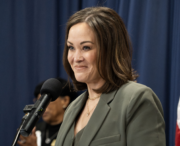
Kentucky Lt. Gov. Jacqueline Coleman speaks at a podium at the 2026 Fairness Rally at the Kentucky State Capitol

Kentucky Lt. Gov. Jacqueline Coleman announces run for governor

FRANKFORT — It’s official: Kentucky Lt. Gov. Jacqueline Coleman is running for governor.

After two terms as Democratic Gov. Andy Beshear’s second-in-command, Coleman announced Monday morning that she will be running for Kentucky’s highest office in 2027.

Standing in front of the Kentucky Hall of Governors inside the Thomas D. Clark Center for Kentucky History in Frankfort, Coleman noted Kentucky has only ever had one woman run the commonwealth.

It is time to change that, she said.

Coleman spent the last two years weighing the decision to run, she said, hearing from Kentuckians on what they want in their next governor.

“It’s crystal clear: they want someone who will show up, listen and focus on the issues that truly matter to their families,” Coleman said. They want someone who will stand against “the chaos and toxic negativity coming out of Washington, D.C.” and “not someone who is distracted by the culture war of the day.”

“If you’re looking for somebody to talk less about politicians and more about you, for someone who listens more than they talk, here she is,” she said. 

Kentucky limits governors to two consecutive four-year terms, so Beshear — consistently one of the country’s most popular Democratic governors, despite being in a red state — cannot run for the office again.

But her time in the Beshear-Coleman administration is heavily influencing how she hopes to approach her own administration, should she be elected, saying now is not the time to take the foot off the gas.

In front of a crowd of labor and public education leaders, Democratic lawmakers, and the media, she outlined the broad strokes of a game plan focused on continuing Kentucky’s economic development success, while bolstering public education and strengthening health care access — including access to mental health supports.

As a former public school educator and basketball coach, Coleman has routinely served as a cornerstone to one of the administration’s top priorities: public education. She doesn’t plan on letting up on that, saying she will be in “coach mode” while in office.

The administration has also routinely been vocally pro-LGBTQ+, with the duo regularly headlining the annual Fairness Rally at the state Capitol. Coleman was the first constitutional officer in Kentucky to attend a pride event, and she’s attended several across the state since being elected in 2019.

Coleman and Beshear have also been visible advocates during the 2026 Kentucky legislative session, which saw a wave of anti-LGBTQ+ legislation filed in the General Assembly. No anti-LGBTQ+ bills ultimately passed this year, though.

This story has been updated.

Pin It on Pinterest