QUEER KENTUCKY | KENTUCKY'S ONLY LGBTQ+ NEWSROOM

KEEP. Story type. Exactly one per story. Republished journalism from another outlet. Our own Creative Commons footer does NOT make a story syndicated.

Tag Archive for: Type: Syndicated

A speaker holds a microphone and addresses a crowd at an outdoor rally as people gather behind her.

Talesha Wilson Is Changing the World. Louisville’s West End is Her Headquarters.

Editor’s note: This story was originally published by The National LGBTQ Task Force on October 15, 2026, and is republished here with permission. It profiles Talesha Wilson, a local ambassador for Creating Change 2027.

As a hometown hero, beloved community organizer, and content creator, Talesha Wilson’s light is a beacon for Louisville residents who would like to know themselves, and their city, as deeply as Wilson does. The Task Force is thrilled to have her join us as an Ambassador for Creating Change 2027.

Wilson’s role in the community isn’t easy, requiring a balancing act between acting as a courageous problem-solver who engages the everyday community member and a curious leader who questions the integrity of systems that claim to advance Black equity.

“We live in a world that is headstrong on making our lives difficult – when we try to live easy, soft, gentle lives with each other,” Wilson said.

It is the central reason Wilson is a local ambassador for Creating Change 2027, which will take place less than 10 minutes from her local high school.

“I don’t want to be this unique leader. I don’t want to be this thing that feels unachievable, like you can’t touch it,” Wilson said. “You can touch everything that I’m doing because we are right here with each other. I’m in the hood with my cousins. I’m also in the boardrooms with the people. You can be anyone and do this work, and that’s the type of movement leader that I am wanting to be and exude.”

Always BlackAF

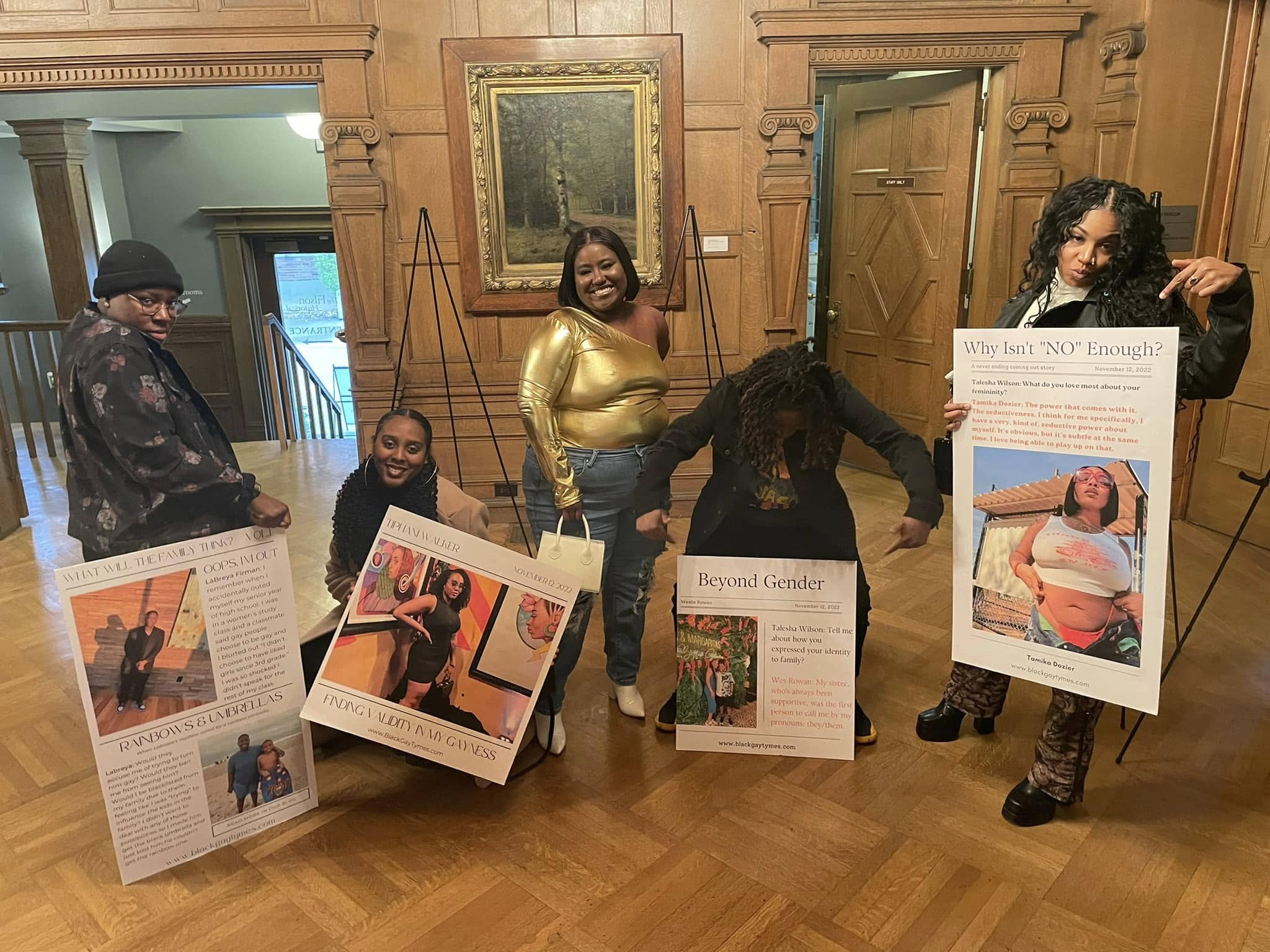
Five people pose in a wood-paneled room with poster boards from an exhibit, including boards titled "Beyond Gender" and "Why Isn't NO Enough?"
(Source: Talesha Wilson via The National LGBTQ Task Force)

As the co-executive director of Black Leadership Action Coalition of Kentucky Action Fund (BlackAF), Wilson’s pride begins in Louisville’s West End. She grew up with a hustler as a father and fearless go-getter for a mother, as both instilled an unapologetic demeanor built by confidence, community, and self-knowing.

“My daddy – he cooked, he did carpentry, renovated homes and was a barber. He was a hustler and he cared about the specifics,” Wilson said. “My mother always allowed me the freedom to speak up, say what’s on my mind. She was very big on ‘Say whatever you need to say to me, because if you can speak up to me, you can speak up to other people.’”

But, for Wilson, growing up in Louisville’s Blackest area also meant recognizing they were the least prioritized. “But, in my lived experience, it’s fun, it’s joy. We are loud. We eat. We talk. We make sure our neighbors are good,” Wilson explained. “That is the story that I want other people in the city to know. West End Louisville is Black culture.”

Her first act of resistance took place at Central High School, when a beloved Pan-Africana teacher Mr. X, was reprimanded during Black History Month for his support of reparations. Wilson worked with her classmates to stage a protest in support of X.

“We [walked] out of the class, right at 1 p.m. since school was over at 2:20,” Wilson said. “I was willing to take that risk. I had an advantage here because with my grandma and mama I wouldn’t be in any trouble. I’m willing to be a voice for my folks…and, over time, I’ve learned how to build their skills and confidence to speak up for themselves.”

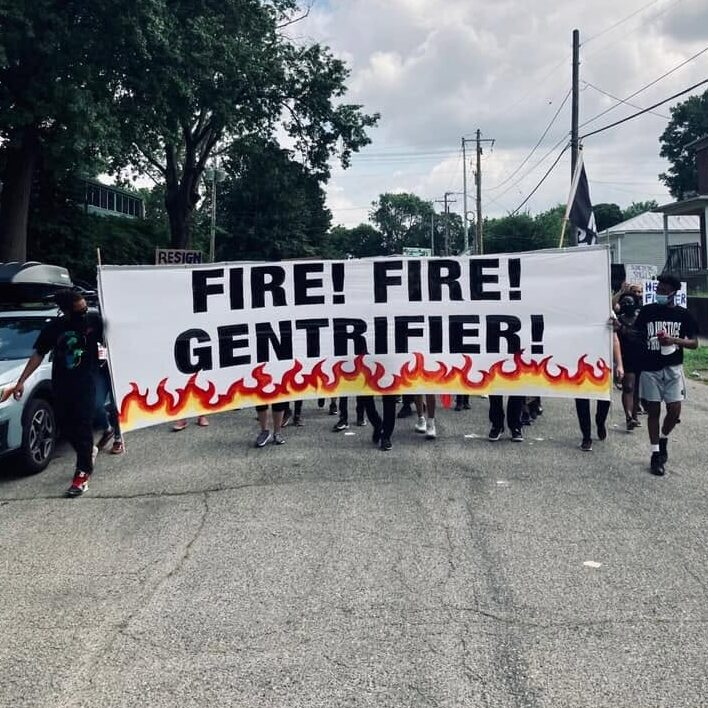
Marchers carry a large banner reading "Fire! Fire! Gentrifier!" down a street in summer 2020.
During Summer 2020, Wilson and Louisville activists called out then-Mayor Fischer for allowing businesses to gentrify Louisville’s East Market District. (Source: Talesha Wilson via The National LGBTQ Task Force)

Wilson Paves The Way

Wilson continued her advocacy work throughout college, serving as an ambassador for the University of Louisville’s LGBTQ+ center. She also interned under Marian Vassar, the executive director of the university’s diversity and equity efforts.

“People weren’t talking about racism, sexism, homophobia, transphobia. People were uncomfortable with being called in to check their implicit biases, and I was helping people navigate those conversations,” Wilson explained. “I started my own community organization called Diversity at The Table where we talked about how gender, race, class and sexuality all intersect with each other on a regular basis.”

Then, tragedy struck on the backdrop of COVID-19. Breonna Taylor was murdered by the Louisville Police Department under the guise of arresting her partner Kenneth Walker, sparking outrage in Wilson’s hometown and across the world. “A friend of mine that I went to high school with kept talking about it, kept talking about Kenneth,” Wilson said. “I didn’t know Kenneth intensely, but me and him rode the same bus [in high school.]”

A protester stands with arms outstretched facing a line of police officers in riot gear holding batons.
Talesha Wilson protests in the name of police brutality in light of Breonna Taylor’s death in Louisville. The images inspired the world to fight for justice against anti-Black racism. (Source: Courier Journal via The National LGBTQ Task Force)

Wilson sprung into action, protesting downtown while the Louisville Courier Journal shared jarring images of tanks, military involvement, and officers in protest gear. “It was a war zone, so chaotic, so scary. We were not prepared,” Wilson recalled. Tensions from the protest led to a mass community call-in where Wilson and other politically engaged activists gathered to discuss safety precautions. “I was trying to find venues but I said, ‘I’m just going to open up my backyard, we’re going to have direct action training.’”

“There were so many white people asking, ‘What do you need?’ I was there to tell them what we needed; water, juice, stuff to help with tear gas. We need snacks. We needed everything. I grabbed my poster pads to roll out what they thought needed to be discussed. We talked about, if you’re going to be down there protesting, how to be safe and effective.”

The protests of Summer 2020 actualized Wilson’s mission to normalize advocacy both for the community and individuals. Her work ballooned into other local entities becoming involved such as local churches and community spaces who opened their doors to host those trainings.

“There was no political home at that time, but we were trying to build it,” Wilson said.

Wilson then focused her advocacy through facilitation, as she collected resources after calls for long-term infrastructure investment to engage folks consistently.

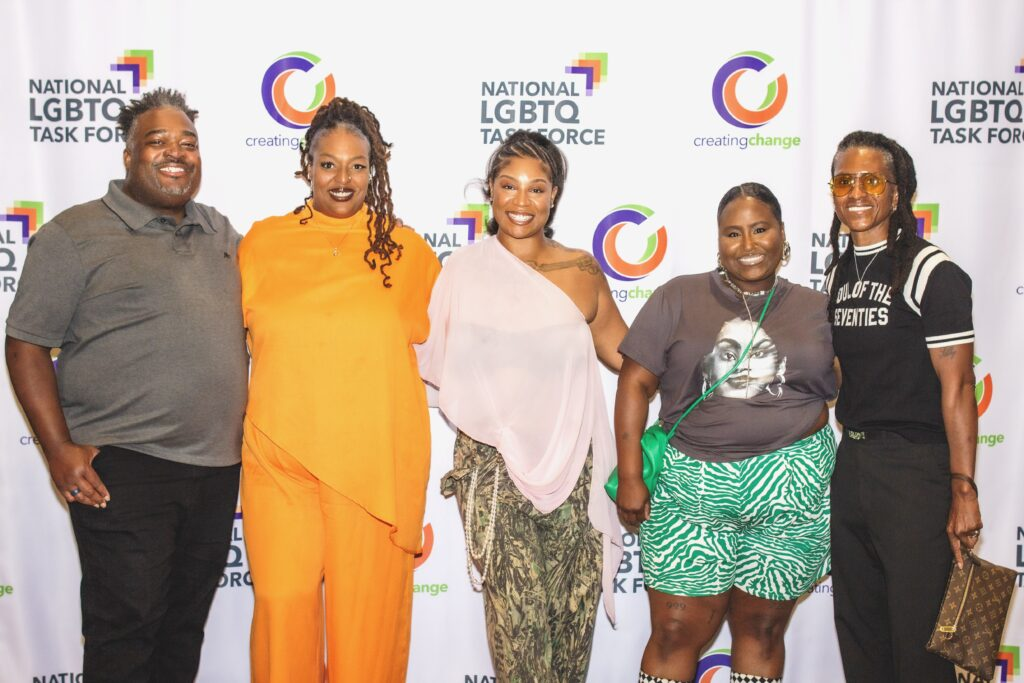
Five people pose in front of a National LGBTQ Task Force and Creating Change backdrop at the Creating Change Kickoff Mixer.
Talesha Wilson and fellow Black, queer movement leaders attend the Creating Change Kickoff Mixer in August 2026 at the convening’s host hotel. (Source: Matthew Pruitt via The National LGBTQ Task Force)

Her current work as co-executive director for BLACKAF reflects this mission, as the organization offers civic engagement, leadership development, and community dialogues on local issues such as community violence/safety, mental health, community care, and a “We Keep Us Safe” series that details how we get to liberation for the Black community.

Now, as one of Creating Change’s local ambassadors, Wilson hopes to build concerted efforts to merge conversations and identities, “where solutions must be intersectional.”

“I really want to get more urban Black gay people to experience Creating Change. I want them to bring that razzle dazzle and that’s what’s missing in Kentucky’s queer spaces,” Wilson said. “If we really want to win, some things are going to need to be shaken up. Get uncomfortable. Be willing and able to respond to questions that haven’t been asked before. I want Black urban gay folks there because we bring all of that. We deserve seats at those tables too.”

About Amber D. Dodd

Amber D. Dodd (she/her) serves as the producer for the National LGBTQ Task Force. She is an award-winning editor, curator, and journalist whose specialty lies in contextualizing Black America. Her work captures similar frameworks, including the Missing & Murdered Indigenous Persons Movement. She owns her own creative brand, blaQplight., a media company that captures authentic Black, queer experiences through education, entertainment, and empowerment.

Amber’s former roles include serving as Howard Magazine Editor, The Spokesman-Review’s Racial-Equity Reporter, and a Culture Freelance Reporter for the Afro-American Newspapers. She is a nonfiction writer, independent communications consultant, and a DJ. Her works can be read in Bi+ Women’s Quarterly Magazine, SWERV Magazine, and the Federal D. Glover Community Wellness Network in Oakland.

This story first appeared on The National LGBTQ Task Force. Republished with permission.

Missy Spears speaks into a microphone at an outdoor event, with drag performers standing behind her.

How Missy Spears’ Humor and Advocacy Evolved Into Powerful Local Leadership

Editor’s note: This story was originally published by The National LGBTQ Task Force on October 1, 2026, and is republished here with permission. It profiles Missy Spears, Queer Kentucky’s executive director.

“I’m a queer kid with a traumatic childhood, we end up really funny.”

For activist Missy Spears, comedy is ever-present. A viral moment of social media posts poking fun at a public mishap. The way a politician vehemently denies silly allegations purported by The Onion.

“I apologize for him,” Spears says, as her cat waltzes into her camera. “He’s very emotional.” Political satire surpasses species, as she helped the animal department fix 40 cats under her first self-led, community project – a TNR campaign “Cut Your Balls Off Covington.”
There’s always room to work, too. “I wrote a grant for $500 to get those cats fixed,” Spears said. “My background is from running my own projects in the community for eight years. Then I worked at one nonprofit for a year and consulted for another.”

Humor, she says, opens more doors than tough talks or too-long-didn’t-read social media posts. What was once cheeky political satire has turned into a life dedicated to elevating LGBTQ+ communities. “At first, it was just saying things on the Internet that other people were too scared to say to see if I could forward along or force conversations, then it turned into finding ways to raise money for causes,” Spears said. “Humor can be a good BS barometer.”

Missy Spears, executive director of Queer Kentucky, in a portrait headshot.
Missy Spears serves as the executive director of Queer Kentucky, the state’s only LGBTQ+ newsroom. Her impact has led her to becoming a trusted leader within the Creating Change 2027 Local Ambassador Program. (Photo by Ryan Grant)

It adds an edge to Missy’s decade of advocacy through an indomitable work ethic, people-first attitude, and multi-faceted leadership as executive director of Queer Kentucky, the state’s only LGBTQ+ newsroom.

LOL, JK

Spears was always politically engaged, including establishing a pantry with local queers in Covington and raising funds for queer-related causes.

A jokester at heart, she created a local “Cards Against Covington” parody of Cards Against Humanity in 2015. “This was just one example of using satire to call attention,” Spears said.

The party-favorite tests gamers on how quirky and crass they can be, compiling answers that turn historic misfortune into comedic oddity. Using real-life events of Covington, Kentucky’s history, the game poked fun at local entities such as University of Cincinnati naming its practice field after well-known racist Marge Schott and the city’s brash history of redlining.

“We sold a couple thousand of them throughout the city in a relatively short time, and it was…. an effective way to at least start a conversation.”

Spears witnessed an accidental synergy that created and rallied folks to sharpen their political education.

“Progressives were on an upswing of power, the Obergefell v. Hodges opinion, and the Me Too Movement was just about to take off,” she said, calling the 2010s a “perfect storm” of pop culture for political jabs and collective accountability.

The game’s reception influenced city officials to speak with Spears to clear up any misconceptions about their work and their current goals for the city. In turn, Spears became a trusted community source that Covington and neighboring cities could engage with. “I realized very quickly when I started to say things on Facebook, enough people would comment that a city official would respond to my page,” Spears said. “It was the power of people talking about these folks and poking fun at things would make them pay attention and sometimes change. That’s where and how I built my network; I just made fun of so many politicians that they would have meetings with me and form relationships.”

What Can Grow Bigger From This?

In March 2018, Spencer Jenkins created Queer Kentucky as a means of blog-era storytelling through vibrant magazine writing. But, as attacks on trans communities accelerated, Queer Kentucky’s mission matured.

“I also never thought my little queer blog would develop into a sustainable nonprofit recognized across the globe,” Jenkins said in a 2023 statement released by the Northern Kentucky Tribune.

Recognizing Spears’ outreach, advocacy and effectiveness, Jenkins announced her as executive director. Under Spears’ leadership, fun, buzzing moments evolved into hard news that queer Kentuckians could be educated and informed by.

“Our focus on queer health, particularly queer physical and mental health, cultural health, and civic health, is coming at a crucial time for an at-risk population that has been under attack for quite some time,” Spears said in the announcement.

Missy Spears at the NLGJA annual conference in 2026.
Missy Spears at the NLGJA Conference in 2026. (Source: NLGJA)

The stories Queer Kentucky tells, she says, not only dispel harmful misconceptions, it unites queer pockets of the state by prioritizing the needs and future of their communities. Three years later, recent stories include stories surrounding a police officer’s multiple federal lawsuits and a how-to guide on where to find HIV-competent doctors throughout the state.

“As long as you know your community, you can figure out what stories people need,” said Spears. “It’s why we launched a research project in 2024 with The Moore Lab researchers who helped us track the lived experiences of Kentuckians including discrimination, health access, and questions about HIV and PREP+, substance use and harm reduction.” Their coverage has earned recognition from GLAAD, including two nominations for Outstanding Independent Journalism and Best Print Article.

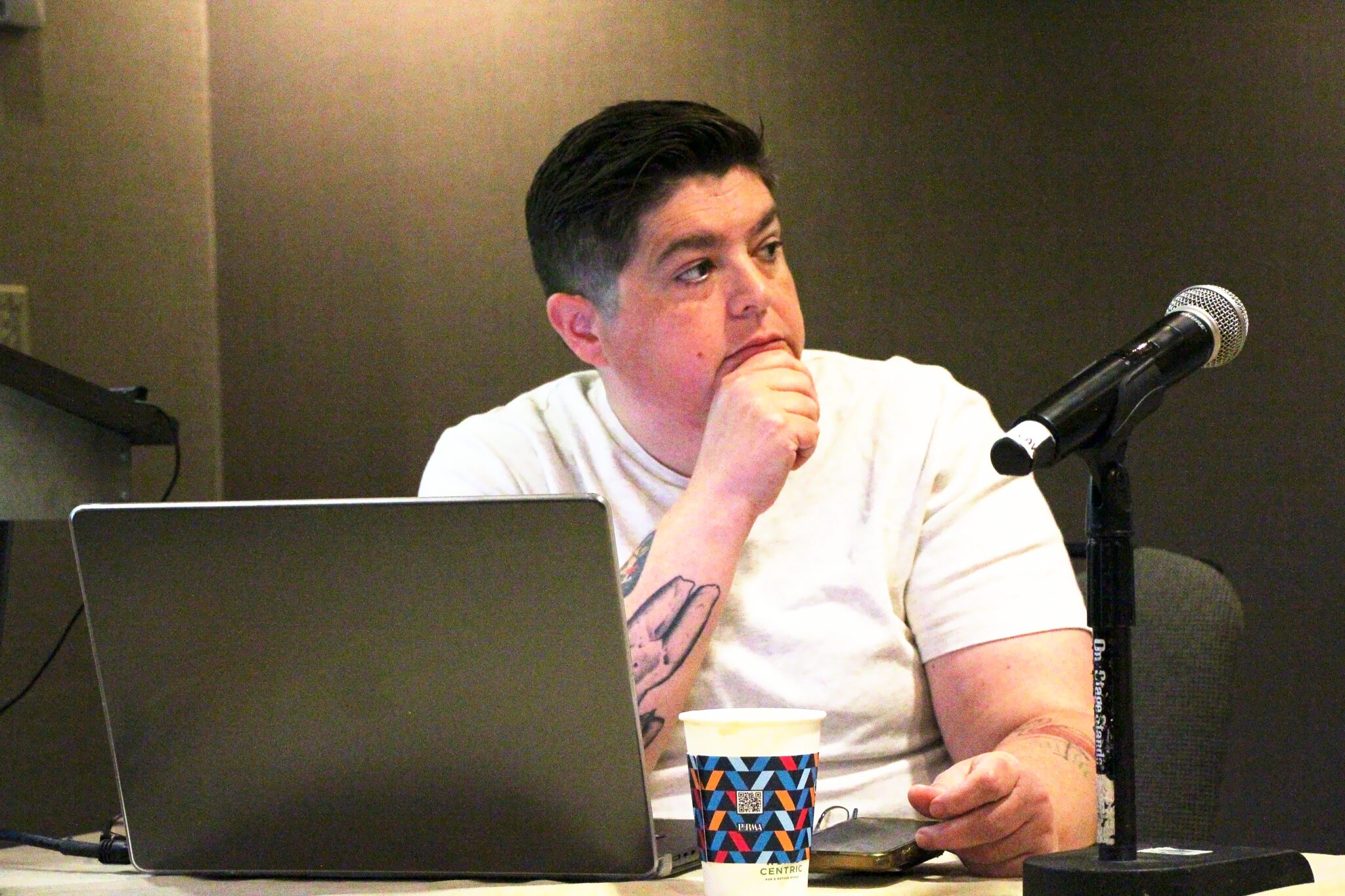
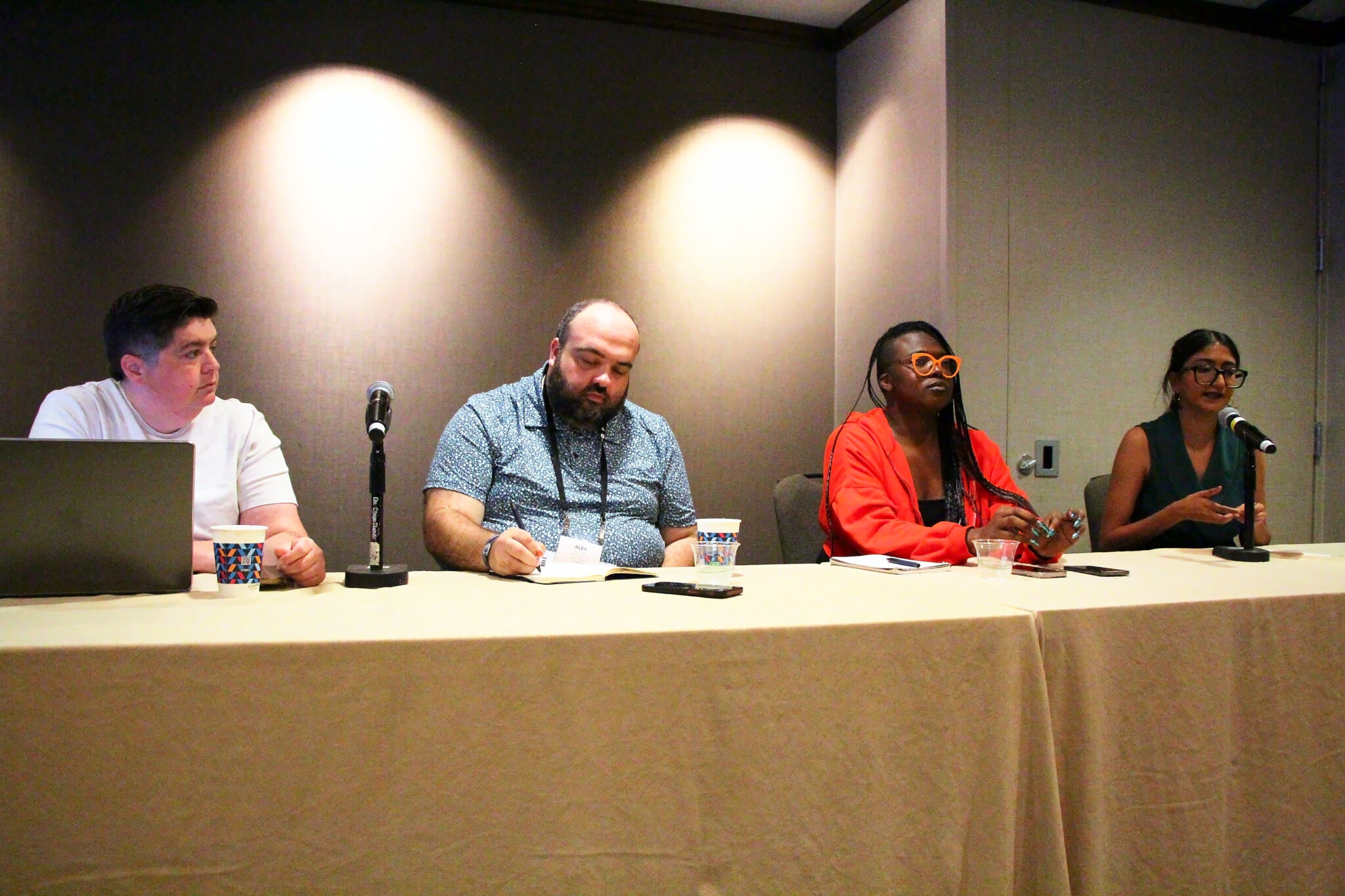
Given the newsroom’s success, Queer Kentucky shares the gospel to whoever’s willing to listen. Spears, along with fellow newsroom leaders, appear in journalistic spaces to discuss their success in niche storytelling.

Missy Spears, far left, on the NLGJA panel “If We Built Journalism Today, Would We Call it a Newsroom?” in San Francisco.
Missy Spears (far left) participates in the NLGJA “If We Built Journalism Today, Would We Call it a Newsroom?” panel at the annual conference in San Francisco. (Source: NLGJA)

“It’s been incredible to see us get writers from The Advocate, The Hill, and Washington Post writing for Queer Kentucky, but we still have folks born and bred in Kentucky that have no journalism experience like myself,” Spears said. “I love it because it’s like no one can tell the story better than someone that’s living there for a lot of these things.”

While 2027 looms, Spears has started counting down the days until Creating Change. She’s using her role as an ambassador to spread the news of The National LGBTQ Task Force coming to town, while encouraging Kentucky’s regional organizations to work together during the largest LGBTQ+ movement skill-building event.

“They get to learn from organizations that have more resources and ask; what have they found that worked? What skill sets or software could they tell us about? Is there anything that we can take from what they’re doing and scale it down? I would really love for folks outside of Kentucky to attend Creating Change to question their own stereotypes about red, Southern states,” Spears said. “I also really hope they learn how to pronounce Louisville.”

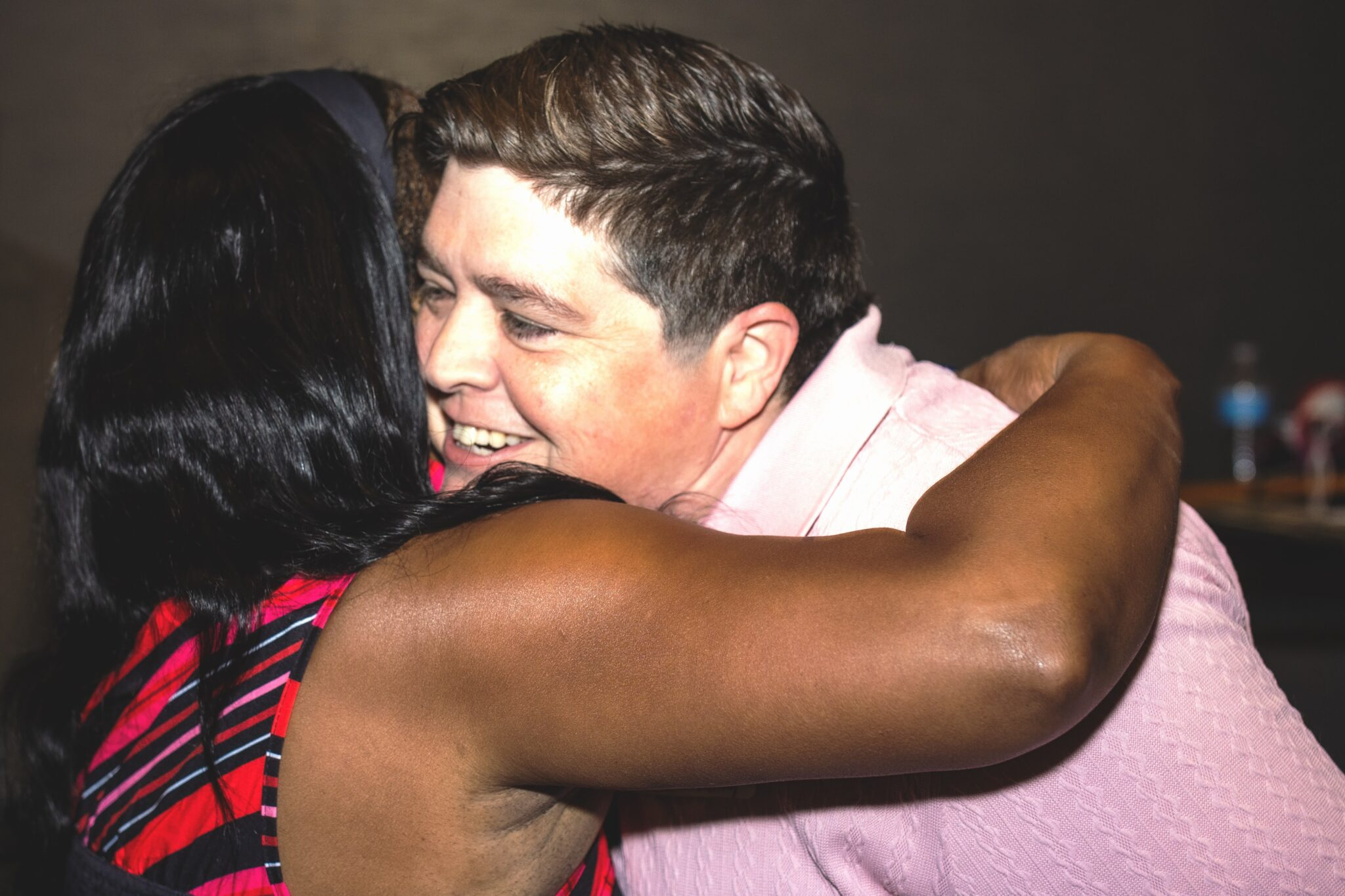
Missy Spears hugs National LGBTQ Task Force staff at the Creating Change kickoff mixer in August 2026.
Missy Spears hugs The Task Force staff at the Creating Change Kickoff Mixer in August 2026. (Source: The National LGBTQ Task Force)

This story first appeared on The National LGBTQ Task Force. Republished with permission.

Supreme Court upholds state laws banning transgender girls and women from school athletic teams

The Supreme Court on Tuesday upheld state laws barring transgender girls and women from playing on school athletic teams, in another setback for transgender people.

The court’s six-justice conservative majority, which has repeatedly ruled against transgender Americans in the past year, ruled that state bans in Idaho and West Virginia don’t violate the Constitution. The court unanimously agreed that barring transgender girls and women also doesn’t run afoul of the federal law known as Title IX, which prohibits sex discrimination in education.

Justice Brett Kavanaugh wrote for the court that, “states may maintain women’s and girls’ sports for biological females.”

More than two dozen other Republican-led states have adopted bans on female transgender athletes, and the decision seems certain to extend to them as well.

Left unresolved by the outcome are lawsuits challenging state laws and regulations in Connecticut, California and elsewhere that permit transgender athletes to compete consistent with their gender identity.

Becky Pepper-Jackson, a 16-year-old high school sophomore in Bridgeport, West Virginia, has been taking puberty-blocking medication, has publicly identified as a girl since age 8 and has been issued a West Virginia birth certificate recognizing her as female. She is the only transgender person who has sought to compete in girls sports in West Virginia.

Pepper-Jackson has progressed from a back-of-the-pack cross-country runner in middle school to statewide champion in the shot put. She beat the second-place finisher by two feet in last month’s West Virginia championship meet.

In the Idaho case, Lindsay Hecox sued over the state’s first-in-the-nation ban for the chance to try out for the women’s track and cross-country teams at Boise State University in Idaho. She didn’t make either squad because “she was too slow,” her lawyer, Kathleen Hartnett, told the court during arguments in January, but she competed in club-level soccer and running.

Prominent women in sports have weighed in on both sides. Tennis champion Martina Navratilova, swimmers Summer Sanders and Donna de Varona and beach volleyball player Kerri Walsh Jennings are supporting the state bans. Soccer stars Megan Rapinoe and Becky Sauerbrunn and basketball players Sue Bird and Breanna Stewart back the transgender athletes.

In 2020, the Supreme Court ruled LGBTQ people are protected by a landmark federal civil rights law that prohibits sex discrimination in the workplace, finding that “sex plays an unmistakable role” in employers’ decisions to punish transgender people for traits and behavior they otherwise tolerate.

But last year, the six conservative justices on the nine-member court declined to apply the same sort of analysis when they upheld state bans on gender-affirming care for transgender minors.

The states supporting the prohibitions on transgender athletes argued there is no reason to extend the ruling barring workplace discrimination to Title IX.

Idaho’s law, state Solicitor General Alan Hurst said, is “necessary for fair competition because, where sports are concerned, men and women are obviously not the same.”

Lawyers for Pepper-Jackson argued that such distinctions generally make sense but that their client has none of those advantages because of the unique circumstances of her early transition. In Hecox’s case, her lawyers wanted the court to dismiss the case because she had forsworn trying to play on women’s teams.

NCAA president Charlie Baker told Congress in 2024 that he was aware of only 10 transgender athletes out of more than half a million students on college teams. But despite the small numbers, the issue has taken on outsize importance.

Baker’s NCAA and the U.S. Olympic and Paralympic Committees banned transgender women from women’s sports after President Donald Trump, a Republican, signed an executive order aimed at barring their participation.

The public generally is supportive of the limits. An Associated Press-NORC Center for Public Affairs Research poll conducted in October 2025 found that about 6 in 10 U.S. adults “strongly” or “somewhat” favored requiring transgender children and teenagers to compete only on sports teams that match the sex they were assigned at birth, not the gender they identify with, while about 2 in 10 were “strongly” or “somewhat” opposed and about one-quarter did not have an opinion.

About 2.1 million adults, or 0.8%, and 724,000 people ages 13 to 17, or 3.3%, identify as transgender in the U.S., according to the Williams Institute at the UCLA School of Law.

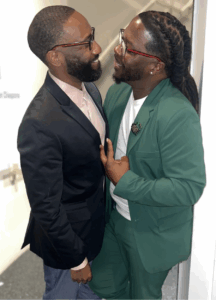
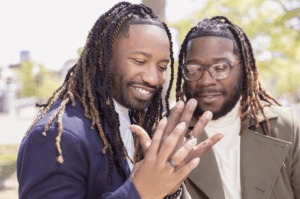
Erik Davis (left) and Dr. Roderick Davis (right) on their wedding day. (Photo by Cary Clayton Media)

GLAAD I Found You: Erik and Roderick Davis on how Removing the Mask Improved their Vision, Allowing Love to come in

By Darian Aaron 

For many couples, the COVID-19 pandemic was a test, resulting in either a pass or a fail in quarantine. Dr. Roderick Davis, 42, director of financial aid and scholarships at a private HBCU in Louisville, KY, tells GLAAD he can pinpoint the moment in March 2020 when he confronted a hard truth about himself and his preparation for a next chapter with Erik Davis, 44, a pharmacy specialist and content creator who had not yet entered his life. 

“My pastor at the church I was attending preached this sermon—’ Some of y’all are going to come into the pandemic this way, and you’re going to leave the pandemic another way,” Roderick recalls.

“I was like, ‘Well, what does that mean for me?’ When the Centers for Disease Control and Prevention (CDC) announced that we were going to have to wear a mask, I said to myself, ‘Well, no, that’s not going to work for me because I’ve been wearing a mask my entire life,” Roderick remembers. “One of these masks is gonna have to come off.”

The mask Roderick knew he had to remove was one worn as a shield of protection from the shame and disapproval of relatives, strangers, and most of all—spiritual rejection and eternal damnation from leaders in the Church of God in Christ—the Black Pentecostal denomination in which he was raised. Roderick says he could no longer hide what was clear to him internally, but he admits that by coming out, it was also clear to him that retreating back into the closet would not be an option once he verbalized his truth. 

“I was engaged to a woman, and in the back of my mind, a voice kept whispering that I couldn’t be the person who marries someone while hiding my true self,” Roderick said. “Taking off the mask meant finally coming out, facing my deepest fears, and choosing my own happiness over a life lived in silence.”

While Roderick may be considered a late bloomer, Erik removed his mask nearly two decades earlier, a pact he made with himself after beginning his freshman year at the University of Mississippi. 

“I wrote my parents a letter stating my sexuality,” Erik said. “My hands shook with fear—I’d heard stories of kids getting kicked out, and I desperately hoped my family wouldn’t turn away. Deep down, I believed they’d accept me, even as I braced myself for heartbreak.” 

Photo courtesy of The Davises

But as a product of the Black Baptist church experience, Erik says he couldn’t be certain he’d meet the same fate as other gay young adults still financially dependent on their parents. 

“The process of writing that letter was excruciating because I knew, once I sent it, there was no turning back,” Erik said, his voice trembling even in the memory.

Fast forward—post-Erik’s collegiate career and a divorce from his first husband—in the solitude and social distancing era of a global pandemic, he scrolls through Instagram and a picture of a man appears on his feed, changing the trajectory of his life. The man in the photo was Roderick.

“I slid into his DMs because when someone starts liking [multiple photos in a row], and then they go back and like old photos,” Roderick said, admitting his curiosity was piqued.

Through meticulous internet sleuthing, Roderick uncovered the stranger on the other side of the screen on his mobile device, along with a glaring red flag: Erik’s husband.

“I don’t do the whole breaking up of a happy home type situation. So if you’re still married, you can slide right up out of my DMs,” Roderick recalls telling Erik. 

Roderick didn’t know at the time that Erik’s two-year marriage had ended in divorce, but he would soon find out, providing an entry point for the two to talk. 

“Going through a divorce, you always think, I’ll never get married again. My heart was bruised, but I was open. I hadn’t expected to find someone after the pain of my last relationship, but when I met Rod, I felt a spark—something undeniable. He stirred my spirit and gave me hope for new beginnings,” Erik said. 

Photo courtesy of The Davises

“We immediately started having some of the hard conversations up front,” Roderick said. “What are your triggers? What are your non-negotiables? What are your deal breakers? We talked about all those things up front so there would be no surprises at the end.”

The couple tells GLAAD they communicated online for three weeks and dated for six months before they knew they’d met their forever. Both living in Tennessee at the time, Roderick says Erik was intentional about seeing if their online chemistry was real. 

“Erik drove [from Memphis] to Nashville within the first week of us even talking,” Roderick said. “We grew an attachment fast. Erik came into the relationship very sure of himself and what he wanted. Me, on the other hand, I was like, ‘No, bro—we got to slow this thing down because I ain’t ready,” Roderick said. 

A year later, Roderick was more than ready. 

“Having someone promise to protect and walk with you—that’s what I needed to just say, you know what, let’s do what we need to do,” Roderick said. 

Photo courtesy of The Davises

A Couple of Forevers 

In September 2022, inside an apartment clubhouse overlooking AutoZone Park, home of the minor league baseball team the Memphis Redbirds, surrounded by family and friends, Erik proposed. 

“Timing is part of God’s perfect plan,” Roderick said, reflecting on how he and Erik moved in the same circles for years but never connected until later. In hindsight, they believe their marriage was destined, and their friends and families reaction confirmed it. 

“They were super excited,” Erik said. “Rod came into the family like a brother to my brothers and like a son to my Dad. It was perfect. They bonded and became close so fast. I was like, ‘Wow, this is nothing but God,’ because my previous relationship wasn’t like that.”

While Roderick says his bonus mom was ecstatic about the pending nuptials, his Dad was initially less than enthusiastic. 

“We actually hit a bump after Erik asked me to marry him,” Roderick says of his relationship with his Dad. “We stopped talking for a few months. It wasn’t until the day of my wedding that he told me that he was releasing me.  He said, “Well, I’ve been your protector since I had you. On the day of my wedding, he was like, ‘I’m finally going to release you. So, make sure this is really what you want to do.’ And he pulled me to the side, not even 30 minutes before I walked down the aisle to tell me that he was releasing me to Erik.”

On October 9, 2023, in front of 160 witnesses, Erik and Roderick committed their lives to each other in an elegant and unplugged ceremony at The Gin at Nesbit, a rustic barnhouse wedding venue in Nesbit, MS. For both grooms, the day was an out-of-body experience. 

Erik Davis (left) and Dr. Roderick Davis (right) exit their wedding ceremony at The Gin Nesbit on October 9, 2023. (Photo by Cary Clayton Media)

“I can’t remember what everybody wore. I don’t remember any of that. But I do remember the feeling I had of being calmer when I said I do,” Roderick said. 

Each groom walked down the aisle separately and to different songs—Roderick to “Here In This Moment,” by Brian Nhira, and Erik to “Everytime I Close My Eyes,” by Babyface, featuring Mariah Carey and Kenny G. 

“Waiting for him at the altar, it was like no one else was there but him walking down the aisle with those white teeth,” Erik said. 

Now, two years after saying I do, and settling into married life, constant attacks by anti-marriage equality politicians on the right are threatening to upend Erik and Roderick’s union and the right for LGBTQ couples nationwide to marry. It’s a conversation they tell GLAAD they can’t believe our country is still having. 

“We weren’t afraid that our marriage would suddenly disappear, but there was a real, heavy moment of wondering why our love and commitment are still something people felt should be questioned or debated,” they said. “It stirred up old feelings we thought we had moved past—feelings of being seen as less than, or as conditional.”

“In my vows, I said, Erik, you’ve set me free. I felt like I had been a caged bird for a long time,” Roderick said. “But now I am able to breathe.” 

“I needed Roderick in my life to grow,” Erik said. “I needed him to be there for me. He’s my rock.”

Kentucky social worker’s comments about LGBTQ+ community broke no law, state board finds 

by Sarah Ladd, Kentucky Lantern
September 9, 2025

The Kentucky Board of Social Work says a licensed counselor violated no laws when he wrote a social media post about the LGBTQ+ community in which he said “I personally (and professionally) never want to affirm rebellion against our Creator.”

The organization representing former Rowan County Clerk Kim Davis in her efforts to overturn marriage equality is defending the social worker who was reportedly fired because of what he said in the post.

Florida-based Liberty Counsel said the unnamed counselor was employed by a Leitchfield health and wellness organization and is trying to be reinstated to his job, though it’s unclear how. A spokesperson for the Christian organization said “Liberty Counsel and the counselor are pursuing appropriate remedies” and to expect “more updates in the near future.”

Liberty Counsel laid out a sequence of events in a response on the social worker’s behalf to complaints that had been filed against him with the profession’s Kentucky governing board. The social worker’s name and that of his employer are redacted in the version of the response, dated July 18, that Liberty Counsel released. The address of his former employer is not redacted.

Liberty Counsel says the man was fired after making a social media post in June in which he wrote, “I’m a licensed mental health professional and there’s constant pressure to compromise beliefs to make people happy in this field (and in all our lives in general).”

His comments came after his employer made a post honoring Pride Month, held in June to honor the 1969 Stonewall uprisings, during which the LGBTQ+ community resisted police raids of gay bars and other discrimination.

“I love my career and the people I serve with a passion, but I’m not going to sell my soul for it. While places I work might be a ‘safe and affirming space for lqbtqia+ (sic) community,’ I personally (and professionally) never want to affirm rebellion against our Creator,” the post said, according to Liberty Counsel. “What good does it do if we gain the whole world — my favorite job, perfect mental health even — if we lose our own soul? I’ve recently watched previously sold Christians sell out on this issue. Count me out. I’m His, and sticking to His Word. The rainbow…reminds us He won’t flood the earth with water again because of all this crap, but dang, there’s a fire coming.”

In follow-up comments, the social worker said he recognizes “the dignity and worth of every person” and said that “loving well is important.”

“I think it’s a disservice to the counseling profession to encourage people to keep doing things that hurt them,” he said, according to Liberty Counsel. “I know you agree with that. We all have to judge daily. What is bad is judging wrongly or judging with a plank in our own eye. Our disagreement has to be whether or not sex outside of God’s word is mentally injuring. I believe so many disorders are ultimately caused by sin and the fall of man.”

The Kentucky Board of Social Work reviewed ethical complaints filed against the counselor, according to an August letter shared by Liberty Counsel and a video record of the August board meeting. After reviewing state law, the board “concluded that the facts alleged in this matter do not constitute any apparent violation of Kentucky law governing the practice of social work,” according to the letter sent by the board’s executive director to the counselor.

The board had a brief discussion of the complaints, none of which came from clients, during the August board meeting and ultimately voted that there wasn’t sufficient evidence that the social worker violated ethics or law.

State law says the board can “revoke, suspend or refuse to issue or renew; impose probationary or supervisory conditions upon; impose an administrative fine; issue a written reprimand or admonishment; or any combination of actions regarding any applicant, license, or licensee upon proof” that the person in question violated Kentucky’s code of ethical conduct or committed other offenses.

The code of ethics directs social workers to “promote the well-being of a client,” “not illegally discriminate against an individual,” “provide a service to a client in a manner that is respectful and appreciative of the client’s culture” and much more.

Marc Kelly, the executive director of the Kentucky Board of Social Work, said the documents “speak for themselves.”

“The licensee’s social media posts and other comments are likely distasteful and appalling to most social workers,” Kelly said, but “they were not considered a violation of (the law).”

“The postings made may have resulted in a dismissal but that is not necessarily a violation of law,” he said.

Rev. Brandon Long, an ordained minister who lives in Fort Thomas and has been open about his experience with conversion therapy, said this case represents a need to “do better.”

“We should be honest about what this is. If a licensed professional went online after their employer wished everyone a ‘Happy Black History Month’ and said they could never affirm Black people, or if they responded to their employer celebrating ‘International Women’s Day’ by insisting women should remain silent and submissive, we would immediately recognize that as bigotry, not faith,” Long said. “The same standard applies when LGBTQ people are targeted. It is the same logic of segregation, dressed up in new language.”

The First Amendment and protected class

One of the complaints filed but then dismissed by the board (and cited in Liberty Counsel’s July 18 response) alleges the counselor’s social media post “was accessible to clients and was viewed by clients (some commented on the post).” The code of ethical conduct restricts “dual relationships” between counselors and clients, though it doesn’t specifically address being connected on social media.  A dual relationship means a social, personal or business relationship between a social worker and client coexists with their professional relationship.

Liberty Counsel made the case that the speech in the social worker’s social media post was protected by the First Amendment, which protects freedom of assembly, speech, religion and the press; the 14th Amendment; the Kentucky Constitution and the Kentucky Religious Freedom Restoration Act.

“First Amendment speech and religious protections do not disappear when someone becomes a licensed counselor,” Liberty Counsel founder and chairman Mat Staver said in a statement. “These frivolous complaints are a clear attempt to unconstitutionally silence and censor opposing views. There was no jurisdiction or cause here to regulate this counselor’s speech or discipline him based on private expressions of religious and political beliefs. The counselor’s employer should reinstate him immediately and correct this potentially costly mistake.”

A spokeswoman for the American Civil Liberties Union of Kentucky said the First Amendment “only protects people from government prosecution (and) persecution” and that private companies in Kentucky can hire or fire people over speech.

The employer in this case is redacted in Liberty Counsel’s documents. The organization believed to be the counselor’s former employer said it wouldn’t comment on the issue.

Meanwhile, Liberty Counsel asserts that “Kentucky law does not recognize ‘LGBTQ’ (or the words for which the acronym stands), nor ‘sexual orientation’ nor ‘gender identity’ as protected classes, but it does recognize ‘religion’ as a protected class.”

Chris Hartman, the executive director of the Fairness Campaign, said that “as a technicality, they are right — that those four words are not included in the protected classes, thus explicitly including LGBTQ people.”

However, he said, the United States Supreme Court decision in Bostock v. Clayton County means that “sex as a protected class includes sexual orientation and gender identity,” therefore sexual orientation and gender identity are “implicitly protected in sex discrimination, both federally and statewide.”

Long, the minister, said any public professional has an “obligation to put personal bias aside in order to care for every client with dignity.”

“When boards, courts and governments allow this type of discrimination to continue without consequence, they are not protecting religious freedom, they are rebuilding segregation for a new era,” Long said. “We can, and must, do better.”


GET THE MORNING HEADLINES.

SUBSCRIBE


Kentucky Lantern is part of States Newsroom, a nonprofit news network supported by grants and a coalition of donors as a 501c(3) public charity. Kentucky Lantern maintains editorial independence. Contact Editor Jamie Lucke for questions: [email protected].

Library receives donations to replace books church leaders targeted for LGBTQ+ themes

by Jack Brammer, Kentucky Lantern

In a matter of a few days, nearly $1,000 has been donated to the Shelby County Public Library to replace 16 LGBTQ+ books a local church had recommended to check out and never return.

“The response to the missing books has been overwhelming and mostly positive for the library,” said Pamela W. Federspiel, the library’s executive director, on Thursday. “We will use the donated money to replace the books and buy more like them.”

Theft or civil disobedience?

The Kentucky Lantern reported Aug. 18 that three leaders of the Reformation Church of Shelbyville urged its members to remove books from the Shelby County Public Library by checking them out and never returning them. The books portray gay characters and historical figures or explore LGBTQ+ themes.

The  church  leaders — pastors Jerry Dorris and Tanner Cartwright and Austin Keeler, an evangelist with the church mission, Reformation Frontline Missions — defended what they call an “act of civil disobedience.”

But librarian Federspiel said the action is tantamount to “stealing.” She contacted a collection agency to retrieve the books but so far it has not been successful.

The library has “lost” 16 books valued at $410.85 since a member of the church checked them out with due dates in late June 2024. Neither Federspiel nor the church leaders have identified the library patron.

“Since the story came out, people have made almost $1,000 in donations to replace the books,” Federspiel said.  “One anonymous donor gave $500, and we hear more may be coming.”

The Shelby County Democratic Party has encouraged its members to donate money to the library. In an email this week, the political party said the Reformation Church of Shelbyville “seems to believe it can remove books from the local library and not return them on purpose (at the direction of their pastor) because they have decided for all of Shelby County that some of the content should not be available for reading or even in our library.

“Is this ‘civil disobedience’ as claimed or is it theft?”

The party asks people to help the library replace the missing books by donating on Shelby County Democrats KY.

Pastor Jerry Dorris, Aug. 5, 2025. (Kentucky Lantern photo by David Stephenson)

Asked what the library would do if the new books are checked out again and not returned, Federspiel said she is talking to a lawyer about what precautions to take.

Asked if he would still urge removal of new books the library uses as replacements, Dorris said, “I am just an individual Christian.  I will keep on saying what I think should be done.”

Dorris posted on Facebook that the removal of the books “is not theft — it is civil disobedience rooted in God’s law, carried out in love for our neighbor and aimed at protecting children.”  He called the books in question “groomer material.”

He claims that under Kentucky law, failure to return a library book is not prosecuted as theft but handled as a civil matter, with fines, collection notices or suspension of borrowing privileges.

“This is not grand larceny — it is treated like an unpaid bill. By man’s law, and more importantly by God’s, it does not belong in the category of theft,” he said.

A Kentucky law addressing failure to return a library record classifies it as a civil matter.

“The law deals with civil liability but not any criminal defense,” Dorris said.

Shelby County Attorney Carrie McIntyre said a state law — KRS 172.150 — makes failing to return library books a civil matter not a criminal offense.

“Failing to return books would make the borrower liable for double the cost thereof,” McIntyre said in an email Friday morning.

The library is in the city of Shelbyville, noted McIntyre. “I am unaware whether a report of theft has been filed with the Shelbyville Police Department.”

Shelbyville Police Chief Bruce Gentry said Friday afternoon that no complaint has been filed with his office.

McIntyre said her office is not an investigative body. “Among many other roles, we prosecute cases that are investigated by law enforcement agencies in the county. As of yet, this particular issue has not been brought to me by anyone,” she said.

Concerning the church pastors’ urging members to remove books, the county attorney said, “I assume the church would rely on the First Amendment to defend their actions. Since they aren’t threatening physical harm or yelling ‘fire’ in a crowded theater, as the law school examples like to say, I’m not sure there is anything illegal about the speech aspect of it.”

She called the issue interesting “both morally and legally.”

“Also, given the number and value of the books at issue, it is no small amount, especially for a small town library.”

Dorris, who said he has received one death threat and many vitriolic emails and comments for his stance, noted that some of his critics are using the biblical commandment “Thou shalt not steal” to attack him.

“Many who cheered riots and looting now clutch the Ten Commandments to condemn us for suggesting vile books be removed from libraries. Their sudden zeal for “Thou shalt not steal” is not love for God’s law — but hatred of it, wielded to defend perversion,” he said.

“When Christians check out such materials and refuse to return them, they are not stealing private possessions but resisting the misuse of common funds for wicked purposes,” he said.

The controversy has created a social media frenzy and has garnered national attention from various Christian, atheist and gay organizations and news outlets.

This story has been updated with comments from Shelby County Attorney Carrie McIntyre and Shelbyville Police Chief Bruce Gentry. The story also has been updated to correct the Shelby County Democratic Party’s web address. It was incorrect in an earlier version.


GET THE MORNING HEADLINES.

SUBSCRIBE


Kentucky Lantern is part of States Newsroom, a nonprofit news network supported by grants and a coalition of donors as a 501c(3) public charity. Kentucky Lantern maintains editorial independence. Contact Editor Jamie Lucke for questions: [email protected].

Public will be on the outside as Kentucky legislature convenes in temporary quarters

by McKenna Horsley, Kentucky Lantern
July 21, 2025

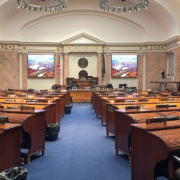
The Kentucky General Assembly plans to convene in temporary chambers for at least the next three years while the Capitol undergoes extensive renovations.

During those years, there will be no public galleries where citizens can watch as the House and Senate debate and vote on new laws.

No rotunda where advocates and protesters can gather for rallies.

And less opportunity for citizens and lobbyists to personally interact with lawmakers in the halls.

People will be able to watch the legislature in session in real time from next door in the Capitol Annex via live streams of the proceedings.

But the setup leaves some Frankfort regulars concerned.

Amye Bensenhaver, co-director of the Kentucky Open Government Coalition, said that without a space for the public to observe in person, the legislature risks violating the state Open Meetings Act.

A Senate Republican spokesperson rejected any suggestion that the temporary arrangement violates open government laws. He said the expense of building a gallery in a temporary building could not be justified and would have been “an irresponsible use of taxpayer dollars.”

Becky Jones, vice president of the League of Women Voters’ Kentucky chapter, said the League understands the cost concerns but would like to see more proactive steps to ensure public access to the legislative process.

“I think the League certainly appreciates the cost constraints that the legislature faced when building the temporary structure that’s going to service for three more years,” Jones recently told the Kentucky Lantern. “We also appreciate that the loss of a public viewing gallery is not insignificant, and I think there could have been more definitive steps taken to ensure that we will have access via this live stream.”

“The chambers are for the people, not merely the legislators,” Jones said.

The state’s public broadcast network, KET, will still have cameras in the House and Senate chambers to carry the live stream, but Congress recently voted for significant cuts to public media funding nationwide.

Physical presence and participation

The Senate’s Republican leaders last month unveiled the Senate side of the temporary building. Senate President Robert Stivers took reporters on a tour of the space, showing offices and conference rooms down the hall from the temporary Senate floor.

Asked about the absence of a public gallery, Stivers cited cost. The Capitol galleries overlook the floors of the House and Senate and are entered by their own stairs.

“I think what the discussion was, we could have built the gallery, but you think about expensive — this is already expensive,” Stivers said of the $14 million structure where the legislature plans to hold at least three regular sessions. The Capitol renovation is expected to cost almost $300 million.

Republican Caucus Chair Robby Mills, of Henderson, said during the press conference that “public access is still going to be 100% to the process” with KET streaming.

Reporters will still be allowed in the chamber as well.

Finance and Administration Cabinet spokesperson Kinsey Woodson told the Lantern in an email that “the General Assembly never requested a design option with a public gallery space, and therefore no estimate was ever made.”

Bensenhaver, a former Kentucky assistant attorney general who authored open records and open meetings decisions for 25 years, said Stivers’ comments during the press conference sounded “really dismissive of what his predecessors in office considered a priority.”

In 2013, the General Assembly codified that public agencies must “provide meeting room conditions, including adequate space, seating, and acoustics, which insofar as is feasible allow effective public observation of the public meetings.” Later that same year, lawmakers added to state law that for any public meeting, agencies “shall evaluate space requirements, seating capacity, and acoustics.”

“There’s a physical presence that I think is so important to public participation — this idea that by the strength of your numbers, you show support or opposition to an idea or a proposal,” Bensenhaver said.

Jones had similar thoughts. When people are allowed in a gallery space, they might see how lawmakers off camera react to debate on the floor, and that might open an opportunity to approach the lawmaker and ask about their reaction.

“When you’re observing what’s going on the floor, it’s like you’re watching a play,” Jones said. “ You can see things that happen that aren’t going to necessarily be provided by a livestream, because we have to depend on the person running the camera and how many cameras are set up.”

Dustin Isaacs, a spokesperson for the Senate majority caucus, said in a statement to the Lantern that the temporary setup does not violate the Open Meeting Act. “Claims to the contrary ignore both the plain language of the statute and common sense.”

“The law requires public meetings to be observable ‘insofar as is feasible.’ The Kentucky Attorney General affirmed that standard during the pandemic (OAG 20-05), recognizing that under extraordinary circumstances, physical accommodations may be adjusted, as long as the public can still observe proceedings effectively. A full Capitol renovation, planned with input from both the legislative and executive branches, clearly qualifies. Constructing a second-story gallery in a temporary chamber is not just impractical; it is structurally, logistically, and financially infeasible and would be an irresponsible use of taxpayer dollars.”

Isaacs added that those who’ve engaged with lawmakers on this issue “will hopefully recognize we’ve been responsive and have focused on delivering accessible solutions despite challenging circumstances beyond our control.” He reiterated the addition of viewing rooms with the livestreams in the annex, maintaining press access and “continued online transparency,” arguing these “tools not only meet the law’s requirements for public observation, but arguably exceed them.”

While lawmakers understand that some would prefer the option of in-person gallery seating, but some have suggested that not having the gallery is because of lawmakers’ contempt for public transparency, which is “not only inaccurate, it’s hyperbolic and revisionist,” Isaacs said.

“The gallery isn’t meant to be a venue for protest or spectacle. It has always been a place for quiet observation, not disruption,” he said.

Isaacs compared expecting the temporary building to fully replicate the permanent chambers in the Capitol to “insisting all public communication be hand-delivered or printed when a website goes down.” During the renovation, legislative information and meetings will be accessible to the public.

Isaacs added that lawmakers have “acted in good faith and within the law.”

“Recasting a temporary logistical challenge as a constitutional crisis does not reflect a commitment to transparency,” he said. “It demonstrates a commitment to political theater.”

Changes to advocacy?

The extensive renovation also means that the Capitol rotunda is closed. The space, centrally located between the House and Senate and in front of the governor’s office, was often used for press conferences and rallies by outside groups.

No similar central space is part of the temporary legislative quarters. But Democratic Gov. Andy Beshear said in a July 10 press conference that his administration was working on an alternative space for groups to use and hold rallies, “maybe not as large as could have been in the Capitol rotunda.”

“We recognize that’s needed, and we’re working on that which is within our control,” he said.

Kate Miller, the ACLU of Kentucky’s advocacy director, told the Lantern that “it’s too early to know what the impact will be on constituents being able to engage their lawmakers” during the renovation. Most of the ACLU’s advocacy efforts took place in lawmakers’ annex offices by connecting constituents with members of the legislature.

Mike Harmon, director of state outreach for the Commonwealth Policy Center, said in an email that the rotunda would be missed. He also touted the effectiveness of building individual relationships with lawmakers.

The advocates who most influenced him when he was in the House “were those who were sincere in what they believed and were not afraid to answer the question, ‘who is for it and who is against it?’” It didn’t mean those advocates “always got what they asked for, but I did consider those types of conversations with greater weight,” the former state auditor added.

“True advocacy comes from developing relationships and not becoming angry when an issue you want doesn’t pan out that session. There is always another session and another issue that you want to advocate for with legislators,” Harmon said, predicting that the Commonwealth Policy Center’s development of such relationships will make up for the loss of personal access in the temporary building. “I would imagine the negative impact to our efforts should be minimal.”

Jones of the League said that during the renovation “people might be drawn to find different ways to make their presence known.” That might look like silent protests or being outside the temporary structure. It could also look like being more present in committee meetings and preparing statements to give during hearings.

“I think it’s hard to predict how advocacy will change,” Jones said. “I think it will change. I’m just not sure how that’s going to happen.”

Kentucky Lantern is part of States Newsroom, a nonprofit news network supported by grants and a coalition of donors as a 501c(3) public charity. Kentucky Lantern maintains editorial independence. Contact Editor Jamie Lucke for questions: [email protected].

LGBTQ+ youth have lost a lifeline. What now?

If you or a loved one are in crisis, please call the National Suicide Prevention Lifeline at 1-800-273-TALK (8255), or contact the Crisis Text Line by texting TALK to 74174.

This story was originally published in Uncloseted Media, an LGBTQ-focused investigative news outlet.

When Arden was 16, they called a suicide crisis hotline “thinking their life was over.”

They were in an abusive relationship, regularly self-harming, and felt that nothing was helping. “It was terrifying,” they told Uncloseted Media.

“If it weren’t for the hotline, I would have killed myself.”

Since that day, Arden, now 24 years old and living in Brooklyn, has used various crisis helplines. When the 988 national suicide prevention hotline launched a “Press 3” option in 2022 for LGBTQ+ youth, they immediately started using the resource.

Arden, who identifies as nonbinary, says the LGBTQ+ hotline workers “respected their identity” and were understanding that they are not a woman. “It was really affirming for a very troubling time in my life.”

Since then, Arden has “Pressed 3” more times than they can remember, seeking help for everything from dealing with the loss of their friend, who died by suicide, to “stupid cliquey gay people stuff.”

“I remember when my friend had killed himself and I was dealing with a lot. I called them and they talked to me for over an hour because I was really upset,” they say. “When I called the hotline, it was a last resort. I was really at my wits’ end.”

Arden — whose last call to the lifeline was two weeks ago — is one of 1.3 million callers and chatters the LGBTQ+ youth hotline has served since it launched, according to federal data. The legislation that greenlit the national program, signed by Trump in 2020 during his first term, explicitly recognized that LGBTQ+ youth are more than “4 times more likely to contemplate suicide than their peers, with 1 in 5 LGBTQ+ youth and more than 1 in 3 transgender youth reporting attempting suicide.”

A close up of a hand holding a phone.
Kaoly Gutierrez/Uncloseted Media

This new option to “Press 3” allowed queer youth in crisis the ability to directly connect with counselors from a set of specialized LGBTQ+ crisis centers. These counselors are trained in cultural competency and often bring lived experience, providing identity‑affirming, empathetic support for challenges like coming out, discrimination or mental health crises.

Despite the hotline’s success, the Trump administration announced last month that they would be shutting it down on July 17, claiming that the service had run out of congressionally directed funding. The Substance Abuse and Mental Health Services Administration said in an email to Uncloseted Media that “continued funding of the Press 3 option threatened to put the entire 988 Suicide & Crisis Lifeline in danger of massive reductions in service.”

There are no plans, however, to shut down the other hotline options, including the Veterans Crisis Line, the Spanish Language Line and the Native and Strong Lifeline. And while Congress spent $33 million on the LGBTQ+ service last year, the cost of continuing it represents merely 0.006 percent of the $510 billion that suicide and self-harm costs the U.S. yearly.

“This is absolutely a mistake,” a suicide prevention call center director told Uncloseted Media. “We are concerned that this will result in increased suicide rates for LGBTQ+ youth.”

Why we need option 3

The director’s concern is supported by a 2022 research brief that found that queer college students with access to LGBTQ-specific services were 44% less likely to attempt suicide than those without it. Research also shows that a hotline specific to LGBTQ+ services increases the likelihood of queer youth calling.

“It’s true for any direct service,” Harmony Rhoades, associate research professor of sociology at Washington University, told Uncloseted Media. “People who are in substance use recovery want to work with people who’ve gone through recovery themselves because they understand what that experience is. Culturally, there is not a lot of understanding of the specific experiences of someone who is LGBTQ+ and without specific training, a crisis counselor isn’t going to be able to know the language that’s going to feel affirming.”

A person stands holding a phone by a pond.
Kaoly Gutierrez/Uncloseted Media

“Connecting with someone who gets it was really helpful. … Because at home, I was so isolated and I didn’t really interact with other queer people,” says Genna Brown, who used the Trevor Project’s chat function at 10 years old.

“I was an extremely self-loathing, suicidal kid who was under the impression that God hated me and I was gonna burn in hell for eternity,” Brown, now 15 and living in High Point, North Carolina, told Uncloseted Media.

“I only used the chat feature because I was scared my parents would hear me. We shared a wall,” she says. “I was spiraling really bad. I’d just realized I was crushing on girls, and I thought I was going to burn in hell for all eternity because that is what we are taught.”

Raised in a Southern Baptist church, Brown never felt safe at home, where her father would regularly spit slurs like “faggots” and “queers.” At church, every sermon was about Sodom and Gomorrah or about how “real love” only existed between a man and a woman.

“I grew up knowing the number one thing not to be was one of the ‘dirty queers,’” she says. “I kept thinking, I can kill myself now and go to hell, or live longer and still go to hell. I used to have panic attacks at 9, 10 years old, just thinking about burning in hell perpetually.”

Brown remembers Caitlin, the chat counselor who helped her, being the first ever to tell her that queer love was valid.

“She told me she’d been with her girlfriend for seven years. I didn’t even believe queer people could be happy. … It broke my brain in the best possible way,” says Brown, who is now out and proud to her parents, who have come around, and to most of her friends on social media.

A person sits at the bottom of outside stairs, with another person standing at the top of them.
Genna and her Mom, Melanie.
Kaoly Gutierrez/Uncloseted Media

Arden had a similar experience. “The queer line is better than the regular line,” they say. “I feel like it’s less like going through a checklist on the queer line.”

As a survivor of sexual assault, Arden says knowing that the counselors on the other line were trained in LGBTQ-specific trauma made it easier to reach out for help. “My voice doesn’t pass per se but they still respected my identity,” they say.

LGBTQ-specific resources for youth are critical, with 41 percent seriously considering suicide in 2024. In addition, queer youth are disproportionately affected by a litany of mental health issues and trauma, including physical and sexual assault, anxiety, depression, eating disorders, bullying and addiction.

“It’s not like we’re cherry-picking some random group,” says Rhoades. “If we are going to fund [suicide prevention], there is no reason we should do it inefficiently by not effectively targeting the people who need it most. So yes, they need specific suicide prevention services.”

While the hotline focuses on LGBTQ+ youth, they don’t turn away adults who need help. Joshua Dial, 36, says that when he called 988, he was often connected to the LGBTQ+ youth hotline after mentioning that he’s gay.

“I always walked away feeling better after I called,” he says. “There have been times when I spoke to the regular 988 crisis people, and they helped too. But they didn’t understand quite as much.”

Dial, a Lutheran who lives in Stillwater, Oklahoma, says he wasn’t always comfortable being open about his sexual orientation to his religious community and that the only way to meet other gay people was on hook-up and dating apps, which he notes are “not for emotional support.”

“I wouldn’t be talking to my pastor about getting on Grindr. I can’t go to my pastor and tell them what I did last weekend,” he says.

Dial, who was raised to believe that homosexuality is a sin, has experienced depression since the age of 16 and has also struggled with bipolar disorder, addiction and PTSD. “My addiction was getting worse, and the only constant was that the line was always available,” he says. “I didn’t have any other options, but I knew that if I called the hotline, I would get help.”

Dial says the emotional support he received through these phone calls kept him from self-harm and suicide. “There are times when I called that number and was this close to taking a handful of pills, this close to slitting my wrist, this close to buying a gun to shoot myself. And I talked to those people, and they not only understood, but they gave me the empowerment of knowing that someone had my back.”

How cutting option 3 affects the whole system

While the cuts are only meant to affect the hotline’s support for LGBTQ+ youth, crisis center employees say they’ll impact the entire 988 network.

“This being rifted does very much mean less capacity for 988 as a whole,” says the suicide prevention call center director. “Everyone will be affected.”

“When the LGBTQ+ hotline opened up, it really lowered the volume on the mainstream counselors,” a 988 hotline counselor in Washington state told Uncloseted Media. “It seemed really helpful, and I didn’t get a lot of LGBTQ+ chats after that point.”

The counselor at the Washington state center says they are about to lay off 42 counselors from their LGBTQ+ hotline. They say these roles won’t be replaced on the main 988 line due to a hiring freeze. Because of this, counselors expect the number of calls they receive to double, which could dramatically increase wait times. The Washington state center did not respond to a request for comment.

Even without the cuts, wait times are an issue. A 17-year-old caller from Virginia says that even the 10 minutes they had to wait for their call to be answered were painful. “I was worried that nobody would want to talk to me. I was just feeling hopeless,” they say. “There’s this one resource that I’m supposed to be able to have access to 24/7, but it just isn’t as accessible as it should be. For some people, those 10 minutes are crucial.”

In a 2009 study of 82 patients referred to a psychiatric university hospital after a suicide attempt, nearly half reported that the period between their first thought of suicide and their actual attempt had lasted 10 minutes or less, underscoring how shorter wait times can be a matter of life and death.

“If we are not able to catch someone during the time that suicidal thoughts have appeared and intervene as quickly as possible, they could start figuring out how they’re going to kill themselves and make it happen,” says the suicide prevention call center director. “And a lot of folks have access to means that can result in instant death like firearms.”

What can be done?

With the “Press 3” option gone, Rhoades worries that the current spate of anti-LGBTQ+ legislation and hateful rhetoric toward the community will affect how counselors without queer-specific training will provide care.

“We’re living in an unprecedented time where anti-LGBTQ+ hatred is being normalized,” she says. “It absolutely affects how young people are treated. And it filters down to crisis counselors.”

As Congress and the Trump administration prepare to shut down “Press 3” on July 17 in an effort to save money, many believe that it will have the reverse effect.

“They just want these people to die. … That’s the message I got,” says a hotline operator in Washington state, adding that the administration is “not looking at the bigger picture.”

Representatives and advocates are fighting for more LGBTQ+ mental health services. Kansas Rep. Sharice Davids reintroduced a bill last month dedicated to LGBTQ+ mental health resources. “By increasing access to mental health support for our children and teens, we can save lives,” Davids said in a press release. And last weekend, hundreds of people protested in front of Trump Tower in an effort to save the hotline.

Arden says they wouldn’t be here today without the line’s support. “I’ve been struggling for a long time in my life [with] self-harm and I’ve been clean almost two years now,” they say. “I would definitely not be clean if it weren’t for the hotline and I would probably hurt myself again.”

If you or someone you know is struggling, call or text the 988 Suicide & Crisis Lifeline at 988. LGBTQ+ young people can press 3 to reach counselors trained in LGBTQ+ care, an option that returned on Sept. 30, 2026 after it was cut in July 2025. The Trevor Project also offers 24/7 support at 1-866-488-7386 or by texting START to 678-678.

University of Louisville shuts down employee groups in response to Kentucky anti-diversity law

by McKenna Horsley, Kentucky Lantern
July 14, 2025

The University of Louisville has disbanded the UofL Women’s Network and four other employee groups in response to a new state law.

A former president of one of the disbanded groups criticized the action, telling the Kentucky Lantern it goes further than required by the Republican legislature’s new ban on diversity initiatives in public higher education.

Ricky Jones, former president of the UofL Black Faculty/Staff Association and professor of Pan-African Studies, said the employee resource groups provided safe spaces for underrepresented people and allowed them to have “a unified voice to speak to the administration about issues.”

Jones criticized administrators at UofL and other universities for bowing to political pressure on decisions about diversity, equity and inclusion on campus. He predicted the assault on diversity in Kentucky higher education will “get worse before it gets better.”

“Higher education in Kentucky, for Black folk in particular, and for other groups that are being targeted, I think it’s a lost cause at this point, unless something drastic changes. And we don’t have leadership at these schools that are committed to making those types of changes, so we’re in trouble.”

In addition to the groups for Black and women faculty and staff, UofL has eliminated the Asian, Asian American and Pacific Islander Faculty and Staff Association; Hispanic Latino Faculty and Staff Association; and the LGBTQ+ Faculty and Staff Association.

After a review, some university resource groups “were deemed not to be” in compliance with the new law, said UofL spokesperson John Karman.

“Our Employee Success Center will continue to explore ways to support meaningful engagement and to ensure all UofL faculty and staff are valued and supported,” Karman added.

Employee resource groups, or ERGs, were created to “promote a climate of inclusion and provide a place where employees can come together to network, create a strong sense of community, and share their concerns,” according to a now-removed UofL web page description.

Earlier this year, Kentucky’s Republican-controlled General Assembly passed House Bill 4, which eliminates diversity, equity and inclusion (DEI) programs and resources at all public universities and colleges within the commonwealth. The universities were directed to enact changes to meet the law’s requirements by June 30, 2025.

UofL and Kentucky’s other public universities began reviewing policies in the spring shortly after the law was passed. Eastern Kentucky University adopted a viewpoint neutrality policy and a resolution saying EKU plans to comply with the law in May. Before the 2025 legislative session, the University of Kentucky and Northern Kentucky University disbanded their diversity offices amid scrutiny of DEI programs nationally.

UofL President Gerry Bradley outlined how university administration reviewed programs and resources for compliance with the law in a June 27 email to campus. That included work groups reviewing areas of “position analysis; policy analysis; admissions, financial aid and scholarships; and athletics.” The work group submitted recommendations to UofL’s legal counsel and a Board of Trustees committee. The board considered policy changes during a June 26 meeting.

Bradley wrote in his email that decisions to implement changes “were difficult to make in the face of our work to build a culture of belonging — a culture that supports all, that is welcoming of all and reflects our community of care.” He acknowledged that people “have felt hurt and abandoned during this process,” adding that he has “heard your voices and understand the feelings expressed.”

“Let me assure you that I stand by my commitment to support and celebrate all of our community and meet their needs,” Bradley said. “This matter will continue to spark important and necessary conversations about ideas of belonging, success, access to higher education and more.

“With this challenge comes an opportunity for all of us to remain committed to making the University of Louisville a place where we embrace differences and celebrate uniqueness. We will continue to do so with compassionate and steadfast resolve.”

Jones, the UofL professor, said the university’s actions speak louder than the president’s words. He said the state’s new anti-DEI law makes no mention of the kinds of employee groups that UofL ordered dismantled and said administrators chose to be “more aggressive about anti-diversity moves” than the bill required. “Either they agree with the uber-conservative legislators coming out of Frankfort who are doing real and meaningful harm to Black people, LGBTQ people and others” or “they just don’t care,” Jones said.

“I think it’s just a feeling of hopelessness there right now,” he said. “It’s to the point now even those of us who have spoken out over the years, it’s like, ‘Speak out for what?’ This is over.”

Kentucky Lantern is part of States Newsroom, a nonprofit news network supported by grants and a coalition of donors as a 501c(3) public charity. Kentucky Lantern maintains editorial independence. Contact Editor Jamie Lucke for questions: [email protected].

The Staggering Scale of Trump’s ‘War on HIV’

This story was originally published in Uncloseted Media, an LGBTQ focused investigative news outlet. Subscribe to the latest from them here.

Since 1989, the LGBT Life Center in Norfolk, VA has built up what CEO Stacie Walls calls a “test and treat” model. For every patient that walked through the doors of their HIV clinic after working up the courage to get tested, there had been the promise that, if they tested positive, all they’d need to do to get treatment is walk down the hallway.

But since the Trump administration’s sweeping cuts to HIV funding took place earlier this year, that’s no longer the case. “The grant money that pays for people who are uninsured is the grant money that they have canceled,” Walls told Uncloseted Media. “That’s so disheartening and scary and goes against everything that we’ve ever wanted to embrace as a nonprofit service agency.”

With these cuts, staff now have to send uninsured patients to the next nearest community HIV program in Hampton, a 30-minute drive away. Walls says they’ve already had to transfer 19 existing patients, including some of their frequent client base of low-income LGBTQ people of color, who are disproportionately impacted by the virus. While the center has been able to shift to covering at least their initial treatment appointment, they are unable to cover further care, and Walls says that even this is not sustainable.

The LGBT Life Center in Norfolk, VA. Photo courtesy: Corey Mohr.

The LGBT Life Center is just one of the many U.S.-based HIV organizations and programs that have fallen victim to the billions of dollars worth of cuts by Trump and his newly created Department of Government Efficiency.

HIV funding has been hit particularly hard: Uncloseted Media estimates that the National Institutes of Health (NIH) has terminated more than $1 billion worth of grants to HIV-related research.1 In addition, the U.S. Agency for International Development (USAID) has terminated 71% of all global HIV grants, and the President’s Emergency Plan for AIDS Relief (PEPFAR) has been the subject of temporary suspension and major proposed cuts.

Additional cuts are also on the horizon, with the Trump administration’s budget proposal for Fiscal Year (FY) 2026 calling for the closure of all Centers for Disease Control and Prevention (CDC) HIV programs.

The effects of these cuts are deadly. Researchers estimate that PEPFAR’s funding freeze alone may already be associated with more than 60,000 deaths in sub-Saharan Africa, and numerous experts say that the entire global health system could be upended if the administration’s HIV cuts continue as planned. Mathematical models show that the worst-case scenario is apocalyptic: nearly 11 million new infections, 3 million deaths, and an infection rate outpacing the virus’s peak in the 1990s.
“This is not something that’s just a matter of the scientists losing funding; the community is losing funding, and in the long term, losing ground in the fight against HIV,” says Noam Ross, executive director at research nonprofit rOpenSci.

The Domestic Impact

Cuts to HIV funding in the U.S. have been a significant casualty of the Trump administration’s efforts to reduce spending and attack Diversity, Equity and Inclusion (DEI). Researchers behind Grant Watch, an independent third-party database of grants terminated by the NIH and the National Science Foundation, have identified HIV-related funding as one of the most common targets for termination. As of June 17, Uncloseted Media has calculated roughly $1.353 billion in HIV-related terminations in Grant Watch’s NIH database, accounting for more than a third of the $3.7 billion in recorded NIH cuts overall.

List of terminated HIV-related grants in Grant Watch’s database.

“They’re certainly casting an enormously wide net in this,” says Ross, who is also Grant Watch’s co-developer. “It doesn’t matter that they’re not explicitly saying that ‘it’s a war on HIV’ because if they’re gonna have a war on sexual minorities and transgender people, it’s a war on HIV too.”

The Department of Health and Human Services (HHS) has explicitly told HIV groups across the country that funding was cut because they believe health research for LGBTQ people and racial minorities is unscientific. Researchers across the country have received letters and emails from the NIH with nearly identical statements informing them of their grant terminations:

“Research programs based primarily on artificial and non-scientific categories, including amorphous equity objectives, are antithetical to the scientific inquiry, do nothing to expand our knowledge of living systems, provide low returns on investment, and ultimately do not enhance health, lengthen life, or reduce illness.”

One of the programs subjected to cuts is the Adolescent Medicine Trials Network (ATN), an HIV program that has been active since 2001. Its goal is to prevent, diagnose and treat HIV in young people.

Research under ATN’s umbrella has seen promising developments, including progress towards a product that could combine PrEP and birth control into one pill as well as new methods for reducing HIV transmission in young men who use stimulants. Despite this, NIH cut $15 million worth of grants to ATN because of its focus on high-risk LGBTQ youth populations. The program’s funds were later restored, but only after ATN agreed to cut off a study on transgender youth of color.

“There are particular issues around Black women, LGBTQ people, [and] the type of treatment that they need … that’s the social side of medicine, which is a very important part of medicine—it’s not just molecules, it’s people,” Ross says, adding that grantees focused on “delivery and participation and how to keep people in care,” such as programs that help vulnerable populations stay on PrEP or undetectable folks maintain their antiretroviral therapy regimen, are “very undervalued by [the] administration.”

“So that stuff feels like it’s faster to get canceled,” he says.

Rowan Martin-Hughes, senior research fellow at the Burnet Institute in Australia, says cutting programs that support prevention and long-term treatment is dangerous.

“With other infectious diseases, you treat people and then they’re recovered; with HIV, people require lifetime treatment,” he told Uncloseted Media. “Most of those people infected with HIV are still alive, and if you take treatment away from them, many people will die. And because treatment is also the best form of preventing transmission, many millions of additional infections will occur.”

Many advocates and lawmakers are pushing back against the cuts. Earlier this month, a federal judge in Boston ruled that the NIH’s DEI-related grant terminations—including many HIV programs—are illegally racist and discriminatory toward LGBTQ people, saying that in his four decades as a judge, he had “never seen a record where racial discrimination was so palpable.” HHS officials say they will consider an appeal.

NIH is far from the only agency issuing massive cuts to HIV. The CDC has terminated large grants to numerous HIV clinics across the country. Los Angeles-based St. John’s Well Child and Family Center lost $746,000, and the LGBT Life Center in Norfolk has lost over $962,000 and could potentially lose a whopping $6.3 million, which makes up 48% of their operating budget. Walls says it’s not just their treatment model that’s taken a hit—the center had to cancel 16 free mobile testing events in June alone, which she fears could cause many more people to contract the virus without knowing, contributing to its spread.

“When we’re out in the community in our mobile testing van, it’s super convenient for people. We’re parked there, they can just walk through, get their test and keep on going, and so that is a low-barrier way to test,” says Walls, who says that easy access is critical for low-income LGBTQ people of color. “[Without it], thousands of people that we test every month or every year are not going to be tested.”

The Vaccine Impact

DEI isn’t the only reason the government has given for HIV-related cuts. The Center for HIV/AIDS Vaccine Development (CHAVD), a consortium of researchers at Scripps Research and Duke University, was informed last month that, after seven years of funding from NIH, their grant would be terminated next year.

Dennis Burton, the program’s director, says they are close to a major breakthrough, with promising technology based on broadly neutralizing antibodies that can disable thousands of different strains of HIV being nearly ready for clinical trials in humans. But without NIH funding, the project may be unable to continue.

“It would put back the development of an HIV vaccine by a decade or longer,” Burton told Uncloseted Media. “We begin to see the light at the end of the tunnel … it’s just the wrong time to stop.”

A senior NIH official told the New York Times that “NIH expects to be shifting its focus toward using currently available approaches to eliminate HIV/AIDS.”

And while Burton says that existing HIV treatment medicine like antiretroviral therapies is “a miracle,” the decision to jettison vaccine research in its favor is misguided.

“The drugs are fantastic … but they’re expensive and people have to take them—the great thing about a good vaccine is that with one or a limited number of shots you can get lifelong prevention,” says Burton. “We want people to live without the fear of HIV, and vaccines are the proven way of preventing viral infections and viral disease.”

The Global Impact

The most sweeping cuts to HIV funding have been to foreign aid. On his first day in office, Trump ordered a 90-day freeze on all foreign aid funding as well as a stop-work order for PEPFAR. While Secretary of State Marco Rubio issued a waiver to continue some critical operations, department memos specifically prohibited funding for PrEP for all populations except pregnant and breastfeeding women.

Photo: Screenshot/ DW News

This move, coupled with the dissolution of USAID and a proposal to cut an additional $1.9 billion from PEPFAR in the FY26 budget request compared to the prior year, has created a perfect storm with staggering results.

The PEPFAR Impact Tracker, a project by Boston University infectious disease modeler Brooke Nichols, estimates that over 60,000 adults and over 6,000 children have died due to PEPFAR-related disruptions between January 24 and June 17. And a survey conducted over the first week of the stop-work order found that 86% of PEPFAR recipient organizations reported that their patients would lose access to HIV treatment within the next month, more than 60% had already laid off staff, and 36% had to shut down their organizations.

The impact hits the hardest in sub-Saharan Africa, the region with the highest HIV concentration, accounting for an estimated 67% of HIV positive individuals globally as of 2021. Numerous long-running and influential LGBTQ health clinics in South Africa have been forced to close, and an investigation by The Independent found that communities in Uganda and Zimbabwe are rapidly being torn apart as more people risk death from lack of access to HIV treatment due to the cuts.

Numerous LGBTQ people told the Daily Sun, a South African digital newspaper, that the closure of long-running clinics like Engage Men’s Health in Johannesburg and Wits Reproductive Health and HIV Institute was devastating.

“I take PrEP, but you can’t go to any clinic as a queer person and ask for it without people looking at you weirdly,” one trans person told the Daily Sun. “At the trans clinic, it was different. Everything was smooth, everything flowed.”

The U.S. has historically been the biggest contributor to fighting HIV, accounting for more than 70% of international funding, but they’re not the only ones making cuts. Following Trump’s example, U.K. Prime Minister Keir Starmer announced 6 billion pounds in funding cuts to foreign aid, including HIV, and France and Germany also announced multi-billion euro cuts.

“HIV has received a lot more funding than any other health area,” says John Stover, vice president for modeling and analysis at Avenir Health. “So it’s a likely target just because the money is so large.”

Martin-Hughes of the Burnet Institute thinks these cuts are dangerous for the entire global health system. He co-authored a study modeling the potential impacts of HIV funding cuts from the major global funders, and the results are grim.

In the worst-case scenario, where PEPFAR is discontinued with no replacement or mitigation alongside the proposed cuts from the top five biggest-spending countries, the study projects that there could be nearly 11 million new infections and nearly 3 million deaths by 2030, which would raise the annual infection rate higher than its 3.3 million peak in 1995.

This is not necessarily the most likely scenario, as PEPFAR is expected to be reinstated in at least some form. However, even the most optimistic estimates show that substantial cuts like the one proposed in the Trump administration’s FY26 budget could still put an end to 15 years of declining infection and death rates—especially since prevention and testing would likely be sacrificed first.

“The world has made really amazing progress on HIV,” Martin-Hughes told Uncloseted Media. “That kind of increase [in infections and death rates would be] a major reversal.” He says that major foreign aid cuts would leave programs for at-risk populations, such as gay and bisexual men, trans women, sex workers and people who inject drugs, particularly vulnerable to being shut down.

Cuts to PEPFAR, a program started by Republican president George W. Bush in 2003, have been controversial even among Republicans, with Senate Appropriations Chair Susan Collins publicly opposing them. While many researchers and policymakers advocate for funding and leadership on HIV to shift away from foreign aid and more towards local governments, Stover and other experts argue that that transition can only be possible with support from PEPFAR in the interim.

“Overall, we all have a vision of more local ownership and control over the resources and how they’re allocated,” Stover says. “[But] it takes time to make this transition, so it’s gonna be practically impossible if funding is just cut off abruptly.”

Cuts on All Sides

Walls says cuts are also happening at the state level. Virginia’s Republican governor Glenn Youngkin slashed hundreds of thousands of dollars for HIV programs, and Walls’ center recently lost multiple corporate donors, including Target, due to pressure from the Trump administration to roll back their DEI efforts.

She says that the fear of backlash for supporting LGBTQ initiatives is so pervasive that even some of their continued donors are now requesting that their contributions remain anonymous.

“Now, if Target was to advertise that they were giving money to the LGBTQ community center in their neighborhood or city, they would have consequences from the administration or even shoppers,” she says. “They’re not gonna take that risk.”

Meanwhile, Walls says the LGBT Life Center is staying afloat thanks to the local community stepping up, with an unprecedented number of people signing up to be volunteers and local restaurants and other businesses providing their assistance, whether that’s by participating in citywide fundraising events or offering to help paint the clinic.

“It is amazing to see, and I know that through all of this the community will help carry us through, because we have brought value to this community for 36 years and I feel confident that people see value in our services,” she says.

Still, experts, advocates and infectious disease modelers agree if HIV funding doesn’t continue, the effects will be devastating.

“I think it’s hard for people to look at these numbers and not feel like it’s important to prioritize,” says Martin-Hughes. “There needs to be, to avert these worst-case scenarios, sufficient funding for those programs.”

What It Actually Looks Like When Trans People Follow Bathroom Bans

Uncloseted Media documents two trans people using the bathroom legally in states with bans.

This story was originally published in Uncloseted Media, an LGBTQ focused investigative news outlet. Subscribe to the latest from them here.

What may have seemed like an issue resolved in 2017 following the repeal of North Carolina’s infamous HB 2, bathroom bans targeting the trans community have once again made national headlines alongside a spate of new bills.

Nineteen states already have active laws that restrict transgender people from using restrooms that match their gender identity. Many of these bills are more extreme than those in previous years, with Florida and Utah—two states that have banned trans folks from using all government building restrooms that match their gender identity—threatening criminal penalties against violators. Florida’s law classifies the offense of using the bathroom and not leaving when asked as a first-degree misdemeanor, punishable by up to a year in prison and a $1,000 fine.

Photo on left by Whitney Brewer for Uncloseted Media.

To understand what these bans look like in practice, Uncloseted Media documented Briden Schueren, a trans man, legally using the women’s bathroom at the University of Cincinnati and Ashley Brundage, a trans woman, legally using the men’s bathroom at Tampa International Airport.

Whitney Brewer for Uncloseted Media.

Schueren, a 37-year-old art studio owner from Columbus, Ohio, walks across the University of Cincinnati’s campus, uncertain of where he can and can’t use the men’s restroom in his home state.


“What are the bills, what is getting passed in the House,” he told Uncloseted Media. “[Keeping up] is just exhausting.”

Ohio is one of seven states that ban transgender people from using bathrooms and facilities consistent with their gender identity in K-12 schools and specific government-owned buildings, including the University of Cincinnati.

Provided by a University of Cincinnati student.

The public research university made headlines and sparked outrage from LGBTQ advocates when it implemented restroom signs labeled “biological men” and “biological women” to enforce Ohio’s Senate Bill 104. They took the signs down after just one month of protests, with college administrators apologizing to students in an email, saying that the “biological” bathroom signs will be replaced and that they made an “error.”

But even with the removal of the signs, it’s still illegal for Schueren to use the men’s bathroom anywhere on the school’s campus, meaning if he wants to follow the law, he has to use the women’s bathroom or a gender neutral option that is “out of the way,” according to students.

Schueren says he felt uncomfortable entering a space where he knows he doesn’t belong. “I now have to be in this bathroom [even though] that’s not how I identify anymore socially and mentally,” he says. “I don’t belong there. As a masculine person with a very obvious beard, I feel like my bathroom is the men’s restroom.”

Brundage, a 44-year-old transgender woman from Tampa, Florida, has not used men’s restrooms for 16 years since she came out.

Florida’s Facility Requirements Based on Sex Act—that passed into law in 2023—mandates that individuals use restrooms and changing facilities that correspond to their sex assigned at birth in certain public and state-owned buildings, like libraries, schools, post offices and airports.

“It felt weird,” says Brundage, describing the moments before being forced by law to use the men’s restroom at the airport. “It was a little awkward, right? We wanted to make sure that we weren’t making anybody feel uncomfortable.”

Schueren says that being back in a bathroom that doesn’t align with his identity was painful.


Research from the International Journal of Transgender Health shows that 49% of transgender youth reported sometimes avoiding public bathrooms and 22% always avoided them. Youth who avoided bathrooms were nearly twice as likely to attempt suicide in the past year compared to those who never avoided public bathrooms. And a 2020 survey found that 85% of transgender youth who faced bathroom restrictions reported a persistent depressive mood.


“We already know that the suicide rates for trans individuals are highest amongst everybody, so it just could cause more,” says Schueren.

Whitney Brewer for Uncloseted Media.

Bathroom bans are not only emotionally taxing; they can be dangerous.

A 2025 report by the Williams Institute found that transgender people face increased risks when they are required to use bathrooms according to their sex assigned at birth. Transgender men were more likely to experience harassment when using the women’s restroom.

Schueren has faced harassment in both the men’s and women’s restrooms. In the early stages of his transition, he remembers entering a bathroom on his college campus and being followed by a man who knew he was trans. “He was making aggressive movements,” says Schueren.

The man stood outside the stall, punching his hand against the wall. “He was just so angry. … [H]e was much bigger than I was. He was making threats, saying I would ‘be injured.’”

For nearly 45 minutes, Schueren sat on the toilet and watched through the crack in the stall door as the man paced back and forth before finally departing. “I was just sitting in the bathroom shaking hysterically, waiting patiently for him to leave.”

Whitney Brewer for Uncloseted Media.

Brundage, who ran for office for the Florida House of Representatives in 2024, sees a massive irony when far-right lawmakers claim these bans will keep women and girls safer.


“I also want to make sure that my kids are safe in bathrooms,” Brundage says. “The people who actually do harm in spaces … are typically cisgender men. And it’s like, ‘Who is the actual villain?’ We should be doing something to address the issue, not scapegoating transgender people.”

Congresswoman Nancy Mace, who has been vocal and accusatory on this issue, has used transgender slurs in press conferences and has framed her stance as a defense of “biological reality” against what she calls “radical gender-bending experimentation.”

In November 2024, she introduced a resolution to ban transgender women from using female facilities on federal property. When asked if the resolution was targeted toward Sarah McBride, the first openly transgender member of Congress, Mace said, “Absolutely.”

Even though McBride said she would follow House rules by using a private bathroom on Capitol Hill, Republican Congresswoman Lauren Boebert mistakenly confronted a cisgender woman in a Capitol bathroom, believing she was Rep. McBride.

Boebert reportedly said, “You shouldn’t be here,” before realizing her error and later apologizing.

In addition, earlier this month, two cisgender women were ordered to leave a Boston hotel after a security officer demanded one of them show identification to “prove” her sex while using the women’s restroom.

“We have to do a better job in the world linking bathroom hypocrisy to [discrimination],” Brundage says, drawing a line from today’s debates to Jim Crow laws from the 1960s, where Black Americans were banned from white-only bathrooms—part of a racist system that falsely promised “separate but equal.”


Whitney Brewer for Uncloseted Media.

Far-right media has created a narrative that allowing trans folks to use the bathroom that matches their gender identity is dangerous and unsafe, especially for young girls.

In 2021, Fox News aired 88 segments over a three-week period about a sexual assault at a Virginia high school, repeatedly suggesting that the incident was related to trans-inclusive bathroom policies. Fox host Will Cain claimed that the school’s “transgender policies led to [a father’s] teenage daughter being allegedly raped in the school bathroom by a man in a skirt.” These claims were false, as the school’s policy was implemented months after the assault.

In addition, transgender men are frequently indistinguishable from cisgender men. This means a male predator wouldn’t need to disguise himself to enter a women’s restroom in a state with a bathroom ban; he could simply claim to be trans.

“A law’s not gonna stop a gross, deranged perpetrator,” says Schueren. “They’re already breaking the law by being a person that wants to be a predator. So it’s not trans people that are doing this, it’s people that just break the law in general, and those tend to be cis [men].”

There is no empirical evidence that allowing trans individuals to use a bathroom of their choosing increases the risk of sexual assault.

Whitney Brewer for Uncloseted Media.

Brundage says that beyond the misinformed narratives surrounding anti-trans legislation lies something far more practical and frustrating: a massive amount of wasted taxpayer dollars.

“We’re talking about this wasteful spending issue of trans people,” she says. “Meanwhile, do I have a realistic way to make a living? Am I paying too much for insurance? Do the roads have potholes where I live? All of these things that could actually really affect you on a day-to-day basis aren’t being discussed and aren’t being solved.”


Brundage notes the more than $215 million the Trump campaign and the GOP spent on anti-trans ads during the last election cycle.

She says the constant political targeting of trans people has psychological and social consequences.

“Could you imagine if someone was going to be the president … and every time they got on the microphone, they talked about all the people named Steve in the world, how awful they are, how crappy they are?” she says. “If your name is Steve, you’re going to feel really crappy eventually. You’re going to feel like the whole weight of the largest economy in the world is against you.”

Whitney Brewer for Uncloseted Media.

While using a bathroom isn’t something cis people have to think about, Schueren says it’s often on his mind, especially when crossing state lines. “I recently went on a road trip with a trans person and we both are at different stages of our transition,” he says.

Beyond the emotional toll and stress of planning where to use the bathroom, holding in urine can increase the risk of urinary tract infections, cause bladder discomfort, and—in the long-run—contribute to bladder dysfunction from overstretching.


Schueren and Brundage say being forced to use the bathroom that doesn’t match their gender identity feels awkward, confusing and wrong.


Brundage agrees and underscores how much time and energy these debates are taking away from conversations Americans really care about.

“While we’re talking about bathrooms, we’re not talking about lowering insurance rates for houses or for cars, because we are all focused on the big bad transgender people,” she says.

If you or someone you know is struggling, call or text the 988 Suicide & Crisis Lifeline at 988. LGBTQ+ young people can press 3 to reach counselors trained in LGBTQ+ care, an option that returned on Sept. 30, 2026 after it was cut in July 2025. The Trevor Project also offers 24/7 support at 1-866-488-7386 or by texting START to 678-678.

Kim Davis will appeal to SCOTUS in marriage equality case

Editor’s note: This story was published in April 2025. Davis has since formally petitioned the U.S. Supreme Court; see Supreme court formally asked to overturn marriage equality.

By Sarah Ladd

Former Rowan County Clerk Kim Davis plans to ask the United States Supreme Court to weigh in on whether she was protected by the First Amendment when refusing same-sex marriage licenses a decade ago, her lawyer announced Monday.

This comes after the 6th U.S. Circuit Court of Appeals refused a request to re-hear her case, saying the panel of judges who ruled against Davis in March already considered the case fully.

Mat Staver, the founder and chairman of conservative legal group Liberty Counsel, said in a statement that the nation’s highest court is “the next step to give Kim Davis justice in this case since the emotional distress damage award against her in her individual capacity is barred by the First Amendment.”

Davis is fighting a federal jury’s decision that she should pay $100,000 to a couple she denied a marriage license in 2015. But her lawyers also want the case to result in same-sex marriage rights being revoked.

“This case underscores why the U.S. Supreme Court should overturn Obergefell v. Hodges, because that decision threatens the religious liberty of many Americans who believe that marriage is a sacred institution between one man and one woman,” Staver said. “The First Amendment precludes making the choice between your faith and your livelihood.”

The move is expected. Staver, who argued on Davis’ behalf in Cincinnati in January before a 3-judge panel in the 6th Circuit, said at that time he intended to use her case to try and overturn marriage equality.

Obergefell v. Hodges, the 2015 decision that guaranteed same-sex couples marriage rights, is “on the same shifting sand” that doomed Roe v. Wade, Staver said.

“I think … it’s not a matter of ‘if,’ it’s a matter of ‘when’ Obergefell will be overturned,” Staver told the Lantern in January. “I have no doubt that Obergefell will be overturned, and the issue will be returned back to the states as it was before 2015.”

The Kim Davis case

Davis, then the Rowan County clerk, made national headlines in 2015 for refusing to issue marriage licenses to several same-sex couples based on her religious beliefs.

In 2015, U.S. District Judge David Bunning ordered Davis to jail for five days for contempt for refusing to comply with a court order.

In 2024, Bunning ordered Davis to pay $260,104 in fees and expenses to attorneys who represented one of the couples she refused a marriage license. Bunning earlier ordered Davis to pay the couple, David Ermold and David Moore, $100,000 in damages for violating their constitutional rights. Liberty Counsel has unsuccessfully fought Bunning’s decisions.

Davis lost her bid for reelection as Rowan County clerk in 2018.

Her lawyers have argued she acted within her First Amendment rights when she refused to issue the licenses, though judges don’t agree.

In March, the 6th Circuit refused to strike down the jury judgement against her on those grounds, saying she “cannot raise a Free Exercise Clause defense because she is being held liable for state action, which the First Amendment does not protect.”

Liberty Counsel said the case raises the question “of whether a government official sued in an individual capacity and stripped of governmental immunity may assert a personal First Amendment defense to monetary damages.”

The group wants the Supreme Court to take up the case to “answer the question of ‘first impression,’ resolve any conflicts with Supreme Court precedent, and ensure that former government defendants standing before the Court in their personal capacity do not lose First Amendment protections.”


GET THE MORNING HEADLINES.

SUBSCRIBE


Kentucky Lantern is part of States Newsroom, a nonprofit news network supported by grants and a coalition of donors as a 501c(3) public charity. Kentucky Lantern maintains editorial independence. Contact Editor Jamie Lucke for questions: [email protected].

U.S. Rep. Andy Barr makes it official. Lexington Republican seeks McConnell’s Senate seat.

by McKenna Horsley and Jamie Lucke, Kentucky Lantern
April 22, 2025

Railing against the “woke left” and embracing President Donald Trump, Kentucky Republican U.S. Rep. Andy Barr confirmed his run for U.S. Senate by unveiling a video Tuesday.

Barr’s announcement comes as no surprise after weeks of speculation following Sen. Mitch McConnell’s announcement in February that he would not seek reelection. McConnell has held the seat since 1984.

In the video, Barr  denounces “insane DEI initiatives,” referring to diversity, equity and inclusion programs that Trump has banned in the federal government and is moving to end elsewhere. Barr echoes also Trump’s presidential campaign’s emphasis on transgender issues, vowing to “lock up the sickos who allow biological men to share locker rooms with our daughters.”

Daniel Cameron (Kentucky Lantern photo
by Matthew Mueller)

Republican Daniel Cameron, a former Kentucky attorney general, announced his candidacy on social media as soon as McConnell ended his announcement that he would not run. It’s Cameron’s first foray back into Kentucky politics after losing the 2023 gubernatorial election to Democratic Gov. Andy Beshear. Cameron reported having raised $508,000 for his Senate run as of March 31.

Meanwhile, Barr raised $1.8 million in the same period and has $5.3 million on hand, according to federal campaign finance reports.

Barr, of Lexington, was first elected to the House in 2013. Currently, he is a senior member of the House Financial Services Committee and chairman of the Financial Institutions and Monetary Policy Subcommittee. He also serves on the House Foreign Affairs Committee.

Barr in December lost a Republican caucus vote to be chairman of the powerful Financial Services Committee, which oversees U.S. banking  and monetary policy. He had earlier said a House committee chairmanship would preclude his running for the Senate, McClatchy reported.

In the weeks leading up to Barr’s announcement, the congressman was among Republicans facing pressure from their constituents to have an in-person town hall over growing frustrations with President Donald Trump’s agenda. Last month, more than 900 people gathered for a town hall at the Kentucky Theatre in Lexington, but Barr declined to attend. He did have a telephone town hall days later.

The Republican primary looks to be contentious between Barr and Cameron, particularly as they seek a coveted endorsement from Trump. Cameron had Trump’s backing for his failed 2023 race. Barr has recently emphasized his support for the president’s agenda and for his billionaire adviser Elon Musk. At a White House event earlier this month, Trump said while acknowledging Barr’s attendance: “Good luck with everything. I hear good things.”

A possible third candidate, Lexington-based businessman Nate Morris, has also been mulling a run for Senate but has not made a formal announcement. Morris has gained the eye of Trump world allies, including the president’s son, Donald Trump Jr. Morris’ support for the president’s tariff plans was also included in a recent White House press release.

On the Democratic side, House Minority Floor Leader Rep. Pamela Stevenson, of Louisville, has announced her candidacy for the race. Like Cameron, she was a statewide candidate in 2023, losing the attorney general race to Republican Russell Coleman. Rocky Adkins, a senior adviser to Beshear and former state House Democratic floor leader, has not ruled out a Senate run himself.

Kentucky Democratic Party Chair Colmon Elridge in a statement said Barr in Congress has done “absolutely nothing” while the Trump administration “cripples our economy, sends prices skyrocketing, targets Kentucky’s signature industries and threatens to gut health care that 1.5 million Kentuckians rely on.”

“Today, he managed to launch his U.S. Senate campaign with a two-minute video that grovels for Trump’s endorsement and ignores the very real problems Kentuckians face every day,” Elridge said.

Barr’s Senate candidacy now opens the race for Kentucky’s 6th Congressional District — a seat in central Kentucky that Democrats are hoping to flip. The Democratic Congressional Campaign Committee previously listed Barr’s current seat as one of the districts it views as in play heading into midterm elections in 2026.

This story was updated with a statement from the Kentucky Democratic Party chair.

Kentucky Lantern is part of States Newsroom, a nonprofit news network supported by grants and a coalition of donors as a 501c(3) public charity. Kentucky Lantern maintains editorial independence. Contact Editor Jamie Lucke for questions: [email protected].

Kentucky braces for storms, possible tornadoes. Risk highest in the west.

by Sarah Ladd, Kentucky Lantern
April 2, 2025

Gov. Andy Beshear has declared a state of emergency for Kentucky ahead of expected storms and possible tornadoes over the next four days.

Beshear warned of “severe storms that are intense and long-lived” and a risk of tornadoes, hail, flooding and high winds across Kentucky.

Under his emergency order, Kentucky Emergency Operations Center, transportation officials and the Kentucky National Guard will be ready to respond if they’re needed.

“Tornadoes are expected, and I know that’s tough to hear. And we are most concerned about the area of Western Kentucky that has gotten hit far too much, as well as a wider area of Western Kentucky,” Beshear said in a statement. “Remember, these can be strong tornadoes, EF-2 and greater. We’re really concerned about people’s safety, especially in the overnight, because when storms or tornadoes hit while people are asleep, that’s sadly when we’ve lost the most people. So, everybody out there, be really careful.”

What’s expected?

West Kentucky and Western Kentucky are at the highest risk for tornadoes and other storms, according to the National Weather Service. Central Kentucky is under an “enhanced risk” and Eastern Kentucky is under “marginal” risk, according to NWS.

Starting Wednesday night, Western and West Kentucky can expect “a major outbreak of severe storms with strong, long track tornadoes, very large hail and damaging winds,” according to the National Weather Service. Winds could reach 70 miles per hour.

On Thursday and Friday, West Kentuckians in Fulton, Hickman, Carlisle, Ballard, McCracken, Graves and the surrounding areas may experience flash flooding, “rapid rises on area rivers,” heavy rain and severe storms, according to NWS. Paducah is under a flash flood warning through Sunday and may see record-breaking rainfall.

NWS predicts up to 15 inches of rain in West Kentucky, with Western and Central Kentucky expecting a maximum of 10 inches.

Louisville is under a flood watch through Thursday.

Tips for safety

The National Weather Service recommends these safety tips during the type of storms Kentucky is bracing for:

Find shelter during the storm. Have a plan to go somewhere safe if you need to. Do not drive through standing water. Keep a flashlight, shoes and cell phone near your bed while you sleep. Make sure your phone is charged and weather alerts are turned on. During a tornado, get as low as possible — the lowest room in the home, under a table. Get under something heavy and sturdy to protect yourself from debris. During a tornado, stay away from windows and doors.


GET THE MORNING HEADLINES.

SUBSCRIBE


Kentucky Lantern is part of States Newsroom, a nonprofit news network supported by grants and a coalition of donors as a 501c(3) public charity. Kentucky Lantern maintains editorial independence. Contact Editor Jamie Lucke for questions: [email protected].

Biblically responsible investing is booming — and LGBTQ+ Americans are paying the price

This story was originally published in Uncloseted Media, an LGBTQ-focused investigative news outlet.

On January 7, Meta introduced a new and watered-down Hateful Conduct Policy, which now makes explicit exemptions for discrimination aimed at the LGBTQ+ community. “We do allow allegations of mental illness or abnormality when based on gender or sexual orientation, given political and religious discourse about transgenderism and homosexuality,” the policy states, using an offensive, loaded term that anti-trans activists frequently use. The LGBTQ community and allies were outraged, with many boycotting Facebook and Instagram because of it.

But for Robert Netzly’s company, the new guidelines were a massive win: “Meta’s decision to end its censorship and divisive DEI policies represents a watershed moment for free expression, corporate responsibility, and faith-based investing,” wrote Netzly, the CEO of Inspire Investing, in a blog post a few days after the announcement.

“We had been engaged with Meta for about eight months … with a shareholder resolution centered on censorship,” Netzly, who describes himself as a “blood-bought believer by Jesus Christ,” told Uncloseted Media. “I applaud [Meta] for listening. I applaud them for engaging with us and I applaud them for making a good decision,” he says, adding in his blog post that Inspire’s shareholder engagement efforts “were instrumental in speaking biblical truth to corporate power and contributed to steering Meta toward a more inclusive, free and God-glorifying society.” Meta did not respond to Uncloseted Media’s request to view the shareholder resolution, and Inspire Investing declined to share a copy.

Inspire Investing, founded by Netzly in 2015, is one of several financial firms specializing in what’s known as biblically responsible investing (BRI) — a rapidly growing, socially conservative form of Christian faith-based investing that steers Christians, no matter how well-intentioned they may be, away from investing in companies that support or promote various LGBTQ+ rights or inclusive policies for the community.

“The whole idea of biblically responsible investing is a relatively new concept that doesn’t get a lot of attention,” says Kent Saunders, a professor of economics and finance at Anderson University.

While BRI may be new, this form of investing is a key factor pushing companies to sprint away from diversity, equity and inclusion (DEI) efforts.

And the industry is booming. Netzly says his company has over $3.2 billion of assets under management, up from the $35 million they had eight years ago. “We’re growing like a weed. And not just us, but many others. So it really is just the beginning of the faith-based investment movement.”

How BRI works

Inspire Investing and other BRI firms, like the Biblically Responsible Investing Institute (BRII) and the Timothy Plan, screen companies for various forms of support for the LGBTQ+ community. Depending on the BRI firm, companies can get dinged for celebrating Pride Month, for offering benefits to same-sex couples, for having an LGBTQ+ employee resource group and for covering top or bottom surgery for their trans employees.

“When you’re talking about a company that is comprised of thousands of people with various viewpoints, we can’t take sides in a social issue,” says Netzly. “Particularly in something so deeply important and impactful as marriage, sexuality, relationships [and] gender.”

Despite Meta’s new rules, even they aren’t BRI-safe. Among other violations, BRII downranked them because of a 2024 video posted to LinkedIn captioned, “This PRIDE month, we’re proud to amplify the voices and stories of our Meta employees who are shaping a more inclusive world.” And Meta isn’t alone: Coca-Cola was written up for donating $100,000 to The Trevor Project — a suicide prevention organization for LGBTQ+ youth — and Amazon was down ranked for having an LGBTQ+ category on its marketplace. In fact, almost half of the S&P 500 is a no-go for Christian investors because of their so-called LGBT activism.

“What they’re doing is demonizing an entire community,” says Wendy Via, co-founder and president of the Global Project Against Hate and Extremism. “[BRI] creates this false equivalency for discrimination against LGBTQ people and people of faith. It’s just not the same. The gay community has worked for years and years to get folks the rights and the protections that they have earned and deserve. And so a company shouldn’t be dinged for being inclusive.”

One of the most common reasons a company gets ruled out of BRI is when they have a high score on the Human Rights Campaign (HRC) Foundation’s Corporate Equality Index — a survey that measures workplaces on their LGBTQ+ policies and practices that is widely recognized as the gold standard metric for whether a company treats their queer employees well.

But for Inspire Investing, companies who scored “an above-average employer rating” on the HRC’s Index are dinged and receive a bad score for their so-called LGBT activism. Meta, Pfizer, Alphabet (Google’s parent company), Microsoft, Amazon and Apple all received the lowest score from Inspire Investing — a negative 100 — for “earning an above-average rating from HRC.”

Part of corporate America’s abandonment of DEI has involved no longer participating in the HRC’s survey. In the last six months, companies that announced they would no longer participate include Harley-Davidson and Lowe’s. And today, both companies hold positive scores from Inspire Investing, which is only possible when a company has no screening violations related to so-called LGBT activism or other categories they deem anti-Christian.

“There’s many things in the [Index] that are just frankly required legal mandates; you have to do certain things,” says Netzly, who says HRC has “encouraged hate-filled messages towards people of faith.” But when it comes to something like celebrating pride, Netzly asks, “Has Apple sponsored a Focus on the Family parade? I don’t think they would do that [and] that’s an example of taking sides in an issue.” Focus on the Family is an organization that has advocated for conversion therapy. The Southern Poverty Law Center has described them as one of a “dozen major groups [which] help drive the religious right’s anti-gay crusade.”

In an email to Uncloseted Media, HRC spokesperson Jared Todd challenged Netzly’s notion that being pro-LGBTQ+ means you are anti-Christian. “Two things are true: Diversity and inclusion efforts are not a zero-sum issue; and LGBTQ+ people of all backgrounds hold jobs that are housed in workplaces across the country. That’s why policies and practices based in DEI, alongside active participation in surveys like the Corporate Equality Index, are so vital to a company’s long-term success in achieving their business goals and ensuring top talent attraction and retention,” he writes.

Despite the recent DEI exodus, Todd noted that this year, HRC surveyed a record-high 1,449 participants — nearly 5 percent growth from the previous year. Todd also pointed to data from 2024 that found 60 percent of people say an inclusive work culture with a well-supported diversity program is critical to attracting and retaining them as an employee — up 9 points from 2022.

“I think the real problem is how these companies are defining Christianity and biblically-based thinking,” Via told Uncloseted Media. “They are viewing Christianity and a biblical worldview in a very narrow way that the majority of Christians do not agree with,” she says.

A sign with an Apple logo in the pride flag colors is raised above a crowd.
Biblically responsible investing targets corporations, such as Apple and Starbucks, that have supported Pride parades and recognized LGBTQ+ rights in recent years.
(Arun Nevader/Getty Images)

The origins of BRI

“Biblically responsible investing was sort of an evolution from the environmental, social and governance (ESG) movement,” says Saunders, who conducted a 2023 study exploring BRI. “This was a faith-based application of [it],” he says, adding that in recent years, BRI firms have separated themselves from ESG.

BRI was born in the 1990s when Arthur Ally founded the Timothy Plan. “At age 52, Mr. Ally was called by God … to launch America’s first pro-life/pro-family mutual fund,” reads a brochure on their website. When it launched, the firm screened for five core issues: abortion, pornography, alcohol, tobacco and casino gambling. It has since added additional screens aimed at the LGBTQ+ community to “preserve innocence [by] filtering out companies engaged in anti-family activity” and exclude “companies actively profiting from and normalizing the vulnerabilities of … sexual impurity, or attempting to redefine God’s Word.”

The Timothy Plan did not respond to multiple requests for comment.

When it comes to filters, the Biblically Responsible Investing Institute’s are the strictest, according to Saunders’ research. Their sprawling screens — 67 in total — are broken down into 13 categories, including abortion, alcohol, anti-family activity, contraceptives and non-married lifestyles.

“We do not hate any person who self-identifies as LGBT,” Stephen duBarry, president of BRII, told Uncloseted Media in an email. “We are taught by Christ that every human being is our neighbor, who we are to love as much as we love ourselves. At the same time, we also believe that LGBT behavior is sinful, disordered and ultimately self-destructive. We are convinced this is what the Bible teaches, and this is also how a broad consensus of Christians have understood scripture for roughly two millennia. It is precisely because we love our neighbor that we seek to divest from the promotion of all forms of behavior that we believe to be harmful.”

Saunders’ research found the most commonly violated BRII screen is related to LGBTQ+ equality which is filed under “anti-family activity” and “non-married lifestyles.” Each filter carries a fixed “failure period,” ranging from 1 year to 100 years, designating the length of time a company is excluded from BRI investing.

For example, because Apple celebrated pride in 2023 and 2024, they are excluded from BRI for 54 months until at least September 2026. Since they were “one of the first [companies] to offer domestic partner benefits (medical benefits to an employee’s same gender partner),” Apple is excluded for 100 years, lasting from March 17, 2008, until March 2108. Yes, as in the 22nd century.

DuBarry notes these exclusions could be dropped if Apple were to “meaningfully address BRII’s concerns.”

The full list of Apple’s BRII violations is vast. The company received anti-family activity violations for promoting LGBTQ+-themed podcasts, audiobooks, and TV shows on iTunes and AppleTV. They received a similar violation because of a post on X promoting an interview with Scissor Sisters gay pop icon Jake Shears and nonbinary musicians Lava La Rue and I. Jordan.

“[BRI] tries to point out companies that violate human rights … [but] excludes or prevents companies that are trying to be activists in that area,” says Saunders. “It certainly could seem to be doing the opposite of what it intends to do in some areas.”

The growth of the industry

Since the Timothy Plan launched in 1994, at least six other Christian investment firms have joined the scene. Some of these firms, including Inspire Investing, have their own network of specialized financial advisors who target Christian investors and guide them on how to follow BRI practices. The ability to grow clientele and audience is supported by a media ecosystem that includes TV ads, podcasts, videos, daily livestream shows and books that explain why you, a good Christian, should join in.

One podcast, Christian Financial Perspectives, explains in an episode entitled “Voting Christian, But Investing Woke?” that “millions of conservative Christians are supporting woke agendas through their mutual funds or ETFs.” Host Bob Barber explains that “we [conservative Christians] want to have a voice not only in the nation, but we want to have a voice in our city, our state, and how our country [is] run.” The goal? Enough control of the country to fight “liberals” who “want a free reign for the LGBTQIA+.”

“It’s kind of like the whole poop in the brownie stories,” says co-host Shawn Peters, resorting to a crude metaphor for why Christians can’t simply take any faith-based approach and must follow BRI. “If somebody offers you a brownie and they say, ‘Oh, there’s a little bit of poop in there.’ Well, how much poop is okay in the brownies for you to still eat them? I think most people would say, ‘Now that I know there’s poop in the brownies, I don’t want to eat them,” he says, explaining that no matter how small or indirect, a good Christian steward wouldn’t let their money touch companies that support LGBTQ+ or other screening measures in any way.

BRI penetrates all-American institutions

Companies with BRI violations transcend all institutions in American society. UnitedHealth Group is ruled out for offering health insurance that covers gender-affirming care for trans people; JP Morgan Chase took a hit for its foundation’s contribution to LGBTQ+ causes like the National Queer Asian Pacific Islander Alliance and the Chicago Gay Men’s Chorus; Starbucks was wrist slapped for sponsoring Seattle’s PrideFest in 2023; and even Electronic Arts — creator of The Sims — was dinged for including queer characters in its games.

Via sees parallels between the world of BRI in investing and the broader goals of right-wing Christianity. “The Christian nationalist movement in the U.S. is very much trying to break that separation of church and state in our government and they are trying to influence entertainment and media. And now we’re looking at financial institutions. It is alarming that there is such a concentrated effort in all parts of society from a minority of a minority of Christianity,” she says.

Like most conservative Christian movements, the next biggest issue for BRI is abortion. Companies are ruled out of BRI for offering their employees benefits like insurance that covers abortion and abortion-related travel. For Target and Walmart — who have both recently ditched their DEI efforts — even simply selling the morning-after pill landed them a violation.

Real-world impact

The world of BRI has a real-world impact on the policies of some of America’s largest companies.

Uncloseted Media has obtained four shareholder resolutions from Inspire Investing targeting efforts to curb hate speech and anti-discrimination guidelines dating as far back as 2023 — including one resolution that Apple shareholders rejected at their annual meeting on February 25.

Uncloseted also obtained over 20 letters supporting similar resolutions submitted by Inspire Investing between March and May of last year to many companies that have since curbed their DEI policies, including Walmart, Amazon, Citibank, Morgan Stanley and JP Morgan Chase. “We’ve been in conversations with a number of [companies], you know? Tractor Supply, John Deere, kind of on down the list. Robby Starbuck is a part of our coalition,” says Netzly.

In a resolution submitted to Apple, Inspire Investing criticizes the company’s policies, stating it supports “non-profits that are … actively attacking free speech and religious freedom.” This includes groups like the Southern Poverty Law Center (SPLC), a nonprofit specializing in civil rights and well-known for its “hatewatch” list that flags companies that “monitor and expose the activities of the American radical right.”

Another resolution submitted to Verizon says companies that promote DEI initiatives “replace rich cultural and ideological diversity with a monolithic focus on group identity” and that terms like “microaggressions” and “hate speech” serve to “punish certain political and religious views.”

Where they can’t wield their own shareholder power, Inspire Investing assists outside partners, like the conservative think tanks National Center for Public Policy Research and Bowyer Research, by sending letters of support for resolutions that target DEI policies and so-called viewpoint restriction rules that limit hate speech against marginalized groups.

In the week leading up to the presidential election, Inspire worked with SPLC-designated anti-LGBTQ+ hate groups like Alliance Defending Freedom — which has voiced support for conversion therapy and has been influential in anti-trans legislation. The two organizations, alongside “a group of influential investors with over $65 billion in assets under management,” worked together to send letters to Fortune 1000 companies “urging them to avoid or roll back their DEI policies” in response to members of Congress who were asking those companies to “defend” DEI values.

Alliance Defending Freedom did not respond to Uncloseted Media’s request for comment.

“DEI has become synonymous with taking sides, and particularly a leftist side, alienating and even oppressing those who have different viewpoints,” Netzly told Uncloseted Media. “Some call it reverse discrimination, call it what you will, but that’s what [it has become] in practice,” he adds.

The Trump effect on BRI

Leaders in the BRI space believe the Trump administration will help their industry blossom. Netzly wrote in a blog post that “President Trump’s 2025 agenda has provided a rare and compelling alignment with the principles of biblically responsible investing.” In just six weeks, “New leadership at federal agencies … and other reforms create a legal environment where Christian businesses can flourish.”

John and David Schneider, hosts of the Queer Money Podcast, urge the LGBTQ+ community to leverage their own financial power. They say the whole goal of BRI is to suck investing dollars from companies that are positive for the community and wield those investments for their own political gains.

“One of the things that our community doesn’t have that the Christian right has is one thing they coalesce around, right? They coalesce around biblical values and understand how they apply that in their lives,” says David Schneider. “We’re exactly in the place that the Christian right wants us to be,” he says. “Stressed out, spread out and unorganized.”

When it comes to fighting back, “We have more power than we think we do. We have been trained to believe that we are powerless,” says John Schneider, urging queer people to think more strategically about their money. While the LGBTQ+ community doesn’t agree on everything, we do have one thing in common: protecting our rights. And there are plenty of queer people with investments to leverage in support of that — be it a retirement plan, stocks or simply a college fund or, at the very least, how you spend your money.

As BRI continues to boom, Netzly believes companies like his will continue to have more influence to use shareholders to push corporate powers away from LGBTQ+-inclusive social policies.

Wendy Via of the Global Project Against Hate and Extremism says that as the BRI movement grows, intolerance towards the LGBTQ+ community may increase as well.

“The idea that we’re going to take our society backward and use finances as a way to do it. I mean, I think it’s appalling,” she says.

If you or someone you know is struggling, call or text the 988 Suicide & Crisis Lifeline at 988. LGBTQ+ young people can press 3 to reach counselors trained in LGBTQ+ care, an option that returned on Sept. 30, 2026 after it was cut in July 2025. The Trevor Project also offers 24/7 support at 1-866-488-7386 or by texting START to 678-678.

Let’s look at the final full week of Kentucky’s 2025 legislative session

This article was originally published by The Gallery Press by Olivia Krauth

This is the final full week of Kentucky’s 2025 legislative session and, honestly, thank God for that.

The GOP-dominated legislature has until 11:59 p.m. Eastern Friday night to pass anything controversial before a 10-day veto period starts. That’s when Gov. Andy Beshear — known supporter of DEI efforts and the LGBTQ+ community — can reject bills sent to him for consideration to be law, but lawmakers would still have two days at the end of the month to override him.

If anything anti-DEI or anti-LGBTQ+ *doesn’t* make it to Beshear by then, I would tell you it is safe to assume it is dead and won’t become law. But also this is Frankfort and apparently we can randomly try and block needed health care from transgender Kentuckians at 8:30 in the morning, so.

A note of caution: There is so, so, so much going on in Kentucky politics right now. For this evening, I’m focusing on the five bills left on the Queer Kentucky bill tracker I’ve been running all session that are still considered alive because what an absolute day for going after the LGBTQ+ community.

As always, you can fill out this survey real fast to let me know what questions you have or what bills you’d like an update on. (And yes, you can also submit people for the potential Best Dressed of #KYGA25 list.)

OK, let’s begin.


FRANKFORT, March 7 – Rep. Ryan Dotson, R-Winchester, (left) confers with Rep. David Hale, R-Wellington, during Friday’s House session. (Photo: LRC Public Information)

OK, seriously?

We can start with the way some Republicans decided to take a bill that already sought to prohibit bans on conversion therapy — a discredited attempt at counseling kids out of being anything other than straight — and then somehow add a section barring Medicaid funds from covering gender-affirming health care for transgender Kentuckians.

They did this literally at 8:30 a.m. Wednesday in front of a Senate committee, which proceeded to pass the new bill (House Bill 495, sponsored by GOP Rep. David Hale).

Hale, to his credit, explained the committee substitute of the bill, which radically altered the bill with all of the new we’re-taking-away-your-health-care language, in the committee.

It was interesting to hear Hale present and defend this sudden change because just last week, he seemed to be defending a parent’s right to choose their child’s health care. Now, he’s defending the state’s right to choose your health care, regardless of age. Wonder what changed.

However, he was — and has been — praised for working to make the conversion therapy part of the bill stronger, per Dem Sen. Karen Berg. But the new section yanking away health care was a no-go.

The HB 495 committee vote also included committee chair GOP Sen. Stephen Meredith yelling at Fairness Campaign director Chris Hartman mere *syllables* into Hartman’s testimony against the bill.

I’ve seen plenty of high tensions in Frankfort, but Meredith’s audacity might be unprecedented.

HB 495 now has two readings in the Senate, meaning it could get a full Senate vote as early as Thursday morning, actually, since both the House and Senate decided to gavel in at 9 a.m. instead of the normal 2 p.m.

If it passes the Senate, the House needs to agree with the changes the Senate made to their bill before it gets sent to Beshear’s desk where it will almost absolutely be vetoed.

But here’s the thing: Some Republicans in the House already tried to make the whole blocking Medicaid funds situation a thing several weeks ago and the bill went nowhere. Not even when HB 495 was up for a House vote last week did they try to add this language to it.

So, why now? And will the Senate be interested in it?

And if the Senate approves it, the House has to agree with the changes — will they? Will they do so by Friday night? If they don’t, will a conference committee — a group of lawmakers tasked with finding a compromise — be successful in time?

And if the conference committee fails, what will the free conference committee — the group that basically gets to take the bill and do whatever they want to it — come up with? And will they reach a solution in time?

Is it really worth it to them to spend that much time during the next two legislative days? We’ll see.

It is entirely possible that adding this language about Medicaid will cause the entire thing to collapse, therefore allowing Beshear’s ban on conversion therapy to stay in place. But again, we’ll see.


FRANKFORT, March 12 – Senate Democratic Floor Leader Gerald A. Neal, D-Louisville, speaks on House Bill 4, an act related to diversity, equity and inclusion initiatives, on the Senate floor Wednesday. (Photo: LRC Public Information)

Does anyone know when slavery ended?

Kentucky’s GOP-dominated Senate easily approved — with an assist from Dem Sen. Robin Webb, who also voted in favor of the measure — this year’s marquee anti-diversity, equity and inclusion bill, House Bill 4.

HB 4 is aimed at college campuses, and despite this being a high-profile topic for the last two sessions and the bill actually not changing a ton since being filed last month, I’m still not sure if anyone is 100% sure what exactly it does and doesn’t do.

Generally, it is aimed at not forcing any policy designed to be based on religion, race, sex, color or national origin. It wants to do away with DEI offices. It wants to foster intellectual diversity, though, that is safe.

But, just like with so many other bills sparked by the GOP’s culture wars, even with attempts to make its language specific and after months of discussion, it still isn’t totally clear.

And when things like this aren’t clear, it often has a chilling effect on educators and admins.

Wednesday’s Senate vote was, um, interesting. Some Dems, like Louisville Dem Sen. Karen Berg, shared lengthy, personal stories about how DEI impacted them directly. Republican Sen. Donald Douglas, who is Black, rattled off a list of historical facts, including sharing that slavery ended in 1805. Dem Sen. Reggie Thomas, who is also Black, later corrected him regarding slavery facts.

And apparently there was an off-camera fight between legislative leaders, captured by the Kentucky Lantern’s McKenna Horsley.

McKenna Horsley @mckennahorsley.bsky.social

Some party leaders are having a heated discussion.

View on Bluesky

I could write an entire other newsletter about the energy, the body language, Sen. Karen Berg’s shawl version of a Snuggie (?), the last second appearance of Sen. Cassie Chambers Armstrong — everything — in this clip, but I am tired and so therefore I will move on (for now).

This one is off to Beshear, who has 10 days to decide what he wants to do with it. (Spoiler: He will most likely veto it.)


More on LGBTQ+ issues

Senate Bill 2

SB 2, which would block gender-affirming health care for the 67 or so transgender inmates in Kentucky, passed a House committee Wednesday.

This is a top priority bill for the Senate GOP — all 31 Republican senators signed on as a cosponsor — but it looks like it might not have the time to pass the House. It needs three readings across three days, like all bills, and it needed its first reading on Wednesday in order to pass by Friday. And it got that first reading. So we’ll see how this goes.

But while Beshear is pretty pro-LGBTQ+, I don’t know if he’s gone on record regarding this particular issue. It might be possible that he won’t veto it, and therefore Republicans have a bit of extra time.

Senate Bill 132

This one would basically allow health care professionals to refuse to do certain medical procedures if those procedures violate their values. So, think, if their religious values include not believing LGBTQ+ people are real, they could refuse to provide needed gender-affirming health care. Same idea goes for abortions.

This passed out of a House committee and got that first reading Wednesday, so this also could pass Friday.

Senate Bill 60

SB 60 is very much like SB 132, but it extends the religious liberty thing to basically everything — not just health care.

It is almost safe to say this one is dead. It could’ve been heard in committee Wednesday, and yet they didn’t put it on the agenda. It also doesn’t have any of its three readings in the House, and there are only two legislative days left before the veto period, so … the math.


Oh, and also

For reasons I have not seen publicly and/or widely articulated, apparently Grimace was terrorizing the Kentucky Capitol Annex Wednesday.

As if the session itself wasn’t a terror enough.

Apparently, there is also an uprising regarding an alleged recent decision to stop the Capitol Annex snack shop (a small place with a gas station-like assortment of snacks and drinks so you don’t pass out in Frankfort and/or for those of us who have a fear of the Capitol Annex cafeteria) from offering *checks notes* hot food?

Obviously, I will keep y’all updated with such incredibly passing matters, especially as the veto period approaches.


Some programming notes

Just a bunch of repeats from last week:

  • If you’re a paid sub, PLEASE double-check what card you have on file so any and all payments go through. Several of y’all signed up for annual subscriptions last March, so those should be renewing soon and I’d hate for you to lose access at the worst possible moment of session.
  • It is fully party time in Frankfort, but party time in Frankfort does not come cheap. If you’d like to chip in a few bucks for gas or a Celsius via Venmo, I’d be forever grateful (but no pressure, seriously). My Venmo is right here.
  • Also, please take a second and share this newsletter with a friend and/or on your social media feeds! As I said, it is fully party time in Frankfort, and the more folks we have reading + sharing The Gallery Pass, the better the party. Plz + thx!

Where can you find me?

  • For live updates: Either Twitter or BlueSky.
  • For video recaps/explainers/answering your questions: TikTok.
  • For aesthetically pleasing things to add to your Insta story: My professional Instagram.
  • For full-length articles: Queer Kentucky.
  • For regular recaps + analysis: The Gallery Pass. (Please tell your friends to subscribe!)
  • To send me ideas and tips: Use this survey. It is anonymous and you can fill it out as often as you’d like.
  • To support my work: Venmo. (Again, no pressure.)

Aight, my party people, we will talk when we talk next. If you see me in Frankfort and I’m not sobbing in my car, feel free to come up and say hi! I have friendship bracelets!

Toodles!

My Kentucky party people, welcome to the 2025 Frankfort Power Players list!

This is republished from The Gallery Pass.

This list comes after weeks of careful consideration and repeatedly running through scores of nominations, including some of my own recommendations from my time as a politics reporter.

All told, nearly 200 people were considered for this list, and only a few dozen ultimately made the cut. To everyone who nominated folks, thank you so much — there are a few folks who made this list solely because of how strongly someone vouched for them.

Before we dive in, let me be clear on a few things. First, just because someone isn’t on this list, doesn’t mean they don’t have power or sway in Frankfort or Kentucky politics. This list is by no means definitive or exhaustive. It also isn’t a ranking in any way, shape or form.

Additionally, just because someone is on the list, does not mean I endorse or condone their actions, policies or politics. I repeat: This is not a list of endorsements. It is a list of people in Frankfort, almost all tied directly to the legislative session, who, in some way, shape or form, hold power.

Over time, I’ve described this list as “power brokers,” “names you should know” and “unsung heroes.” I tried to find folks at the sweet spot between all three of those categories.

But I considered a lot more than that. When they speak, do people listen? Where do they fall at the intersection of public name recognition and perceived power? If they’re a lawmaker, how successful are their bills? If they got nominated by someone else, how strong of a nomination was it?

As you may notice, I kept a lot of super common names off of the list. For example, you won’t see Senate President Robert Stivers or Speaker of the House David Osborne on this list. Gov. Andy Beshear also didn’t make the cut. Same goes for several popular high-power lobbyists.

Ultimately, though, the concept of “power” — particularly when it comes to Frankfort — is subjective. And, therefore, so is this list.

The list ended up being so long that I felt it was best to split it into two parts: One with the lawmakers, and one with the attorneys, media and policy-shapers.

We will begin with the lawmakers. Again, this isn’t a ranking, so these will (almost) be in alphabetical order by last name.

Let the games begin.


Sen. Julie Raque Adams (R-Louisville)

Who needs a title to have power?

After she didn’t get a leadership spot in the Senate GOP caucus after being the caucus chair, she’s still out here, kicking. One top thing to watch from her: A bill on “sextortion,” which had a bipartisan slate of sponsors and is expected to pass out of the Senate Wednesday afternoon.


Sen. Cassie Chambers Armstrong (D-Louisville)

Since day one of #KYGA25, she’s been one of the most prolific bill filers in the statehouse. As of Tuesday night, she’s the most prolific in the Senate. It was enough to get name dropped on one of KET’s Kentucky Tonight episodes looking ahead at the session.

She’s still relatively new (started mid-2023 session), and of course she’s a Dem in the heavily Republican Senate, but I think she’s best poised to get some bipartisan work done this session (and probably also remain one of the more prolific filers).

One example: On Tuesday, she announced a bipartisan effort alongside GOP Sen. Steve West to help school athletic coaches to better report child abuse following a Courier Journal investigation examining abuse at the hands of coaches.


Sen. Amanda Mays Bledsoe (R-Lexington)

I mean, it feels like she’s been here for all of, what? Three seconds? (Two years) And she is the vice chair of multiple committees and is routinely the name tied to big-deal bills or the face tasked with repping the Senate GOP caucus on TV.


Rep. Josh Calloway (R-Irvington)

I feel as if I’ve written about Calloway more than any other lawmaker thus far this session, and there’s a reason for that.

Sure, my coverage does tend to focus more on the culture wars issues that his legislation tends to gravitate towards, but he’s easily one of the liberty thought leaders in that particular arena in the legislature, as well as in general in the House.

Historically, his success rate is not great, but I’ll be watching to see if maybe this year is the year (especially with Trump in office).


Rep. Kim Moser (R-Taylor Mill)

Moser is not simply making this list because she is the only sitting lawmaker to successfully drive up my parents’ steep, windy, gravel driveway (although that is peak power player energy).

The House Health Services Chair was formally nominated due to her effectiveness as a lawmaker: “She has passed over 40 of her sponsored bills into law, including several public healthcare reforms that expand KY healthcare services, including SAD treatment, mental health, and maternal health.

“A commonsense conservative, Kim brings a voice of reason in Frankfort, and she works across the aisle, collaborating with many of her colleagues, advocacy groups, and stakeholders to find real solutions,” the nomination continued.


Rep. Rebecca Raymer (R-Morgantown)

Raymer’s gotten some big-ish stuff done in a short amount of time (looking at you, 2023 push to study and regulate hemp-derived substances). And judging by the stuff she’s filed thus far this year, she’s poised to work on Kentucky’s lack of sexual assault nurse examiners — a big issue uncovered a few years ago by a KyCIR investigation that has since seemingly fallen out of people’s minds.


Rep. TJ Roberts (R-Burlington)

Wow, what to say about TJ Roberts.

Roberts, a NKY freshman legislator, easily earned a spot on this list by being the most prolific bill filer thus far this session (and some of them have already started to move).

But he was also one of the most nominated folks for this list, and the nominations were … colorful. Number of haters was not one of the metrics used to determine this list, but perhaps it should’ve been.

Someone called him, and I quote, a “bitch ass hoe.” (I was going to censor that a bit, but I couldn’t figure out how to do it without robbing it of its richness.) He was also told his “aura is beige, your energy is flat, and your shade game? Nonexistent.” And was then told to “sashay away.”

But, really, a different nomination explained it best: “Despite being a freshman legislator, TJ has gotten large amounts of media attention for his bills introduced in the first 2 weeks of session. The governor even personally called him out for his efforts. TJ will be a top name to watch for the remainder of the session, and he is poised to influence what the talk of the session revolves around.”


Rep. Pam Stevenson (D-Louisville)

The House Dems have a brand new slate of leaders this session, led by one of TikTok’s favorite Kentucky-based floor speakers, Rep. Pam Stevenson as House Minority Floor Leader.

Stevenson also recently announced she plans on running for Sen. Mitch McConnell’s seat in 2026 in what is expected to be a closely watched and contested race (well, if McConnell decides not to run again).

For now, she’ll be joined by Reps. Al Gentry and Lindsey Burke, as House Minority Caucus Chair and House Minority Whip, respectively, as the squad seeks to make the Kentucky House Dems relevant again. (They are on the losing end of a 80-20 minority.)


Sen. Lindsey Tichenor (R-Smithfield)

Since getting elected a few years ago, Tichenor has been continuously growing strength as one of the Senate’s liberty leaders. She’s sponsored some high-profile legislation, maybe most notably efforts to restrict drag performers, and helps add numbers to any and all liberty-oriented bills coming through the senate.

To quote her nominator: “She is a little prickly but plays the game well.”


Rep. James Tipton (R-Taylorsville)

As the inaugural chair of the House Postsecondary Education Committee, Tipton will play a critical role in determining which, if any, anti-DEI measures get through to the House floor.

Someone who nominated him added he “has been fighting to protect KY children from sexual abuse. He plans to continue to push for passage of protective legislation in the 2025 session.” And he already has: House Bill 36 got filed on Day One.


The unknown anti-DEI work group

ICYMI, Senate President Robert Stivers recently said a work group of House and Senate members, plus Attorney General Russell Coleman and reps from Kentucky’s universities, is working on anti-diversity, equity and inclusion legislation aimed at higher ed.

Outside of Coleman, do we have any specific names involved with the group? No. Will we have more details in the coming week, as we approach and hit the bill filing deadlines on Feb. 18 and 19? Hopefully. But for now, I consider the entire group to be a power player.


Sens. Max Wise and Robby Mills (R-Campbellsville and Henderson, respectively)

Wise and Mills are the fresh faces for GOP leadership, taking over as Senate Majority Floor Leader and Senate Majority Caucus Chair, respectively.

If their names sound familiar, good, they should. Both ran for lieutenant governor in 2023 (Wise with Kelly Craft and Mills with Daniel Cameron) and both have produced high-profile legislation in recent years, particularly involving LGBTQ+ issues.

Mills spearheaded the 2022 push to keep transgender girls out of girls’ sports, and Wise sponsored Senate Bill 150 in 2023, which was largely considered one of the worst anti-trans bills in the country that year.

Now, they’re in leadership roles, steering the GOP supermajority in the Senate.


THE ATTORNEYS


Jeff Harmon

As a member of the Senate GOP’s legal team, Harmon got a shout-out for “his expertise in the energy sector and overall work ethic in supporting a very busy Senate Majority Caucus in multiple subject areas.”


Eric Lycan

As general counsel for House GOP leadership, Lycan is “one of the most influential players you have never heard of.”*

Per his nomination: “He has represented many KY Republican officials, from campaigns and election contests to ethics and legislation, and has the trust of the House majority caucus and joint leadership. He was on the RPK executive committee and is on the Board of the Republican National Lawyers Association. He is involved with virtually all of the contentious legislation that comes before the House, and is the on-the-floor parliamentary advisor to the Speaker.”

*I’d like to take this opportunity to say I have heard of him primarily because when I was a young rookie reporter who did not realize the attorney for the House GOP sat in the media section on the House floor, I accidentally sat in his seat one time. He made me move. I remain apologetic to this day.


Tyler Peavler

As a member of the House GOP legal team, Peavler “works tirelessly behind the scenes to keep the House moving,” his nominator wrote.

“Having served in both the state Senate and House, few people have the expertise Tyler does in procedure and policy. He’s been working in the legislature since 2018 and has silently overseen the Republican reform of KY’s legislation.”


THE MEDIA

Quick note: I am, obviously, a politics reporter. I could easily write an entire other piece about the Frankfort press corps and who to go to for coverage about what, but to keep things focused and fair, the three reporters listed below are the three who got nominated by the public.


Bode Brooks

The nomination for the FOX 56 reporter called him “a solid political journalist with strong sourcing.”

But, both for his nominator and myself, his relatively new show “Red, White and Bluegrass” is what fully earned him a spot on this list.

Brooks is a relative newcomer to the Frankfort beat, but he has quickly earned the trust and interview time with several high-profile lawmakers with his TV segment. His show grew crazy fast, and now regularly gets enough play it is becoming a bit of a mainstay in Kentucky political journalism.


McKenna Horsley

Horsley has been the Kentucky Lantern’s state politics reporter since the newsroom’s inception in late 2022, and she’s been on it ever since.

A reader nominated her, saying she has “excellent writing, timely articles with a good grasp of the issues, also clear reporting on Comment on Kentucky.”


Renee Shaw

A list of Frankfort reporters would be incomplete without KET’s Renee Shaw, aka our queen. No, seriously: One of her nominators literally wrote her job title as “queen.”

The other, who described her as “Renee Motherf***ing Shaw” (asterisks my own), referred to her as the “HBIC/GOAT.”

Listen, anyone who can routinely host an hour-long live TV broadcast of roughly four people who do not agree with each other on a high-profile controversial political topic deserves to be on this list. Straight up.

(“Presumably she was already on the list but I have a sacred obligation to nominate her anyway,” the aforementioned “queen” nominator wrote.)


THE LOBBYISTS


Stephen Huffman

Huffman is a lobbyist for several high-profile organizations, including Keeneland and the University of Kentucky.

Per his nomination: “His star has risen dramatically. He is very close to House leadership and top three most influential lobbyists with the House. He is extremely well liked and gets results. His portfolio of clients has grown extensively to include key KY industries.”


Brian Lacefield

Whoever nominated Lacefield is his hype person, so I’ll just drop the nomination here:

“He is a policy guy. Understand how the sausage is made. Getting 80% of what you want is a win and that politics is not a zero sum game, it’s the long game of building consensus and finding a win-win.

“Lacefield has made a career on building symbiotic relationships to advance the greater good. He will always listen to opposition and seek to learn in an understanding way.

“He is a true independent lobbyist with great relationships on both sides of the aisle. His role is to educate legislators to his clients interest and advise against unintended consequences, making legislation better for our Commonwealth.”


Richard Nelson

As the leader of the conservative Commonwealth Policy Center, “Richard has been instrumental in helping social conservatives get elected to the General Assembly, and he’s been influential in getting bills on social issues passed.”

As a reporter, I best know Nelson as the guy who handed me a packet of photos of scantily clad drag performers during an early morning legislative hearing over whether or not heavy restrictions should be placed on drag a few years ago. Attempts at limiting drag have failed, but I understand exactly why he got nominated.


Abby Piper

The founder and managing partner of government relations/PR firm Piper-Smith got a few nominations.

The first: “Abby has built a steady and successful lobbying and PR firm from scratch. She handles tough issues and elevates clients into getting the best possible outcomes. She never backs down from a challenge and is respectful and thoughtful as she navigates her and the firm’s way through Frankfort.”

And then the second (a bit more succinct): “She’s brilliant.”


Chuck Truesdell

After the past year of maybe-we-should-break-up-JCPS energy and some more recent vibes of let’s-target-JCPS-because-our-school-choice-amendment-didn’t-pass, in what world would Jefferson County Public Schools’ lobbyist not make this list?


David Walls

As the executive director of The Family Foundation, a conservative group focused on Biblical values, Walls made the list for basically the same reasons as Nelson. He’s played a big role behind-the-scenes as the GOP has grown in the legislature, particularly around social issues.


THE POLICY-SHAPERS

Sure, lobbyists definitely fall into this category, but this is designed to be a catchall spot for advocates, activists, leaders who aren’t quite lobbyists — anyone who shapes policy either publicly or privately, in some way, shape or form.


Jason Bailey

As the leader of the left-leaning Kentucky Center for Economic Policy, Bailey is a frequent challenger to GOP-led initiatives.

“KY Policy drives the agenda for Democrats in Frankfort. Nobody provides more policy details and analysis than that group. They are key to forming the policy arguments for the entire Kentucky center left, and that’s all we’ve got: arguments,” one nominator said.

The group’s data and analysis are frequently cited by advocates, lawmakers and reporters alike, too.


Alex Berling

Berling calls herself a “citizen advocate for commonsense data-driven policies that improve the quality of life for Kentuckians,” which is a lot of words, but accurate.

Their anonymous nominator explained: “After volunteering for the county Dem party and Dem candidates for a year, Alex ran for statehouse while attending Emerge in 2023…and she was essentially railroaded out of the party for being too progressive of a candidate.

“She took her passion and skill set to Rep. Kim Moser and has spent the past year working with Moser on like-minded issues, getting more accomplished than she would have as a Democrat.”

(ICYMI: Moser also made this list due to her effectiveness as a legislator.)


Kelsey Hayes Coots

She’s here for a pretty simple reason: She was basically the architect behind Amendment 2’s downfall. And as a reminder, Amendment 2 failed not just by a little bit, but by a whole lot. So, what’s next? A reframed mission for Protect Our Schools KY aimed at generally improving public education.


Emma Curtis

Curtis has been a common face in Frankfort for the last few years, and now she’s an elected official in Lexington.

“With a new wave of national anti-trans legislation and having campaigned on her ability to work with the legislature to benefit Lexington,” her nominator wrote that they expect her to use her new role as a Lexington councilmember (and one of the first transgender people elected to office in Kentucky) “to draw attention and lead the charge against any filed in KY.”

Curtis was also one of three women who initially went on record detailing their experiences with embattled Rep. Daniel Grossberg, who is under investigation for accusations of sexual harassment.

On that note, I’d like to also add Allison Wiseman and Sarah Ritter to this list. They, too, spoke out against Grossberg, even when it could’ve cost them their careers in Kentucky politics. Because of them, several others came forward with their story and/or called for Grossberg’s removal from office (myself included).


Robbie Fletcher

Between a sudden multimillion dollar funding shortfall and some districts’ need for more online learning days, the new education commissioner is already playing a big role in Frankfort this session.

But when does Kentucky’s K-12 chief not play a large role in state policy and politics? Fletcher is the first commissioner to have to be confirmed by the state senate after Republicans took a major disliking to former commissioner Jason Glass over culture wars issues, so it’ll be interesting to see how he balances the best interest of Kentucky students and Frankfort — two things that often don’t mix well.


Michael Frazier

Frazier’s exact title is Executive Director of the Kentucky Student Rights Coalition and, larger than that, policy advisor, but how does one truly define Michael Frazier?

He seems somewhat omnipresent in the halls of Frankfort — “He has done pretty much everything you can do in Frankfort from campaigning to writing legislation to lobbying,” one Democrat who nominated him said. (Frazier tends to lean Republican.)

But the majority of his nominations — and he was one of the most nominated folks on this list — focus on his work on free speech and anti-DEI measures in higher ed. And, one person added, he “is a principled defender of liberty.”


The Kentucky Student Voice Team

They were already going to make the list, but KSVT definitely earned its spot here when it sued Kentucky over providing an allegedly inadequate education earlier this year.

They’ll be doing more on that front throughout the upcoming year, and it’ll be interesting to see if/how lawmakers react to their allegations via legislation in the coming weeks.

(Let the record reflect that even before January’s lawsuit, several individual KSVT-ers got nominated on their own.)


Cara Stewart

Described by one nominator as “Kentucky’s Whisperer to the Stars,” Stewart was one of the most nominated folks on the list, so I’ll just sit back and quote some of them:

“Cara is my go-to for legislative info and insights and I trust her as a source of knowing who is who, what they do, and how to effect real change.”

“Bipartisan mover and shaker. Cara is widely respected in Frankfort and the go-to for many lawmakers on matters of health policy.”

“Cara Stewart not only defines what it means to be an effective and compassionate advocate, but she is also a diplomatic problem solver. Her unique ability to work with anyone/everyone to achieve the goals for those she advocates for is beyond description.”

“I mean she knows everything…and everyone. More lawmakers call her now for advice than even when she was the House Dems chief of staff. She’s influential on policy, helps shape bills, knows the inside dirt (on everything and everyone), works well with Republicans without losing her progressive vibe, and is one of the few NKY folks shaping this state.”

 

Why the Far-Right Chose Riley Gaines for the Trans Sports Debate

This story was originally published in Uncloseted Media, an LGBTQ focused investigative news outlet

Research is ongoing around trans women in sports. But Riley Gaines has become the darling of the far-right by using transphobia before science to make bank from attacking the community.

Story by Hope Pisoni, Photos by Gage Skidmore

“We were all standing there cheering for [Gaines] on the podium and she just looked so pissed off,” says one of Gaines’ former teammates. “I was looking at my teammate and I was like, ‘Dude, this is the worst thing that could have happened.’”

Thomas was fresh off of becoming the first trans athlete to earn an NCAA Division I title and had become the target of controversy throughout the season, with organizations like Save Women’s Sports and Concerned Women of America using her success as a rallying cry against trans women’s participation in sports. Gaines’ teammate, who asked to remain anonymous due to concerns about grad school applications, told Uncloseted Media that tensions had already been high prior to the competition but reached a boiling point when Gaines and Thomas tied.

“She, for months leading up to that, had this bias in her head, and I think that was the last straw that gave her the push to speak up about it,” says Gaines’ former teammate, adding that she could never have predicted that this would be the start of a lucrative career for her former captain.

Less than a week after the race, Gaines began skyrocketing to right-wing fame when she was profiled in an article by right-wing commentary website The Daily Wire, where she criticized the NCAA for awarding Thomas a trophy before her.

“The more I thought about it, the more it fired me up,” Gaines told the conservative media outlet founded by Ben Shapiro.

The next month, she would testify before the Kentucky senate in support of a bill that would ban trans women from women’s sports. By May 2023, she had appeared on Fox News 29 times and been hired as an official spokesperson for the Independent Women’s Forum (IWF), a far-right organization known for anti-trans activism.

Since the infamous race against Thomas, she’s sued the NCAA, headlined nationwide speaking tours and launched the Riley Gaines Center at the Leadership Institute. This month, Gaines appeared at the signing of Donald Trump’s executive order banning trans women from women’s sports, where he personally congratulated her for her activism and for being “at the forefront” of the issue.

As Gaines’ star has risen, her former teammate says it’s become too much to stomach. “I haven’t followed her, and I’ve tried to distance myself from it,” she says. “It’s just been insane how she has changed this narrative … into ‘trans people shouldn’t compete in sports.’”

Gaines’ meteoric rise reflects a strategy that far-right groups, including the anti-LGBTQ hate group Alliance Defending Freedom (ADF), use to prop up young, primarily white, cisgender women and girls as figureheads in their movement to ban trans girls and women from sports.

While research surrounding trans women in sports is ongoing, Gaines and other right-wingers rarely cite it when pushing for laws that rollback trans rights. Instead, their rhetoric is fueled by transphobia and fearmongering about how trans girls and women are jeopardizing the safety of cis females.

This strategy seems to be working. Since 2020, 27 out of 50 states have banned trans students from competing on teams matching their gender identity.

“There’s a whole right-wing media machinery and money that started strategically using people like Riley Gaines to make these arguments around Title IX and [the idea] that trans athletes are ‘destroying’ women’s sports,” says Mia Fischer, a professor of communications and women & gender studies at University of Colorado Denver. “Anti-trans activism has made sports a key issue, and they’ve very effectively used it as a trojan horse to attack other trans rights.”

How Sports Became a Target

Openly trans athletes are exceedingly rare, with fewer than ten competing in the NCAA, according to the association’s president. Despite this, leaked emails show that, as early as 2014, ADF was coordinating with the American College of Pediatricians—another anti-LGBTQ hate group—to produce pseudoscientific studies.

In one email, ADF requests a report that “make[s] the point that interpreting Title IX to include protections for ‘gender identity’ will harm girls by allowing boys to displace girls on competitive sports teams.” This argument would form the backbone of their legal and rhetorical strategy for pushing trans sports bans.

Multiple trans athletes told Uncloseted Media that their presence in sports was, for a long time, mostly irrelevant. But Fischer says that began to change in 2017 when two Connecticut trans girls drew controversy after multiple first- and second-place wins in the state’s high school track competitions, and some parents raised concerns about fairness.

ADF—a group that has advocated for conversion therapy and against marriage equality—jumped on this opportunity and helped the families of three cisgender Connecticut runners file a lawsuit in 2020, arguing that allowing trans girls to compete on girls’ sports teams violates Title IX. The plaintiffs in the ongoing lawsuit were quickly promoted by ADF and allied groups.

As with Gaines, they testified in favor of other states’ anti-trans legislation, published op-eds and appeared on Fox News. One plaintiff’s mother, who started a petition to change Connecticut’s policies around trans athletes, was featured on a panel with the Heritage Foundation—the organization that penned Project 2025—to discuss the importance of banning trans women from sports.

“That was a really scary time,” says Andraya Yearwood, one of the trans runners from Connecticut, adding that she received sustained harassment both online and from some parents. However, she said most teammates and competitors were supportive. “I knew people didn’t want me to run, but I didn’t know that it would reach such heights.”

Yearwood remembers online strangers telling her to quit running, calling her a cheater and sending her posts and videos that misgender her and call for her to be banned from her sport. At one track meet, she recalls hearing cheers from the crowd after she was removed from a race for a false start, and she says one woman verbally accosted her.

“I just stood there for a few seconds. I didn’t say anything,” Yearwood told Uncloseted Media. “I was too stunned to speak. Then I turned around and I kept walking. I just was like, ‘I’m not gonna pay you any mind. I have better things to worry about, like my race.’”

Riley Gaines’ Rise to Stardom

As ADF’s lawsuit moved through the courts, Gaines’ star rose. She successfully lobbied local governments for sports bans, was featured in campaign ads for Rand Paul and Ron DeSantis and landed a podcast called “Gaines for Girls” on Fox Nation. She also worked with International Chess Federation leadership to ensure trans women would be banned from their women’s events.

Gaines’ rhetoric wasn’t always so extreme. In her initial appearance in The Daily Wire, she consistently genders Lia Thomas correctly.

“I am in full support of her and full support of her transition and her swimming career,” Gaines told The Daily Wire, “because there’s no doubt that she works hard too, but she’s just abiding by the rules that the NCAA put in place, and that’s the issue.”

But as the far-right rewarded her, Gaines’ rhetoric became increasingly fueled by transphobia. Today, she misgenders trans people and laments watching Thomas “steal trophies from girls I’d known my whole life.”

“Lia Thomas is not a brave, courageous woman who EARNED a national title. He is an arrogant, cheat who STOLE a national title from a hardworking, deserving woman,” she tweeted in March 2023, almost exactly a year after her tying match.

This switch-up is not unique. Yearwood says prior to the Connecticut lawsuit, she had been friendly with Chelsea Mitchell, one of the plaintiffs. Weeks before the lawsuit was filed, Mitchell congratulated Yearwood in an Instagram message shared with Uncloseted Media.

Image courtesy of Yearwood.

“That really shocked me,” Yearwood says. “ [It] was a bit confusing.”

Mitchell did not respond to a request for comment.

“People become more ideologically indoctrinated,” says Fischer. “The influence of various anti-LGBTQ Christian conservative groups on these athletes becomes really clear, in that their views become more narrow, exclusionary, or even radical fundamentalist.”

There’s also a financial incentive for Gaines to lean into this rhetoric. Gaines was paid nearly $12,000 by Ron DeSantis’ presidential campaign in 2023, and her center was awarded $20,000 for collaborating on a “Real Women of America” pinup calendar with Conservative Dad’s Ultra Right Beer—which the founders describe as an “anti-woke” beer company.

Gaines has also participated in paid speaking engagements at over 50 college campuses, landed two separate book deals and has her own merch collection with the Leadership Institute, with “Save Women’s Sports” and “BOYcott” t-shirts selling for as much as $40.

“She’s developing her stance according to who’s supporting her,” says Gaines’ former teammate. “With her sponsorships and with the big people commenting saying ‘you’re doing great things,’ I think it was inevitable that it would have led to that.”

On Fox News, Gaines has even gone so far as to bully and misgender kids, referring to an eighth-grade trans girl as a “mediocre man.”

Later in 2022, Gaines became an official spokeswoman for the IWF, an organization founded in the 1990s by a group of conservative women who were working to defend then-Supreme Court nominee Clarence Thomas from allegations that he had persistently sexually harassed a former advisor. Over time, they grew into a broader conservative women’s group with the help of significant funding from right-wing donors. Recently, their primary focus has been anti-trans advocacy.

IWF is part of the Our Bodies, Our Sports coalition, a collection of organizations that sponsors Gaines’ “Take Back Title IX” college campus tours, where she gives speeches advocating against trans women in sports.

In one speech at Cal Poly San Luis Obispo, Gaines said that calling for trans women to be banned from women’s sports is “how anyone with any amount of brain activity would probably comprehend this information.”

The Leadership Institute and Manipulating the Narrative

In August 2023, Gaines launched the Riley Gaines Center at the Leadership Institute with the goal of “protecting women’s sports.” The Leadership Institute, a member of Project 2025’s advisory board and funded by the Charles Koch Foundation, is known for training conservatives to be effective activists and politicians. Notable alumni include Mitch McConnell and Mike Pence.

Last summer, the center launched an online training, where Gaines details how to use Title IX to “Defend Women’s Sports and Stand Against Gender Ideology.”

“Biological sex has been replaced in favor of transgenderism,” Gaines says in the video. “[People are] being silenced for believing in the biological reality that there are only two sexes.” Subsequent videos instruct viewers how Title IX can be used to “silence” or “censor” students who engage in harmful rhetoric, like misgendering or deadnaming trans folks, and how students can instead use it to push back against this “censorship.”

The center also has a roster of young female ambassadors who, like Gaines, have become influencers of the anti-trans movement. Among them are members of the Roanoke College Swim Team, who made headlines when they claimed they were pressured to accept a trans woman on their team. However, the College’s administration released a statement stating that the trans woman in question never joined the team and withdrew her request after receiving backlash.

Despite this, the team appeared on stage at one of Donald Trump’s final 2024 election campaign rallies, where the president praised them for their protest. “The brave members of the swim team stood up to the transgender fanatics,” Trump said.

Gaines herself also claims on her center’s website that she was forced to share a locker room with Thomas. “We weren’t even forewarned that we would be forced to undress in front of a 6’4” fully intact, 22-year-old male. As if that weren’t enough, we were effectively silenced by our universities with threats and intimidation.”

But Gaines’ former teammate says this is untrue. “NCAA gave us a heads-up that all the locker rooms were going to be gender-neutral, and there were three locker rooms that we could have used … So Riley’s villainizing Lia with ‘I was changing in the locker room when Lia walked in and stripped down,’ and I’m like, ‘Riley, we knew this was a possibility.’ Riley shaped the narrative in her way.”

Uncloseted Media reached out to Gaines via the Riley Gaines Center with an interview request and a list of questions but received no response.

Cherrypicking White Cis Women

“There’s clearly a lot of media training that these people have received,” says Fischer, noting that the right-wing’s selection of white, traditionally feminine girls and young women is likely intentional. “If we think about traditional gender norms, they fulfill all these signifiers that we traditionally associate with feminine white athletes. I think this is also why media then attaches to certain people easier than to others and is able to create this celebrity status around them.”

Yearwood believes that anti-Black racism was an underlying element to the backlash she received, with many attacking her by playing on existing stereotypes of Black women as more masculine in contrast to their white counterparts.

“Because a lot of black women in general are often hyper-masculinized in American culture, I think that also contributes to the scrutiny that we faced in high school,” says Yearwood. “They had really focused on our muscle definition as we were running, and some of the comments were comparing us to other famous black athletes like Lebron James.”

Yearwood says most of the hate she has received has been from older people. She believes that is why there’s so much focus by the right wing to find people like Gaines who can persuade younger generations to oppose trans women competing in sports.

“It’s funny when grown adults target teenagers, so I don’t think that would gain as much traction,” says Yearwood.

As Gaines’ star continues to rise, Trump’s recent executive order, which empowers federal agencies to enforce a trans-exclusionary definition of Title IX in any institution that receives federal funding, can now deny trans athletes all over the country the opportunity to compete in sports.

For Yearwood, the hate from the anti-trans movement and from influencers like Gaines was so intense that she chose not to continue running competitively in college.

“I spent months going back and forth about whether I wanted to do track, and after making the decision not to, it did feel like I was losing a part of me,” says Yearwood. “There’s still times that I do wish I could still run track, and still have that kind of camaraderie on a team.”

Editor’s note: Uncloseted Media reached out to ADF and IWF for comment but received no response.

Bill barring use of public funds on transgender treatments for Kentucky inmates advances

photo: From left, Hannah Callahan, Chris Hartman and Jacks Gilles testify against Senate Bill 2, barring gender-affirming care for Kentucky inmates, including phasing out transgender inmates’ ongoing hormone treatment. (Kentucky Lantern photo by Sarah Ladd)

by Sarah Ladd, Kentucky Lantern
February 13, 2025

FRANKFORT — Under a Republican bill advancing in the Kentucky legislature, a reported 67 incarcerated people would have to stop taking “cross sex hormones” if the treatments are paid for with public funds.

Advocates who asked — in vain — members of the Senate Judiciary Committee to vote against Senate Bill 2 said it’s unfair to target such a small population.

Chris Hartman, the executive director of Kentucky’s Fairness Campaign, called the bill “a politically motivated attack against one of our smallest and most vulnerable communities.”

“You cannot tell me,” he said, “that this is one of the most pressing issues for the vast majority of Kentuckians.”

The bill says public dollars cannot be used to fund a “cosmetic service or elective procedure” for Kentucky inmates. It also says if a health care provider documents that ending a treatment would harm an inmate, use of the drug or hormone may be “systematically reduced and eliminated.”

It passed Thursday’s committee along party lines. One Republican took issue with forcing a transgender prisoner to end a medical treatment that’s already underway.

Sen. Michael Nemes, R-Shepherdsville (LRC Public Information)

“I think the intent of this bill is not to have the state pay for operations that are elective while people are in prison,” said Sen. Michael Nemes, R-Shepherdsville, who passed on the vote. “I don’t think the intent of the bill is to deny medical treatment that they’re already receiving, and I need clarification that that does not stop that.”

Rep. Kim Moser, R-Taylor Mill, has filed similar legislation, House Bill 5. Hers, though, would allow continued treatment “if the inmate was undergoing this treatment upon admission to the correctional facility and physical harm would result from its discontinuation,” according to the bill.

“Kentucky taxpayer dollars should not be used to fund cosmetic or elective procedures for individuals who have committed crimes against the Commonwealth and its citizens,” Moser said in a statement. “I filed HB 5 to protect the use of taxpayer funding, ensuring that public funds are spent responsibly.”

Moser’s bill covers plastic surgery, knee replacement surgery, breast augmentation, gender reassignment surgery and prescribing or administering cross-sex hormones. Wilson’s focuses on the last two treatments.

SB 2’s sponsor, Senate Majority Whip Mike Wilson, R-Bowling Green, called it a “simple” bill to address an issue that came up last year involving a Kentucky Department of Corrections regulation allowing transgender inmates to apply for gender-affirming treatments.

Sen. Mike Wilson presents Senate Bill 2. (Kentucky Lantern photo by Sarah Ladd)

Sen. Reggie Thomas, D-Lexington, echoed concerns that the population in question is small.

“We’re not damaging the state budget by treating 67 people,” he said. He called focusing on that many people “a distortion of priorities.”

Wilson said he was aware of 67 inmates receiving “cross sex hormones” but knows of no evidence Kentucky prisoners have undergone gender reassignment surgeries while incarcerated.

But, he added, “it’s in their policy that they will provide that, so we can’t really trust that they’re not going to do that.”

Kentucky Republicans condemn state policies on gender-affirming care for inmates

Gov. Andy Beshear has said he thinks inmates do not have the right to “any and all medical surgeries paid for entirely by tax dollars.” In December, Beshear said a regulation under fire from Republicans would be pulled and aligned with an opinion from Republican Attorney General Russell Coleman that there is no federal requirement for the state to provide prisoners with gender-affirming care.

Minority Floor Leader Sen. Gerald Neal, D-Louisville, said “I’m not going to put myself in the place of a doctor, which I have no training in,” when explaining his vote against the bill.

‘You could be sentencing (people) to death’

Four people testified against the bill, including transgender Kentuckians and other advocates.

Jacks Gilles, a Louisville psychologist, testified that ending the treatments laid out in the bill “will result in negative health outcomes, including increased anxiety, disturbances in social and familial relationships, depression, suicidality and death.” The National Suicide Prevention Lifeline is 988.

“Gender affirming medical care is not experimental, it’s not elective, and it’s not cosmetic,” Gilles said. “Treatment for gender dysphoria has proven to be necessary for individuals to lead happy, healthy lives, and is rooted in decades of scientific research, testing and practice.”

Emma Curtis, a Lexington council member and openly transgender Kentuckian, appealed to religion in her testimony. She read two Bible verses about treating everyone with kindness.

“I ask you to heed those words,” she said, “to act in a Christ-like manner and to vote no on Senate Bill 2.”

Hannah Callahan, who lives in Lexington and was incarcerated “many, many years” into being on hormones, “a treatment my doctor considered medically necessary.”

Callahan said she couldn’t access her weekly injection for a while after going to jail and “being denied my medically necessary health care was far worse punishment than the one that I actually received from the actual judge.”

“Those weeks without medical treatment were an absolute nightmare. Suddenly, my body and my mind began to change and I had a rapid decrease in body fat and other physical side effects that triggered extreme gender dysphoria, body dysmorphia and mental anguish,” Callahan said. “I suddenly became weak and lethargic. I spent most of my time in my bunk asleep. I didn’t have a clear head, and my mind felt numb. My depression became so severe that I contemplated suicide.”

The National Suicide Prevention Lifeline is 988.

Callahan called the experience “cruelty” and told lawmakers if they passed Wilson’s bill, “you could be sentencing (people) to death without meaning to.”

Kentucky Lantern is part of States Newsroom, a nonprofit news network supported by grants and a coalition of donors as a 501c(3) public charity. Kentucky Lantern maintains editorial independence. Contact Editor Jamie Lucke for questions: [email protected].

If you or someone you know is struggling, call or text the 988 Suicide & Crisis Lifeline at 988. LGBTQ+ young people can press 3 to reach counselors trained in LGBTQ+ care, an option that returned on Sept. 30, 2026 after it was cut in July 2025. The Trevor Project also offers 24/7 support at 1-866-488-7386 or by texting START to 678-678.

Kim Davis’ lawyer eager for next step as he argues same-sex marriage case before appeals panel

originally published by the Kentucky Lantern by Sarah Ladd

CINCINNATI — A lawyer for former Rowan County Clerk Kim Davis argued before the 6th U.S. Circuit Court of Appeals Thursday in a case he hopes will help overturn federal same-sex marriage protections.

The oral arguments focused on the question of whether Davis should pay $100,000 to David Ermold and David Moore for denying their marriage license a decade ago.

After the hearing, Davis’ lawyer, Liberty Counsel founder and chairman Mat Staver, told the Lantern that his team’s goal is for the appeal to reach the U.S. Supreme Court. The case would provide the justices an opportunity to re-evaluate the decision that guaranteed gay couples equal marriage rights on the same grounds that the court in 2022 used to overturn the federal right to abortion, Staver said.

Obergefell v. Hodges, the 2015 decision that guaranteed same-sex couples marriage rights, is “on the same shifting sand” that doomed Roe v. Wade, said Staver.

“I think … it’s not a matter of ‘if,’ it’s a matter of ‘when’ Obergefell will be overturned,” Staver told the Lantern. “I have no doubt that Obergefell will be overturned, and the issue will be returned back to the states as it was before 2015.”

The arguments: First Amendment and the’color of law’

Each side argued for about 15 minutes before a three-judge panel at the Potter Stewart Courthouse in downtown Cincinnati.

Davis’ lawyers are asking that she not be required to pay $100,000 to Ermold and Moore for denying their marriage license in 2015 as ordered by a federal jury. Davis made national headlines in 2015 for refusing to issue marriage licenses to several same-sex couples based on her religious beliefs.

During Thursday’s oral arguments, Staver focused his arguments on the First Amendment, which promises the freedom of speech, religion and the press, as a defense of Davis’ actions.

He also argued that emotional distress isn’t quantifiable, therefore the $100,000 payment was “pulled out of thin air” and Davis should pay out nothing.

“There’s no lost wages, there’s no treatment, there’s no injury, there’s no out of pocket expenses,” Staver told the judges. “It’s only based upon their hurt feelings that occurred when they went to the clerk’s office to get the license, and they said that Kim Davis’ words caused them the distress.”

Because of that, he said, the amount in question is arbitrary.

“Just being upset when they came to the counter to get the marriage license and raising their voice is not sufficient for a jury to award emotional damages based solely upon that information,” Staver said. “How in the world would the jury, for example, calculate $50,000 for each plaintiff when they had nothing before them on which to calculate it?”

The judges pushed back on Staver’s argument that Davis is now a private citizen and has full First Amendment rights.

Senior Judge Helene N. White, who was appointed by President George W. Bush, said the relevant question is what Davis did as a “government actor.”

Judge Chad A. Readler, who was appointed by President Donald Trump, said “the problem there seems to be that she didn’t try to avail herself of any of those rights she may have had under federal or state law, vis-à-vis her employer, to get an accommodation. She just refused, herself, to do this.”

Judge Andre B. Mathis, who was appointed by President Joe Biden, posed this question twice: “Are you saying she was not engaged in state action?”

Staver replied, “She was a state actor, and that’s where she had sovereign immunity originally, but then they stripped her of the qualified immunity and came after her in her individual capacity.”

Bill Powell, Ermold and Moore’s attorney, argued that Davis violated his clients 14th Amendment rights while acting under the color of law.

“As long as my clients had enough testimony to support $1 in damages, then the argument that there should be zero should fail,” Powell said.

Davis had the right to oppose the concept of gay marriage in her personal and private capacities, he said, but “the state cannot continue to discriminate against same sex couples.”

 The Potter Stewart United States Courthouse in Cincinnati. (Kentucky Lantern photo by Sarah Ladd) 

Powell also addressed the argument that Davis’ actions are covered under the First Amendment.

“When a government official acts under color of state law, they do not have that kind of First Amendment protection. Even if you disagreed with that, and even if you thought that Miss Davis had some kind of First Amendment protections in her job, it would have to be for speech that she took in her private capacity outside of her official duties,” Powell argued. “And that is not what happened here.”

“In this case,” he added, “the accommodation that (Davis) gave herself was to make it the official policy of her entire office not to issue marriage licenses to same sex couples, even her subordinates. And that kind of an accommodation … took the law into her own hands, and there was no possible justification for that.”

What happens next?

Powell didn’t speak to the press after Thursday’s arguments, saying his comments in court would speak for themselves.

Staver with Liberty Counsel said it was difficult to get a sense of where the judges stood based on their questions, but he’s “optimistic.”

He expects a ruling in around 90 days, he said. Should the court rule against him, he intends to appeal to the U.S. Supreme Court. Should it rule in his favor, he expects an appeal from the other side as well.

“There’s two arguments that we would present to the Supreme Court,” Staver explained. “One, that the First Amendment is a defense in cases like Kim Davis’ for other people who have sincere religious beliefs. But beyond that, that Obergefell should be overturned.”

In a brief filed in June 2024, Liberty Counsel said the Supreme Court should reconsider Obergefell v. Hodges for the same reasons the high court rolled back federal abortion protections.

Liberty Counsel’s argument picks up on Supreme Court Justice Clarence Thomas’ concurring opinion in the 2022 abortion ruling. Thomas wrote that the court could use the same rationale to overturn earlier decisions on same-sex marriage and access to contraception.

“Obergefell was wrong when it was decided and it is wrong today because it was based entirely on the legal fiction of substantive due process, which lacks any basis in the Constitution,” Liberty Counsel said in court documents filed last year.

Listen to an audio recording of the oral arguments here.

The Heartbreaking Oversight in Conversion Therapy Bans

If you or someone you know is struggling, call or text the 988 Suicide & Crisis Lifeline at 988. LGBTQ+ young people can press 3 to reach counselors trained in LGBTQ+ care, an option that returned on Sept. 30, 2026 after it was cut in July 2025. The Trevor Project also offers 24/7 support at 1-866-488-7386 or by texting START to 678-678.

Overdose alert in Lexington

by Lantern staff, Kentucky Lantern
September 20, 2024

The Lexington-Fayette County Health Department has issued an overdose alert for Lexington.

The health department reports a spike in suspected nonfatal drug overdoses with 24 reported in four days, Sept 17-20, according to information from the Overdose Detection Mapping Application System (ODMAP).

“This is an important time to carry naloxone, used to reverse opioid overdoses, especially if you or someone you know has substance use disorder,” said the department’s communications officer Kevin Hall in a news release Friday. “Fentanyl has been found in all types of regulated drugs, so naloxone may help regardless of the drug taken.”

The department’s Harm Reduction Program provides naloxone to anyone who needs it. Naloxone kits are available 11 a.m.-5 p.m. Mondays, 3-6:30 p.m. Wednesdays and 11 a.m.-5 p.m. Thursdays in the Dr. Rice C. Leach Community Room at the Lexington-Fayette County Health Department, 650 Newtown Pike. People picking up the free naloxone also receive a 10-15-minute class in how to use it.

The department recommends:

Don’t use drugs alone If you or someone you know needs help with substance use disorder, visit https://findhelpnowky.org/ky to search for available treatment options (or call 1-833-859-4357 during business hours or 1-800-854-6813 after business hours) Check in on friends, family members, neighbors and others to share this information Call 911 if you suspect an overdose.

Kentucky Lantern is part of States Newsroom, a nonprofit news network supported by grants and a coalition of donors as a 501c(3) public charity. Kentucky Lantern maintains editorial independence. Contact Editor Jamie Lucke for questions: [email protected]. Follow Kentucky Lantern on Facebook and X.

GRLwood shared their new album BLOOD as the first part of a new trilogy

Louisville Public Media | By Otis Junior
Published August 21, 2024 at 10:22 AM EDT

Louisville rock band GRLwood has shared a brand new album titled BLOOD. The new release is the first of a trilogy of albums, with SWEAT and TEARS to complete the collection later this year. It is a deeply personal project, one that GRLwood founder Rej Forester wrote and recorded at her home studio (which, to make it even more personal, is based in her bathroom closet).

According to a press release, the songs “reflect on the overwhelming anxiety of being consistently broke and not being able to get ahead, being lied to, being abused, and growing and healing through the pain inflicted by someone who refuses to heal themselves, all while still trying to retain a belief in love and that in the end, people are inherently good.”

BLOOD is the first album from GRLwood since 2019’s I Sold My Soul to the Devil When I Was 12, and arrives just ahead of their fall tour, with dates in the US and Europe. Check out the full tour schedule and listen to BLOOD on Spotify below.


Pornhub alerted users this week that Kentuckians will lose access to the site due to age verification requirements on July 10

This story was first published by Louisville Public Media

When Kentuckians opened up the pornography video-sharing website Thursday, they were hit with a pop up. In all caps underneath a picture of the Kentucky flag, it read, “You will lose access to pornhub in 26 days.”

Earlier this year, Kentucky lawmakers passed a bill — following in the footsteps of several other red states — that requires pornography websites to verify that Kentucky users are more than 18 years old. Gov. Andy Beshear then signed the bill into law.

Check how your lawmakers voted on this bill and others on the 2024 Kentucky Legislative Vote Tracker.

The legislation, which will go into effect in mid-July, requires porn websites to verify ages using a state or federally-issued ID or methods that rely on “public or private transactional data” to verify age.

After the bill passed the Senate, Republican Sen. Gex Williams from Verona said he was aware that some sites chose to exit the state rather than comply with the requirements. In fact, he said, “we hope for this.”

The bill declares that porn is creating a “public health crisis” and has a “corroding influence” on kids. When a person opens Pornhub, an initial page already informs users that Pornhub is an “adult website.” Users are then required to affirm they are 18 or older to enter, but there are no additional verifications.

Sylvia Goodman
/
Screenshot

In a statement to Kentucky Public Radio, Pornhub’s parent company Aylo said they have long supported user age verification, but disagree with the methods required under the legislation.

“Any regulations that require hundreds of thousands of adult sites to collect significant amounts of highly sensitive personal information is putting user safety in jeopardy,” the company’s statement read. “Moreover, as experience has demonstrated, unless properly enforced, users will simply access non-compliant sites or find other methods of evading these laws.”

According to Aylo, Pornhub complied with a Louisiana law last year. Since then, their traffic dropped roughly 80%.

“These people did not stop looking for porn. They just migrated to darker corners of the internet that don’t ask users to verify age, that don’t follow the law, that don’t take user safety seriously, and that often don’t even moderate content,” the parent company said. “In practice, the laws have just made the internet more dangerous for adults and children.”

Aylo says it believes the age verification requirements put in place by the state legislature constitute a violation of privacy.

“We don’t want minors accessing our site and think preventing that from happening is a good thing,” the second pop-up says. “But putting everybody’s privacy at risk won’t achieve that.”

Aylo argues that device-based age verification is a better solution. That shifts the onus on operating systems to deny users access to age-restricted websites.

“This means users would only get verified once, through their operating system, not on each age-restricted site,” Aylo said in a release. “This dramatically reduces both privacy and data theft risks and creates a very simple process for regulators to enforce.”

The legislation also includes several ways in which users or parents can sue a website for failing to comply. A child or their parents could sue for $10,000 per incident in which a porn website doesn’t perform age verification. The bill also requires that the sites not hold onto personal identifying data, allowing people to sue for $1,000 for every day their data is stored by the website.

Websites that fall under the requirement include any that distribute material that is more than one-third “harmful to minors.”

Similar legislation has passed in a dozen other states since 2022, including Indiana, Florida and Idaho just this year, according to the Free Speech Coalition, the trade association for the adult industry.

 ‘Adult-oriented business’ bill advances in Kentucky legislature, foes call it ‘anti drag’

by Sarah Ladd, Kentucky Lantern
March 19, 2024

A House committee on Tuesday advanced a Senate bill to regulate “sexually explicit” performances hosted in “adult-oriented businesses” which opponents have labeled as “anti drag.” 

Members of the House Veterans, Military Affairs & Public Protection Committee voted to approve the latest version of Senate Bill 147, sponsored by Sen. Lindsey Tichenor, R-Smithfield. Senator Lindsey Tichenor at her seat in the Kentucky Senate, Feb. 27, 2024. (Kentucky Lantern photo by Arden Barnes)

The Senate passed the bill on March 6. Thursday is the 53rd day of the 60-day legislative session. 

The bill would keep businesses that “predominantly” host “sexually explicit” performances from locating within 933 feet — roughly a city block — of establishments  that cater to children, like schools. Violators could lose their ability to renew business or liquor licenses and could receive cease and desist letters. Local governments could also make the rules tighter. 

Tichenor said the bill in its current form no longer gives citizens the right to bring civil actions for violations. Instead, that power would go to the attorney general, commonwealth’s attorney and county attorneys. 

“The Commonwealth of Kentucky has long set regulations around several different industries in order to enact measures to protect its citizens,” Tichenor told committee members. “We regulate and monitor insurance, horse racing, financial advising, real estate, alcohol — the list is long. The intent of this bill is to set regulations around an unchecked industry to ensure we are protecting communities and minors within those communities from the exposure that may lead to adverse secondary effects.”  

Other changes to the bill included allowing businesses to be grandfathered into their current locations. Still, opponents called it a “mean” piece of legislation that targets LGBTQ+ Kentuckians. 

Republican Bob Heleringer, a former member of the House from Louisville, spoke against the bill on behalf of the Fairness Campaign. (KET screenshot)

Republican Bob Heleringer, a former member of the House from Louisville who spoke for the Fairness Campaign, told lawmakers that the bill is a “bad look” for the Kentucky legislature. 

“We’re the party of freedom; we’re the party of liberty; we’re the party of treating people as individuals,” he said. “We’re the party of business; we’re the party of getting government out of our lives, keeping it small and not intrusive. And this is the antithesis of that.” 

He called the bill a move to “codify discrimination” and  “codify bigotry.” 

“You get to be in a free country, you get to be prejudiced against gay people,” Heleringer said. “As an individual, you get to be prejudiced against Catholics, Jews, Mexicans, Black people, white people, straight people. You want to be prejudiced? We live in a free country and you can do that. When you write it in the law, that’s different. That’s wrong.”  Rep. Chris Fugate, R-Chavies, speaks on the House floor, March 13, 2024. (LRC Public Information)

Rep. Chris Fugate, R-Chavies, said the bill, which he voted for, “is not about hating gay people at all.” 

“Freedom is not the ability to do what we want to do,” he said. “If that were true, then we would let people kill people who think they have the right to kill people.” 

Fugate also said a “young man” recently came into his church “dressed as a young lady” and “my heart breaks for him.”  

“Society has become a society that causes confusion,” Fugate said. “Somewhere along the line, somebody’s abused that young man, no doubt.” 

“Somebody has added to his confusion. These drag queen shows and all this garbage —” Fugate said, before switching gears to address someone shaking their head at him. “You can shake your head ‘no’ at me. You don’t intimidate me; you don’t scare me. The truth’s the truth.”  

House Democratic Whip Rep. Rachel Roberts, D-Newport, said Fugate’s words “sent me so back on my heels” with the example that his heart broke “for someone because they were dressed differently.” 

“I wonder if your heart would break if I had shown up wearing a tie today?” asked Roberts, who voted against the bill and called it mean. “I wonder if your heart breaks because I have short hair.” 

Rep. Stephanie Dietz, R-Edgewood, said she believes “the vulgarity that is in some of those parades” is from outside of Kentucky and not from the LGBTQ+ community in her constituency. 

“I have a real diverse district and I want to be sensitive,” said Dietz. She voted for the bill. “And I feel differently than some of my colleagues. I have a niece that is gay. I have people that live in my neighborhood that are gay.” 

She added: “I have a little bit different perspective of how I view that population. I don’t share the same sentiments that … someone’s sick or that we need to change them.”  

Kentucky Lantern is part of States Newsroom, a nonprofit news network supported by grants and a coalition of donors as a 501c(3) public charity. Kentucky Lantern maintains editorial independence. Contact Editor Jamie Lucke for questions: [email protected]. Follow Kentucky Lantern on Facebook and Twitter.

‘Adult-oriented’ businesses would be subject to new restrictions under bill approved by Senate

by Sarah Ladd, Kentucky Lantern
March 6, 2024

FRANKFORT — A bill placing new restrictions on “adult-oriented” businesses, which opponents have blasted as “anti-drag,” passed the Kentucky Senate Wednesday 32-6. 

It can now go to the House for consideration. 

Senate Bill 147 prohibits “adult-oriented” businesses from being located within 933 feet of a child care facility, children’s amusement establishment, school, park, recreation facility or place of worship. It defines “adult-oriented business as “an adult arcade, adult bookstore or video store, adult cabaret, adult theater, or any establishment that regularly hosts any performance involving sexual conduct.” 

Sen. Lindsey Tichenor, R-Smithfield, said on the floor that these businesses cause “the general erosion of communities.” 

“Adult-oriented businesses present a wide variety of adverse secondary effects, including an increase in crime, human trafficking, prostitution, lewdness, public indecency, vulgarity, weakening of public morality, obscenity, drug abuse and the trafficking negative impacts from surrounding properties and their values, sexual assault, human trafficking, exploitation” and more, she said. 

Originally the bill required businesses in violation to relocate when their lease expired or within five years of the bill becoming law. A floor amendment that passed removes that requirement.  Businesses that violate the bill’s rules — including admitting or employing minors — could lose their ability to renew business or liquor licenses and could receive cease and desist letters. 

Another floor amendment removes the word “drag” from the definition of adult cabaret in this phrase: “any establishment that hosts sexually explicit drag performances or any performance involving sexual conduct.” 

“Most of us,” said Sen. David Yates, D-Louisville, “want to make sure that sexually explicit content or activity is removed from minor children.” 

But Yates, who voted against the bill, worries “there may be a free speech issue there” and “constitutional violations” in the bill. 

Kentucky Lantern is part of States Newsroom, a network of news bureaus supported by grants and a coalition of donors as a 501c(3) public charity. Kentucky Lantern maintains editorial independence. Contact Editor Jamie Lucke for questions: [email protected]. Follow Kentucky Lantern on Facebook and Twitter.

Judge rules former Rowan County Clerk Kim Davis must pay $260K in fees, costs

Associated Press
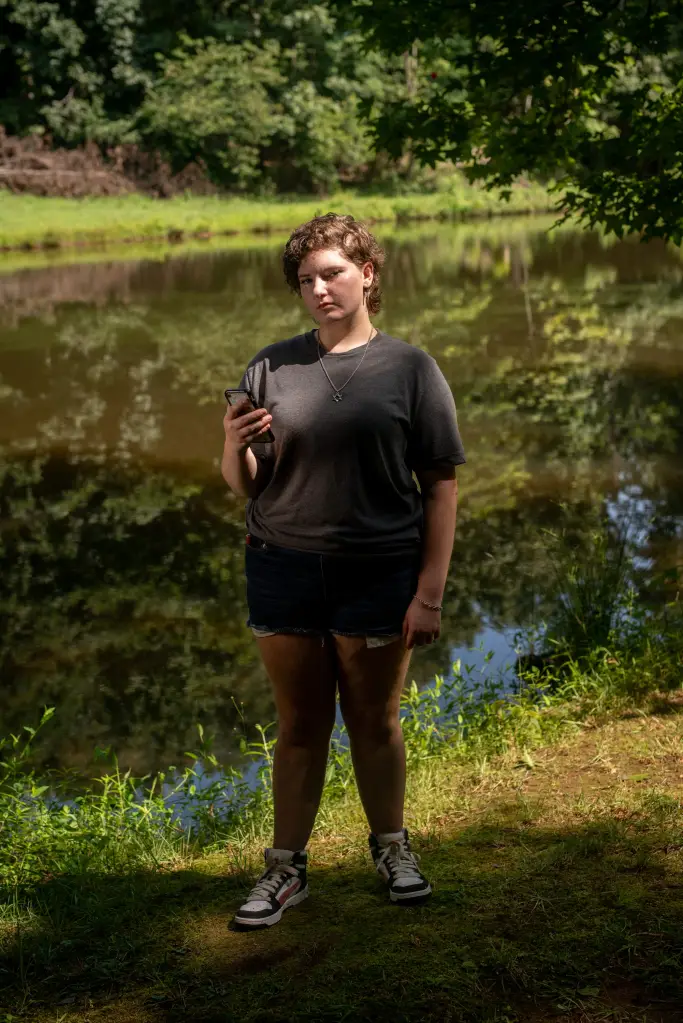
Former county clerk Kim Davis, who refused to issue marriage licenses in Rowan County, Kentucky, to same-sex couples, must pay a total of $260,104 in fees and expenses to attorneys who represented one couple, according to a federal judge’s ruling.

The new payout is in addition to $100,000 in damages a jury said the former Rowan County clerk should pay the couple who sued.

Attorneys for Davis had argued that the fees and costs sought by the attorneys were excessive, but U.S. District Judge David L. Bunning disagreed and said Davis must pay since the men prevailed in their lawsuit, the Lexington Herald-Leader reported.

Attorneys for Davis were expected to appeal the ruling.

Davis drew international attention when she was briefly jailed in 2015 over her refusal, which she based on her belief that marriage should only be between a man and a woman.

Davis was released only after her staff issued the licenses on her behalf but removed her name from the form. Kentucky’s state legislature later enacted a law removing the names of all county clerks from state marriage licenses.

My Lived Experience as an Atheist in the Qmmunity

by Himothy Hazardus

I think some would say I had a unique experience growing up as a queer Appalachian atheist in rural Kentucky. I’ve always presented masculine of center despite being born a biological female. I’m a textbook transgender man, but my relationship with religion is undeniably intertwined with my identity just as much, if not more, than my LGBT status. 

A lot of the cynicism I display that people attribute to my atheism really comes from my lived experiences, and particularly, my proximity to death. I was raised in the back of a funeral home because my stepdad was a mortician—yet somehow I never saw one damn ghost the entire time we lived there! Trust me, I went looking, too. I’ve also watched so many family members pass away from cancer. My home county ranks #22 for highest cancer rates in the nation. My father struggled with suicidality for most of his life. A few times, I even witnessed his attempts on his life. All of this has made for a very complex relationship with death – and thus, religion. 

Religion arose to help us cope with our mortality. People have prayed to gods for centuries for the promise of Heaven, or everlasting life after death. As an atheist, there’s not a day that goes by I don’t wish I could believe in something to give me comfort in knowing my life would go on after death. 

I don’t believe de-conversion, or the loss of faith in a religion, is an event we always have control over. I think it happens to us. A lot of people have asked me, “What would it take to make you believe?” And at some point in my atheism, I accepted that nothing could convince me. Perhaps I haven’t hallucinated enough to be sure of my position.

Another way I battle with this idea is that I’m aware I’m free from divine persecution for being queer, but I will never get a chance to experience everlasting life. I’ve seen so much suffering occur before my eyes, yet I can still see an inherent preciousness about life that I can’t quite explain. I cling onto life from the sheer unlikelihood of it, yet sometimes being aware seems like a burden I didn’t ask for. For these reasons, my atheism comforts and terrifies me in the same breath. 

There are pros and cons to being both theistic and not. All that aside, theism affects us all differently. I’d say my journey was a bit off the beaten path. Though my stepfather was a Cherokee native, he still believed in a deity. After his death, my mother, a lifelong Southern Baptist, was roped into the Pentecostal church, which is very popular in my neck of the woods. Though they have some very charming features, their services can be a bit intense and jarring to some. To 11-year-old me, it was just another Tuesday. Once I got away from Eastern Kentucky, I learned how outsiders see them. 

While I was in the throes of God’s wrath, my relationship with religion was shaped by my queerness. I hit puberty around the time my mother really got into God. She would often mail off her last dollar to a televangelist who promised blessings that would never come. Even as a child, it infuriated me that someone would profit from someone else’s grief and hopelessness. These experiences, oddly enough, gave me a sense of empathy for the vulnerability that fundamentalists prey on. I understand why my mother flocked to it. Her husband had just died, and we were in financial ruin—about to lose everything. She was reaching up for hope because she couldn’t find it by reaching out. 

In the midst of all this, we were all discovering Something Wasn’t Right about me. I was increasingly masculine acting and presenting. I remember my older sister telling my mother once that she thought I was gay, and my mom scolded her for the suggestion. I remember being so attached to the idea of being a man. I often dreamt about it and woke up sorely disappointed. For a period, the Pentecostal church managed to stomp that out of me with the fire-and-brimstone mantra. I often wish there was more I could do to stop this religious trauma from occurring. 

Unfortunately some things we can’t change, but I want to change what I can. I do that by stepping out of my comfort zone with my activism. I’m generally not a very extroverted individual, but if telling my story helps someone relate to growing up queer in the South, I think I can say I’ve done something. 

When I think of the atheist experience in relation to queerness, it’s not some hyper-intellectual explanation that I think of. My perspective comes from a place of resilience, and I think a lot of queer folks can relate to that. Rejecting the popular notion that we should hate who we are is a radical act. Sometimes this gets overlooked when we focus on the falsehood of religion rather than the actual harm it creates.

Between giving the poverty-ridden hillbillies of Appalachia false hope and preaching the young into conformity, religion made my environment toxic. Leaving it behind is liberating beyond comprehension when you come from a place of oppression. Once I traded the lies for real hope, it really changed things for me. I was able to propel myself forward while I watched everyone around me being held back. 

That’s why I think it’s so important that we reach into these rural communities and give them the tools and resources they need to create space for these stories to be told, for these conversations to be had. I started a chapter of the Secular Student Alliance at my college, Morehead State University. It was distinctly different from other groups by being more of a support group than an academic or activist group. A lot of the people who came to our meetings were healing from a lifetime of religious trauma. This created a tight bond among us that I didn’t really see in more urban groups.

The differences in experiences among queer atheists are stark and deserve to be acknowledged. It can never hurt to spread a sense of empathy in our communities whether it be for one group or another. I think if I had to have a goal in writing this, it would be that. I know I’m always hungry for a new perspective, and atheists are typically curious individuals. All this to say it’s a changing world. Let’s make it change for the better. 

Himothy Hazardus is a Grant Accountant at the only HBCU in Kentucky. They became involved with American Atheists in 2017 while organizing against the homophobic Kim Davis with the Secular Student Alliance in Morehead, Kentucky. In 2019, he was awarded Diversity Program of the Year at Morehead State University. He continues to be involved in local activism with Lexington Atheists, and Frontrunners Lex, an LGBTQ+ run/walk group. 

This article was featured in the 2022 Q3 edition of American Atheists magazine. All rights reserved.

If you or someone you know is struggling, call or text the 988 Suicide & Crisis Lifeline at 988. LGBTQ+ young people can press 3 to reach counselors trained in LGBTQ+ care, an option that returned on Sept. 30, 2026 after it was cut in July 2025. The Trevor Project also offers 24/7 support at 1-866-488-7386 or by texting START to 678-678.

Louisville receives perfect score from Human Rights Campaign for seventh consecutive year

Story first featured on LouisvilleKY.gov

For the seventh year in a row, Louisville has earned a perfect 100 on the Human Rights Campaign’s Municipal Equality Index for the city’s support of the LGBTQ+ community and its work to make Louisville welcoming and inclusive. Louisville was the first city in the state to receive a perfect score and has met that benchmark each year since 2015.

“Louisville is proud to be an inclusive community where individuals of all gender and sexual orientations are welcomed, celebrated, cared for and protected. We strive every day to ensure Louisville is a place where people can feel at home to be themselves,” said Mayor Greg Fischer. “Long before the Human Rights Campaign Municipal Equality Index (MEI), Louisville sought out institutional protections for our LGBTQ+ community because it was and is the right and the compassionate thing to do. Major recognitions like this help us spread the message to the world that Louisville is a welcoming and inclusive place.”

The Mayor applauded the Louisville Metro Human Relations Commission for its work to promote unity, understanding and equal opportunity across the city and to eliminate all forms of bigotry, bias and hatred.

The overall score for Louisville Metro improved from last year with the city receiving additional points for its ongoing work to protect youth from conversion therapy, extend domestic partners benefits to city employees, and provide services to LGBTQ+ people experiencing homelessness and people living with HIV or AIDS. The city also received points for having openly LGBTQ+ elected or appointed leaders.

The Human Rights Campaign began in 1980 and is now the nation’s largest civil rights organization working to achieve equality for lesbian, gay, bisexual, transgender, and queer Americans. Through its Municipal Equality Index (MEI), it reviews criteria on citywide non-discrimination protections, policies for municipal employees, city services, law enforcement, and the city’s leadership on LGBTQ+ equality.

“Receiving a perfect score on the Municipal Equality Index scorecard for seven years running illustrates Louisville’s continued dedication to embracing inclusion, diversity, and our LGBTQ community,” said Cleo Battle, President & CEO of Louisville Tourism. “We are truly proud of this milestone, as well as the additional accolades and national recognition that further support our status as a welcoming city.”

Among those accolades:

“One of 10 Hottest Gay Destinations” – Orbitz

“One of Six Underrated Cities for LGBT Travelers” – Conde Nast Traveler

“Six Surprising Cities Great for LGBTQ Families” – Family Traveler

“Top 100 LGBTQ+ bars across the US” [Chill Bar (#87) and Big Bar (#91)] – Yelp
“7 US Pride festivals off the beaten track that will blow you away” – Gay Star News

This year, a record-breaking 110 cities earned the highest score of 100 on the MEI, up from 11 in 2012, its inaugural year.

“LGBTQ+ people are everywhere – in every city, county and ZIP code. Throughout its 10-year history, the Municipal Equality Index has been centered on supporting and celebrating the work municipalities do to serve LGBTQ+ people in the places they call home. This year, state-wide lawmakers have zeroed in on attacking transgender and non-binary children – for no reason other than in an effort to harm and erase them. Local leaders, however, have continued to move the needle of progress forward, and by doing so, they have spurred economic growth by signaling to residents, visitors, and employers that their city is open to everyone,” said JoDee Winterhof, Senior Vice President of Policy and Political Affairs at the Human Rights Campaign.

Read Louisville’s MEI scorecard here and read the full MEI report here.

Check out events, resources, accolades and more at LGBTQ Louisville.

HRC: Remembering Cris Blehar, Trans Woman Who Was “An Amazing Mother And A Wonderful Person”

by Violet Lhant • December 1, 2021

This story appeared on HRC’s website.

Cris Blehar, a 65-year-old white transgender woman and U.S. Air Force veteran, was tragically killed at her home in the Flaherty area of Meade County, Kentucky, on May 19, 2021. According to local news, a suspect has been charged with her murder and a trial date has been set for June 2022. Blehar’s cousin Mark Stephens contacted HRC to ensure that she was “remembered, honored, and counted” as a member of the transgender community. Her death is at least the 49th violent killing of a transgender or gender non-conforming person in 2021. We say “at least” because too often these deaths go unreported — or misreported.

According to her obituary, Blehar was a former law enforcement officer in the U.S. Air Force and retired from United/Continental Airlines. She also worked as an Uber driver and loved animals and bowling. 

In a statement to HRC, Mark Stephens said the following:

“If there is one thing to know about Cris, it was that she fought fiercely to define her life as SHE wanted. Whether it was her military service, her 20+ year career in the airline industry, or her post retirement decision to buy a farm & start a family of her own. She lived life to the fullest and wanted everyone around her to live their best life as well. Growing up ‘different’ in Kentucky is certainly no easy task, something we shared in addition to being cousins, and she tackled it with the passion and zeal that only she could have. Her friends will always remember her infectious personality & her unmistakable laugh. She loved others passionately and fiercely, none more than her own son, Maverick.”

Blehar’s son Maverick Thompson also remembered her, writing:

“Cris was an amazing mother and a wonderful person. She had so much love and brought a smile to many. She had a hilarious sense of humor that will live on through those that knew her. She will be sorely missed!”

Cris was full of life and it is appalling that she was so violently taken from this Earth. It is comforting to know that she was well loved by friends and family, but her death highlights the need to combat gun violence and all of the factors that contribute to these killings.”

Tori Cooper, HRC Director of Community Engagement for the Transgender Justice Initiative

Pin It on Pinterest