KEEP. Subject. Additive. Reproductive health and rights as they reach queer Kentuckians: period poverty, contraception, abortion access, reproductive health clinics.
In April, the Substance Abuse and Mental Health Services Administration (SAMHSA) released a letter notifying funding recipients that the agency is taking a “clear shift away from harm reduction,” including eliminating funding for fentanyl testing strips, clean syringes and needles, and “overdose hotlines.”
Harm reduction at its core is “a set of practical strategies and ideas aimed at reducing negative consequences associated with drug use,” according to the National Harm Reduction Coalition. The organization further details that some of those strategies could include the safer use, managed use, abstinence, meeting people who use drugs “where they’re at,” and addressing conditions of use along with the use itself.
SAMHSA’s decision has had immediate and life-threatening consequences for Kentucky organizations doing the work to close critical gaps in care for those in need, including for marginalized people.
“When they put this letter out there, they literally just handcuffed a lot of people,” said Shreeta Waldon, executive director of the Kentucky Harm Reduction Coalition (KyHRC), a Louisville-based nonprofit that works to reduce substance use disorder overdoses and deaths.
The letter cited a White House executive order from July 2025 to justify the policy changes. The order, “Ending Crime And Disorder On America’s Streets,” details those changes among a list of other line items including homelessness and crime. “Do not fund programs that fail to achieve adequate outcomes, including so-called ‘harm reduction’ or ‘safe consumption’ efforts,” the order reads.
It describes such strategies like harm reduction as ineffective; however, harm reduction is actually an evidence-backed practice that has been backed by scientific research.
What Kentucky Lost When SAMHSA Cut Harm Reduction Funding
These changes and attacks on harm reduction initiatives have hit the already limited ecosystem of harm reduction services built by and for Black and brown communities.
“SAMHSA award terms are now prohibiting federal grant funds from supporting several traditional harm reduction supplies, including syringes for illicit injection, safer smoking supplies, and fentanyl and other substance test strips,” Waldon explains. “That means that organizations are now navigating a much narrower definition of what federally funded harm reduction can include and not include.”
Recent research revealed that Trump’s elimination of federal funding for programs that provide syringe exchange and other harm reduction interventions will directly contribute to an increase in overdose deaths and non-fatal overdoses. Outcomes that Black and brown communities already feel more intensely.
KyHRC is one of the few groups in the state still delivering harm reduction care and resources for BIPOC communities, despite these concerning changes. In addition to new limitations, Waldon’s group immediately lost a $400,000 grant after the SAMHSA decision. However, instead of deferring programs or shortening their impact, the organization found new ways to deliver care to communities.
KyHRC began working with partners across the country to source harm reduction resources that they no longer could get from federal funding. Waldon mentioned that, among other groups, the Connecticut-based organization Reduce Harm Inc. has supported KyHRC with clean syringes, testing strips, and other supplies that are no longer accessible.
The redefinition of what the government will fund comes after a well-documented body of evidence pointing to harm reduction as a key strategy to prevent drug-related deaths. Studies show that fentanyl testing strips prevent overdoses, and research shows that providing clean syringes prevents the transfer of blood-borne diseases. A 2025 study including 67 communities, some of which were in Kentucky, found that when offered harm reduction strategies, those communities experienced a 15% reduction in non-fatal opioid overdoses and an estimated savings of $190,100 in healthcare spending per community.
Why Black Kentuckians Feel the Cuts Hardest
For Black communities in Kentucky, these new limitations are felt even more deeply than their neighbors. In 2023, the overall number of drug overdose deaths in Kentucky declined for the first time in years, while Black Kentuckians experienced an 8% rise in overdose deaths. Black Kentuckians continue to face worse health outcomes, less access to regular health care, and higher mortality rates compared to other groups. It is these realities that make harm reduction and community resources for Black and brown people all the more critical, according to the organizers delivering care despite greater obstacles.
“If you are trying to give me aid and help me based on the statistics that you have for white people, it’s not going to help me because it’s not made for me,” said Adria (AD) Shouse, a master barber at Well Groomed Barbershop Parlor.
Shouse is a barber with the African American Barbershop and Beauty Salon Initiative (BBSI), a public health program part of Project Ricochet, a nonprofit organization working to improve outcomes for minority youth in Lexington and beyond. BBSI transforms “relationship-rich environments” like barbershops and beauty salons into spaces where communities can get care and education related to diabetes, sexual health, mental health, drug use, and harm reduction.
“I’ve seen changed behavior in people that I’ve been cutting for years that have utilized resources through BBSI,” said Shouse.
BBSI provides community events based out of these safe spaces that bring care, including harm reduction resources, right to the communities who need it. This direct level of intervention is what Shouse says is missing in much of the conversation around BIPOC public health funding.
“The funding is different when it comes to people of color or minorities,” said Shouse. “They’re trying to keep certain communities and certain people in certain places because it works to their advantage.”
Shouse’s clients are predominantly Black men and young people, and in her work she fulfills a material need while offering support for other challenges.
Doulas Trained in Harm Reduction
It is that same model that other community leaders are implementing to provide support for Black pregnant people as well.
Granny’s Birth Initiative (GBI) is a nonprofit based in Louisville that supports Black parental health, partnering the care a pregnant person needs with the harm reduction resources they are unable to find elsewhere. That starts with training their doulas on harm reduction strategies, including trauma-informed care and Narcan usage.
“We make sure that our doulas are trained in that because doulas do provide resource navigation and it should always be non-judgmental support,” said doula Alexa Scisney, founder and executive director of GBI. “We want them to be well trained on not just keeping a straight face, but genuinely and truly understanding the type of resources that are needed.”
Black pregnant people are at least three times more likely to die due to a pregnancy-related condition, compared to their White counterparts. In Kentucky specifically, 82% of pregnancy-related deaths are deemed preventable. About 1 in 20 pregnant people use illicit drugs during pregnancy. This puts the work that GBI does as ground zero for public health progress and reducing harm.
“I know that doulas are an industry that is new to Kentucky, but a doula is somebody that’s supposed to be providing physical, mental, and emotional, non-judgmental support,” said Scisney. “And here at GBI, that non-judgment is something that we really highlight because it is not our job to do harm to people already seeking harm reduction resources. Our doors are always open.”
In addition to the SAMHSA decision, resources for harm reduction in Kentucky have been rocked by funding cuts and lack of consideration for how harm reduction impacts public health. In May, the University of Kentucky announced that it would formally end its HIV/AIDS prevention and treatment organization.The Target4 Project was part of this elimination, which provided HIV/AIDS intervention and services in addition to harm reduction supplies and targeted outreach.
Kentucky public health leaders say they will continue to step up in their communities, despite the new obstacles in front of them.
“Let us be the voice because we are the people who have experienced it. We’re the closest to it. We’re the closest because we live it every day,” said Waldon.
While the Trump administration and SAMHSA cut opportunities and funding, harm reductionists and community leaders continue to show up in new ways for their neighbors. While groups still hope for more permanent and sustainable funding, it is the promise of safer, stronger communities that pushes them forward, they said.
“For me, harm reduction has always been the radical decision to believe that every human being is worth keeping alive before they change, before they recover, before they become who somebody else thinks they should be,” said Waldon. This work was supported by the 2026 CNP Media Fund. #CNPMediaFund
https://queerkentucky.com/wp-content/uploads/2026/09/kentucky_harm_reduction_.webp6681200Nick Fultonhttps://queerkentucky.com/wp-content/uploads/2024/05/Queer-Kentucky-White-Logo-300x132.pngNick Fulton2026-10-02 07:39:562026-10-01 15:58:29Federal Cuts “Handcuffed” BIPOC Harm Reduction in Kentucky. Communities Are Stepping Up.
The views and opinions expressed in submissions to Queer Kentucky are those of the authors and do not necessarily reflect the official policy or position of Queer Kentucky. Any content provided by our submissions or regular columnists are of their opinion. As a reader, you are always welcome to submit your op-eds through our submission form.
Let’s imagine something.
Imagine walking into a reproductive health clinic in Kentucky and not having to brace yourself.
Imagine reproductive healthcare that was designed with LGBTQ+ people in mind from the beginning.
Reproductive health is too often reduced to “pro-choice” versus “pro-life.” But for many people in queer and trans communities, reproductive justice is even more complex and personal than ever.
That’s part of why JustChoice is opening the JustCenter for Reproductive Health.
For nearly everyone, walking into a reproductive health clinic already comes with a lot: excitement, fear, shame, hope, grief, relief, sometimes all at once. Add in the realities many people face when abortion or other care is involved: protecting privacy, missing work, finding childcare, arranging transportation, and covering costs. It’s a lot to carry.
For queer and trans people, there’s an even deeper layer: wondering if you’ll be made to feel unsafe in a space that’s supposed to help you.
We’re not here to speak for the queer community; we are simply here to say: we see you, and we’re building something different.
At JustCenter, our commitment is extremely simple: accessible care rooted in dignity, respect, and kindness. That means welcoming families in all their forms, and reducing barriers wherever we can, including things like offering childcare when visits take time and using a sliding, pay-what-you-can scale.
JustChoice understands that reproductive justice does not end with a procedure. People need support before, during, and after pregnancy, whether that pregnancy continues or not. That’s why services at JustCenter also include:
Free pregnancy counseling and ultrasounds
Miscarriage management and emotional support
Free birth control, including IUDs, condoms, and Plan B
Parenting and adoption support, including baby supplies and mutual aid
Help navigating community resources in hostile or under-resourced environments
This is an invitation. We want to learn from your experiences and build the antidote of what’s caused harm. Join us so we can build systems of care together.
Follow along or learn more on Instagram at @_justchoice or visit www.justchoice.org and click the green button to subscribe to their newsletter.
https://queerkentucky.com/wp-content/uploads/2026/03/justchoice-justcenter-reproductive-health-scaled.webp25602048Laura Sullivan MSW LISWShttps://queerkentucky.com/wp-content/uploads/2024/05/Queer-Kentucky-White-Logo-300x132.pngLaura Sullivan MSW LISWS2026-03-26 08:36:192026-10-10 15:37:56Opinion | We See You: JustChoice Is Opening JustCenter for Reproductive Health
What started as an extension of the Garrard County Food Bank has grown into Kentucky’s leading defense against period poverty: the lack of access to products, resources, and educational materials which ensure a safe and comfortable menstrual cycle.
Skylar Davis is the founder of Period Y’all, a nonprofit initiative advocating for reproductive justice and accessible period products for all Kentuckians. Founded in 2022, Period Y’all has established period pantries – boxes stocked with period products free for the public – in three counties, donated products to over a hundred schools in the Appalachian region, and educated countless members of the community about the importance of reproductive autonomy.
Previously, Davis poured her passion for advocacy and reproductive justice into policy work, hoping to combat bills threatening reproductive rights. She found herself disheartened by the constant negativity and decided to search for a way to “bring some joy.”
A Period Y’all pantry stocked with free menstrual products provides public access to pads and tampons for community members in Kentucky. Photo provided by Skylar Davis.
“I really wanted to do something that was meaningful,” Davis said. “To be able to fight for something more positive. Even if it takes years to pass.”
Inspired by Change Today, Change Tomorrow’s “Friday Period” project, which encouraged members of the community to claim free period supplies every Friday, Davis returned to her hometown in Garrard County to establish Period Y’all.
“The first time, I came with one folding table and probably 40 boxes of pads and tampons that people had donated,” Davis said. “And then it grew once I realized how great the need was. It wasn’t just period products, but hygiene products and incontinence products for the elderly.”
Now, with period pantries in Paducah, Berea, and Garrard, dozens of communities can access products, information, and assistance to help manage their menstrual cycles.
“It’s cool to see the variety of people that are thankful for the products,” Davis said. “It’s not just women in the community. It’s grandmothers who are caring for their grandchildren; maybe they’re on a fixed income, so they don’t have the extra money for the products. It’s mothers. It’s teens that come through and ask us for stuff. Men will ask for their partners and know what their partners use.”
McKenna Newman, a Period Y’all volunteer and fellow Garrard County native, teamed up with Davis to “help bring menstrual equality to anyone in need.”
“Growing up in Garrard County, many girls, including myself, had to get creative managing our periods,” Newman said. “Whether it be financially or the mental and physical burden we all had dealing with it. It is a shame rooted in women and no one should be embarrassed of this natural process.”
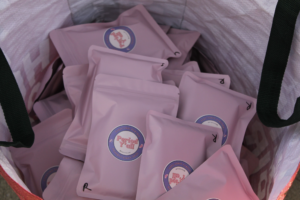
Reusable pouches filled with menstrual products prepared by Period Y’all for distribution to communities across Kentucky. Photo provided by Skylar Davis.
Following its success in Garrard County, over 30 requests for pantries arose across the Commonwealth. Davis plans to open 13 additional period pantries in locations such as Richmond, Somerset, Morehead, Hazard, Louisville, and more.
“When Period Y’all first started, we were doing monthly pop-ups… The products we had, we were able to source through donations, cold calling, and advertising on social media,” Newman said. “All it took was one Facebook post, and now, here we are, four years later, providing hygiene products to schools across Kentucky.”
Recalling her experience with policy work, Davis hopes to empower students to make informed choices about their bodies, health, and their administration.
“Within the next few years, I’m really hoping to get more students involved in shaping the education side of the work,” Davis said. “They’re the ones that are experiencing this in school. They don’t have access to products because it’s not in their school’s budget.”
Since the implementation of Senate Bill 150, schools have restricted students from discussions surrounding gender and sexuality – something that affects all students, regardless of identity. Students experiencing their period in school are only allowed to receive certain pre-approved products, while their teachers have been warned to avoid explaining what periods are.
“People don’t realize the correlation between attacks on trans people and LGBTQ people and those who have periods,” Davis said. “These attacks hurt all of us, not just a marginalized group of people. We can fight back against all of this harmful legislation.”
To join Period Y’all’s crusade against period poverty, Davis and Newman encourage volunteers to participate in “packing parties” – where packages of free pads and tampons are assembled – or to host a product drive.
“If you ever wanted to get involved with reproductive advocacy… Create a conversation. Make a post. Start a group. Connect with other people,” Newman said. “Your voice is your best tool. Be loud, be proud, and don’t be ashamed! Societal shame around periods is one of the many reasons we have a crisis surrounding women’s health.”
Interested in establishing a Period Pantry in your city, hosting a product drive, or donating menstrual products to support underserved Kentuckians? Contact Skylar Davis to support Period Y’all!
https://queerkentucky.com/wp-content/uploads/2026/03/Screenshot-2026-03-09-at-10.37.25-AM.webp5881030Sav Gripshoverhttps://queerkentucky.com/wp-content/uploads/2024/05/Queer-Kentucky-White-Logo-300x132.pngSav Gripshover2026-03-09 14:43:002026-10-10 14:21:30Period Y’all founder Skylar Davis leads Kentucky fight against period poverty
Kentucky’s 2025 legislative session is finally almost over.
Lawmakers will spend Thursday and Friday in Frankfort tying up some loose strings and mainly overriding several (if not all) of Gov. Andy Beshear’s nearly 30 vetoes.
Queer Kentucky will be monitoring things so you don’t have to (but, obviously, feel free to join us in civic engagement). We’ll be updating this story as things progress from now until the clock strikes midnight Friday and lawmakers, per the state constitution, must go home.
6:21 p.m. Friday: Y’all, it is done!
Kentucky’s 2025 legislative session is officially over. Actually, it ended close to an hour ago. I’ve yet to hear from anyone — lawmakers, journalists, even the Senate Gallery doorkeeper — who can prove that this isn’t a record time on the final day of session.
As expected, it was a light day. The change to HB 501 to clarify that lawmakers are directly targeting transgender people’s hormone therapies in a new law blocking Medicaid coverage of such treatments cleared the House, but Beshear will have a chance to veto it and lawmakers will not be able to override him. He has until April 9 to make a decision.
But it looks like the other two bills I mentioned this morning — SB 132 and HB 392 — did not end up going anywhere.
Unless something crazy happens, I do believe this is the end of the live blog. Thanks for following along!
4:23 p.m. Friday: We’re almost done
Seriously. The House just wrapped up passing any bills it was interested in. All there is left to do now is some paperwork-type of formalities. At this point, the vast majority of senators have left the scene. We’re about to adjourn at a record time.
3:11 p.m. Friday: They’re running out of stuff to do
Friends, it looks like the end is near. The Senate has spent much of the last two hours waiting on the House to send them a single bill: Senate Bill 9, which creates paid maternal leave for teachers.
And that’s kind of all they had left to do, Senate Majority Floor Leader Max Wise said. Now all eyes are on the House.
1:32 p.m. Friday: Lunch break is almost done
Just checking in from Frankfort to say we haven’t done much except take some lengthy lunch breaks. The Senate is about to restart and the House is expected back closer to 2 p.m.
We’re still expecting an early end to the day compared to the typical final day of session. When they adjourn, they’ll do so sine die — meaning anything filed this year that hasn’t been passed is officially dead.
11:24 a.m. Friday: Senate clarifies HB 495
The Senate passed a new version of House Bill 501 that would clarify Kentucky’s new ban on using Medicaid for gender-affirming care. The change, which the House now needs to confirm, clarifies that only hormone treatments meant to treat gender dysphoria are banned.
8:42 a.m. Friday: The final day begins
Hello and welcome to the final day of Kentucky’s 2025 legislative session!
We’re looking at a hopefully short and easy day in Frankfort after the legislature knocked out most of their business Thursday. The House and Senate both start at 9 a.m. and currently have pretty light agendas, but they can always add bills and resolutions to the list.
A few things I’ll be watching:
I’m hearing some rumblings that the House could vote on Senate Bill 132, which will allow health care professionals to refuse to treat someone based on moral or religious grounds. Most thought this bill was dead, and if it is resurrected and passed, Beshear would be able to veto it and lawmakers won’t be able to overrule him.
Another bill potentially back from the dead: House Bill 392. This would require inmates to be assigned to facilities tied to their assigned sex at birth. It also needs a House vote, and Beshear would also be able to veto it.
A late Senate floor amendment to House Bill 501 would clarify the new HB 495 ban on Medicaid coverage for gender-affirming health care, specifically saying hormone treatments for gender dysphoria would be outlawed. The original law currently says “cross-sex hormones in amounts greater than would normally be produced endogenously in a healthy person of the same age and sex.”
The session must end by midnight tonight, but Senate President Robert Stivers told reporters earlier this week they’re hoping to have everything wrapped up in time for the UK men’s basketball game around 7:30 p.m.
8:55 p.m. Thursday: Everything is overridden
Lawmakers have called it a night after spending the day overriding basically all of Beshear’s vetoes. New laws include sweeping restrictions to diversity, equity and inclusion efforts at colleges; weakened labor and water rules; and language aimed at “clarifying” when doctors can provide abortions.
We still have one day of session left, with the House and Senate expected to start at 9 a.m. Friday.
5:01 p.m. Thursday: Advocates react to HB 495 veto override
Shortly after lawmakers overrode the veto of HB 495, Chris Hartman, the leader of the Fairness Campaign, said, “It’s a sad day in Kentucky.
“Two anti-LGBTQ bills will become law with devastating consequences for our community. HB495 opens the door to ‘conversion torture’ and denies Medicaid coverage for transgender healthcare. Likewise, SB2 denies healthcare to transgender inmates. Both are cruel and have no place in our Commonwealth.”
Senate Bill 2 became law Wednesday after Beshear let it become law without his signature.
4:36 p.m. Thursday: HB 495 veto overridden
Conversion therapy will be allowed in Kentucky and transgender Kentuckians will no longer have gender-affirming health care covered by Medicaid after lawmakers overrode Beshear’s veto of HB 495 Thursday afternoon.
The reversal of Beshear’s executive order blocking conversion therapy in the state will go into effect immediately.
2:40 p.m. Thursday: House overrides HB 495 veto
Greetings from Frankfort, where the House and Senate have spent the bulk of the day overriding Beshear’s vetoes.
Main thing of note for now is that the House has overridden Beshear’s veto of House Bill 495, which allows conversion therapy and blocks transgender people on Medicaid from accessing gender-affirming care. The Senate also has to override the veto in order for it to become law.
What to know about the last two days of #KYGA25
Kentucky’s Republican-dominated legislature will be focused on overriding Beshear’s vetoes. The GOP has a supermajority in both chambers, so it’ll be relatively easy for them to do this, but it will probably be kinda time-consuming.
The only anti-LGBTQ+ bill left in the game is House Bill 495, which blocks transgender Kentuckians on Medicaid from getting gender-affirming health care and undoes Kentucky’s current ban on conversion therapy. Beshear vetoed this (at the Fairness Dinner, no less), but it is expected to be overridden.
Some other override situations to keep an eye on include, but aren’t limited to:
House Bill 4, which broadly restricts colleges and universities’ diversity, equity and inclusion efforts.
House Bill 90, which proponents say adds needed clarity to Kentucky’s abortion ban, but opponents say actually makes things more difficult for doctors and pregnant people.
Senate Bill 89, which Beshear’s veto message argues could make more water pollution and devastating floods a real possibility for the state.
House Bill 398, which would weaken the state’s worker protections.
We’re so late into session that there are very few bills that can still pass that haven’t already — especially when it comes to anything high-profile or controversial. But lawmakers will likely have a few more mundane bills to get through. They can still pass bills to Beshear’s desk, but they just won’t have a chance to override him should he veto them.
Kentucky’s 2025 legislative session, legally, must end by midnight Friday.
https://queerkentucky.com/wp-content/uploads/2025/03/ky.avif7681366Olivia Krauthhttps://queerkentucky.com/wp-content/uploads/2024/05/Queer-Kentucky-White-Logo-300x132.pngOlivia Krauth2025-03-27 18:03:542026-10-10 12:53:31Follow along with the last two days of Kentucky’s 2025 legislative session
Folx – because as an Appalachian, I often address people as folks. It’s in our blood! I also love the word camp/campy, as I feel like Kentucky is a wonderfully unique and kitschy place.
How did you activate and organize your community for equality?
I’ve been a community organizer for over five years, namely in the realm of LGBTQ+ and reproductive rights advocacy. Honestly, I got my start because I was passionate to see some change in my community. I didn’t have a playbook per se to make change, I just threw myself out there and used social media as a platform to amplify my message. Social media can be a great tool in the fight for equality. Since 2018, I’ve been a member of Pikeville Pride, a local LGBTQ+ nonprofit dedicated to doing work in Eastern Kentucky. I currently serve as president, and our organization plans and hosts our annual Pride event in Pikeville. Last year, our event had over 2,300 attendees, which was our biggest to date. My work with Pikeville Pride has allowed me to talk to members of my community about the need to highlight the diversity and inclusion of LGBTQ+ in Appalachia because we’re often overlooked or ignored. I like to tell folks we’ve been here and we’ve always been here, and slowly but surely, we are putting a name to the faces of Queer folks in the region.
In the last 25 years, what is one moment that gave you hope for Kentucky’s fight in equality?
Seeing a fairness ordinance being passed in Vicco gave me a lot of hope because if a small, rural town in Perry County can do it, to me, there is no reason we can’t have a statewide fairness ordinance that not only helps protect Queer folks across the state, but other marginalized communities as well.
What do you think is next for Kentucky in the fight for Equality?
I see more cities, such as Pikeville, embracing a fairness ordinance and passing policy that protects our community. I also see LGBTQ+ organizations from across the state form a coalition to have a more visible presence in Frankfort to support programs and policies that will benefit our community.
What are Kentucky’s greatest strengths when it comes to the fight for Queer equality?
Our greatest strength truly is our people. I’ve met some of the most dedicated advocates and organizers in my journey, including Carla Wallace, who has been involved in Queer advocacy in Kentucky for decades. The ones who paved the way for us to be where we are have welcomed the newer generation to continue the fight and given us the tools we need to succeed.
https://queerkentucky.com/wp-content/uploads/2025/02/QueerKY_PrintIssue07_Posts_48-png-scaled.webp56254500Queer Kentuckyhttps://queerkentucky.com/wp-content/uploads/2024/05/Queer-Kentucky-White-Logo-300x132.pngQueer Kentucky2025-02-20 12:00:552026-10-10 19:12:4225 Faces of Fairness: Cara Ellis
Why the Future of Same-Sex Marriage is Still in Question
Same-sex marriage became legal across the United States on June 26, 2015, thanks to the Supreme Court’s ruling in Obergefell v. Hodges. This landmark decision was a victory for LGBTQIA+ rights, affirming that same-sex couples have the same fundamental right to marry just like anyone else.
However, this hard-won progress now feels uncertain. In 2022, the Supreme Court overturned Roe v. Wade in Dobbs v. Jackson Women’s Health Organization, ending federal protections for abortion rights. Both cases, Roe and Obergefell, rest on similar legal principles, particularly the constitutional right to privacy. With the Court’s willingness to revisit established precedents and the inauguration of Donald Trump in 2025 adding further uncertainty, many are questioning the future of marriage equality and LGBTQIA+ rights more broadly.
So, why are some people connecting abortion access and same-sex marriage? The answer comes down to a legal concept called precedent.
The Role of Precedent in Legal Decisions
Precedent refers to when courts rely on past decisions to guide rulings on similar cases. This is rooted in a Latin term, stare decisis, which means “to stand by things decided.” Many important Supreme Court decisions, including Roe and Obergefell, were based on this principle.
The Roe v. Wade ruling didn’t just legalize abortion; it also established that people have the right to make personal choices about their own lives without the government interfering. This idea of a “right to privacy” became the foundation for other cases, like the right for interracial couples to marry, access to birth control, and eventually, same-sex marriage in Obergefell v. Hodges.
When the Supreme Court overturned Roe in 2022, it shook the foundation for all the rights that depend on similar privacy protections.
A New Policy Landscape
One of Trump’s first actions after taking office was to issue an executive order narrowly defining gender in federal policies, erasing recognition of transgender and nonbinary individuals. Such actions magnify concerns that LGBTQIA+ rights may come under further scrutiny in this administration, making the fight for marriage equality and broader protections all the more urgent.
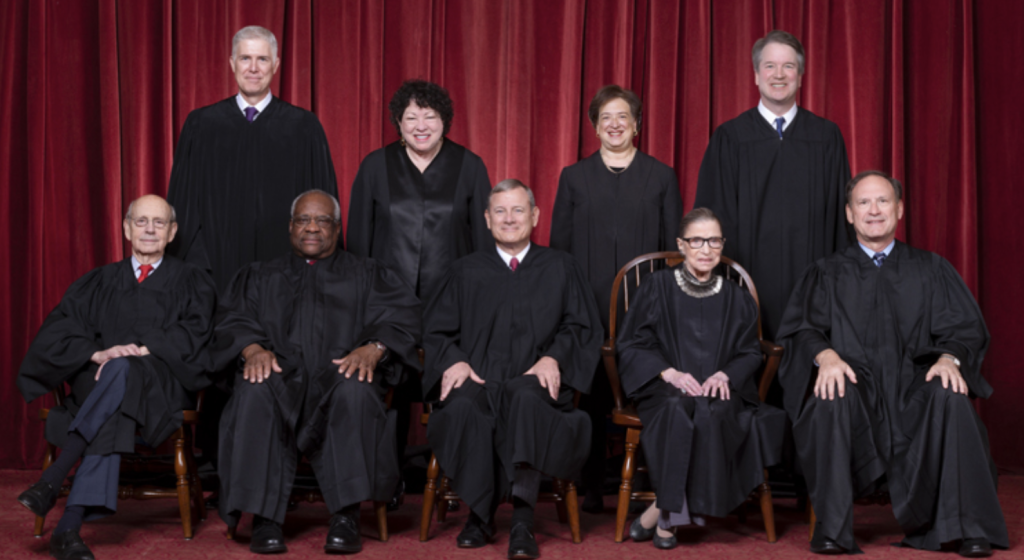
Adding to the anxiety is the current makeup of the Supreme Court. With three conservative justices appointed by Trump during his first term, the Court now has a 6-3 conservative majority. Trump’s 2025 inauguration raises fears that any new Supreme Court vacancies could shift the balance even further, making it more likely that cases like Obergefell could be challenged.
How Are Supreme Court Justices Appointed?
Here’s a quick breakdown of how Supreme Court appointments work:
A Vacancy Happens: A seat on the Court opens up, usually because a justice retires or passes away.
The President Nominates: The President picks someone to fill the spot, often a judge or legal expert.
The Senate Judiciary Committee Reviews: This committee interviews the nominee to decide if they’re qualified.
Senate Votes: The entire Senate votes on whether to approve the nominee. A simple majority is needed.
Lifetime Appointment:If confirmed, the nominee becomes a justice and serves for life or until they choose to step down.
The president and Senate’s political leanings can make a big difference in who gets appointed, which is why Trump’s return to the presidency adds stress to an already tense situation.
A Call to Action for the LGBTQIA+ Community
The fight for civil rights requires vigilance and participation. From advocating for inclusive policies to understanding how Supreme Court nominations impact the judiciary, staying informed and engaged is vital. Above all, the LGBTQIA+ community must continue building coalitions, fostering resilience, and claiming spaces where joy and love can flourish, no matter the challenges ahead.
The future of marriage equality and broader LGBTQIA+ rights remains uncertain, but one thing is clear: this community has a long history of perseverance, and there’s no way in hell it’s stopping now.
https://queerkentucky.com/wp-content/uploads/2025/01/homeless-1-1-png.webp7681366Belle Townsendhttps://queerkentucky.com/wp-content/uploads/2024/05/Queer-Kentucky-White-Logo-300x132.pngBelle Townsend2025-01-28 14:58:462026-10-10 16:11:19Dobbs v. Jackson: What the Supreme Court’s Abortion Decision Means for Same-Sex Marriage
The views and opinions expressed in submissions to Queer Kentucky are those of the authors and do not necessarily reflect the official policy or position of Queer Kentucky. Any content provided by our submissions or regular columnists are of their opinion. As a reader, you are always welcome to submit your op-eds through our submission form.
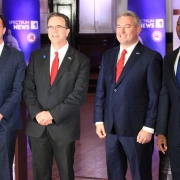
The first Kentucky Republican Gubernatorial debate of the 2023 election year took place on March 7. The debate originally aired on Spectrum News, and one of the topics discussed was whether or not the government has a place in regulating the access of gender-affirming surgery for minors under 18.
Alan Keck, Mike Harmon, Ryan Quarles, and Daniel Cameron are some of the Republican candidates for governor. All of them curated answers to this question that match transphobic narratives from across the nation. On March 9, a Swedish information activist published 2,603 pages of emails wherein legislators, hate groups, lobbyists, and organizations were exposed for curating transgender bigotry across the United States.
These emails from 2019-2021 showcased how anti-trans narratives were fabricated, giving us different tropes for transphobia that can be immediately disarmed and traced back to medical misinformation, white supremacy, and plain violence. Republican candidates for governor adopted what some might consider to be transphobic phrasing in their answers, but let’s unpack just how each candidate answered and what it means.
Alan Keck, current mayor of Somerville who has framed his campaign around being a more centrist/ fair Republican option, answered that “you can’t go buy alcohol until you’re 18” or “alcohol until you’re 21.” However, it is worth noting that you also cannot legally consent to any surgery as a minor. This not only attempts to delegitimize young people’s understanding of their identity, but also their autonomy and the role of a parent in making a decision with their child and their child’s doctor. He goes on to effectively beg us to not paint him as a bigot, using platitudes like, “…what those children need is love and affection and attention,” to cover his stance.
Mike Harmon, current State Auditor who uses the slogan “Follow the Data,” ironically called gender affirming care to anyone under 18 both “a crime” and “child abuse.” This categorization contradicts every reputable medical association, including the American Medical Association. The medical truth, backed with reputable data, is that lack of gender affirming care, including surgery, costs the lives of folks who are unable to access it. To many supporters of the trans community, it would be considered a crime and child abuse to remove the option for parents, their children, and their doctors to make decisions.
Ryan Quarles, current Agricultural Commissioner, noted multiple times in his answer that this is a parental issue. Quarles seemed to be attempting to be considered a more reasonable Republican, while still adhering to foundational conservative beliefs like liberty and small government, therefore giving parents power in this equation. Quarles also noted multiple times that it is already illegal to consent to surgeries if you are a minor, which was another framing of the narrative that framed him as more sensible than the others on stage.
Contrary to Quarles’ attempt to set himself aside from the pack by sounding more reasonable, Daniel Cameron took another route. Cameron is the current Attorney General of Kentucky, whose career has been built by a long time association with Mitch McConnell, by working with the insurrection-tied Republican Attorneys General Association, by protecting the police industrial complex over pursuing justice for Breonna Taylor, and by effectively outlawing abortion in the state of Kentucky (something he repeats often and with pride).
It is no surprise that Cameron gave such an alarming message, as his political strategy is just a more eloquent and intelligent presentation of Donald Trump, who built his political career on inflammatory narratives. Cameron says that, “We need to make sure that we protect our most vulnerable and that includes our minors, not only in the womb. But also, our minors, making sure that they’re not undertaking some irreversible procedure that they might ultimately regret in the future… But I think we have got to get to a place as leaders where we say ‘enough is enough, we’ve got to stand up for minors.’”
Attempting to make every conversation about abortion rights will be something we see often in this election cycle from Daniel Cameron. If we’ve learned anything about the conservative establishment since the Reagan era, it is that abortion as an issue divides people more than just about anything. Clearly, transness is becoming more of a contentious issue as conservatives run out of platforms to fabricate moral panic over. Knowing this, it is no surprise that Cameron chose to bridge the issue of abortion with transness. Both ignite moral panic in mostly religious bases, therefore allowing him to create a potentially larger group of voters.
Cameron’s political attempt to fuse these two issues is a curated move by his communications team to politically appeal to as many ultra-conservatives as possible. This calculation on Cameron’s campaign team is one that conservative campaigners are deciding across the nation: do we try to garner votes associated with curated anti-trans moral panic (like past Republicans have done with abortion, anti-terrorism, and gay marriage), or do we sit out of this narrative because a lot of voters ultimately recognize it as fabricated, hateful, and also horse shit?
Kelly Craft, Trump-associated wife of a KY coal baron and also a major competitor in the race for governor, did not attend. This was covered as being due to scheduling conflicts. Although, as a political insider and researcher who has watched her live Q & A, I can say that she is not recognized as being her strongest in that realm. Because of her lack of ability to extemporaneously answer outside of spaces curated for her message, we may never see her debate.
Mason-Dixon interviewed 625 registered voters throughout Kentucky. 10% of those voters weren’t affiliated with one of the major parties, with the remaining voters evenly being Republican and Democrat. This poll was before the debate, but offers insight into what the dynamics are.
This poll measured name recognition and favorability. Of the 625 Kentucky voters, 52% polled as recognizing and favoring Beshear’s name. On the GOP side, Daniel Cameron had 30% recognition and favorability. Kelly Craft was at 14%, Ryan Quarles at 12%, and Mike Harmon at 9%.
The Kentucky primary elections will be held May 16, 2023.
https://queerkentucky.com/wp-content/uploads/2023/03/IMG_4195.jpeg7201280Queer Kentuckyhttps://queerkentucky.com/wp-content/uploads/2024/05/Queer-Kentucky-White-Logo-300x132.pngQueer Kentucky2023-03-25 09:41:572026-10-10 19:16:17Kentucky Republicans cover gender-affirming care in debate
Coffee Order: cold brew, two splendas, splash of cream
I met Oliver a couple months ago while doing research for an article about the abortion bans. Their passion and fight immediately struck me, along with their wealth of knowledge to help the queer community. Oliver was born and raised in Louisville, KY and graduated from the University of Louisville with a degree in Political Science and LGBTQ Studies, Social Change, and Philosophy. They are the director for the Trans Health Advocacy program at the Kentucky Health Justice Network.
Oliver loves to read political theory, and their favorite book is The Queer Art Of Failure, which you can find here. “Failing is creative,” they said. “I failed at being a woman…but what I was doing was failing into myself.” They also really enjoy leatherwork. They got started when they realized they wanted a chest harness and have been creating ever since. They have some amazing pieces in their shop, from collars to keychains. You can check out their shop here.
Oliver knew they were queer from a pretty young age. “Most people knew before I did. When I was in elementary school I got called gay slurs for both genders. It was upsetting, but after coming out as nonbinary, I joked that they saw something in my I hadn’t seen in myself yet.” Oliver said that they were always gender nonconforming. “I had the queer aesthetic.”
They came out in their junior year of high school when they started dating. In college, they found a very unfriendly atmosphere on the UK campus. “It was a bonding point for one of my partners and I…we both had bottles thrown at our heads on Limestone. We didn’t know each other at the time, but we shared similar experiences.” When they came back to U of L, they were able to be more theirself. They got involved in student labor organizing which gave them a clearer sense of identity and independence. As they settled into being themselves, they realized there was more to their identity than just bisexual. This is where their gender journey began. “It’s very visceral when you realize these things. You just know.” But as with most adventures, there are new things you find along the way. “I used to be really freaked out by the idea of getting facial hair. But now I’m like, ‘this kind of works’. You continually learn more about yourself and your needs”. They said that working with trans people on a regular basis also helps with that journey. Things they didn’t realize about themselves becomes clear as they see it through the eyes of other people who are experiencing the same things.
Oliver started at the Kentucky Health Justice Network as an intern while still in undergrad with an organization called the Reproductive Rights Service Corps (now called Collective Rising). “They treated us as capable, like we knew what we were talking about and could make a change.” It was there that they introduced the idea of a trans health support program. Even though they were just there for a summer internship, the organization loved it. Oliver has been finding grants for that program and doing it ever since.
“I do a lot of direct support: figuring out insurance coverage for gender affirming care, what doctors to go to, transition mapping. When someone has recently come out or realized they want to transition- socially, medically, legally, physically- we sit down in person or over zoom and figure out goals, steps to get there. We map out a plan and what they can do in the meantime if those big goals are far away.” They also help with education and cultivating events to help support the community. Close to the holidays they have a get together for trans people to gather and find support before heading into what can be a really difficult time. “We want everyone to know there are people around you who know you, and know who you really are.”
Some organizations Oliver wanted to give a shout out to were Forge Forward and the Louisville Tenants Union. Forge Forward is a Wisconsin based organization that works with trans survivors of domestic and sexual violence. They provide a lot of community and provider support, educating doctors and therapists. This is particularly important because of the high percentage of the LGBTQIA+ community that experiences that specific type of violence. You can learn more about Forge Forward here.
“There are a lot of really cool organizations locally doing really powerful work. Shout out to all of the local unions, the Old Louisville Coffee Co-Op. We love mostly queer and trans worker owned businesses!” Both of Oliver’s parents were very active in their unions which provided an early political introduction. They said that even though unions were pretty stagnant for a time, they are going back to their radical working class roots.
Another person Oliver admires is Oriaku Njoku, founder of large abortion fund in the south and the ED of National Network of Abortion Funds. “I’ve met them a couple of times and they have such a warm spirit and are doing such powerful work. They emailed me a couple weeks ago to see how NNAF could collaborate to spread information about the new U.S Trans Survey and I honestly just thought that was sick as hell. E.D’s of national orgs usually don’t initiate that kind of collaboration but they are so grounded in the work, it makes me feel really hopeful about the future of abortion funding.”
Growing up in Kentucky leads to its own challenges, but also its own beauty. Because it’s not as accepting as some areas, we have a strong community with each other. “People in Kentucky, by necessity, are so community focused in a way you don’t see in other states. We take care of each other and lift each other up.” When traveling across the state, Oliver has also found that most people here want to help each other. Even though the legislators don’t have our best interest in mind, the people themselves are very caring.
As far as queer people growing up here right now, Oliver had some great advice.“You can have whatever life you want. Being trans is not going to stop you from doing whatever it is you want to do. My trans identity is very important to me and at first I thought because of the transphobia in society, I couldn’t reach the same goals as my cisgender peers. We have to fight harder. But you can do it, and you can be happy. You can grow into a trans adult and just be yourself, there are going to be people that think you’re rad as hell.”
https://queerkentucky.com/wp-content/uploads/2023/03/Screen-Shot-2023-03-13-at-12.31.17-PM.png6421120Alixandria Thomasonhttps://queerkentucky.com/wp-content/uploads/2024/05/Queer-Kentucky-White-Logo-300x132.pngAlixandria Thomason2023-03-13 12:32:162026-10-10 14:27:15At the forefront of the fight for transgender, queer health equity with Oliver Hall
Editor’s Note: Regarding boycotts: This article is the second installment in a series that is intended to raise awareness around the systemic injustices that poor, queer, working class Louisvillians (specifically baristas) experience, and the ways certain local religious institutions and powerholders contribute to these injustices. While increased awareness often does, and should, result in action, we defer to the workers to tell us what type of action would be most useful. According to the baristas who are fighting to unionize locally, our patronage (and our tips) are needed more than ever. So rather than boycotting, tip generously, follow the workers’ campaigns on social media, and check in regularly to see how you can best support their unionization efforts.
Birds of a Feather: Sunergos, Quills, Sojourn, and Southern
Local coffee chain Sunergos’s reputation as a Christian coffee shop, and more specifically, a conservative-leaning, queer-unfriendly Christian coffee shop, predates the 2015 controversy discussed in part one. Local coffee chain Quills enjoys a similar reputation. Where did this reputation come from? To answer this question, we need to look at the particular religious institutions that the businesses are in bed with (don’t worry: they’re married), namely: Southern Seminary and Sojourn Church.
When Sunergos’s co-founders Matthew Huested and Brian Miller met in 2001 at Sojourn Church, they were both pursuing their Masters of Divinity at Southern Baptist Theological Seminary (“Southern” for short). Local coffee chain Quills has its own history of entanglement with the Southern Baptist institutions. We reached out to Nathan Quillo (owner of Quills) as well as Matthew Huested (of Sunergos), to give them each a chance to comment. We didn’t hear back from Huested, but we did hear back from Quillo. His comments can be found at the end of the article.
Birds of a feather: white supremacy, rape culture, and institutional homophobia
Southern Seminary is a private, not-for-profit institution that consists of three separate schools: the School of Theology; the Billy Graham School of Missions, Evangelism, and Ministry; and Boyce College, an undergraduate program. Southern is part of the Southern Baptist Convention, a Christian denomination with a very un-Christian history.
What makes a Southern Baptist different from a Northern Baptist? Originally, it was their positions on slavery. The groups formally split into two distinct organizations in 1845 in the midst of the civil war. Ministers in the North were critical of slave-ownership and ultimately considered it to be a sin, whereas Southern ministers supported slave ownership, or at least condoned it: an irreconcilable difference that led the groups to sever ties. These origins live on in the denomination’s name, its history books, its buildings, and in its silence.
James Boyce, the founding president of Southern who the school’s undergraduate program is named after, was a chaplain to the Confederate Army who used his family’s plantation money to help build the seminary. The school’s first board president, Basil Manley Sr., served as the official chaplain of the Confederacy and was known for endorsing a biblical basis for slavery. Manley’s son, who was also a founding faculty member, was a slave owner who has a dorm named after him.
According to a 2018 report issued by the Southern’s current president, Albert Mohler, each of the seminary’s founding faculty members were deeply involved and/or deeply complicit in slavery. To be exact: the founding faculty together owned over 50 slaves. Included with the report was a letter from Mohler that expressed the school’s “lament” for this history, but offered no reparative or corrective action, saying “We must repent for our own sins, we cannot repent for the dead.”
When prominent Black Southern Baptist pastor Dwight McKissic urged Southern to remove the names of the slave-owning founders from their campus buildings, Mohler responded saying “As president of this institution, it is certainly not my intention to remove those names from either the buildings or from the school. There would be no school and none of these buildings would matter but for the founding vision of those original faculty members.” In 2019 Mohler denied a request from an interracial ministers coalition to financially support a nearby historically Black college as a form of reparations, stating “We’re not going to respond to public demands for reparations made, quite interestingly, by the people who demand that the reparations be paid to them.”
If an institution has a history of racial violence, you’re likely to find sexual violence there as well. This is because the systems of domination on which the U.S. was built—racism, sexism, imperialism, and classism—are all interconnected and mutually-reinforcing. Bell Hooks refers to this as the “imperialist white supremacist capitalist patriarchy.” The Southern Baptist Convention is a prime example.
Southern Baptist Convention former-president Johnny Hunt was accused of sexually assaulting another pastor’s wife in 2010, claims which were found credible. He is now planning a return to ministry. In a tribute video they made for Hunt, pastors who served on his “spiritual team” claimed to have observed a “genuine brokenness and humility before God” suggesting Hunt had learned his lesson. According to the Washington Post, the video made no mention of Hunt’s victim or any efforts he had made to make amends for his actions.
Hunt is just the tip of the iceberg. From 2018 to the present, the Southern Baptist Convention has been in the news after investigations into top officials revealed a “deliberate effort within the organization to suppress reports of sexual abuse and protect over 700 ministers and church workers who were credibly accused of abuse.” An independent team conducted 300 interviews and collected five terabytes of data in a 300 page report. In August of 2022, the Southern Baptist Convention announced that it was facing a federal investigation into the scandal.
Image: Houston Chronicle
One of the people who spoke out was Jennifer Lyell, a woman who attended Southern. Lyell was motivated by the account of Megan Lively, who was raped by a fellow student at Southern and then counseled by the seminary’s president to not report the incident. The organization’s own newspaper did a story on it, but changed the story just before it went to print to make it read as if the relationship had been consensual. The article reported that Lyell admitted to having a “morally inappropriate relationship” with her former seminary professor, a claim that was later proven false.
Given its long history of race and gender-based violence, it is unsurprising that the Southern Baptist Convention is also famously, and shamelessly, anti-queer. In 2015, Louisville LGBTQ+ advocacy group The Fairness Campaign organized a rally on Southern’s campus to protest the school’s use of conversion therapy, or to use Southern’s preferred language: counseling to bring about “a transformed Christian sexuality manifesting itself either in heterosexual monogamy or celibacy.” That same year, Southern’s president Albert Mohler told reporters that “for many, many people struggling with these patterns of sin, it will be a lifelong battle.” Regarding trans kids, he stated that “there is never a justifiable reason to affirm transgender kids’ confusion. These things aren’t negotiable.” In 2022, Campuspride.org still lists Southern among the “absolute worst, most unsafe campuses for LGBTQ+ Youth.”
Based on these affirmations, we believe that premarital sex, extramarital sex, homosexual activity, and transgendered behaviors violate clear biblical teaching on sexual purity […]Therefore, behavior inconsistent with these Biblical standards contradicts the values of our covenant community and is prohibited even when consensual. […] Consistent with our desire to teach and model a biblical approach to sex, SEBTS prohibits the practice or any form of private or public advocacy for the idea that sex outside of a biblically defined marriage is morally acceptable (including the affirmation or participation in same-sex or transgendered dating or marriage advocacy, participation, and/or other related behaviors). […] WE DENY that God has designed marriage to be a homosexual, polygamous, or polyamorous relationship. We also deny that marriage is a mere human contract rather than a covenant made before God… WE DENY that adopting a homosexual or transgender self-conception is consistent with God’s holy purposes in creation and redemption… WE AFFIRM that it is sinful to approve of homosexual immorality or transgenderism and that such approval constitutes an essential departure from Christian faithfulness and witness… WE DENY that the approval of homosexual immorality or transgenderism is a matter of moral indifference about which otherwise faithful Christians should agree to disagree… WE AFFIRM that the grace of God in Christ enables sinners to forsake transgender self- conceptions and by divine forbearance to accept the God-ordained link between one’s biological sex and one’s self-conception as male or female.
Image: news.sbts.edu
The implication of this doctrine is that queer people need to change fundamentally in order to be acceptable in the eyes of God. Whether that change looks like eradicating their queerness through prayer and conversion therapy, or repressing their attractions / gender identity through abstinence / living as the gender they were assigned at birth, the core message is that being okay with who or what you are is a sin. Their qualification that this sin is “no worse than any other” is not the consolation that they think it is. I personally think it is more insulting to be told that my transition is no worse than lying, cheating, or stealing. If you’re going to call it a sin, at least don’t make it a petty one. At least call it deadly. Because that’s what your indoctrination is to the queer person who internalizes it.
Matthew Truett, a former Southern student who was expelled for being queer, provides this firsthand account of the damage that the above doctrine causes:
Southern was, for lack of a better word, a total mind fuck. The October before I moved to Louisville to go to Southern, I had officially come out to my family and friends. Their disdain was actually what drove me to enroll at Southern because I wanted to make them proud and make them look at me like I wasn’t dashing their dreams of a “committed missionary for Christ.” So, I consciously decided to go back in the closet in order to make Southern work, and it was hell. I lived on campus, worked on campus, and went to classes on campus. I only left campus in order to go to church (Sojourn) or small group. Southern was my entire Louisville life, until it wasn’t.
When you enroll in classes at Southern (in 2014), you had to sign the Honor Code first. You couldn’t even get to the online form to register for courses without first signing the Honor Code. The Honor Code had your standard “no drinking,” “no drugs,” “no porn or sex before marriage”, “no going to bars” (you could not even enter a bar without being at risk for being in offense to the Honor Code). They also had statements making you agree that you would not file a lawsuit against anyone while being a student and agreed to non-legal, Christian/pastoral mediation for legal matters. You also could not get divorced while enrolled at Southern. As you guessed it, you could not be gay or engage in homosexuality (sex, relationships, marriage, etc).
At that time in American history, this was before the landmark Obergefell case, so gay marriage was illegal in Kentucky anyway, but even the self-identity as LGBT made you ineligible for enrollment. Of course, I lied, registered for classes, and started my grad program. In fairness, in Evangelicalism, Southern is pretty prestigious, and their president Al Mohler is highly influential in Evangelical social circles. If I was going to sacrifice my very sexuality, I wanted a top-notch education from one of the pinnacles of American Christian education, so Southern was my one and only choice for my Mdiv program.
I lived on campus, and as the national conversation started ramping up regarding the possibility of a federal marriage decision for Queer people, other students’ blatant disgust and homophobia ran unchecked. Gender roles are very strict at Southern (women cannot take preaching classes because women cannot be ordained in the Southern Baptist Convention), and even men who enrolled in the Biblical Counseling tract were mocked because that was what female students traditionally studied. Seminary dorm life makes locker room talk look like child’s play. I knew who I was and what I was sacrificing to even be able to sit in the same common spaces as these men, so I kept a lower profile.
My internal struggle of sequestering myself as well as my own growing disgust for the men around me drove me to start asking questions such as, “Would it really affect straight marriage if gay marriage was legalized?” This raised many red flags amongst the dorm life leadership (who were also fellow students), and, quickly, my name was taken to the Dean of Students. I was called into the Dean’s office, and he asked me frankly, “Are you a homosexual?” I answered honestly and said yes. With this yes, I was swiftly evicted from my dorm room, fired from my on-campus job, and left expelled and homeless in a new city.
It’s clear from Matthew’s story that leadership at Southern is trained to identify the “signs” or “red flags” of homosexuality and report them as soon as they are detected: the textbook definition of a witch hunt. In Matthew’s case, it backfired, because after they left Christianity they discovered Paganism, and now they are a literal witch. We love to see it. But in all seriousness, I’m just glad they lived to tell their story. Not everyone does.
One would like to think that the owners of Quills and Sunergos were simply ignorant, or unaware of the Southern Baptist stance on homosexuality as young people, and that they abandoned those doctrines once they became more informed. Unfortunately, Quillo still aligns himself with Sojourn in Ballard’s 2014 article, and when they left the seminary to pursue careers in coffee, Huested and Miller brought their Southern Baptist Christianity with them.
After Sojourn, Huested got involved with Immanuel Baptist, another Southern Baptist church in Louisville who includes on their short list of community partners BsideU For Life and Speak for the Unborn. The former is an anti-abortion clinic, the latter an anti-abortion activism group. “We highly encourage you to join them on the sidewalk at the local abortion clinic, exhorting men and women with the truth of the gospel” states the church’s website. The website also advertises free counseling services which treat “sexual sins” including homosexuality. Certification is not a requirement for counselors; in fact, any church member who is interested can attend their free quarterly training. Currently Huested is a member at First Baptist Church of Olive Hill, yet another Southern Baptist church and member of the Southern Baptist Convention.
Now let’s turn to Sojourn: which Quillo helped found, where Huested and Miller met, and whose bait and switch tactics led to Matthew’s retraumatization.
Christian Hipster Headquarters
Image: mysonginthenight.com
You can’t talk about Sojourn’s origins without at least mentioning Quills. Sojourn’s website tells the story of how the church started as a bible study in Nathan Quillo’s apartment. When the group outgrew the apartment, Quillo started meeting with folks at Southern Seminary to discuss logistics of church planting. Quillo himself came up with the name “Sojourn,” which is based on a song by Christian musician Rich Mullins. According to Sojourn’s website, Quillo eventually stepped away from leadership, but remained a core part of the team.
Sojourn was launched in 2000 in Louisville’s Shelby Park neighborhood. While the church is known for its hipster aesthetic (think tattoos and skinny jeans), its official doctrines are just as old school and problematic as Southern’s. The hipsters at Sojourn hide their bigotry behind indie music, handlebar mustaches, and oat milk cortados, but the church’s bylaws are crystal clear:
Image: rock.sojournchurch.com
How does Sojourn square this statement with the accepting, laid back, open-minded image they project? In 2008, a LEO journalist asked a group of four Sojourn pastors this very question. The pastors responded: “Gays are free to come to Sojourn, but only after they acknowledge that they need to be saved from the sinfulness of being gay.” In other words: we don’t think gays should be banished from society, we’re just saying they need to act straight if they want to sit with us (and not go to hell).
“But we do welcome you,” says the Sojourner, “as a child of God.” To which I say: that statement is meaningless. What you welcome is an idea, not a person. What’s more, it’s an idea I don’t believe in or relate to. Your “welcome,” like your love and acceptance, is completely removed from the contents of my experience, mind, heart, and life, that is, my person. Those contents, my person, is precisely what you reject.
In his widely-read 2014 article, “How Christianity Shapes Louisville’s Coffee Culture,” author Gabe Bullard asks Quillo to describe Sojourn. Quillo says that it’s a “theologically conservative church but socially liberal.” If you’re scratching your head at this description, you’re not alone. What Quillo means by “theologically conservative” (anti-gay, anti-trans, anti-feminist, etc) is what most people mean when we say “socially conservative.” Is Quillo saying that Sojourn is socially conservative but socially liberal?
Before anyone can accuse him of contradicting himself, Quillo quickly clarifies that by “socially liberal” he doesn’t mean “politically progressive.” What he means, according to Bullard, is “All the things that make Sojourn appealing to a younger crowd—the embrace of youth culture, the hosting of concerts, the prevalence of ink and spacers among followers, the decision to not constantly trumpet Baptist views.” But why does Quillo use such confusing language? Why not just say that Sojourn is socially conservative, but still finds ways to appeal to a younger crowd? And as a journalist, why doesn’t Bullard pick up Quillo’s shifty wording and get to the bottom of it?
Image: sojournnewalbany.com
Throughout the article, it becomes increasingly clear that Bullard is personally invested in preserving the facade that his interviewees have curated. He portrays Sojourn’s critics as conspiracy theorists, writing that there are “comments and questions, hinting that [Sojourn’s] coolness is, at best, a mask for disagreeable views on homosexuality and women in leadership, and, at worst, a smokescreen for attempts to convert.”
But the hipster aesthetic is not what Sojourn’s critics find deceptive. What we find deceptive is the way that Sojourner’s hide, omit, or obfuscate their doctrines from outsiders, until they have their hooks in them. This is the real issue, so why is Bullard dodging it? What’s his angle? “Who me?” I imagine him saying. “I’m just a guy who writes about culture, and who happens to be a Christian. Of course I’m cool with gay people.” As he actual says: “Spend enough time at Quills or Sunergos, and you’ll inevitably hear a band with a gay member on the stereo.”
Bullard quotes an elder at Sojourn: “We don’t wave the baptist flag, because we don’t want to be divisive.” In other words: they don’t want to scare newcomers away. But at the end of the day, they still hold the same views as all the other Southern Baptists. They still won’t perform, host, attend, or otherwise support your gay wedding. They still won’t let you work for them until you’ve renounced your “sinful lifestyle” and committed to a life of celibacy. Once again, Matthew had to learn this the hard way.
In the wake of my expulsion, I was encouraged by the Dean of Students to continue going to the new church that I had just recently begun, Sojourn Community Church – Midtown Campus, because he thought that they would be a good community in this “season” of struggling with “SSA” (Same-sex attraction). I had started Sojourn Midtown earlier in the semester; and since my vocational aspiration was dashed, I clung to Sojourn for community and purpose. In my membership interview, I came out to the pastor who was conducting my interview as a litmus test for acceptance; I couldn’t emotionally or spiritually handle being rejected from both my school and my new-found church.
To my surprise and elation, my being out was not disqualifying to my membership process and I was soon extended official membership. Their acceptance of my gay presence in their weekly Sunday services and weekly Community Group meetings (a small group that met to discuss the sermon further) inevitably weakened my defenses that I had put up against Christians. Not only did they not treat me as “the sum total of my sins”, but they allowed me to be as involved as I wanted in weekly services (serving communion, assisting with PowerPoint during service, greeting people as they came in for service, etc) as well as involved with the Sojourn Network: the broader church-planting organization which establishes churches around the nation. Of course, all of this involvement and community and belonging hinged on one crucial caveat: I had to remain a celibate, albeit, out gay Christian. As long as I was celibate or at least repentant when I “fell” to my SSA, I was beloved and welcomed.
The deceit came from their overwhelming love and inclusion while I languished compliantly under their constraints of my sexuality. This deception became abundantly clear when I got into my first relationship 4 years into my membership at Sojourn. I had a new boyfriend and we lived together, which severely offended the one condition to their Christian love. Because I was “unrepentant” (I refused to break up with my boyfriend when they begged and coerced me to), they initiated their process called “Church Discipline.” Church Discipline is Protestant excommunication. Every church handles this differently, but in Sojourn’s case, they assign 2 pastors to an individual’s “case,” and it is those 2 pastors’ duties to the Church and to the Board of Elders to convince the individual to repent and to report back to the Board all of their interactions with the individual. If the individual repents, the investigation is resolved, the individual goes into Sojourn’s own form of counseling, and continues in community with the Church as a whole. However, if the individual is unrepentant, the individual’s case is shaped into a timeline including every interaction the individual had with their assigned pastors in order to prove that attempts had been made to bring the individual to a point of repentance. This timeline is then shared with all the other members of Sojourn at a quarterly member’s meeting and then voted on by the members whether the individual should be excommunicated or not.
This happened to me. I received a 3 page letter from the church that I called home for 5 years delivered as certified mail (I had to sign in order to prove to the sender (Sojourn) that I had received it) informing me that my relationship and “subsequent cohabitation” put me in offense with Sojourn and with God. My investigation lasted 7 months and one of the 2 pastors assigned to my case was my best friend. The Board of Elders even told my friend that if anyone could convince Matt to repentant, it was him. I didn’t repentant, and after 7 long, painful, tear-filled months, I was excommunicated from Sojourn.
An interesting note regarding my excommunication: remember that whole timeline-spilling your intimate details to the entire congregation-people vote to have you removed thing? Well, that didn’t happen in my case. Conveniently enough, the Board exercised their right to change the format of member meetings just before my excommunication so that my name would simply be on a PowerPoint slide with other people who “requested to have their membership removed from Sojourn.” No details of the last 7 months, no airing their “gay grievances” before the congregation; they simply rushed me out the proverbial back door and brushed it off as my choice to leave. I find this interesting because when I called them out for trying to save face with the larger Louisville community as being this welcoming accepting church, their only defense was “we reserve the right to change the format of the church discipline in order to love the individual in the best way possible.”
Sadly, I am not unique with regards to Sojourn discarding “problematic”, “non-compliant” Queer individuals. Queer people come into Sojourn because of an emphasis on the arts, or the genuine-feeling of welcomeness from the congregation, or any other reason; but Sojourn knows that these are all tactics they manipulate in order to get the “alt” artsy crowd into their doors. That’s why they don’t immediately discard Queer people, rather they see how compliant the Queer members can be and for how long; knowing that when the Queer members step out of line, they have policies in place to handle them. Everyone’s story is their own to tell, but I know that there is a person who held a position within the church who has had to go through a similar experience to mine because of their Queer identity. It’s disgusting and the bait-and-switch has to stop! I can handle the enemies that I know; but the betrayal of wolves in sheep’s clothing especially from a community who knows the sordid past of American Christianity and the Queer Community is truly soul-crushing.
I was devastated. Christianity was my only real cultural reality for the first 28 years of my life, and now not only had I been rejected from Christian education, I had been rejected by the church who was “supposed to be different.” They were my family, and the ultimate betrayal came from my best friend who literally built a case against me to have me removed from Sojourn. Frankly, it was too much to process, and some days, I still don’t think it has all been resolved emotionally and spiritually. There is a unique burden Queer people of certain faiths have to deal with: the fact that even our existence on Earth is an affront to the deity who we love more than anything.
Being excommunicated from one of the most “progressive-leaning SBC churches in Louisville” would be pretty punk if I didn’t care about the relationships and the life I had built within Sojourn. I literally moved into an apartment 3 doors down from Sojourn just to make myself as available as possible to Sojourn. Sojourn Midtown and Sojourn Network was my entire Louisville family until they weren’t, and I was left to pick up the pieces and rebuild as best as I could. That started with a proud apostasy from Christianity in its entirety; I began researching the gods of my ancestors and cleaved to them as a source of strength in an impossibly difficult time. I shunned every appearance of Christianity, and eventually left Louisville for Chicago in order to live in a city that didn’t have so many complicated, broken memories.
The question of “What would I say to Sojourn or Southern if I had their undivided attention?” has haunted the corners of my mind for nearly 4 years. With a fierce dedication to my Queer Community, I would ask if they know the depths of the ramifications of their theology? I loved Jesus as the figure seen in the Gospels, and your hatred and need to control me stamped that out. It is only now as I continue to process, heal, and learn, that I am able to finally start pursuing a relationship with Christ without the Christianity; but that is no thanks to you. The leaders who I trusted to teach me Scripture. The pastors who I trusted to lead and protect me as Christ does His little ones. The friends who I shared life with for years all for it to be used against me to get the crazy Queer back in their cage.
Your rhetoric and theologies have an effect that dismantles an individual’s very essence of self before the great unknown, and that has devastating effects that cannot be undone. I will never be able to enjoy a personal relationship with Christ without constantly fearing damnation because my approach to Christ is Queer and full of magick. I will always have a lingering fear of Hell (even though I no longer believe in Hell’s existence) because I was constantly reminded for 3 decades that my Queerness has only one final resting place. Sojourn, your theology is evil and your false sense of security you use to lure people in is as anti-Christ as anyone possibly could be. Your theology kills people, sometimes physically, but always spiritually, emotionally, and mentally.
How to attract Christians and repel gays (and how to not)
According to Bullard, neither Quills or Sunergos have “done anything to make their shops appealing to Christians, apart from being Christians themselves.” But if Christians find these spaces appealing because it’s public knowledge that the owners share their beliefs, values, and affiliations, doesn’t it make sense that queers would be deterred from those spaces for the same reasons? And maybe this isn’t the owners’ intention, but intention is not the same as impact. If the intention is for everyone to feel welcome, and that’s not happening, then they need to do something different.
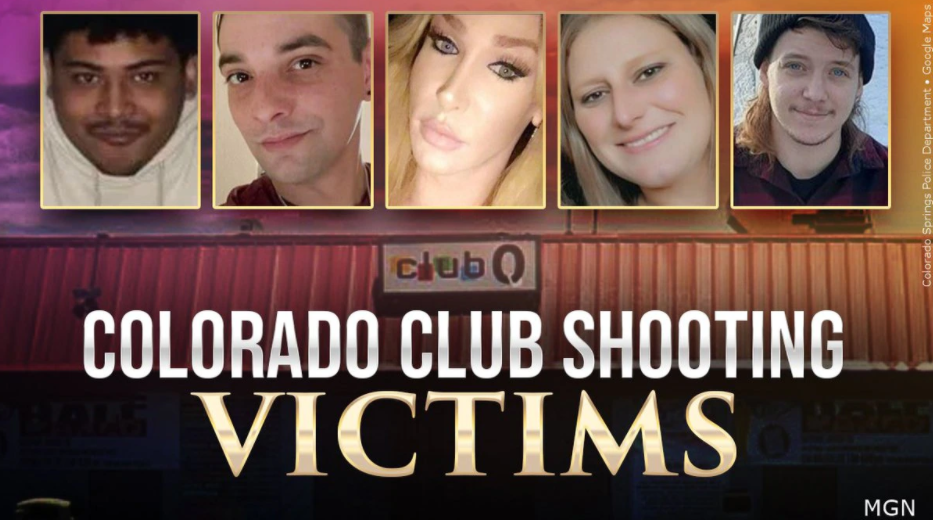
In a world where racists, xenophobes, and homophobes have no issue going into a nightclub or grocery store and shooting whoever doesn’t look like them, love like them, or share their beliefs, marginalized communities are going to need more than so-called “political neutrality” to feel safe (forget feeling included). For one thing, we need to know that others in the space know that we are welcomed to be there. I need to know that if I show up in a gender-nonconforming outfit, or on a non-hetero date, or with a group of visibly trans folks, we’ll be treated with the same respect and courtesy as anyone else. We won’t be stared at, whispered about, or given the side eye when we share a brief kiss or hold hands in the open. People won’t complain or cause a scene over which restroom we use. We won’t be misgendered from the moment we enter the building to the moment we leave. And when incidents do happen, management will understand the gravity of the situation and take action–just like they would if they themselves were trans.
Image: MGN/CSPD/Google Maps
What would it take for me and my chosen family to feel safe at Sunergos or Quills? Like any relationship where trust has been broken, there is no quick and easy solution. The owners would need to take a deep look inward, and ask themselves if they honestly want queers to feel safe in their spaces–especially considering that it will require a bit of sacrifice on their part. It will cost them some money upfront (but ultimately help their bottom line, as studies show) and some homophobic customers (who will be replaced by accepting ones) and it will cost them their reputation as a conservative-leaning, anti-queer business. But it doesn’t have to cost them their faith, or even their reputation as Christian-owned establishments. They could be known instead as a queer-affirming Christian coffee shop: a gathering place for queers, Christians, and Christian queers. Some die-hard atheists would probably still avoid the place, and so would some Southern Baptist Christians. But I know plenty of atheists, agnostics, and non-Christian people of faith who are more than happy to share space with Christians who are happy to coexist.
Of course, it’s not enough just to do a rebrand. The owners would have to be willing to acknowledge that, as white cisgender men, they don’t know the solution to build trust with oppressed groups that are currently wary of them. They would have to get comfortable asking for help, accepting feedback, and treating marginalized individuals as the experts of their own experience. Building trust requires time, patience, consistency, vulnerability, and dedication. It’s not something you can achieve in a quarter, or by ticking a certain number of boxes. It’s a living, breathing relationship that must be tended to with ongoing care.
If Quills and Sunergos were to go this route, they would be going against the Southern Baptist doctrine which states “We deny that the approval of homosexual immorality or transgenderism is a matter of moral indifference about which otherwise faithful Christians should agree to disagree.” And what a victory it would be for social justice, as well as for Christianity, if they publicly renounced this doctrine.
On the other hand, if they can’t meet these basic standards of inclusivity, then they should not posture as inclusive or “progressive.” Because it’s more than just a matter of false advertising: it’s a matter of life and death.
*
An interview with Nathan Quillo
According to one account, which is featured on Sojourn’s website, you played an integral role in the founding of Sojourn, whose stances on LGBTQ+ identity have caused a lot of harm to the queer community. Do you stand by these doctrines?
Yes, I did play a part in the founding of Sojourn. I grew up Catholic, but the church didn’t mean much to me as a young person. In my early twenties, when my faith became important, I took a job as a youth leader at a Methodist Church. A few years in the church fired me for being too progressive. The experience left me hurt and disillusioned. A few of the volunteer leaders and I began meeting on Wednesday evenings until we found new churches, if and when we decided to go back. That group was the original core group of Sojourn. After several months, we were introduced to a guy connected to the Southern Baptist Seminary. The decision was made that Sojourn would move toward joining the SBC and become an “official church.” I stepped away from leadership during this time because I was dealing with significant personal issues that required much of my time and energy. That was almost twenty years ago, and much of my thinking has evolved. And as I reflect on it now, I no longer align with all the doctrines.
If not, how has your thinking changed? Have you done anything to repair the harm that Sojourn has inflicted on the queer community?
I’m much more committed to supporting and affirming my LGBTQ+ friends and colleagues. I have been out of Sojourn leadership for a long time, so I don’t know of specific instances of harm. But for anyone in the queer community who has experienced emotional damage, I am very sorry. I would hope by now, they have found healing and a community that supports them with the love and kindness they deserve.
You are quoted in a 2014 article, “How Christianity Shapes Louisville’s Coffee Culture,” describing Sojourn as “theologically conservative” but “socially liberal.” Your use of socially liberal here is unconventional, and could be read as misleading, contradictory even. Sojourn has been criticized for using similarly misleading messaging, particularly by queer people of faith who joined the church thinking that it was affirming, and left the church (and/or the faith) after it proved not to be. How would you respond to the critique that Sojourn is intentionally misleading people?
Shortly after this quote from 2014, Sojourn experienced significant organizational changes. This dramatic shift caused me to shy away from the church even further. I’m not entirely sure, but from my occasional chats with Sojourn staff, it seems they would no longer use the term “socially liberal.” Of course, no one likes a bait and switch, so I certainly see how this vague messaging can be misleading, frustrating, and potentially harmful.
How important is diversity and inclusion to you as a business owner and employer? What does a diverse and inclusive establishment look like in your mind? A diverse and inclusive work environment?
When I started Quills, I envisioned a specialty coffee space that was safe and welcoming to all people. So yes, diversity and inclusion are important to me. Over the years, I’ve heard various versions of the rumor, “Sojourn owns Quills.” For the record, this is not true. I started Quills by borrowing $35,000 from a family member. Fortunately, I was able to pay them back, so I took out another loan and kept working. Quills slowly grew due to the hard work of many fantastic baristas, managers, and operations leaders. Most have moved on, but a few are still around. The majority of my entrepreneurial journey has been on-the-job training, so I’ve made many mistakes running my business. But each has been an opportunity to learn and improve. I underestimated the hard work it takes to create a diverse and inclusive establishment, but I’m pleased that Quills continues to work on our diversity and inclusion initiatives, such as our employee survives for feedback and suggestions, partnering with local organizations like Feed The West and scheduling routine discussions to hear from any marginalized employees. Our current leadership teams are very committed to these initiatives. For our type of work, I think inclusion is communicated through the kind of people greeting guests from behind the bar. If guests see that they can identify with some employees, it creates a sense of welcome and safety. For the employees, it’s much the same, but company leadership must also establish a culture of trust through policy and procedure, practicing empathy, and developing ongoing training.
Would you say that Quills prioritizes diversity and inclusion? Are there any particular goals you have for the business, as concerns diversity in recruitment, retention, or leadership roles?
We prioritize diversity and inclusion at Quills, but we can improve. The current cafe management and leadership team is a healthy 50% split between males and females. This balance is great, but currently only 18% of our employees openly identify as LGBTQ+, one of which is in management and will soon be moving into regional management. Again, I’m pleased with this, but I would like to see the percentage of LGBTQ+ employees increase. I’d also like to see more people of color working at Quills. We routinely discuss how this can happen at leadership meetings and spent significant time at this year’s annual leadership getaway, strategizing diversity and inclusion plans for 2023.
Are there any specific practices your business uses to protect and include marginalized employees?
We use a job application form that includes questions regarding diversity and inclusion for people seeking work at Quills. This form helps us communicate our desire to build an inclusive workplace and helps us protect marginalized employees by screening answers that may threaten an inclusive culture. We also invite employees to share their pronouns on our internetwork, so coworkers can learn how to best address each other. In all our onboarding training, we highlight our expectations that all employees will respect and support an inclusive work culture. We have also started informal discussions with our employees on sensitivity training, which we plan on rolling into mandatory training workshops in 2023.
Do you support the union efforts taking place in Louisville? If your workers decided to unionize, would you be supportive? Why or why not?
I’ve never worked with a union, but from the little research I’ve done, it seems many unions run well and genuinely support the best interests of the employees and the companies with which they work. However, some union efforts have created extra work, frustration, stress, and poor results for employees and employers. The profit margin is very slim for coffee companies, especially those without drive-throughs. So there would need to be plenty of due diligence to ensure that unionizing would be good for everyone; baristas, managers, and leadership. But if the results benefit everyone, I would gladly support a union.
Would you say that your workers make a living wage? Do you think it reasonable of them to expect to?
I would say most of the employees at Quills make a living wage, although I’d like to see an increase across the board. Currently, the base pay for baristas is $10 per hour, moving to $11 after all training is completed, with an average of $8.16 per hour in tips. Our Lead Baristas start at $12 and move to $13 plus tips. The goal in opening three more cafes is to increase the sales volume needed to incrementally raise wages to the barista base pay of $15 per hour. Additionally, I would hope for continued growth so we can continue expanding our benefits packages to be in line with major medical coverage offered by other businesses. I’m not sure how long this will take, but these are my goals. So, yes, it’s reasonable for our employees to expect to make a living wage.
If you or someone you know is struggling, call or text the 988 Suicide & Crisis Lifeline at 988. LGBTQ+ young people can press 3 to reach counselors trained in LGBTQ+ care, an option that returned on Sept. 30, 2026 after it was cut in July 2025. The Trevor Project also offers 24/7 support at 1-866-488-7386 or by texting START to 678-678.
https://queerkentucky.com/wp-content/uploads/2022/12/Untitled-design-36.png7681366Adrian Silbernagelhttps://queerkentucky.com/wp-content/uploads/2024/05/Queer-Kentucky-White-Logo-300x132.pngAdrian Silbernagel2022-12-07 13:14:552023-09-01 17:42:22Part Two: An exiled Sojourner, SBTS scandals, forced birth, AND MORE coffee
On June 24, 2022, the Supreme Court overturned Roe. v. Wade, the landmark case in 1973 that ruled to affirm the constitutional right to an abortion. Months later we are still reckoning with this decision while the consequences of what this will mean for many marginalized people still hangs in the air. We spoke with Erin Smith and Oliver Hall from the Kentucky Health Justice Network about how this will affect the queer and trans community specifically.
“It’s been an interesting chain of events, and one thing I’ve noticed is that policy is very much developed around very cis-herteronormative language and ideas, so it is automatically non-inclusive of anyone who is trans or nonbinary- and if I’m being completely honest, I could easily say when most of the legislation is made, they aren’t thinking of Black or brown folks either,” said Erin. Even though Erin runs the Kentucky Health Justice Network, they often feel left out of the conversation. They have been given a “seat at the table” to help defend Kentuckians, but they are often not included because of the woman-only language often used in discussion of reproductive rights.
According to Oliver, creating barriers to abortions is even harder on the trans community because of the barriers they already face to basic healthcare. “We are not represented on intake forms, we are not represented in medical school curriculums or insurance policies…we are not being thought of.” Trans individuals already face higher levels of poverty and unemployment, lack of insurance and transportation, making it more difficult to get to appointments. Gestational limits also disproportionately affect trans people, who may lack funds for pregnancy tests and are often misinformed about the risks of pregnancy while on HRT. “A lot of us have been led to believe if you are on testosterone for long enough, your risk of getting pregnant is very, very low. I was looking at a study that said 20% of trans people on testosterone got pregnant while they were not having a menstrual period- 20% is not a low percentage to me.”
Other barriers to care that trans people face include state-mandated counseling and waiting periods that prevent individuals from receiving care in a timely manner. The medical field’s overwhelming incompetency with regard to trans health makes trans people wary of seeking medical care. Ultrasounds and cervical cancer screenings can be especially triggering for trans-masculine people who experience reproductive organ dysphoria. In Kentucky especially, queer people in rural communities lack support networks and access to resources and transportation. And trans youth face their own set of barriers.
So how are queer Kentuckians feeling in the wake of Roe v Wade being overturned? More than anything, exhausted. “I am black, I am nonbinary, I am queer. I am masc presently, I have a different reaction to things,” says Erin. “Even for people who have been here since day one, people who have been following the process, it is not surprising, but it still hurts.. It’s hurting for the present and hurts for the future of Kentuckians. I can’t be shocked by anything because being a black person in this country is already difficult. There are very few things in marginalized communities that they are like ‘wow, we’ve never seen this before’ because we’ve seen it since the abolishment of slavery, since a failed reconstruction, since Jim Crow, since every single movement- race has played a part in it. So we are not shocked, we are just hurt, that we are still continuing to not be heard.”
Oliver echoed many of those sentiments, remarking that 2022 has been one of the worst years in terms of anti-trans legislation in almost every state across the country. “A lot of us have been there to watch it happen. And coming back after the Frankfort session about the anti-trans sports bill and having to have these conversations about reproductive rights that don’t include me… it’s really piling on. I was not willing to undergo an invasive ultrasound and go to a women’s clinic, I had to manage my own abortion. Having to do these things is incredibly exhausting and we shouldn’t have to” Oliver stated.
Supporters of the abortion ban are not the queer community’s only antagonists. “There are still a lot of people in the [pro choice] work that are transphobic, who are racist, and it becomes more apparent as we do this work in Southern states” said Erin. They talked about how hard it was to testify in Frankfort while people repeatedly misgendered them. “To be called woman, to hear woman-only language… you can’t say anything because as soon as you do, you trigger the transphobia in the room. Not only am I Black, I am advocating for trans folks as well. There’s already such a deaf ear and, in some cases, very hostile to the point where it’s like, I need to keep my mouth shut to not put myself in danger, or put someone else in danger, and I still need to get home at the end of the day. Respect is hard to come by now.”
“Just leaving” isn’t an option for many queer folks. Moving is costly, and with a national housing shortage on the rise, moving out of state can be nearly impossible. Besides, says Erin, “wars are not won by constantly retreating. Someone has to stay and fight, and I will fight for my home. I will fight for future generations. I would love to raise my kids here.”
Of course, there are ways to self manage an abortion, and thankfully the methods of doing so have evolved, and grown safer and more sophisticated. It is worth noting that the health risks from pregnancy itself are much greater than the risks from an abortion. The mortality rate around pregnancy is now higher than it was when the original case was heard in 1973, and the risks are even greater for POC. If the only way out of a high-risk pregnancy is through illegal means, the individual has to weigh the health risks against the legal risks: to decide whether to risk their life, or risk going to jail.
Given the current state of affairs, it’s easy to lose hope. But we can’t let ourselves. We have to do everything in our power to take back our right to bodily autonomy, our right to decide what happens to and with our bodies. According to Erin, that all starts with education. “Abortion rights is a fight for bodily automony. It’s a fight for healthcare. That is the language that needs to be used. You cannot talk about one without talking about the other.” Part of the problem is that we lack a state wide sex education program that is queer-affirming. Another part of the problem is the lack of sensitivity training for medical professionals and staff. One bad experience with a doctor or desk person can lead someone to put their health in jeopardy just to avoid it happening again.
“This is why community care is so important,” says Oliver. “People have to take care of people. We have to be open to different thoughts, opinions, backgrounds, and ways of living. How can we show up for people and make sure they have the same access and support in rural Kentucky that I do in Louisville?”
One of the ways we can help is by supporting our local networks: Kentucky Health Network, QueerKentucky, and Protect Kentucky Access just to name a few. Nationally, Sister Song Women of Color Reproductive Justice Collective is a great group to support, as well as Repro Action. The Kentucky Health Network isn’t going anywhere. Their abortion hotline is still open, and they will continue to fight for reproductive justice. “Nothing is going to stop us from our mission in Kentucky. We are going to go what we have to do, and if that means getting people to other states for abortion access, that’s what we are going to do. We are committed to the people in the state of Kentucky and we will continue to serve the people of Kentucky.”
Until the right to abortion is guaranteed to all Americans, we must continue fighting. Erin says, “it is seen as a very violent action which is just not true. It is a false narrative that has gained momentum, leading to fear tactics that are affection laws. They are coming for individuals. Fighting gets hard because of the burnout, the exhaustion. We are tired. We are doing our best to hang on, but we need more allies. We need more people to say something, and put in the same level of work.” So this is our call to action. Whether we are directly impacted or not, we know that none of us are free until all of us are free. Here are three simple actions you can take today:
Make sure you are registered to vote in the midterms, and make sure to VOTE NO ON AMENDMENT 2.
to make Louisville a sanctuary city for abortion access.
https://queerkentucky.com/wp-content/uploads/2022/11/Screen-Shot-2022-11-08-at-1.12.11-PM.png11281552Alixandria Thomasonhttps://queerkentucky.com/wp-content/uploads/2024/05/Queer-Kentucky-White-Logo-300x132.pngAlixandria Thomason2022-11-08 14:00:082026-09-27 14:10:13VOTE: Reproductive rights restrictions will affect the LGBTQ+ community
National News: With the growth of Queer Kentucky, we think it is important to keep our audience up to date on big national Queer news that may affect Kentucky in the future.
This year, the Florida government passed bills that use purposefully vague wording and interpretation to manipulate and scare LGBTQ+ communities. Unclear and nonspecific government documents disempower, intimidate, and confuse communities who are unlikely to know what certain bills, laws, and guidelines state or how they may affect them. LGBTQ+ communities are being bullied out of basic human rights through vague and ambiguous legislation that gives life-changing interpretation rights to teachers, doctors, and judges. Although this tactic isn’t new, it seems to be reemerging and used more prevalently in Florida. As other states are and will continue to try to pass similarly vague bills, it is important to be aware of recent clear examples to recognize them in other states and institutions.
Intentionally deceptive information was shared through Florida’s Department of Health to discourage patients from inquiring and pursuing certain transition treatments and procedures. In April of this year, the FDA released medical treatment guidelines, pre-surgery consent forms, and fact sheets that could create more hesitation, skepticism, and even prevent trans folks from seeking necessary medical care. The Florida Department of Health’s website contains medically inaccurate guidelines that describe gender transitions and hormonal therapy as “running an unacceptably high risk of harming” and advises against certain gender-affirming care and treatments. The Board of Medicine released a proposal on June 2nd to remove Medicare coverage for gender-affirming surgeries. Navigating medical visits as a trans person can be challenging and even dangerous even without these additional hurdles. The misleading anti-treatment stance the department takes restricts trans people from making informed and autonomous decisions about their bodies and transition journeys.
The “Don’t Say Gay” bill passed this March, creates similar fear and confusion with unclear messages, meaning teachers and principals have to interpret and enforce the meaning of the bill however they see is best. This bill prohibits a school district from encouraging classroom discussion about sexual orientation or gender identity in primary grade levels. Without actual definitions attached to “age-appropriate or developmentally appropriate for students”, staff must determine their understanding and avoid conversations and lessons which could be considered inappropriate. Teachers are left to tiptoe around and possibly avoid important lesson topics such as the AIDs crisis and same-sex marriage to ensure they do not overstep an elusive line. Children with LGBTQ+ families are being silenced, confused, sexualized, shamed, and unable to learn, explore, or discuss anything other than than through a heteronormative lens.
These bills do not just target and affect minorities. Florida passed an abortion bill in February which left everyone with the ability to get pregnant with very little autonomy over their choice to terminate their pregnancies. After 15 weeks, unless it is determined medically necessary by two physicians, in writing, as a way to save the pregnant person’s life, an abortion is against the law. A Florida bill passed in 2019 states a judge must find sufficient evidence using factors–age, intelligence, emotional development, well-being, ability to grasp the risks and “consequences” of their decision, and willingness to take on the responsibility–to determine whether a minor’s pregnancy can be terminated. These arbitrary and relative factors of whether or not someone can and should continue with pregnancy are weighed without specific guidelines. The task of presenting a convincing case for their right to abortion to a judge or doctor falls onto the pregnant person, and then they must give all control to the court to decide if they have to keep their pregnancy.
The passing of these intentionally vague and manipulative bills, laws, and regulations – as well as others– will affect marginalized communities most by compiling the disadvantages and lack of privilege already present. As other states have and will continue to pass similar laws to scare and quiet certain groups, it is critical to empower communities through education and awareness.
Empower your community:
Familiarize yourself with the specific bills which affect you and your community.
Stay informed of new bills and laws in your state and what they could mean for you and your community.
Be aware when vague wording is used and determine its intentions and risks.
Create safe spaces for children outside school to discuss gender and sexuality topics.
Educate your children on topics and historical events teachers may no longer be covered in school.
Use outside medical sources such as the U.S. Department of Health and Human Services and the American Medical Association when seeking medical advice and information.
Before seeking medical procedures or signing consent forms, ensure the information is accurate and up to date.
Compare documents in other states and practices to find any disinformation.
The Vampire Shot Glass is an all-gender inclusive menstrual cup for anyone who menstruates. It is similar to the menstrual cups you’ve seen before, manufactured and tested in the US and created out of medical grade silicone. The two biggest differences lie in who the CEO is and who they are made for. Madeline, the founder of Vampire Shot Glass, is also a certified sex coach and has used her platform on TikTok to educate the masses on inclusivity in sexual issues. And the intended audience- anyone. This includes all different genders as well as a variety of body shapes. According to their website, “We are different from other menstrual cup companies because we’re committed to affirming identities and supporting gender euphoria.”
They have three different sizes, one of which is specifically made for people with low cervixes. There are also small holes toward the top to keep it from vacuuming to the cervix. The tab on the bottom helps with grip, and the overall design is super easy to use. And best of all- no mention of “women” or “feminine” anywhere. Periods are not just for women and not all women menstruate- and the period products we have available to us should represent that.
Sizing chart source: VSG Kickstarter page
I talked to Madeline about the exciting Kickstarter campaign that launched April 1st. “The biggest thing people can do to help is to share and support the campaign. We need to get the word out there.” As a queer-owned small business, word of mouth is the quickest way to really get this amazing product off the ground.
And Vampire Shot Glass is just the beginning. There are a lot of ideas for the future, both around products and around education. In the field of bodies and how they work, education is everything. “We believe there is no right way to menstruate and acknowledge that menstruation is not gender specific. We’re sick and tired of the pink-washed toxic menstrual industry and have decided to do something about it.”
Log on to the Kickstarter page and support this amazing company and its product. You can check out Madeline’s TikTok to learn more here: https://www.tiktok.com/@the.attitude.tok
https://queerkentucky.com/wp-content/uploads/2022/04/Untitled-design-22.png19001800Alixandria Thomasonhttps://queerkentucky.com/wp-content/uploads/2024/05/Queer-Kentucky-White-Logo-300x132.pngAlixandria Thomason2022-04-26 14:51:432023-09-01 20:19:42The Vampire Shot Glass: because not just cis women have periods
The 2022 Kentucky General Assembly starts January 4 and a slew of anti-LGBTQ+ bills will create a challenging four months for the Fairness Campaign and other advocacy groups fighting racism, transphobia, and homophobia in the Bluegrass.
For 30 years and counting, Fairness continues fostering progress. These achievements include 23 communities adopting fairness ordinances (protecting nearly a third of the commonwealth from discrimination), three major cities banning the deadly practice of conversion therapy on Kentucky kids and all seven explicit anti-LGBTQ+ attacks on the community in the Kentucky General Assembly were defeated in 2021.
Despite decades of progress, some LGBTQ+ activists are worried.
“We are already facing pre-filed bills that threaten many of our most vulnerable Kentuckians,” Fairness Campaign Executive Director Chris Hartman, said.
Chris Hartman, Executive Director, Fairness Campaign
One of the anti-LGBTQ+ items is another attempt to ban transgender students from fully participating in school life by barring their access to sports teams. Neighboring states West Virginia, Tennessee and several other states around the country have passed similar bills.
Regarding education in public schools, there are two bills that would ban Critical Race Theory and teaching about LGBTQ+ identities.
“We’re very nervous, perhaps more than in the last decade plus,” Hartman said. “There is already an anti-trans student sports bill pre-filed in the legislature and opponents have announced their intent to put an anti-LGBTQ law inside an abortion bill.”
The “Omnibus Abortion Bill” that includes language from 2021’s failed “Healthcare Discrimination Law,” if passed, will allow any worker in a healthcare setting to deny service to anyone for any reason.
For two years, Senator Stephen Meredith (R) couldn’t pass the original healthcare discrimination bill, so he slid it into the new abortion bill.
Lawmakers can put any language they want into bills. Bills don’t have to be specifically about any one thing, though they are often categorized as something related to one thing—education, health and welfare, etc. In Ohio, lawmakers slipped the similar anti-LGBTQ+ language into their budget bill and passed it in 2021.
“Needless to say, we are going to need every LGBTQ-supportive Kentuckian at the Statewide Fairness Rally and Lobby Day on Wednesday, February 16,” Hartman said. “People are now able to register for the rally at fairness.org/rally.”
Ban Conversion Therapy Kentucky will also appear during the 2022 session. Despite attempts in 2020 and 2021, conversion therapy is still legal in the Bluegrass.
The Youth Mental Health Protection Act is bi-partisan legislation that would protect vulnerable kids from ineffective and fraudulent practices claimed to “change” a person’s sexual orientation or gender identity.
“We continue to pick up more and more cosponsors and I am told that this particular bill has more bi-partisan support than any other LGBTQ+ bill in the country,” Willner said. “There are people in the legislature that are basically anti-LGBTQ+, but I think when we start talking about the issue of suicide, self-harm and really dangerous risks associated with conversion therapy, it seems like even people that are not friendly to the cause say, ‘this goes too far.'”
The truth is that conversion therapy has no scientific basis whatsoever. Instead, it is often based on outdated and false theories such as the flawed notion that being gay is caused by bad parenting. Most conversion therapists falsely blame parents for their child being gay or transgender, even though there is zero evidence for such claims.
The Trevor Project survey of 34,000 LGBTQ youth found that of the 5% of LGBTQ youth who reported undergoing conversion therapy, 42% reported a suicide attempt in the past year. LGBTQ youth who underwent conversion therapy were more than twice as likely to attempt suicide in the past 12 months compared to their LGBTQ peers who did not report undergoing conversion therapy.
If you or someone you know is struggling, call or text the 988 Suicide & Crisis Lifeline at 988. LGBTQ+ young people can press 3 to reach counselors trained in LGBTQ+ care, an option that returned on Sept. 30, 2026 after it was cut in July 2025. The Trevor Project also offers 24/7 support at 1-866-488-7386 or by texting START to 678-678.
https://queerkentucky.com/wp-content/uploads/2021/12/gay-ky.png6501350Queer Kentuckyhttps://queerkentucky.com/wp-content/uploads/2024/05/Queer-Kentucky-White-Logo-300x132.pngQueer Kentucky2021-12-29 17:19:312024-05-09 19:58:08Advocates to fight anti-LGBTQ+ bills, support state-wide Fairness
A coalition of Kentucky advocacy groups and unions will protest the Kentucky Farm Bureau’s discriminatory policies at their annual Country Ham Breakfast at the Kentucky State Fair Thursday morning.
The groups are currently running radio ads on 97.5 WAMZ and 98.5 KISS-FM targeting the Kentucky Farm Bureau’s policies that are anti-LGBTQ, anti-Teacher, anti-Union, anti-Choice, anti-POC, pro-Death Penalty, and more. Kentucky Farm Bureau insurance customers currently pay fees that support the controversial policies, but customers do not receive a copy of them and are largely unaware the policies exist.
The protest will also be joined by Freda Fairness, a puppet mascot created in collaboration with Squallis Puppeteers to counter the Kentucky Farm Bureau’s State Fair mascot Freddie Farm Bureau.
WHAT: Protest of KY Farm Bureau’s Discriminatory Policies
WHEN: Thursday, August 26 at 7:00 a.m. ET
WHERE: Kentucky Fair and Exposition Center South Wing-B937 Phillips Lane, Louisville, KY 40209
WHO: ACLU of Kentucky Fairness Campaign Jefferson County Teachers Association Kentucky Health Justice Network Louisville Showing Up for Racial Justice Planned Parenthood Alliance Advocates – Kentucky United Food and Commercial Workers Local 227
The institution of marriage should only be recognized as the legal union of a man and a woman. (p.9)
We are opposed to any state-supported agency providing benefits to “domestic” partners. (p.10)
We strongly believe in the value of all individuals both born and unborn. (p.10)
We support the current law that prevents teacher strikes. We oppose legislation that mandates collective bargaining for public school employees. (p.60)
We oppose schools declaring themselves gender neutral. (p.61)
Alternative lifestyles should not be taught in public schools. (p.61)
We oppose an increase in the minimum hourly wage. (p.75)
We recommend the federal prevailing wage law be repealed when dealing with government contracts. (p.75)
We strongly oppose any mandate that would require any government entities to recognize and collectively bargain with employee unions. (p.75)
Furthermore, we oppose public employees being permitted to strike, organize work stoppages or slow-downs. (p.75)
We support the idea that those who receive Supplemental Security Income, Supplemental Nutrition Assistance Program (SNAP) benefits, or other government welfare payments should have to submit to random drug testing. (p.76)
Persons on strike should not be eligible for SNAP benefits, surplus commodities or unemployment compensation. (p. 76)
We support capital punishment. (p.88)
We oppose any government mandate that forces school districts to provide transgender bathrooms. (p.90)
https://queerkentucky.com/wp-content/uploads/2021/08/43f906cf-90b9-49a5-a2ba-1d56da6619e1.png6501350Queer Kentuckyhttps://queerkentucky.com/wp-content/uploads/2024/05/Queer-Kentucky-White-Logo-300x132.pngQueer Kentucky2021-08-25 14:11:482024-05-09 19:58:08Homophobic, transphobic practices of KY Farm Bureau to be protested tomorrow morning
I grew up in Bowling Green, Kentucky on a 34-acre farm in a creaky cabin down a long circular driveway. Growing up, I was either outside causing trouble in the neighborhood or inside glued to my T.V. playing my favorite role-playing video game. (It’s Final Fantasy IX by the way and no, VII is not better). I didn’t know what make-up or a straightening iron was until I was in eighth grade, as I was always in baggy basketball shorts, an over-sized t-shirt and some type of skating shoe.
I knew that I was into more than just boys at a pretty young age, but I didn’t quite understand it. All I knew was when I looked at and spoke to a girl, I felt the exact level of attraction as I did while looking at boys; growing up in the Bible Belt taught me that that was not something to mention.
I was constantly surrounded by friends and family who were devout Southern Baptists and learned from them very quickly that relationships were strictly between men and women. Pretty cliché, am I right?
It was easy for me to play along with my peers and what their beliefs were; hell, I didn’t even know what I believed in. I was Super-Glued to another one’s way of life and views and had no clue how to get out or find my own wavelength of thought.
I didn’t truly find my voice and try to experiment with my sexuality until I was in my early twenties after a long-term relationship was ended. What I learned was something totally different than what I initially thought. I consider myself bi and to be quite honest, I don’t care what gender someone is at all.
I’m attracted to minds; the way they function and view the world. What does queer mean to me? Queer is anything that goes against the heterosexual norms of course, but to me it is much more than that. It is the way that I view the world and the people within it.
It is the way that my mind processes what I experience. It is something different and beautiful. It is colorful and free. It is organic and natural. I’m very excited to write for Queer Kentucky and show my voice. It’s something that I was afraid of displaying until recently.
My goal is to unravel the tension that we feel within our own community and shout out what needs to be heard. I want to have a voice for others who were in the same position I was only a few short years ago. Stuck. Paralyzed. Silent. I want to make a difference, even if that difference is in a single human.
Side notes: I am a full time student majoring in Gender & Sexuality studies along with Psychology.
My plan is to work my way through my PhD and become a safe place for anyone and everyone.
I started collecting used bags and stuffing them with essentials for the houseless (homeless is not the word I like to use).
I plan to start sculpting vaginas and uteruses to sell and send the profits to charities that help fund humans with uteruses searching for assistance on abortions.
https://queerkentucky.com/wp-content/uploads/2019/06/d0ef20ee-8836-4aa6-94b0-abd70d39e937-jpg-webp.webp10361280Queer Kentuckyhttps://queerkentucky.com/wp-content/uploads/2024/05/Queer-Kentucky-White-Logo-300x132.pngQueer Kentucky2019-06-17 09:43:532019-06-17 09:43:53Bowling Green native joins Queer Kentucky as editorial intern
Tucked back in Whitesburg, Ky., there is a large unassuming, wood clad, building holding a treasure trove of resources, history and culture. The Appalshop, while it’s been a constant staple of Eastern Kentucky’s culture for nearly 50 years, there is a big chance many people haven’t heard about it.
If you are looking for an expressive hub of mountain Kentucky culture, I’d have to say this is where you’ll find it. They host events, have a radio station with many diverse shows, camps, readings, archives and workshops. You want DIY? This is the spot. The first time I found out about Appalshop was at Pikeville’s Pride. They sent up a booth and I learned about some of their histories and filled out a survey on a safe space they are creating. The next week I was at a reading of “Biscuits and Blisters,” written and read by Misty Skaggs. Afterward, I talked to her mom, who gave me earrings and told me stories about the quilt that covered their table, her artistic inspirations, and traveling to readings with her daughter. On Friday, Nov. 9, I went to see a show put on by the Girls Rock Camp benefit, supporting both the camp and All Access EKY.
Girls Rock Camp is for girls and gender variant youth who want to play music. Having gone to a similar camp in Ohio when I was a preteen, Girls Rock had a special place in my heart. This is the third year of Girls Rock Camp (hosted by Appalshop’s radio station WMMT), and this year they teamed up All Access EKY. All Access EKY is an organization focused on informing and finding birth control resources for anyone who needs either in this region. The bands Slutpill (a local band), Slugpit (a band formed during the camp), and Hedonista (from North Carolina, but with members from the area) performed. During this benefit All Access EKY was providing information on various birth control options, and also had created interlude videos for between sets detailing information on sexual health specifically as it pertained to Kentucky. What was particularly nice is this was an all ages event. There were families supporting their younger family members playing music, and families with kids dancing in the aisles to loud punk music about the necessity of safe access to abortions. There is something very comforting about the normalization of both queer culture and discussions on safe sex in rural Appalachian Kentucky.
I was lucky enough to get to meet and talk to so many wonderful people who have come together to create what feels like to me, a very organic Queer space. This includes the director of WMMT and one of their staff who hosts a radio show. Really, I felt both quite blessed and comfortable in this space, which is one of the first places I’ve discovered out here in Eastern Kentucky that makes me feel that way. I’ve named this Appalshop part 1 because it is my hope to go back and speak with the people who know this place best and learn about the Appalshop’s 50 years of cultural influence in this region.
To me, it feels like this place has always been this way, but I know many people have put in the footwork to create this rural Queer space and it is in my plans to explore further what came into play to make Appalshop what it is today. This won’t be the last y’all hear about Appalshop, and if you have time, definitely check out the work they do.
https://queerkentucky.com/wp-content/uploads/2018/12/img_0656.jpg8421080Queer Kentuckyhttps://queerkentucky.com/wp-content/uploads/2024/05/Queer-Kentucky-White-Logo-300x132.pngQueer Kentucky2018-12-07 13:43:212018-12-07 13:43:21Feminist Friday: The Appalshop Part 1