Tag Archive for: queer musicians

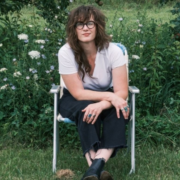
S.G. Goodman sits in a folding lawn chair in a field of wildflowers, wearing a white T-shirt, black wide-leg jeans and black boots.

S.G. Goodman Brings Her Kentucky Tour Home This Week

Singer-songwriter S.G. Goodman is coming to town. The Hickman, Kentucky, native is making two stops in the Commonwealth this week. She’s appearing at the Bourbon & Beyond festival this Thursday, Sept. 24, at the Highland Festival Grounds at the Kentucky Exposition Center before making her way north to Newport to play the Southgate House Revival on Friday, Sept. 25.

Goodman’s current tour spans the South, a sure nod to her commitment to place-making, honoring of home, and love of the spaces that made her. Her third solo album, Planting by the Signs, was released in 2025 and pays homage both to the sound of folk tradition and to Appalachia’s movements through life as guided by the moon and stars.

The Southgate House Revival (SGHR) show takes place in the stunning Sanctuary room, which houses the original organ from when it was a church and is flanked by magnificent stained-glass windows. While the SGHR was formerly a Methodist Episcopal church, its repurposed space also holds true to the spiritual influence that erected its walls.

Goodman’s Southern Baptist upbringing is apparent in her music, and in many ways, reclaimed in her unique sound. The artist, an up-and-coming queer icon in her own right, was named the 2023 Emerging Act of the Year by the Americana Music Association. But more than that, she gives voice and name to many Southern queers who found a love for music in the church and have grown up to find their identity at odds with the values they were raised with.

By marrying the spirit of her faith tradition with a raw and fresh sound in the folk genre, she honors her home while making listeners across the region feel that their space, too, can be held. Goodman seamlessly balances the complexity of rural, Southern, queer identity in a fashion that is so familiar to many, and offers a representation outside the region that makes us proud.

She’s surely one to continue watching, and this series of shows is an opportunity for folks to have their “I was there when…” moment with an artist who graced the cover of Queer Kentucky’s very last print issue in 2025.

Bourbon & Beyond is the annual music festival celebrating Kentucky’s famous spirit with dozens of musical acts on each of its four days. Both weekend and day passes are still available for purchase.

Goodman is joined in Newport by opener Abby Hamilton, whose debut album, #1 Zookeeper (of the San Diego Zoo), is a musical match made in heaven. Hamilton is a Kentuckian too, hailing from Nicholasville.

The Southgate House Revival hosts live music seven nights a week across three spaces within the venue. S.G. Goodman goes on at 8 p.m.; doors open at 7 p.m.

TBALLER, Northern Kentucky artist, poses in leopard print and a vintage fur coat during a photoshoot.

NKY Artist TBALLER Explores Music, Fashion and Funk

TBALLER doesn’t just make music, he puts on a show. The Northern Kentucky artist has spent nine years honing a sound he calls “funky, bold, genre-bending pop,” pulling from Prince, Jimi Hendrix, and the deep funk roots of nearby Cincinnati. This year, he is hitting the stage harder than ever, headlining a DIY-regional tour of small venues across Kentucky.

Along the way, TBALLER built a loyal, largely queer fanbase who connect with his boldness, love of fashion, and self-expression. That connection has pushed him to explore his own identity, both in the studio and in the world. We caught up with him to talk influences, community, and what’s next as he works on his first EP.

Portions of this interview have been edited for brevity and clarity. 

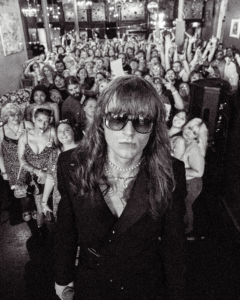
TBALLER performs before a packed, cheering crowd at a live show in Kentucky.

Photo by: Max G @barelymanic

Northern Kentucky Artist on Sound, Style and Self-Expression

Richie: Hey TBALLER! Nice to meet you. What brought you to making music? How would you define your musical style?

TBALLER: Hello! Nice to meet you as well! Originally, I started making music because a friend of mine made a song, and for some reason, I decided to drop a diss track about him sort of as a joke. From there, I found out I like making music and stuck with it. 

Richie: What are your main musical inspirations? 

TBALLER: Some of my main music inspirations are Prince, Jimi Hendrix, Ohio Players, P-Funk, Michael Jackson, Tyler, The Creator, Hall & Oates, and many more. Geographically speaking, I think Cincinnati has had the greatest on my music. and I am greatly inspired by funk music, which has deep roots in Cincinnati.

On Queerness, Community and What’s Next

Richie: What’s your connection to the queer community?

TBALLER: After posting my music on TikTok, I gained a pretty large Queer fanbase. I love seeing them out at my shows, and it makes me feel good that I can provide a safe space for not just my Queer fans but all of my fans to enjoy themselves and have a good time. I take pride in that. I also think specifically my Queer fans have helped me feel more comfortable to loudly express myself. or that, I am eternally grateful.

Richie: How have you explored your identity through making music? How has it changed how you perceive yourself?

TBALLER: Every time I make a new song, I learn a bit more about myself. How I like to dress, how I like to dance. Even reflecting on decisions I’ve made and learning from mistakes. I get all this time to say how I truly feel over an instrumental, and sometimes I pick out things that I didn’t even know I felt. The studio is the one place where it’s all about me and I can’t be wrong. I think mainly I’ve learned that I don’t know nearly as much about myself as I previously thought, and I’m very excited to get to know more.

Richie: Why do you like making dance music? Why do you think it’s important, especially in these times?

TBALLER: I like to dance! I also love to entertain. I’m very inspired by the performers who really made an effort to put on a show. My fans paid their hard-earned money to come see me, so I’ll be damned if I don’t give ‘em a show, and the best way to do that in my mind is give them something they can dance to. 

Before I started performing, it was just a natural inclination towards more upbeat [music] but now I’ve doubled down. With the negative political state of our country and the current president in office, it seems like things are going backwards and getting more hateful. Not to mention, it seems like everyone is struggling financially right now. It’s incredibly important to have an outlet where you can kind of forget about your troubles and just focus on enjoying yourself in the present moment. I feel like making time to let loose can help us get through the tough times and remind us that we are [all] human.

Richie: Where do you hope your music will take you? 

TBALLER: I want to be great. I want to have albums and songs and performances and a career that moves lots of people and makes them feel something. I want to express myself as loudly as possible, and I want to learn as much about myself and this world as I possibly can through my music.

To keep up with TBALLER, follow him on social media here. His next show is August 22nd in Lexington. You can grab tickets here. 

Black-and-white portrait of Appalachian poet Samantha Ratcliffe in glasses, set against a painted mountain landscape.

Appalachian Poet Samantha Ratcliffe Uses Words to Reclaim Queer Identity in Kentucky

Appalachian poet Samantha Ratcliffe embraces her roots through poetry and songwriting to showcase the rich cultural history of the region.

After her parents’ divorce as a child, she was a “deeply dramatic” sixth grader who began to write poetry in class, often landing her in trouble. She filled two notebooks with her words during that time. She approached her teacher and asked if her poetry was worth submitting to a school writing competition. Her teacher then marked the poem up in red ink and returned it to her, stating that that is how a real poem should look.

“I’ve been obsessed with defying the idea of ‘real poetry’ ever since,” Ratcliffe said.

Appalachian Poet Samantha Ratcliffe Finds Her Voice

Born in Pikeville, KY, Ratcliffe uses her Appalachian roots to showcase the fight against hatred in Southern communities. She draws a lot of her inspiration from fellow Kentuckian bell hooks, who focused many of her writings on feminist thinking, race, and social class. Some of her poetry speaks to injustices enacted against Appalachia, as capitalism destroyed many people’s livelihoods. She reiterated the sentiment that the need to create in Appalachia was driven by a drive to exist and to reinvent harmful stereotypes placed upon the region.

The Appalachian region includes a prolific coal industry, in which the workers were exploited and abused by the systems that forced them to work. Thus, today’s economy in Appalachia has been severely affected by the past hardships.

“It’s almost like you’re traveling through a wooded area, but it is your woods. It’s like Kentucky- this South, is our woods. But it’s a reclaiming of that space in a remembrance of our ancestors as we go along this literary path together,” Ratcliffe said.

From Poetry to Songwriting as Fields May

Ratcliffe is also a songwriter. In high school, she dated a boyfriend who introduced her to punk music and started a band with her. “So, as gently as he could, he suggested that maybe he should write the lyrics because he understood punk better than I did. And at that young age, he was probably right!” Ratcliffe said. But her love of riot grrrl music pushed her to write and perform her own songs after the band’s sets. “I was deeply inspired by other local femme and trans artists at the time who made me feel like it was possible for me too,” she said. Now, she has over 50 songs under her belt and releases music under the name Fields May.

Ratcliffe is currently pursuing her MFA in Poetry at the University of Kentucky, where she works as a graduate instructor teaching creative writing classes. Before starting her graduate studies, she worked as an English and creative writing high school teacher.

At 16 years old, she found herself in the Lexington punk scene, where she would sell self-published poetry books called zines that she had collected from across the country. Since then, she has been involved with small press publishing and has attempted to learn as much as she can about the process.

Ratcliffe also runs Hill Writers Collective, a monthly reading series she’s led for more than three years that spotlights two Appalachian authors each month in free, community-centered events. Information on upcoming readings is available on her website and Instagram.

“Often it feels like publishing is unreachable, but I believe it’s one of our oldest mechanisms of collectivism. I’ll never stop talking about how special the literary community is in Kentucky,” Ratcliffe said.

Queer Identity and Appalachian Roots in “Common Wealth”

Currently, she is working on a book of poetry for her thesis, titled “Common Wealth.” The book explores themes of queer identity and Appalachian upbringing, subjects that regularly fuel Ratcliffe’s creative practice. Appalachian roots are based in rising against oppressors, said Ratcliffe. She integrates those ideas into her work, demonstrating what it’s like to live as an openly queer person.

In one poem, Ratcliffe describes a time she had a conversation at the kitchen table with a friend who had just gotten top surgery. The kitchen table presents a feeling of home and Appalachia, regardless of some of the conflicting beliefs held by Ratcliffe and by the region, she said. “There are so many reasons to be scared in life. You could spend your whole life inside, spend your whole life closeted, you could spend your whole life never coming out and living your true life as a queer, trans person. If you don’t say ‘rear against this hatefulness and the selfishness of capitalism,’ you’re actually hurting yourself more in the end. It’s a fake safety,” said Ratcliffe, who was quick to add that she sees this as reflecting her own journey rather than a judgment of anyone else’s — staying closeted, she said, is often a matter of safety, not fear.

That belief is what drives her writing. “Writing is something that I have to do to see myself and the world. And I write about queer, trans, and Appalachian identities because I know those folks as beautiful. I want the world to see us as fully as I see us,” Ratcliffe said. “My biggest advice to aspiring writers is to seek out Appalachian and queer writers not just to improve your own skills, but to understand yourself, where you’re from, and all the places you’ve yet to go.”

In her unpublished poem, “Quilting,” she writes about the deep connection Kentuckians have with one another and how the world has strung them together. “My family taught me that we take in those who need, we feed those who need. There’s always a place at the table for everyone,” Ratcliffe said.

Quilting

This blanket, a family

of pine trees reaching across

the night’s rustling to sooth your

sleeplessness. Bound self of words,

holding the poetry and the poverty

like simile.

Ratcliffe lives loudly and proudly as a queer person, and wants Kentuckians to be proud “There are so many of us (queer people) who are literally taking care of your people, teaching your kids, so we’re just here all the time,” said Ratcliffe. “You may not see us, but we’re still part of this Commonwealth and we’re still a beating heart in our connected story,” she said.

You can read more of Ratcliffe’s poetry and listen to her music here.