LGBTQ+ people living in western Kentucky are experiencing a substantially more dangerous environment than anywhere else in the state, reporting being physically attacked at nearly twice the statewide rate. For trans folks, it goes even further: Kentucky’s hate crime statute has no name for what happens to them when they are attacked. A trans Kentuckian can be assaulted for being trans, and the state may prosecute the harm, but not the reason it was done.
Across the Queer Kentucky survey, western Kentucky ranks first or near first on nearly every measure of harm: LGBTQ+ residents with no health care provider, never tested for HIV, refused care by a provider, physical assault, suicidal ideation, drug use, smoking, feeling unsafe at home and deciding to move away. This is a region where nearly every measure of harm, access and community is at risk. And state policy and protections have failed them time and time again. 29.2% of queer residents in western Kentucky reported at least one instance of physical assault, which they attributed to the overarching anti-LGBTQ+ climate in the state. Overall, the statewide rate of physical assault stands at 15.2%.
54.5% of queer individuals report feeling physically unsafe at home, and 52.2% report feeling unsafe in public. Both are the highest of any region.
But it doesn’t stop at physical assault. In most of western Kentucky, a person who discriminates against and refuses an LGBTQ+ person a job, an apartment or service at a counter faces no legal consequences in doing so.
Across all of Kentucky, 24 communities have local Fairness Ordinances — including western Kentucky’s Paducah in 2018 and Henderson in 2019 — but that’s two of the 24, and they sit 130 miles apart. In between and beyond them, Owensboro, Bowling Green, Hopkinsville, Madisonville, Murray and Mayfield have no local fairness ordinances. On a map of who Kentucky has agreed to protect, most of western Kentucky isn’t on it.
What about larger state protections in Kentucky? It turns out that the state of Kentucky does have a hate crime law that protects sexual orientation. But it’s still reliant on individual judgment, and it still doesn’t protect trans people.
KRS 532.031, passed in 1998, applies when someone commits offenses because of a person’s race, color, religion, sexual orientation or national origin. In 2017, the legislature amended the statute to add a category, extending it to victims targeted for their actual or perceived employment as a peace officer, firefighter or emergency medical services worker.
Gender identity is not on the list.
Nine years ago, when the state legislature reopened the statute to add police and first responders, it still left trans Kentuckians out. For example, if a gay man is assaulted in Paducah, it can legally qualify as a hate crime. But if a trans woman is assaulted on the same block, both the state and law enforcement officers can choose to do nothing. The statute, by not including gender identity, allows law enforcement to turn a blind eye and delegitimize incidents against trans people.
Even within the bounds of discrimination against sexual orientation, this hate crime law does “protect,” the statute has no teeth and the law still does far less than what it implies. It might look and sound substantial, but functions as a performative exercise in the court system. As a result, there are many opportunities to create distance between the assault and any consequence for it. For instance, a judge decides at sentencing whether bias was a primary factor. A finding of bias permits denying probation instead of requiring it. The parole board may delay or deny parole.
It’s subject to discretion and personal biases that could creep in all the way down.
Abill doesn’t have to pass to embolden violence in its communities. Another factor behind why the climate in Western Kentucky still hasn’t improved. A bill only has to be filed, assigned, debated and covered on the local news, which are all separate moments of exposing a Kentuckian to hear whether or not their queer neighbor has the same rights as they do.
For example, Senate Bill 72 would have let health care providers refuse any treatment that violated their conscience. House Bill 468, pitched as a routine civil rights update, would have stripped the enforcement power from the Kentucky Commission on Human Rights and the 22 local commissions that actually enforce fairness ordinances. Both cleared their chamber of origin before stalling.
If House Bill 468 had passed, it would have taken away the only fairness ordinance protections two cities in Western Kentucky have.
And people are responding the only way the law leaves open to them: they blend in, censor their identity and opinions, or leave the state altogether.
According to the same survey, 18.5% of LGBTQ+ individuals living in Western Kentucky have decided to move out of state due to anti-LGBTQ+ policies; statewide, only 8.1% decide to leave. The compounding burden of assault, health care gaps, housing stress, and drug use appears to translate into a concrete intention to leave. One respondent wrote:
“Currently planning to move out of [the] states to a blue state. I have a lot of trans friends that I am scared for. I want them to go somewhere more blue, more safe, more open minded.”
In the face of so much hardship, western Kentucky remains home to LGBTQ+ advocates who keep showing up anyway. In May 2019, 55 residents in Bowling Green spoke in favor of a Fairness Ordinance, while 31 spoke against it. The commission voted it down 3-2. Advocates put it back on the agenda and have continued pushing for it. When a Fairness Ordinance was voted on in January 2018 in Paducah, residents flooded the city commission meeting, forcing the fire marshal to move the overflow into the adjacent hall to listen through open doors. That ordinance passed 4-1.
The people of western Kentucky continue to fight for the safety of their LGBTQ+ neighbors. But with so few fairness ordinances and statewide protections that stop short of covering them, many LGBTQ+ western Kentuckians remain at risk.
If you or someone you know is struggling, call or text the 988 Suicide & Crisis Lifeline at 988. LGBTQ+ young people can press 3 to reach counselors trained in LGBTQ+ care, an option that returned on Sept. 30, 2026 after it was cut in July 2025. The Trevor Project also offers 24/7 support at 1-866-488-7386 or by texting START to 678-678.
https://queerkentucky.com/wp-content/uploads/2026/09/KY_FAIRNESS_ORDINANCE_MAP_2026.webp6681200Sarah Wheatleyhttps://queerkentucky.com/wp-content/uploads/2024/05/Queer-Kentucky-White-Logo-300x132.pngSarah Wheatley2026-09-09 08:44:272026-10-30 09:24:02Western Kentucky’s LGBTQ+ Crisis: The Most Harm, the Least ProtectionQueer Kentucky's survey data reveals a region where nearly every measure of harm is at its worst, and state law still leaves trans Kentuckians out entirely.
When Kenton County’s police chief asked his fiscal court this summer for money to install six automated license plate reader (ALPR) cameras at the entrances to the county’s parks, his primary reasoning was to make those parks safer.
“We see this as a way to keep potential predators from coming into our parks and preying on children,” Chief Spike Jones said at the July 14 meeting.
Commissioner Jon Draud of Edgewood seemed to agree that it was a problem.
“There’s a lot of weird people that hang out at parks,” he said in response to Jones’ report, which stated the cameras would only point into the parks – not the general right-of-way – and only record vehicle data entering and exiting.
The report cited more than 1,000 calls for “suspicious person/vehicle” in the county’s parks since 2021, by far the most common type of call in those areas. Figures showing how many of those calls resulted in arrest or charges were not immediately available.
Vague commentary aside (Draud did not elaborate on who he meant by “weird people”), the story sounds reasonable enough on its surface. It aligns with police departments across the country making the case that the emerging technology is a game-changer for both investigating and deterring crime. Flock Safety’s website is populated by dozens of accounts of these types of cameras’ role in facilitating or expediting case closures.
The game-changing element is the AI-powered data collection and analysis that act as what police officials call a “force multiplier,” allowing departments to do more with stretched resources and pooled intelligence.
“It has changed how we do police work,” Lexington Police Commander Matt Greathouse told Kentucky Law Enforcement magazine. “Not only in Lexington and Fayette County, but all these counties now have some sort of Flock camera. What’s great about that is we can share that information across those jurisdictional boundaries, which we have discussed in many cases.”
Even Kentucky police agencies that have decided to discontinue their use of the cameras stressed the technology’s value. When announcing its decision in July to cancel its contract with Flock, the Newport Police Department said, “The city’s decision should not be interpreted as opposition to emerging public safety technologies or as a reflection that [ALPRs] lack public safety value.”
A ‘permanent dragnet’ for the ‘safest’ cities?
Residents and business owners across Northern Kentucky have been asking leaders why the cameras are needed — and whether the potential threats to their privacy are worth the returns in fighting crime — when they already feel safe.
At an August 17 public hearing, Independence Police Chief Brian Ferayorni spoke to his department’s initial deployment of 10 cameras in 2024, after a pilot the year prior. He purchased five more in 2025 and another five again this past June. He said 17 of those cameras were active at the time of the hearing.
“We are utilizing these ALPR cameras to identify and arrest criminals that come to the city to victimize our citizens and deter others who plan on doing the same,” he told more than 100 people in attendance and more watching the meeting from home.
The city council has approved Ferayorni’s contracts with Flock each of the last three budget cycles, with little fanfare. According to city contracts obtained by Link NKY, each camera costs roughly $3,000 per year, plus initial installation fees ranging from $650 to $1,250 each, depending on location. The first 10 cameras and their installation cost $68,900 over a 24-month period. The second and third contracts waived the installation fees, totalling $30,000 a batch, each for 24-month terms. In total so far, the city has spent nearly $130,000 on the cameras for four years of service from 2024 into 2028, when the most recently signed contract would expire.
Ferayorni defended the cost with a list of more than 30 recent cases he said the cameras assisted in solving since their deployment. Most common among those were stolen vehicles (10); missing persons, drugs and assaults and threats made up the next third (three each), with a variety of other one- or two-off cases comprising the remaining dozen.
Independence resident Zach Ford looked at FBI crime statistics prior to the meeting. While praising the chief for keeping the city “probably the best…in the commonwealth,” he said he couldn’t square a request for more cameras with the safety he feels police officers and more traditional tools already provide.
“We are among 80 percent for the safest cities in Kentucky, and that’s without Flock cameras,” he said during the three-hour public hearing, where, like in other recent meetings across Northern Kentucky, dozens stood up to speak against the city’s use of the cameras, with no one speaking in their favor.
Home security tech site SafeWise aggregates FBI crime data to rank cities by per-capita crime rates. It ranked Independence as the commonwealth’s fifth overall safest city in 2026, aligning with the figures Ford shared and making Independence the top-ranked among its Northern Kentucky peers. Neighboring Taylor Mill is the only other NKY city in the site’s top 10 for the year. A similar federal crime data aggregate site, Crime by City, ranks Independence as Kentucky’s safest, followed by Fort Thomas and Erlanger also in the top five. Newport and Florence had two of the commonwealth’s highest crime rates per capita among reporting cities, alongside Bowling Green, Owensboro and the Louisville metro.
“We have cities that are close to us with higher crime rates that are saying our Fourth Amendment’s more important,” Ford said, referring to Newport officials citing a recent U.S. Supreme Court case (Chatrie vs. United States) which they said could have future implications on how AI-powered ALPR networks could constitute unconstitutional searches.
While the Chatrie case did not consider ALPR cameras specifically, it challenged police’s authority to mass-obtain mobile device location data through so-called “geofence” warrants, as part of a criminal investigation (in this case, of a bank robbery in Virginia). The justices reaffirmed court precedent by holding that the suspect’s geolocation data tied to his cell phone constituted private, Fourth Amendment-protected information. Flock Safety maintains their cameras’ constitutionality, citing dozens of recent lower-court rulings throughout the U.S. affirming their position that the still, discrete images captured by the cameras in public areas do not fall under Fourth Amendment protection.
Court opinions aside, public opinion largely holds these cameras violate their rights.
“Law enforcement has solved crime without the violation of our Fourth Amendment right,” Chaiken said. “Extreme cases do not justify a permanent dragnet of surveillance on the entire population.”
Less than 24 hours after Chaiken and others’ comments in Fort Mitchell, Mayor Greg Pohlgeers announced in a Facebook post that he was ending their contract with Flock, “effective immediately.” Less than a week following the meeting in Independence, their mayor issued a similar statement, announcing the city would be removing its cameras, but that he “continue[s] to believe [their] original decision to utilize this technology was a sound one.”
Serious crime in Kentucky has been shrinking for several years, since even before the commonwealth’s first Flock cameras went into service in 2022, according to both federal crime data and Kentucky State Police’s annual reporting, although there’s some variation.
Overall crime has shrunk steadily since 2019, achieving roughly a 23-percent reduction in the seven-year period, with nearly 10-percent reductions in “serious crime” in both 2024 and 2025. Both state and federal data sets show a steeper drop in property crime than in violent crime, but they differ on how violence has progressed: While federal data show cases like homicide and assault returning to 2019 levels after a spike during the height of the COVID-19 pandemic, state police data show violent crime is up by 10 percent statewide compared to pre-pandemic, after topping out in 2023.
Year
Overall (FBI)
Overall (KSP)
Violent (FBI)
Violent (KSP)
Property (FBI)
Property (KSP)
2019
100
100
100
100
100
100
2020
99
96
128
110
96
96
2021
90
92
129
106
86
85
2022
80
84
98
101
78
78
2023
87
91
102
113
85
84
2024
77
84
97
109
75
75
2025
78
110
67
Crime statistics indexed against 2019 levels. Sources: FBI Uniform Crime Reporting; Kentucky State Police annual reports.
Federal and state police data vary somewhat in their categorizations of crimes and reporting methods, which, along with differently sized data sets, could partially account for the discrepancy in violent crime rates.
Compared to the rest of the country, U.S. News and World Report currently ranks Kentucky’s violent crime rate as seventh lowest, according to FBI city-crime data, with below-average property crime rates, as well. For crime overall, Kentucky ranks 28th, on the lower end of the crime-heavier half.
“The pros for these cameras are supposedly that they stop crimes and help solve crimes,” she said. “How much crime has been stopped in Fort Mitchell? How many crimes have been solved solely based on data from the ALPR cameras in Fort Mitchell?”
https://queerkentucky.com/wp-content/uploads/2026/08/FLOCK_CAMERA_2_AP.webp6681200Pat LaFleurhttps://queerkentucky.com/wp-content/uploads/2024/05/Queer-Kentucky-White-Logo-300x132.pngPat LaFleur2026-08-26 08:00:352026-10-05 17:55:13The ‘Family Safety’ Pretense: Flock Cameras and Northern Kentucky ParksNorthern Kentucky residents pushed back hard against AI-powered surveillance cameras. And in some cities, they won.
When clients walk into one of psychotherapist Sebastian Hamilton’s Louisville offices, they enter a cozy haven filled with soft lighting and pillows, nature posters, art supplies, and baskets of fidget toys. A linocut art print hanging on the wall features the Mary Oliver quote: “You only have to let the soft animal of your body love what it loves.”
Hamilton, whose pronouns are he/they, strives to create the kind of supportive environment he experienced with a trans mental health professional when he was exploring his own gender identity. This work has been complicated over the past year amid growing anxieties about state and federal anti-transgender legislation.
Hamilton, who became a Licensed Clinical Social Worker in 2023 — the same year the Kentucky state legislature passed a sweeping ban on gender affirming care for minors — said, “I’ve been seeing an increase in anxiety and exhaustion, especially since Trump’s second term. I see a lot more hopelessness and weariness.”
He has also seen a rise in the primary contributing factors that lead to suicidal ideation: perceived burdensomeness and thwarted belongingness, which he attributed to “this administration’s policies and the ways the administration has made local communities feel less safe for us.”
“I see people at all stages of their transition journey, and there is still so much joy in our community, so much strength. But sometimes, the joy is harder to access because of the ways things are impacting us on the interpersonal and national level when we have new, harmful legislation coming at us daily,” he said.
The impact on trans health and healthcare
2025 marked the sixth consecutive record-breaking year of anti-trans legislation. In Kentucky alone, 18 bills were introduced, including KY HB 495, which banned Medicaid from covering trans healthcare.
Kentucky, 2025
18anti-trans bills introduced in 2025
KY HB 495 — banned Medicaid from covering transgender healthcare
Trans Legislation Tracker, translegislation.com
Anti-trans legislation introduced, 2022–2025
State bills vs. national bills — six consecutive record-breaking years
State billsNational bills
900
600
300
174
2022
556
2023
716
2024
1,131
2025
Trans Legislation Tracker, translegislation.com
In this environment, patients seeking gender-affirming care, such as hormone replacement therapy (HRT) or surgery, are nervous about medical documentation. Colby R. Loew, MD, whose pronouns are she/they, is a queer family medicine physician in Kentucky who is passionate about trans healthcare.
“I love getting to care for my people, my community. I love getting to care for people who, in the past, maybe weren’t so excited about going to the doctor or who were too nervous to even access care,” she said.
However, over the past year, she has noticed increased anxiety in her gender diverse patients regarding medical documentation of pronouns, gender (if it differs from the one assigned at birth), and gender dysphoria.
As a result, Dr. Loew has also become more cautious about the medical codes she uses when charting. Medical codes, or ICD (International Classification of Diseases) codes, are part of an alphanumeric system for documenting patient symptoms and diagnoses.
Loew told Queer Kentucky, “I haven’t really even been using gender dysphoria much as a code because I don’t need to document it that way. I just use hormone replacement therapy.”
Loew sees this as less of a risk. While a diagnosis of gender dysphoria could identify a patient as transgender, cisgender people also receive hormone replacement therapy, such as cisgender women who take testosterone during menopause.
The U.S. Department of Justice’s July subpoena of medical records related to trans healthcare from over 20 healthcare institutions demonstrates that these records are not private or safe from government overreach. Additionally, given the government’s classification of trans people as “Nihilistic Violent Extremists (NVEs)” and extremists who adhere to “radical gender ideology” as seen in a leaked Intelligence Bulletin and a DOJ memo first published by independent journalist Ken Klippenstein, the hesitation to have one’s trans identity documented in medical records makes sense.
“People are scared. They don’t want the government to know they are trans. They don’t want the government coming after them,” Loew said.
Loew mentioned that she also practices more caution when recording names and pronouns in medical charts, asking patients, “Is it okay if I put this on your chart?” Loew explained that “a lot of people are still like ‘hell yeah!’ but lately I’ve had more people saying ‘maybe not right now.’”
Ari, whose pronouns are they/them, is a Louisville-based genderfluid death care worker who spoke with Queer Kentucky under a pseudonym for privacy and safety. At recent doctor’s appointments, they have felt anxious about documentation — not just as a trans person, but as the child of an immigrant navigating a political climate that has targeted multiple minorities at once.
“Some of my anxiety over visiting doctors is not ‘Will I be treated poorly?’ It is ‘Will I be notated in a way that’s going to come back to bite me in the ass later down the line?’”
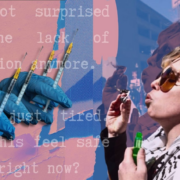
When a doctor recently switched their name in the system to “Ari (they/them),” it showed up on their prescription. “That partially makes me happy, but also puts up more question marks than anything else. Does this feel safe to me right now?”
Barriers to access
Transgender adults and medical discrimination
1 in 3
delayed or avoided medical care due to fear of discrimination
1 in 2
experienced medical discrimination due to their transgender identity
University of Chicago & Center for American Progress
Genderqueer photographer Emmett Valentín, whose pronouns are they/them, is no stranger to that discrimination. During their teen years in foster care in Kentucky, the state forced them to take birth control despite negative side effects. They suffered from severe endometriosis and PCOS for years before opting for sterilization as treatment. Valentín’s Indigenous identity compounded this mistreatment, they said, recalling America’s legacy of reproductive violence against Indigenous, Black, and marginalized communities.
When Valentín began pursuing HRT, they faced invasive questions, unnecessary testing, and pressure to recount their trauma. “I was terrified of having a health care provider be shitty to me because I’ve had enough healthcare trauma from being assigned female at birth.”
They explained that when they switched from the gender-affirming online prescription service FOLX to an in-person endocrinologist, “She did the whole ‘tell me about all of your trauma,’” to which Emmett replied, “I’m not doing that. You’re not my therapist. I’ve been on this for two years now, and it’s doing great. I just need refill.”
Emmett Valentín’s endocrinologist experience
A timeline of barriers
Step 1
Switched from FOLX to in-person endocrinologist. Faced invasive questions and pressure to recount trauma.
Step 2
Slight increase in red blood cell levels. Doctor refuses HRT refill. Refers Emmett to Transform Health Clinic.
Step 3
Earliest Transform Health appointment: 9 months away.
Weeks later — 12:15 pm
Doctor calls with a cancellation at the Lexington clinic — appointment at 1:30 pm, 75 minutes away.
Emmett’s response
“So let me get this straight. You refused to give me a refill, and you’re telling me now, if I drop everything in the middle of my workday and drive over there in record time, then I’m worthy of having healthcare.”
“You have been singlehandedly, absolutely the most invalidating healthcare experience I’ve ever had, and I want you to sit with that.”
Medical providers across all levels have felt the chilling effect of these federal and state level threats. However, both Hamilton and Loew, the mental health and medical providers who spoke with Queer Kentucky, stressed the importance of not caving in to threats or executive orders, which are not legally binding.
Lack of trained physicians
Dr. Loew told Queer Kentucky that trans healthcare was not part of her medical school curriculum. During her residency, supervising physicians were often unwilling to prescribe hormones to trans patients. “It depended on who was there with me as my supervising physician on whether the patient could get what they needed,” she said.
How trans healthcare is covered in medical education
Periodically throughout curriculum52.5%
Discrete modules only34.4%
Not covered at all10.6%
Baylor University Medical Center, 2023 · 160 programs surveyed
Loew disclosed that much of her trans healthcare practice has been self-taught. “The minute I could get my DEA so I could prescribe testosterone, I did.” A DEA, or Drug Enforcement Administration number, allows medical providers to prescribe controlled substances like testosterone.
Tammy, a Louisville resident whose pronouns are she/her, asked to use a pseudonym for safety. At a recent appointment, a nurse questioned how she had breasts without implants, asked how to spell “vaginoplasty” multiple times, then swiveled her chair around and asked, “How do they do that?”
Tammy tried to keep it light: “You should probably ask my doctor. I wasn’t paying attention at the time.”
Years earlier, an endocrinologist told her, “Oh, I guess the estrogen is working” — apparently unaware that estrogen does not eliminate active facial hair follicles, and many trans women like Tammy use electrolysis or laser hair removal to eliminate unwanted body hair. “This wasn’t even just a primary care physician. He was an endocrinologist. At a basic level, he should know how different hormones impact the body, and he just didn’t.”
“I’m not surprised by the lack of education anymore. I’m just tired.”
Trans Kentuckians fear experiences like Valentín’s and Tammy’s could become more common with threats to federal funding for institutions that provide gender-affirming care and empowerment from state and federal governments to deny such care.
Trans Kentuckians refuse to disappear
Despite everything, many trans Kentuckians are hopeful — and organizing.
“Trans people are the least nihilistic people I know,” said Jaz Brown, whose pronouns are he/him. Brown started hormones in March and had top surgery in November. As Trans Health Coordinator for the Kentucky Health Justice Network, he helps people buy binders, apply for medical grants, find housing, and pay electricity bills.
Jaz Brown, Trans Health Coordinator, Kentucky Health Justice Network
“To pursue transition, to pursue gender affirming care is to say ‘Life has meaning. I want to live.’”
Brown urged those struggling to afford care to apply for a grant through KHJN, and drew on a longer history of resistance: “None of this is new. People need to look to their Black elders, their Black trans elders. The government is not going to save us. Organizations are not going to save us. Nonprofits are not going to save us. We have to save ourselves and each other.”
“I think that anticipatory compliance is what the federal administration” wants, Hamilton said. He continued, “Let’s see how many threats we can make to get people to do what we want to do without actually making it a law. Because some of this, we know, if it’s thrown to the courts is going to be thrown back out.”
Valentín finds empowerment in activism. Arrested in 2023 at the Kentucky state capitol while protesting KY SB 150, they shared their mugshot — wearing what they call a “shit-eating grin.” “I would love to see a full socialist revolution in my lifetime, and I am doing all I can to gear towards that.”
Ari hopes to begin microdosing testosterone this year. They limit media consumption, root themselves in community, and draw perspective from their Chinese identity. “This is the year of the Fire Horse. Fire Horse years historically have marked a disruption of the existing order. The last time this cycle occurred was in 1966, the start of China’s Cultural Revolution.”
Looking to past epochs of political upheaval and change is a stirring reminder to trans people, cisgender members of the queer community, and LGBTQ+ allies that oppressors do not grant freedom to the oppressed. Instead, the people must unite, build coalitions, and seize their rights through collective action.
As Leslie Feinberg reminds us in Trans Liberation: Beyond Pink or Blue, “Genuine bonds of solidarity can be forged between people who respect each other’s differences and are willing to fight their enemy together. We are the class that does the work of the world, and can revolutionize it. We can win true liberation.”
If you or someone you know is struggling, call or text the 988 Suicide & Crisis Lifeline at 988. LGBTQ+ young people can press 3 to reach counselors trained in LGBTQ+ care, an option that returned on Sept. 30, 2026 after it was cut in July 2025. The Trevor Project also offers 24/7 support at 1-866-488-7386 or by texting START to 678-678.
https://queerkentucky.com/wp-content/uploads/2026/06/Trans-Healthcare-Collage-3.webp8501366Rowen Greenhttps://queerkentucky.com/wp-content/uploads/2024/05/Queer-Kentucky-White-Logo-300x132.pngRowen Green2026-06-11 14:15:512026-09-27 14:38:27Barriers, burnout, and resistance: Trans Kentuckians and the fight for healthcare
Curtis Clemons has lived in Northern Kentucky his entire life.
The 36-year-old said he’s loved Covington since he was a kid. Growing up 45 minutes away in Williamstown, he looked forward to weekends “in the city” with his family.
Clemons, now a resident and a local realtor, said he usually felt safe in Covington when he interacted with local law enforcement until he learned of a police officer in Covington named Doug Ullrich.
“The interactions I’ve seen on the news and reported about Officer Ullrich, but also the interactions officers have had on the Roebling Bridge last summer,” Clemons said. “There was unjust violence toward citizens on the bridge.”
Clemons was one of several members of the Covington LGBTQ+ community that spoke with Queer Kentucky who were concerned with Ullrich, the number of lawsuits filed against him and what they see is a lack of action by the city and the Covington Police Department.
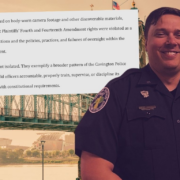
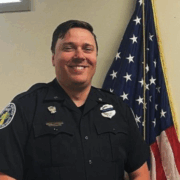
Ullrich is a training specialist and the department’s LGBTQ+ Liaison Officer. On the Covington Police Department website, it describes the LGBTQ+ Liaison Officer mission, “To build communication between the LGBTQ+ community and (the department),” by “developing trust and understanding.” Clemons, and other members of the LGBTQ+ Community interviewed by Queer Kentucky, believe the department is failing in that mission.
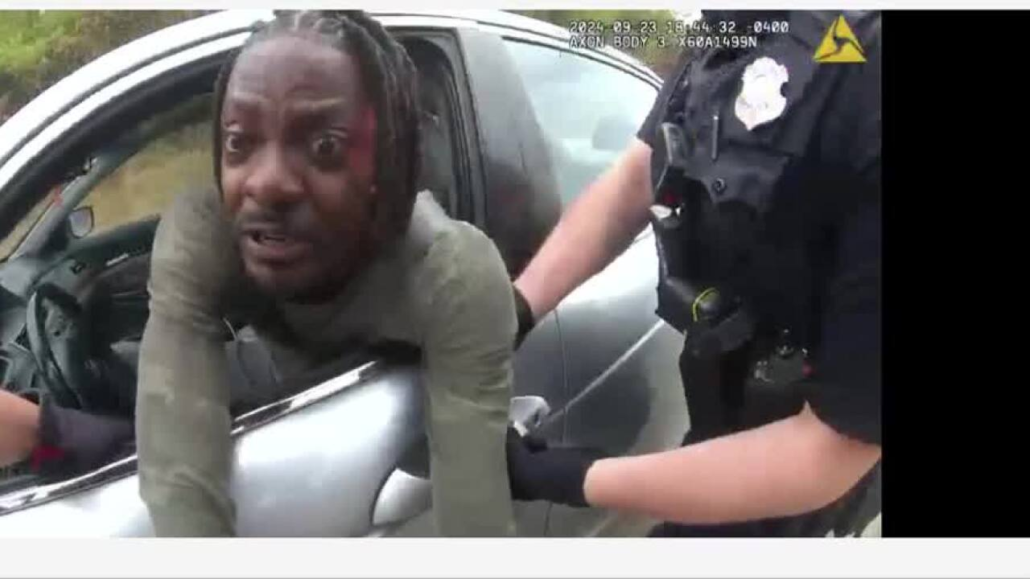
Ullrich made news in early 2025 when dashcam video of his October 2024 arrest of Damien Connor became public. Connor, an LGBTQ+ Black man, was pulled out of his car by Ullrich and another officer after they cut his seat belt. According to the complaint, Ullrich said he smelled marijuana in Connor’s vehicle after he began removing him from the vehicle.
Connor was held overnight, but wasn’t charged when he was released the next morning.
In March 2025, he filed a federal lawsuit against the Covington Police Department and Ullrich for violating his civil rights. It’s one of nine lawsuits filed in federal court against Ullrich since 2021.
Clemons said the lawsuits against Ullrich and the handling of protestors on the Roebling Bridge last year, who were rallying against the detention of Ayiman Soliman by ICE, have put him in a position where he’s afraid of interactions with the police department.
“It has eroded any trust that I might have had,” Clemons said.
Ullrich has been the department’s LGBTQ+ Liaison since 2023. In May 2025, Queer Kentucky published a profile on Ullrich, including excerpts from his 300-page personnel file.
Ullrich’s personnel file showed praise for his work involving traffic stops and drug enforcement. It also showed concerns from other officers and supervisors, including a 2014 group chat conversation with other officers, where Ullrich said, “I violate every policy,” in response to another officer discussing the time he tased a suspect who posed no threat and was running away.
Another member of the chat wrote, “…if u r ever the defendant in a federal case, it could come back to haunt…just my piece of advice, been there, done that, it was not fun.”
Nine lawsuits since 2021
Despite being sued nine times in federal court, Ullrich hasn’t been found liable in the three cases that have been decided. One of those cases is before the Sixth Circuit Appellate Court.
“When one officer repeatedly appears in these cases, it naturally leads people to ask whether supervisory oversight and accountability mechanisms are working the way they should and if anyone truly cares,” said Elise Sebastian, who does volunteer work in the city.
In 2021, Jeffrey Cundiff sued Ullrich and the department after he was given a body cavity search during a traffic stop. Ullrich won partially on summary judgment in March 2024.
In a suit filed in 2021, Anthony Wynn claimed he was assaulted by Ullrich and other officers over the course of three arrests. Wynn sued Ullrich, the police department and 50 officers. Ullrich and some other defendants were dropped from the suit after the judge partially dismissed portions of the case on statute of limitations grounds. The Eastern Kentucky District ruled in favor of the defendants last year. The Sixth Circuit affirmed the ruling in April.
Ashley Ferreiras filed a civil suit in 2024 after she claimed she was physically and sexually assaulted, and had her First Amendment rights violated after she was knocked off her crutches and arrested when questioning why her boyfriend was pulled over. Her case was appealed after the court found in Ullrich’s favor in February. Ferreiras is also awaiting an appeal on her criminal conviction in the case related to her civil filing.
Eight days after the Ferreiras case was decided in Eastern Kentucky District Court, Ullrich was sued in February by Covington residents Stephen Weier and Brandon Greenlee for allegedly conducting a warrantless vehicle search, false arrest and unlawful detainment during a March 2025 traffic stop. Weier accused Ullrich of sexual assault while being searched.
Despite the court deciding in Ullrich’s favor in the Ferreiras case (the judge ruled that Ferreiras’s convictions in Kenton County Court wiped out her claims of having her civil rights violated), Clemons said it hasn’t assuaged his worries about the department.
“If the suits are still being filed then it’s clear there’s still a problem at the Covington Police Department,” Clemons said. “Ullrich may just be a symptom of those issues. Mayor Ron Washington, I think he was the highest or one of the highest-ranking African American police officers in the state of Kentucky, even though he’s retired,” Clemons said. “I would love to see him say something.”
In a response to Queer Kentucky, the City of Covington sent the following statement:
“Because some cases remain pending, the Covington Police Department and the City are limited in what we can comment on publicly.
“That said, the rulings issued so far show that the actions taken by the City’s police officers were professional, lawful, and within established operating procedures.
“The Covington Police Department is committed to professional policing, accountability, and ensuring that officers carry out their duties responsibly while protecting the people and visitors of Covington.
“The City will continue to let the legal process play out while remaining focused on serving the community and upholding the standards expected of the police department.”
A Dangerous and Confusing Message
“Liaison roles exist to build trust with communities that historically have had complicated and often harmful interactions with law enforcement,” said Elise Sebastian. “When the officer assigned to build that trust is simultaneously facing repeated allegations of excessive force, it sends a dangerous and confusing message. This creates a credibility problem.”
Sebastian lives outside Covington with her wife. She’s frequently in the city for LGBTQ+ events and first heard of Ullrich when his arrest of Connor made local news.
“After the news reports, I started paying closer attention to the department’s response,” Sebastian said. “What stood out to me wasn’t just the lawsuits themselves, but the pattern. When one officer appears in that many cases, people are going to ask questions about oversight and accountability.”
Dr. Chelsea Elsmere, a psychologist specializing in LGBTQ+ health concerns, said instances of discrimination can lead to members of a marginalized group losing trust in institutions and feeling they aren’t safe where they live. That can lead to adverse mental and physical health effects, Elsmere said. Ullrich’s status as LGBTQ+ Liaison and the allegations of excessive force could pose a mental health issue.
“It’s a big problem if you can’t trust who is supposed to be protecting you,” Elsmere said. “There is so much fear in our world today; people need to feel secure in their own spaces.
“This is called ‘minority stress theory;’ and is particularly relevant to police interactions,” Elsmere said. “LGBTQ+ individuals are likely to have a baseline of low trust in police and be reluctant to seek help from them. Documented incidents that bring safety into question aren’t going to help this problem, nor is a lack of transparency/accountability from the department in response.”
Sebastian said the situation has caused her to make fewer trips to Covington.
“Trust is fragile, especially between law enforcement and LGBTQ+ communities that historically have experienced discrimination or over-policing,” Sebastian said. “When the officer assigned to be a bridge to that community is repeatedly named in civil rights lawsuits, it undermines the purpose of that bridge.”
Questions about Use Of Force Policy
While Ullrich won the Ferreiras case, depositions reveal that there may be inconsistencies in the department’s use of force policy.
Ullrich and Officer Anthony Fritsch were sued in federal civil court by Ferreiras in 2023 after she alleged officers assaulted her in front of her house. The incident began when officers, including Ullrich, had pulled over her boyfriend in front of her home for a broken taillight.
According to her complaint, she came down to the sidewalk on crutches, and officers pulled the crutches away from her. She filed the suit claiming she was unlawfully charged and arrested, and accused the officers of “physical and sexual assault.”
Ferreiras was found guilty of charges related to the incident. Like her civil suit, that case is before an appeals court.
During the August 2025 deposition, Officer Anthony Fritsch was asked by attorney Justin Whitaker if he was trained on the department’s use of force policy.
“No one specifically trained us on use of force policy,” Fritsch said. “We were expected to read it and understand it.”
Ullrich, a department training officer, said this wasn’t the case when questioned by attorney Whitaker.
During the deposition, Ullrich didn’t say whether he was in charge of training Fritsch on use of force policy. But it has caused community members to question whether the department is taking the policy seriously, especially with the training officer being sued nine times.
Community members: Department needs to address concerns
Elsmere said if more cases against Ullrich continue to be filed, the city’s police department would be in a bind, not only with the LGBTQ+ community, but anyone who feels the department isn’t being responsive to major issues.
“Each new case deepens the rift,” Elsmere said. “Though Ullrich’s interest in serving as LGBTQ+ liaison may come with good intent, the incidents in question have had damaging impact. It is undeniable that these events have undermined relations between the community and (the Covington) police department as a whole. That’s quite contradictory to the very concept of a liaison.”
As long as the department remains quiet, Sebastian, who does regular volunteer work in Covington, said she doesn’t believe the department is taking Ullrich or the community’s concerns seriously.
“The public understands that policing is difficult work,” Sebastian said. “What people struggle with is when a pattern emerges and the response from leadership appears quiet or procedural. That is when trust erodes.”
After the Roebling Bridge Protest, the department suspended one officer for a month and recommended he receive additional training. Sebastian said this is a similar moment and requires similar action.
“This is a moment for the city and the police department to demonstrate that ethical standards and public trust actually matter,” Sebastian said.
Tracy Kisenda, who is suing Ullrich, is awaiting his criminal trial in June. Kisenda is facing charges of assaulting officers and disrupting governmental operations. He said those charges are false, according to his civil complaint, filed in 2025.
https://queerkentucky.com/wp-content/uploads/2026/05/DougUllrich-Lawsuits.webp7681366BJ Bethelhttps://queerkentucky.com/wp-content/uploads/2024/05/Queer-Kentucky-White-Logo-300x132.pngBJ Bethel2026-05-14 14:18:482026-10-11 01:20:40Covington’s LGBTQ+ Liaison Officer Has 9 Federal Lawsuits. The Community Wants Answers.
When Kentucky lawmakers wrapped up the 2026 legislative session earlier this month, they gaveled out and went home without passing a single anti-LGBTQ+ bill.
The legislature — where four of every five seats are held by a Republican — didn’t even show much appetite for such legislation this year, with only two of the 10 anti-LGBTQ+ bills filed getting any sort of vote.
Kentucky’s uneventful session clashes with a federal landscape that is increasingly toxic towards the LGBTQ+ community, particularly those who are transgender or gender-non-conforming, and as hundreds of bills are being considered in other states after a record-breaking year of anti-trans legislation.
So, what worked?
Advocates pointed to two key things: The work of existing groups with the power to directly lobby lawmakers, and the voices of everyday Kentuckians who spoke up throughout the session.
“Nothing ‘just happens’ in Frankfort,” ACLU of Kentucky spokesperson Eric King said.
Of those, only two — Senate Bill 72, which would’ve given health care professionals clearance to refuse to provide any treatment that violated their conscience, and House Bill 468, which initially would’ve made it more difficult to enforce local fairness ordinances — got any sort of vote.
Both passed out of a committee and went on to pass out of their chamber of origin, before not moving in the other chamber.
The remaining eight bills covered everything from additional limits on gender-affirming health care access, to requiring Kentucky to only recognize two genders, to ways to make it easier to sue a city over its fairness ordinance. Many of these have been filed in previous sessions in some capacity, where they also saw little to no success.
Health care professionals could not be discriminated against for refusing to do procedures that would violate their conscience
Passed the Senate, died in the House.
Senate Bill 351
Sen. Gex Williams
Prohibit transgender people from teaching
Withdrawn.
Senate Bill 179
Sen. Lindsey Tichenor
Public entities could only use “male” or “female” labels
Never received a committee assignment.
House Bill 867
Rep. Bill Wesley
“Bathroom ban” in public buildings
Assigned to a committee, but did not receive a vote.
House Bill 759
Rep. J.T. Payne
A floor amendment would keep trans people from teaching
Died without removing the floor amendment.
House Bill 553
Rep. Josh Calloway
Prohibit gender transition-related health care from being covered by taxpayer-funded health plans.
Assigned to a committee, but did not receive a vote.
House Bill 475
Rep. Ryan Dotson
Require Kentucky to only recognize male and female as genders
Assigned to a committee, but did not receive a vote.
House Bill 360
Rep. Scott Sharp
Would make it a crime to perform in drag in public
Assigned to a committee, but did not receive a vote.
House Bill 170
Rep. T.J. Roberts
Gov could not “substantially burden” someone’s freedom of religion
Assigned to a committee, but did not receive a vote.
House Bill 468
Rep. Daniel Elliott
Would make it more difficult to enforce fairness ordinances
Passed the House, died in the Senate.
Who lobbied Kentucky lawmakers on anti-LGBTQ+ bills?
Millions of dollars are spent each year to lobby Kentucky lawmakers in Frankfort, hoping to better a bill’s chances of passing, stop legislation, or at least weaken its blow.
A Queer Kentucky analysis of public lobbying records for the first three months of the 2026 legislative session (aka, all but the final three days) found nearly 40 different groups or organizations that lobbied lawmakers on at least one anti-LGBTQ+ bill at one point in the session.
As a collective, the organizations on file range from everything from insurance associations to The Kentucky Center for the Arts foundation to those representing breweries who host drag shows.
A variety of faith-based coalitions, education groups, and social justice-focused organizations regularly lobbied on these bills, as did a series of health-related groups representing psychologists, social workers, doctors and at least one hospital chain.
Lobbying records don’t typically explicitly say a group’s stance on a bill, just that they reported lobbying on it. And some of the bills on this year’s anti-LGBTQ+ list had ramifications outside of the LGBTQ+ community.
Some of the groups known to oppose LGBTQ+ rights, like the Alliance Defending Freedom’s lobbying arm, ADF Action, reported only lobbying on one or two anti-LGBTQ+ bills this session.
But three groups easily outnumbered the rest, with two of those groups being pro-LGBTQ+ and the other not.
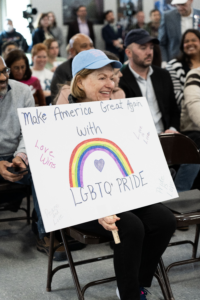
A supporter holds a handmade LGBTQ+ pride sign during a public hearing at the Kentucky Capitol Annex during the 2026 legislative session. Photo by Skylar Davis.
The Fairness Campaign and Kentucky Competes, a group that lobbies on LGBTQ+ issues from a business and economic development angle, routinely lobbied in favor of LGBTQ+ issues. The Family Foundation, a socially conservative group, typically lobbied against the same bills, as frequently as the Fairness Campaign and Kentucky Competes lobbied for them.
“The Fairness Campaign has worked hard in recent years to strengthen relationships on both sides of the aisle and encourage state lawmakers to focus on kitchen table issues that positively impact all Kentuckians, rather than engage in divisive culture wars that harm our most vulnerable communities,” Chris Hartman, the leader of the LGBTQ+ advocacy organization the Fairness Campaign, said.
This year’s success “is thanks to that intentional and difficult relationship building,” he continued, and was bolstered by an “expanded lobbying team.”
Eric Russ, who leads the Kentucky Psychological Association, said their group has also worked on developing relationships with lawmakers so they can be “an ongoing trusted source of mental healthcare information for policymakers.”
KPA, Russ said, “works hard to ensure legislators understand both the psychological science of gender and sexual identity and the impact legislative policy has on the mental health of people in those communities.”
One example is the group’s quick statement opposing SB 351, the anti-trans teacher bill, which “helped legislators and other advocates understand the problems with the bill’s mechanisms and its wide-ranging impact.”
Thanks to quick pushback to the bill both when it was first filed and later in session when the bill sponsor tried to sneak it into a different bill at the last minute, the concept never budged in the legislative process.
Showing up still possible, still critical
2026’s legislative session was the first where the Capitol and the House and Senate chambers were closed to the public.
The Capitol’s closure — due to multi-year renovations — sparked concerns of weakened transparency and limited moments to make voices heard over legislation. Heading into the session, advocates and lawmakers told crowds at Queer Kentucky’s legislative preview panels that showing up — even if it is just to watch a committee meeting or briefly talk to a lawmaker in the Capitol Annex, which remained open — could have major impact.
“It really does matter that people show up,” Hartman said at an early December panel in Newport. “Every time we can fill the chamber with bodies, it gives more people pause than you might know.”
Several groups ultimately were still able to rally the troops, show up in Frankfort and contact their lawmakers.
“Anti-LGBTQ+ and anti-immigrant bills didn’t pass in the 2026 legislative session because of well-organized, relentless advocacy across sectors,” King with the ACLU explained. “Directly impacted people showed up and testified. Coalitions mobilized calls and emails. Volunteers put in the work, day after day.”
Dr. Jacks Gilles, a psychologist based in Louisville, testified against SB 72, one of the only anti-LGBTQ+ bills that made it to a committee hearing. The bill would have allowed a broad range of medical practitioners to refuse to perform services if they felt it violated their “sincerely held religious, moral, or ethical” beliefs.
They said that the bill would have taken away the necessary checks and balances already set by licensure boards, and create more of a power differential between medical professionals and patients. That would lead to people, especially LGBTQ+ people, avoiding medical settings.
“Several of us have had experiences of surgeons coming in before the surgery and asking us to pray for us, but when you take a vulnerable situation and ask them to engage in their religious practice, it’s from a lack of understanding of holding differences as medical providers and still maintaining dignity,” they said.
No one in committee testified in favor of the bill, they said, aside from the lawmakers who supported the bill.
“I would like to encourage getting people involved by voting, coming out to Frankfort and having conversations with lawmakers, even if it’s not to testify against a bill. It’s helpful as well to not feel so isolated,” they said.
https://queerkentucky.com/wp-content/uploads/2026/04/advocates-meeting-kentucky-lawmaker-frankfort-office-scaled.webp17072560Olivia Krauthhttps://queerkentucky.com/wp-content/uploads/2024/05/Queer-Kentucky-White-Logo-300x132.pngOlivia Krauth2026-04-23 14:58:072026-10-26 02:24:47Kentucky Passed Zero Anti-LGBTQ+ Laws in 2026. Here’s How Advocates Made It Happen.
Editor’s note: This story was published in May 2025. Our 2026 follow-up reports Ullrich now faces nine federal lawsuits. Read it here.
Ullrich’s Personnel File Reveals Pattern of Complaints
As Northern Kentucky gears up for Pride under a second Trump administration — one already markedly more hostile toward the LGBTQ+ community — one of the people trusted with protecting a marginalized community is under fire for allegedly repeatedly violating civil rights of those he is trusted to protect.
Covington Police Officer Doug Ullrich has been one of the department’s LGBTQ+ liaisons — a rarity in Kentucky police forces — since 2023.
The role is personal to him: He identifies as LGBTQ+, as do several of his close friends and family, he told Queer Kentucky.
But his suitability for the role has been called into question after Ullrich made headlines — again — for being sued in federal court earlier this year, this time for allegedly violating a Black LGBTQ+ man’s civil rights in what started as a standard traffic stop that escalated into a situation where the man’s seatbelt was cut off and he was pulled through a car window.
It isn’t the first time Ullrich has been sued over alleged civil rights violations. Since 2021, he’s been sued five times in federal court — almost always over allegations of excessive use of force and traffic stops gone awry.
The situation comes on top of a career-long pattern of being seen as proactive to the point of being overzealous and insubordinate, at times landing him in trouble with supervisors during his time at the department, per a review of his personnel file.
City and police officials allowed Ullrich to answer most of Queer Kentucky’s questions in his first public statements since the March lawsuit was filed.
Due to department policy, Ullrich wasn’t allowed to answer questions about the pending litigation or his personnel file. And he declined to say whether or not he would step down from the liaison role should the community ask him to.
“The city of Covington’s commitment to transparency and inclusivity remains steadfast,” a city spokesperson said. “The LGBTQ+ liaison role, which was the first of its kind in Northern Kentucky, was created in an effort to provide a specific community with a direct connection to the Covington Police Department’s administration.
“We have no question regarding Officer Ullrich’s ongoing support for the LGBTQ+ community and his willingness to build meaningful relationships with those who would like to partner with him.”
Attorney Jamir Davis, who has sued Ullrich in federal court twice over accusations stemming from traffic stops, including the most recent lawsuit, though, was clear.
“Based on my experience representing clients in cases involving Officer Ullrich,” Davis said, “and considering the allegations, patterns, and conduct we’ve encountered, I do not believe he should be serving in any liaison role—especially one intended to support or advocate for minority communities.”
‘I violate every policy’
Ullrich’s nearly 300-page personnel file — examined multiple times by Queer Kentucky — paints a picture of a police officer eager to join law enforcement, proactively studying up on practices around policing and case law, and becoming a de facto leader on his shifts around traffic stops, particularly ones involving drugs.
Now a specialist, he is a Drug Recognition Expert, “constantly sought out by other officers for his exceptional knowledge of controlled substances and impaired driving,” one of the notes in his file said.
He’s been commended by the state for his traffic stop and drug enforcement skills in the past, and he minored in gender and diversity studies when he was at Xavier University, “knowing even then that I wanted to serve the LGBTQ+ community,” he told Queer Kentucky.
But Ullrich’s file is also peppered with concerns from supervisors regarding improper use of force, sloppy police work, insubordination and telling a police group chat he “violate(s) every policy.”
“I believe Officer Ullrich has become his own worst enemy,” a supervisor wrote in a performance review early in his career.
“He has the skill, desire, motivation, and discipline to do this job better than anyone else, but his lack of patience and attention to detail have overshadowed most of his accomplishments this year,” they wrote.
Another note in his file stated, “Ullrich’s desire to be so proactive sometimes backfires on him,” adding that, “When he rushes through his paperwork and evidence procedures to get to that next call or make that next arrest, it results in incomplete or inaccurate paperwork.”
Several concerns about Ullrich’s policing didn’t make it into his file, one note signaled, with someone saying they’ve “received many complaints about Officer Ullrich’s performance from his fellow officers, records clerks, crime lab personnel, and supervisors from other shifts” but handled them during his shifts.
One note detailing a meeting between Ullrich and a supervisor discussed an arrest where Ullrich charged a suspect with 69 counts of possession of drug paraphernalia for unused syringe needles. When Ullrich tried to defend himself, the supervisor told him he should be “embarrassed.”
In another instance, Ullrich got in trouble for using his taser on a suspect who was running away from him and posed no clear threat to him — and for how he reacted when a colleague brought it up in a chat room.
“Or I could of tased him… kinda how you voliate policy and tased” the suspect in question, one person wrote in the June 2014 chat thread.
Ullrich responded: “i violate every policy.”
A different person jumped in, warning Ullrich to be careful what he says: “…if u r ever the defendant in a federal case, it could come back to haunt…just my piece of advice, been there, done that, it was not fun.”
A note from a supervisor in Ullrich’s file said, “My most pressing concern is not necessarily the errors that he continues to make, but rather his cavalier attitude toward his continual policy violations,” pointing to the aforementioned chat message.
“I realize that this comment may have been made in jest during what he thought was private conversation, but there is more truth spoken in jest than some are willing to admit,” the supervisor continued. “This truly concerns me.”
Ullrich’s issues at the department-level seemed to slow down as he got older, with one review from around 2021 saying he showed “a constant progression of learning from his mistakes.”
But, the review continued, he “has had a history of issues that have plagued him. It appears these are getting better but they are still popping up on occasion. I would imagine that these issues may be what is keeping Spec. Ullrich from achieving his desire to become an (field training officer).”
Ullrich also got in trouble in 2022 for failing to log evidence properly after he conducted a traffic stop, suspected marijuana use, searched the car, found a suspected THC cartridge and drove off without realizing he left it on the roof of his cop car.
Ullrich faces multiple federal lawsuits involving civil rights
Damien Connor arrest by Officer Doug Ullrich. Photo from Covington Police Department
Police leaders tapped Ullrich as one of the department’s LGBTQ+ liaisons in 2023, despite multiple allegations of civil rights violations against him already on file in federal court.
And they’ve chosen to keep him there over the last two years, even as additional allegations rack up.
Lawsuits represent one side of a situation, and typically public entities don’t comment on pending litigation. However, the city is standing by Ullrich, making an unusual move to call the most recent claims against Ullrich “ridiculous” and publicly critiqued the lawsuit within weeks of it being filed.
Of the five times Ullrich has been sued in federal court since 2021, one case has been dismissed, another is being appealed and the remaining three are in front of a judge.
A Queer Kentucky review of the lawsuits found a pattern of alleged excessive use of force, often aimed at those in marginalized communities, and traffic stops forced to spiral out of control.
The most recent lawsuit, filed by Davis in March, stems from a Sept. 2024 traffic stop when Ullrich pulled over Damien Connor — a Black man who identifies as LGBTQ+.
Connor initially got pulled over for being on his phone, but according to the lawsuit and body cam footage of the incident, the situation rapidly escalated beyond what should’ve been a rather routine stop.
Ullrich asked Connor if he had a gun, and that situation ultimately, allegedly, ended with Connor having his seatbelt cut off, getting pulled out of his car window by officers and ending up in handcuffs.
At some point, Ullrich accused Connor of smelling like weed and thus, in his view, necessitating a search of Connor’s car. Connor has said he can’t use marijuana due to his job’s drug policy.
In the lawsuit, Davis accuses Ullrich of having a long history of wrongfully accusing Black people of being drunk and/or smelling like weed as grounds to unlawfully search their vehicle.
He also contends the city and Police Chief Brian Valenti knew of Ullrich’s long history of such conduct “and failed to take any corrective action” and that they’ve allowed officers “to act with impunity and have failed to properly train or supervise their officers in accordance with established policies.”
An initial statement from the city called the lawsuit’s allegations “false and ridiculous.” Davis had sued before, also over Ullrich’s alleged civil rights violations during a traffic stop. He ended up getting sanctioned for how the lawsuit was handled, and his plaintiff got charged for some of the city’s legal fees. (That case is now being appealed.)
A few weeks after the lawsuit’s filing, the City released extra body cam footage of the Connor incident and double-downed on its support of Ullrich, saying it “is committed to defending its officers who engage in lawful actions.”
And there may be more on the way. Davis told the Atlanta Black Star at least five other citizens claim to have had similar situations with Ullrich, and they might be added to Connor’s lawsuit as co-defendants.
Why does the police have a LGBTQ+ liaison?
Like many marginalized communities, the LGBTQ+ community has — and has had for decades — a fraught relationship with law enforcement.
LGBTQ+ people — particularly those who identify as transgender, nonbinary and bisexual — often face harsher and more frequent run-ins with police, a 2024 ACLU report found, compared to those who aren’t LGBTQ+. More likely to face police search, more likely to face arrest, more likely to be placed in custody. And they tend to be less willing to call the police for help if needed.
Having a designated LGBTQ+ liaison for a police department is seen as one of the most effective ways to rectify law enforcement’s ties to the queer community, a former federal guide to best practices for creating such a role said. (The federal web page got yanked during Trump’s first 100 days in office.)
It isn’t a new concept. The first liaison role on record was created in 1962 in San Francisco.
Ullrich, who has been a Covington police officer since 2011, told Queer Kentucky he’s been interested in the department’s LGBTQ+ Liaison role since it was created in 2016.
As a member of the LGBTQ+ community, and as someone with plenty of close friends and family tied to the LGBTQ+ community, Ullrich feels “a strong duty to speak, act, and work with/for our community,” he told Queer Kentucky.
“I have witnessed and experienced discrimination,” Ullrich said. “I know that members of the LGBTQ+ community have historically been underserved by law enforcement.”
The liaison role is a key reason why Covington is able to claim they’re one of the most LGBTQ-friendly cities in Kentucky. When the Human Rights Campaign judges how supportive cities are to queer people, they look at whether or not local law enforcement has a LGBTQ+ liaison or task force.
Ullrich’s responsibilities fluctuate. Sometimes, it looks like attending community events like the recent Mx. Cincinnati PRIDE Pageant and the upcoming NKY Pride Parade and Festival.
Other times, it means helping his colleagues better understand the community and answer questions about the LGBTQ+ population or jumping in to help with reported hate crimes against LGBTQ+ people.
“In this role, I work to build bridges with the community so that they have a friendly, trusted face for those facing victimization, discrimination, or simply seeking clarity about the law,” Ullrich said. “I entered policing to make a difference for my community, and being the LGBTQ+ liaison helps me do just that.”
NKY Pride leader quiet on Ullrich’s ties to event
The 2024 ACLU report on policing the LGBTQ+ community pitched several potential solutions. One such suggestion: “Carefully consider police presence in public LGBTQ+ spaces and events, such as pride parades and festivals.”
Queer Kentucky reached out to Bonnie Meyer, who leads the Northern Kentucky Pride Center, twice to get her reaction to Ullrich’s recent headlines and to see how he is involved with NKY Pride.
Meyer told Queer Kentucky in late March the group typically doesn’t start planning for Pride until after Kentucky’s legislative session ends. She redirected any questions involving Ullrich to the city.
Meyer did not respond to a more recent request for comment regarding Ullrich or broad information regarding security at this year’s events.
But Ullrich told Queer Kentucky he’s excited to work with the NKY Pride board as one of the police department’s LGBTQ+ liaisons to help organize this year’s events, work out logistics for the parade and address safety concerns that may come up.
He also helps during the event, assisting with medical calls, police and safety needs and even helping out vendors, he said.
NKY Pride events kicked off May 27, with the parade and festival scheduled to start at noon on June 1.
Questions or comments about this article? Want to weigh in? Contact reporter Olivia Krauth at [email protected].
https://queerkentucky.com/wp-content/uploads/2025/05/covington-police-lgbtq-liaison-doug-ullrich-lawsuit.jpg-.webp678824Olivia Krauthhttps://queerkentucky.com/wp-content/uploads/2024/05/Queer-Kentucky-White-Logo-300x132.pngOlivia Krauth2025-05-29 07:44:322026-10-10 10:59:41‘I Violate Every Policy’: Covington Police LGBTQ+ liaison officer under fire amid civil rights lawsuits
This story is part of a digital issue of Queer Kentucky surrounding Harm Reduction and its intersection with the LGBTQ+ community. Check out the full digital issue here. This story is also in partnership with Uncloseted Media, an LGBTQ focused investigative news outlet. Subscribe to their latest here.
Chemsex and Party and Play culture have ravaged the gay community for decades. Considering the history of this problem, are hook-up apps doing enough to combat the epidemic on their platforms?
At 21 yearsold, Robert McAllister remembers unlocking his phone in Louisville, Kentucky, to a grid of bodies on Grindr, the gay hook-up app.
To the average American, many terms and symbols in user bios read like a foreign language: PnP, Tina and parTy, or the crystal ball, ice cream and diamond emoji. At the time, McAllister also had no clue what these terms meant.
After chatting with multiple men, he met up with one of them later that night. Before they started having sex, the guy pulled a plastic bag of white powder out of his backpack and asked McAllister if he wanted to partake.
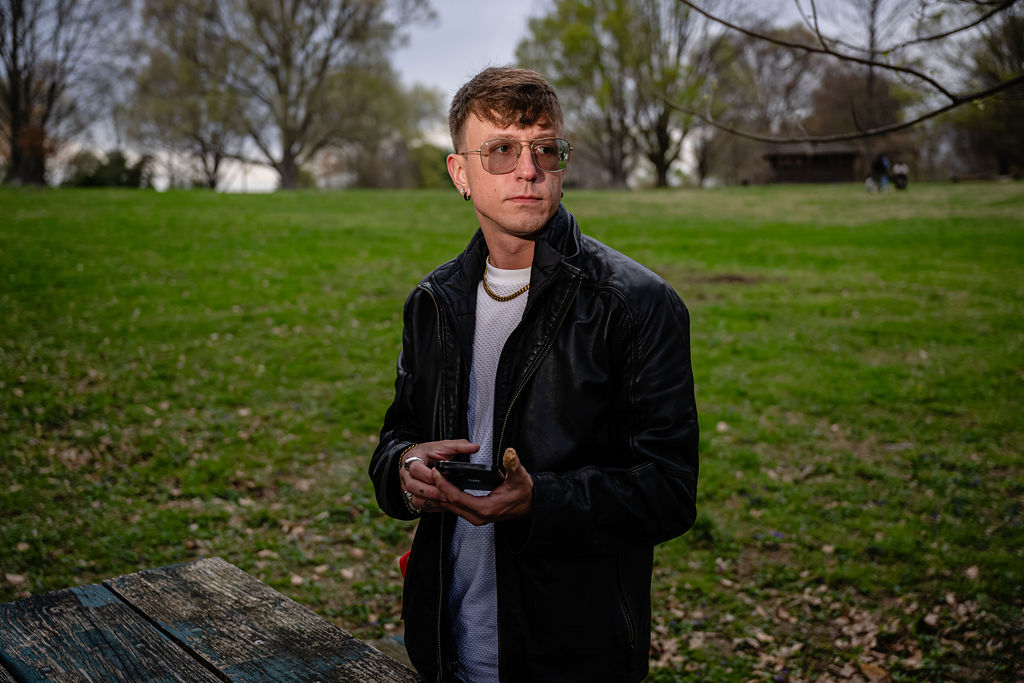
“He snorted it like cocaine. And for whatever reason, I was like, ‘Oh, well, cocaine isn’t that bad,’ so I tried some,” McAllister, now 27, told Uncloseted Media and Queer Kentucky.
Photo by Jon Cherry for Queer Kentucky and Uncloseted Media
The powder he snorted was actually crystal meth, a highly addictive drug that can ravage the body and mind and lead to psychosis, organ failure and irreversible brain damage.
“I remember thinking, ‘Wow, I want to do that all the time,’” says McAllister. “I wanted to feel that good all the time. At home, at work, it didn’t matter if I was hooking up with someone or not. It became a daily habit immediately.”
He says the addiction got so bad that the only people he would interact with for months would be the hookups he used with. “I would seek out people that had it in their profile,” says McAllister, who was addicted to meth for four years. “I would invite them to my apartment to use with me just because I didn’t have anybody else around. At that point I had lost my job, my family really didn’t want anything to do with me, and so the app was my excuse for social interaction.”
McAllister’s experience is common. Party and Play (PnP) culture, also known as chemsex, is exactly what it sounds like: the use of drugs like GHB, ketamine and meth to enhance sexual desire, arousal and pleasure. The practice is most prevalent amongst gay and bi men, who use meth or similar drugs at three times the rate of heterosexual men, according to a 2014 study from the United Kingdom.
photo by Jon Cherry for Queer Kentucky and Uncloseted Media
For 25% of the guys who engage in PnP culture like McAllister, it becomes a severe problem.
While drug overdose deaths in the United States declined slightly in 2023 for the first time since 2018, deaths from psychostimulants like meth rose, killing 36,251 Americans in 2023. That’s just over 3,000 lives a month, or 100 lives a day. And the epidemic is even worse in rural states like Kentucky.
As meth addiction continues to devastate the gay community, hook-up apps like Grindr and Sniffies —which make hundreds of millions of dollars a year—are where PnP culture thrives. One 2023 survey found that 91% of dating app users had a negative experience with drugs and one in four dating app users deleted an app because of drug-related concerns.
“[Dating apps] are making lots of money from this community and the biggest problem that [we are] facing is not HIV, it is drug addiction,” says Ignacio Labayen de Inza, CEO and co-founder of Controlling Chemsex, a charity that provides interventions for chemsex users. “People are overdosing, people are suicidal, people are suffering from sexual assaults, they are psychotic, they are losing jobs, they are ending up homeless. And Grindr is the biggest vehicle that people use to get these drugs.”
So what are the apps doing to combat an epidemic that has been exacerbated by the easy access to meth on their platforms?
Photo by Jon Cherry for Queer Kentucky and Uncloseted Media
The Risk of Hook-Up Apps
Smartphone hook-up apps, which hit the mainstream in the 2010s, have long been associated with a greater risk for sexually transmitted infections (STIs) among queer men. But emerging research suggests they also facilitate drug use among queer men, 15% of whom have used meth within the last year and 23% of whom have used it at least once in their lifetime. A 2017 study found that gay hook-up apps, including Grindr, “significantly increased motivational substance use” and approximately one in 10 of dating app users engaged in substance use after being persuaded on the apps.
The apps know this is a problem. Sniffies is an app which features an interactive map known for its anonymity and showcases pictures of user’s genitals and butts nearby. In an email to Uncloseted Media and Queer Kentucky, they wrote that their users are significantly more likely to engage in chemsex and meth use compared to users on other platforms. They say a notable percentage of their users have reported deleting their accounts due to drug-related concerns. Recognizing this, Sniffies introduced Profile Fields, “allowing users to explicitly state their boundaries and the safety tools they carry, ensuring that everyone can make informed decisions about their encounters.”
Still, in addition, Sniffies—which has seen “explosive regional growth” in 2024—does not allow users to filter for other people’s drug preferences. In a data report that Sniffies pulled for Queer Kentucky, 18% of users selected “No PNP” under their drug preferences.
One of the major problems is that these apps enable easy access to the drugs, according to Kentucky-based Grindr users Uncloseted Media and Queer Kentucky spoke with.
“You can see it everywhere on dating apps,” says Chris Hackenberg, who first used meth at 19 years old during a Grindr hook-up. He says the drug “opened a door” to a “level 1,000 happiness.”
“It started becoming a slippery slope when I started finding [meth] everywhere,” he says. “Eventually, every hookup, I would try to find Tina [meth], and it just kept getting progressively worse to where [it] engulfed my whole life.”
Hackenberg, now 23, remembers staying up for seven days driving around Florida looking to PnP. From Jacksonville to Orlando to Miami, he would drive for hours searching for a new place to geolocate himself on Grindr to find a new selection of men who were ready to use meth with him.
“I think Grindr and Sniffies turn a blind eye to all these drugs. Grindr is so well-known for finding drugs. It’s just so easy,” he says.
What Are the Apps Doing?
The epidemic of crystal meth addiction and PnP culture among gay men has been an issue since the late 1990s, long before smartphones. But the most dramatic increase in meth-related deaths and usage occurred from around 2015 to 2019, when it soared by 180%. At the same time, Grindr exploded in popularity: In 2015, it was reported to have 10.5 million global users and make $38.1 million in sales.
Grindr and Sniffies declined multiple requests for an interview for this story. Instead, Grindr directed Uncloseted Media to their work with a UK nonprofit, The Love Tank, that provides “safer chillouts” guides on their website for information on sexualized drug use. In the guide, they provide information on harm reduction, such as how to check in with yourself before you use, how to determine proper dosage and how to handle overdoses.
In an email, The Love Tank told Uncloseted Media and Queer Kentucky that Grindr promotes their guides through inbox and pop-up broadcast messages on the app, but only in the UK region.
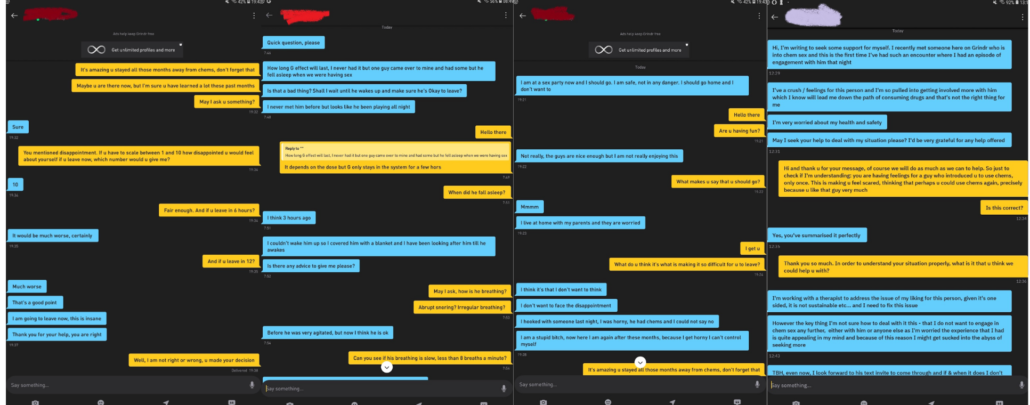
Screenshot of their pop-up. Courtesy of Grindr.
Screenshot of their popup. Courtesy of Grindr.
In the U.S., Grindr works with the nonprofit Building Online Healthy Communities and has a similar pop-up for all users.
Labayen de Inza, of Controlling Chemsex, says that this is not enough. “Clearly pop-ups and guides aren’t working because the problem [of chemsex addiction] is still an issue,” he says. “If I’m horny, I’m not going to check my pop-ups. And sometimes people are not ‘planning to chill.’ Sometimes people are having horrible psychosis and paranoia and looking for help. People tell me, ‘I want to stop. I have to stop, or I’m going to die.’ The guides aren’t going to help with that.”
In the past, Grindr has gotten bad press for allowing drug dealers to use the app. In 2022, detectives that conducted a Florida investigation titled “Swipe Left for Meth” charged 68 suspects for selling drugs on Grindr and other hook-up apps, causing nearly 280 grams of meth to be seized—the equivalent of roughly 1,400 doses.
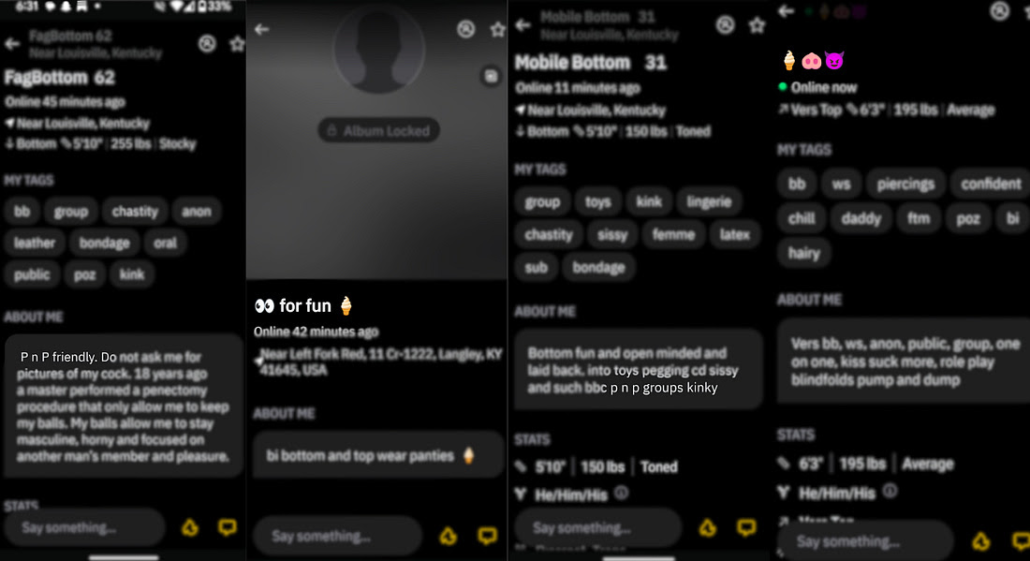
Since then, Grindr’s community guidelines say they have cracked down on banning profiles “centered around or mainly consisting of drug content” and that they prohibit images that are focused on advertising or promoting drug use as well as “emojis commonly associated with buying/ selling.” However, users say that simply putting a capital T, which is not banned, somewhere in their bios is enough to signal that they’re ready to PnP.
And these bans may not work: Uncloseted Media found five references to PnP after using the app for only 15 minutes in Louisville, Kentucky.
Screenshots from Grindr
Sniffies, meanwhile, has a resource page with instructions on how to use chemical drugs safely as well as links to harm reduction resources like syringe access and overdose prevention. Labayen De Inza questions, though, whether users will ever seek out a resource page while using the apps.
Users we spoke with say they wish the apps had a feature where you could filter out folks who are looking to engage in PnP. One 2023 survey by Sniffies’ public health partner found that four out of five participants wanted to be able to filter by drug use practices.
Legal Immunity
While it is likely that illegal drug use is occurring on these apps, they have Section 230 immunity, meaning that Grindr and Sniffies aren’t liable for any illegal activity that occurs on their apps and aren’t liable for the addictions stemming from the platforms.
“No one wants to do anything,” Labayen de Inza says. “It’s really difficult to digest the fact that organizations know what is happening to the community. We cannot do very much because we are working on pride parades or HIV prevention. Those are important things. … But lots of people won’t be able to go to the parade because they will be psychotic or they will be suicidal [because of meth addiction].”
Labayen de Inza, who is in recovery for chemsex addiction, has spent six years on Grindr connecting with folks who have questions about drug use. He says he spoke with over 13,000 users in his first year.
He also surveyed Grindr users in 2019 and found that 10% of the 2,000 respondents were using meth. Of those who said they had used, 90% had a premium subscription to the app, far higher than the roughly 7.5% of all users who pay.
“I wish I could tell the CEO what is happening [on their] platform,” he says. “If you are human, the pain I see every day would make you cry. We have a responsibility to the community to change something.”
Uncloseted Media requested an interview with Grindr CEO George Arison and he declined.
Apps Become Triggers:
Users in recovery from meth also report risking relapse on Grindr and Sniffies.
Hackenberg started recovery in 2023 after he contracted HIV from injecting meth with a hookup. He says he still can’t use Grindr or Sniffies without relapsing, which is difficult because they are his go-to platforms for meeting guys. “I would try to get on the apps after moving to make friends, but I just couldn’t do it,” he says. “As soon as I start going on Grindr, I get the same head buzz as I did when I would smoke Tina. Every time I’ve relapsed, it was facilitated by the apps,” he says, adding that he has slipped “a few times” in his two years of recovery.
Mark Just, a 44-year-old finance analyst, started using meth as a way to build community in rural South Carolina, which only had “a bookstore and a park” as queer-friendly spots. “I mean, that was the only avenue to meet people,” he told Uncloseted Media and Queer Kentucky.
“You’re in the lion’s den on those apps,” he says. “You just have to be really honest about your sobriety and be okay with getting blocked when people don’t read about it in your bio.”
Now 20 years sober and in a relationship, he says when he tried using the apps to meet people, he had to be careful. “The question comes once you match and you’re chatting,” he says. “PnP or parTy or the puff emoji. I was just trying to meet people, but it would come up over and over again. … 1 in 3 guys would ask.”
“The temptation is powerful,” he says. “It’s like giving up Krispy Kreme donuts and then someone showing up to your house with a dozen of your favorite donuts. Your body goes into craving mode, even though you haven’t been exposed to it in so long.”
“In a perfect world, they should make it similar to Tinder, where they don’t show you people that you aren’t interested in based on your demographic. So filtering people based on [drug use] would be helpful.”
What Do We Do?
Ignacio Labayen de Inza says that the apps have to be a part of the solution because they are the ones providing a space where users can easily access the drug.
He thinks resources for support and harm reduction for chemsex need to be front and center on the apps and constantly visible. “There needs to be a pinned square called ‘Chem Sex Support’ so people know exactly where to go for help and they don’t have to leave the app,” he says. He and his team, who are grant-funded and offer their services for free, are already providing this resource to Grindr users but are constantly getting banned from the app because it violates the app’s user guidelines.
“The reality is that people are desperate and they don’t know where to go,” he says. “Chemsex support is very unavailable.”
Example of intervention on Grindr, courtesy of Controlling Chemsex.
“There needs to be a bigger conversation,” says Christian Parker, executive director of the community nonprofit Gay & Sober. “The epidemic of meth in the gay community is a perfect storm. There is loneliness, isolation, and stigma all tied together.”
Sean Young, executive director of the University of California Institute for Prediction Technology, says that the apps don’t bear all the responsibility, but silence is not working.
“I think it’s the responsibility of the technology company to have a safe environment, which right now they’re not,” he says. “But the apps don’t have the knowledge about substance use to know how to do these types of interventions, and it could backfire if they tried to start doing this. The solution to this is that technology companies should come to the table with public health officials and with individuals who are using the apps and start a conversation.”
“I would love to have the opportunity to speak with someone from Grindr,” says Labayen de Inza. “To say, ‘Let’s work together. Let’s do something effective.’”
photo by Jon Cherry for Queer Kentucky and Uncloseted Media
McAllister, who became addicted to meth after his first time trying it with a Grindr hookup, says that education, online support and—most importantly—a destigmatization about meth use would have helped him be more careful.
“If I had some information about meth, then I could have at least made a decision,” he says. “It’s all still somewhat taboo and behind closed doors so I had no idea what it was when I first used it.”
“The dating apps are just enabling that by saying ‘Yes, you can put that [PnP] tagline in your profile,’ but they’re not doing anything to educate people about what that means. We’ll just turn a blind eye to it and let people do it,” he says.
If you or someone you know is struggling, call or text the 988 Suicide & Crisis Lifeline at 988. LGBTQ+ young people can press 3 to reach counselors trained in LGBTQ+ care, an option that returned on Sept. 30, 2026 after it was cut in July 2025. The Trevor Project also offers 24/7 support at 1-866-488-7386 or by texting START to 678-678.
https://queerkentucky.com/wp-content/uploads/2025/04/J9B_5388.webp6831024Sam Donndelingerhttps://queerkentucky.com/wp-content/uploads/2024/05/Queer-Kentucky-White-Logo-300x132.pngSam Donndelinger2025-05-27 12:00:172026-10-10 10:46:15How Apps Like Grindr and Sniffies Are Fueling the Meth Crisis Among Gay Men
Note from Editor-in-Chief and Executive Director of Queer Kentucky, Spencer Jenkins: Queer Kentucky has had past relationships with some of the subjects within this article. Gill Holland previously donated $1,000 to Queer Kentucky in 2020 and also donated $1,000 to TAUNT, an archived project under the Queer Kentucky umbrella. We have also attempted to work with Access Ventures, Bryce Butler, and his team several times throughout the years. Scarlet’s Hope’s Rachelle Starr (whom we have not attempted to work with), and Bryce Butler have been reached out to, but have not responded for comment.We understand that those mentioned in the article have done some great work for Louisville, and they also embody ideologies that harm the LGBTQ+ community. During a coffee meeting in 2019, Bryce and I met at Please & Thank You. When I asked him about his time at Sojourn Church as lead pastor, I said, “Was the conversion therapy under your watch?” His response was, “Be more specific.”
We hope people and organizations that evangelize harmful ideologies will choose to work with organizations like us, to at least make strides of inclusion in their workplace.
This is part four of “Class Struggle and Religious Bigotry: Field Notes on Louisville’s Coffee Scene.” In part two, we mapped out the ties between two powerful local coffee chains and two powerful religious institutions in Louisville: Sunergos and Quills and Sojourn Church and Southern Baptist Theological Seminary. In the present and final installment, we will map the ties between those same religious institutions and Access Ventures, another tentacle of the local Southern Baptist Empire that’s out here doing the Lord’s work: gentrifying neighborhoods and funding white ladies’ anti-sex work crusades.
If this segue into redlining, gentrification, and the non-profit industrial complex seems to deviate from the rest of the series, I challenge you to ask why that is. Could it be that we are programmed, as individuals and organizations, to zoom in on particular social issues and address them as if in a vacuum, like a scientist whose job is to research the mating habits of a particular bug? Homophobia, transphobia, misogyny, racism, classism: these are not isolated events in nature. They are interlocking structures that were produced and maintained, for a particular reason: to preserve the capitalist and white supremacist social order. Approaching them in isolation, like areas of specialization in academic research, is not just ineffective, it’s counterproductive. This is precisely why we are encouraged to approach them this way: it allows us to feel like we are making a difference without actually becoming a threat to the powers that be.
A brief history of plantation capitalism in Louisville
Just as Sunergos conceals its ties to religious institutions like Sojourn, and just as Sojourn conceals its ties to racist and homophobic institutions like the Southern Baptist Convention, so do the leaders within those institutions conceal their roles in racial capitalism. A concept based on Black Marxist Cedric J. Robison’s assertion that “racial ideologies shape every aspect of capitalism,” racial capitalism is “the process of deriving social and economic value from the racial identity of another person.” The exact shape that racial capitalism takes depends on a place’s demographics and history. In Southern cities, like Louisville, that were hubs of the slave trade in the antebellum era, racial capitalism takes the shape of plantation capitalism.
The researchers at Root Cause Research Center (RCRC), a team of investigators and tenant organizers based in Louisville, KY, define plantation capitalism as “a social and economic management system in Southern cities where the descendants of planter families maintain political and economic dynasties largely by keeping Black workers in extreme poverty, landless, and without political power through extractive policies and police terrorism.” According to RCRC, the way that, for example, private developers launch nonprofits to access philanthropic capital and government support, is an example of how aforementioned dynasties hoard resources and exercise political control over time. For a clear understanding of how Sojourn fits into this regime, we need to go back to the beginning.
In 1914, Louisville passed a residential segregation ordinance that dictated that white people and Black people could not occupy properties on streets where a majority of the other race already lived. This ordinance was passed in response to the influx of African Americans who were fleeing the deep South. When the U.S. Supreme Court overturned the ordinance in 1917, homeowner associations in Louisville began implementing discriminatory restrictive covenants to keep their neighborhoods white. Police took it upon themselves to help enforce racial boundaries. From 1924 to 1950, the Realtor Code of Ethics read “a realtor should never be instrumental in introducing any race whose presence would be a detriment to property values.”
Segregation, coupled with economic divestment and political disenfranchisement, devastated Black neighborhoods, depriving residents of access to public resources and amenities, transportation, and opportunities, decreasing property values, and further entrenching the community in generational poverty. In 1932, Louisville hired a famous urban developer to conduct a study called “The Negro Housing Problem in Louisville” which blamed Black people for their impoverished living conditions. “If it were possible to create among the Negro masses a real desire for decent accommodations, the slums would automatically eliminate themselves,” it said. A year later, the city started demolishing parts of Louisville’s Russell neighborhood and constructing the Beecher Terrace Housing Projects and the six-lane thoroughfare separating downtown from the West end, which came to be known as the 9th street divide.
Meanwhile, a new form of housing discrimination was on the rise: redlining, the discriminatory practice of denying housing loans to an area based on its class and racial makeup, a practice which began during the Great Depression when the Home Owners Loan Corporation was created to make homeownership more available to Americans. Josh Poe, former urban planner and founder of Root Cause Research Center, uncovered redlined maps of 1930s Louisville in the National Archives in Washington D.C. (which had been kept private for decades) and paid to have copies sent to Louisville. As Anne Marshall explains in “Dividing Lines,” a 2017 article on redlining in Louisville that features Poe, red clusters on those maps indicate areas that banks channeled money away from, namely poor, Black, and/or Jewish-occupied neighborhoods, including Russell, Portland, Smoketown, and Shelby Park. Green and blue neighborhoods, primarily in the East end, were coveted for their good housing stock and lack of Black or Jewish populations. Yellow areas were of neutral value and seen as a cushion between the red and blue/green neighborhoods.
Though redlining officially ended in 1951, it would be followed by urban renewal, or as it is known in Black communities, “negro removal.” As cities started to experience the social costs of redlining (increased rates of poverty and crime) they responded by increasing police presence in redlined areas and demolishing buildings that they didn’t believe to be worth restoring. As Poe and Bellamy note in their paper Plantation Urbanism: Legacy, property and policing in Louisville, Kentucky, though 60% of the housing in Louisville’s Russell neighborhood was not dilapidated enough to justify demolition, the city determined that the social status of the residents justified complete demolition of large sections of the neighborhood. Here “social status” was based largely on qualitative observations made by police (i.e. subjective perceptions of poverty and crime) rather than on the physical condition of dwellings. This became the basis for the wholesale destruction of the entire eastern portion of the neighborhood. The same principles and practices were used to justify the demolition of the Clarksdale Housing Project and the gentrification of the part of Phoenix Hill that is now known as “NuLu,” and the ongoing gentrification of the Portland and Shelby Park neighborhoods.
Phoenix Hill (now known as “NuLu”)
Phoenix Hill (now known as “NuLu”)
Clarksdale Housing Projects
“NuLu” – formerly known as Phoenix Hill
Gentrification isn’t about reversing the damage caused by divestment and systemic neglect for the people who were directly impacted by it, nor is it an effective method of reducing violent crime rates, which overall have risen to an all-time high in Louisville. It’s about relocating poverty and crime from areas deemed as having wealth-building potential. This is done at the continued expense of Black and poor people, who are forced out of their homes and relocated to low-income housing in other divested neighborhoods, frequently resulting in tensions with the existing residents and the subsequent increase in violent crime in those neighborhoods. Similar motives (and rationalizations) were at play in the 2002 Louisville/Jefferson County Merger: to hide Louisville’s poverty so as to make the city more appealing to attract outside capital. After the merger, the Greater Louisville Project was formed for the same purpose: to use research and data to improve the city’s optics and thereby, as RCRC puts it, “lift census tracts—not people—out of poverty.”
As of 2020, the overall median household income for the Russell neighborhood was below $20,000 per year. The population of the Russell neighborhood was over 90% Black, while only 18% of the land in Russell was owned by Russell residents. Most of this land is controlled by out-of-state development companies, meaning that the rents paid by Russell residents are essentially extracted as passive income for white absentee landlords. This situation is only getting worse as the housing market becomes more and more privatized, and the public sector more and more gutted.
In 2022 America, housing is not a human right, but a form of passive income for the rich. When rent becomes too high to afford, low-income renters are coerced into buying homes through predatory inclusion models, putting them further into debt while private lenders profit off of their loan interest. In low-income areas where private capital is more risk-sensitive, investors rely on government subsidies and philanthropy to protect their investments. Since the majority of public funds are now used as collateral by private investors looking to “strategically invest” in low-income areas, the only remaining safety net for poor people comes from non-profits and philanthropists: neither of which are reliable in a true crisis. Meanwhile, the same investors create or invest in (sometimes incredibly problematic) non-profits to hide private capital and avoid taxation. Philanthropists are taken care of by this setup as well since what they lose in private capital, they gain in political power and influence.
Only the wealthy benefit from the privatization of the housing market, and in Southern cities like Louisville, most of that wealth is hoarded by plantation dynasties and stained with the blood of victims of police brutality. Take Louisville’s Brown Family, which owns the Brown Forman whiskey distillery and is listed on the Forbes list of US wealthiest families. Root Cause Researchers found that J.T.S. Brown was a major in the Confederate army, and his father, William Brown, enslaved many people. The Brown Family has also played a major role in urban development in Louisville.
Brown Family OGs
Real estate developer and Brown Family member Gill Holland, also known as the “Godfather of NuLu” and the “Prince of Portland,” is behind the demolition of the Clarksdale Housing Project, the expansion of NuLu, the redevelopment of Portland, and the redevelopment of Russell, for which he leveraged a thirty million dollar grant from the Department of Housing and Urban Development along with investments from Louisville Metro Government and many large philanthropic donations. The Brown Family remains complicit, if not actively involved, in the displacement of Black Louisvillians and Louisville’s reputation as a city known for its police brutality. There is mounting evidence that the Vision Russell initiative contributed to the deadly police raid on Breonna Taylor’s home as just one example.
The displacement of Black residents is not an accident, an unforeseen and unfortunate consequence of gentrification. As former Louisville Mayor Charles Farnsley said on TV back in the seventies, it’s a process that is “designed to drive the Negro back from the central [business district].” Not a lot has changed.
1968 Louisville Protests
2020 Louisville protests
Sojourn descends on Shelby Park
In 2012, Sojourn Church moved its midtown location from the Germantown neighborhood to Shelby Park. Kaitlyn Soligan Owens, a queer and Jewish writer and activist who grew up experiencing the effects of gentrification in Boston, and who now lives and co-owns a bar in Shelby Park, describes Sojourn’s entrance into the neighborhood as “the clear push by a white evangelical church that began in the East End to move into a low-to-moderate income neighborhood that at least some of them held in fairly obvious disdain….correctly identified by residents as gentrification.”
Sojourn Midtown in Shelby Park
Inside Sojourn
As Sojourn Church settled into its new surroundings, it encouraged its (predominantly white) congregants to buy homes in Shelby Park. Sojourner Nathan Ivey told WAVE 3 News that the church was “literally calling members of our congregation to move into these restored homes and to engage the neighborhood residents to enter into deep relationships and have them over for meals and journey with them over the long haul.” The white saviorism in this statement echoes through the media quotes from Sojourners who “followed the call” to move to Shelby Park:
“It’s a hard thing to ask a young family to do this … to move into an iffy neighborhood. But we’ve been given everything in Christ and have nothing to lose.”
“They’re from here, they live here, they have a heart for this neighborhood. If we begin to listen to them and empower them, we want to help them reach their goals.”
“We’re gonna do this cool event on my street and we’re gonna do that cool thing, and I’m gonna bake bread for sixteen neighbors in order to get sixteen prayer requests”
The last quote comes from a woman named Jordan, who is featured on a podcast episode called Where the Gospel Meets Gentrification. The episode is hosted by Love Thy Neighborhood, a Louisville-based Southern Baptist Christian non-profit founded and directed by Sojourner Jesse Eubanks. The website describes Love Thy Neighborhood as an “urban missions gap year program” that seeks to “provide young adults ages 18 to 30 with social justice internships and Christian community.” In the gentrification episode, Jordan dialogues with Eubanks and a woman named Rachel Szabo: all of whom were some of the first Sojourners to move to Shelby Park.
When Jordan was in her early twenties, she and her husband decided to “embody God’s call to justice” and buy a home in Shelby Park. Though her family and friends had concerns about them living in such a “rough” neighborhood, Jordan believed they’d been called there by God. As Eubanks puts it: “God cares about ‘the least of these,’ and she wanted to model that.”
At first, Jordan felt out of place in Shelby Park. “At that time I was the only one coming home with Trader Joe’s shopping bags…everyone else would buy groceries at the neighborhood corner store,” she says. But then one morning she took her first walk through the park that the neighborhood is named after (which, Eubanks adds, was designed by Fred Olmsted, the famous landscape architect who also designed Central Park in New York City) and she was astonished by just how beautiful it was. At that moment, Jordan “just felt just so assured, even amidst the push-back we had received, that this is my home.”
Back at home, Jordan “was just like, you know….we’re gonna do this cool event on my street, and we’re gonna do that cool thing, and I’m gonna bake bread for sixteen neighbors in order to get sixteen prayer requests….and I was gonna be—I don’t know what I was gonna be, but something was gonna happen because I showed up.”
Here Eubanks inserts this commentary: “It’s important to remember that Jordan’s intentions—they’re good. She genuinely wants to love her neighbors. She genuinely wants them to know Jesus. There is no ulterior motive there. But growth doesn’t come without change, and in order for there to be growth in Shelby Park, there’s gonna have to be change. And Jordan wasn’t the only one who wanted to bring about this good change to her neighborhood. Part of the incoming change came from another Christian: Bryce Butler.”
Bryce Butler and Access Ventures
“Gentrification…seeks a mandatory peace: neighborhoods with clean streets and neatly contained trees; benches that suit a harried secretary on their lunch break but prevent the homeless from lying down to sleep…certainly nothing for truly queer folx who play with and problematize gender, their very existence a challenge to gentrification’s normative capitalist project.”
– Kaitlyn Soligan Owens
One of the major forces behind the gentrification of Shelby Park is Bryce Butler, co-founder and managing director of the venture capital investment firm Access Ventures, and former pastor at Sojourn. He’s now a member of Hurstbourne Baptist Church. Like Sojourn, Hurstbourne Baptist belongs to the notoriously homophobic Southern Baptist Convention. Butler is also a former-U.S. Army Officer (as all his online bios highlight) and a Southern Baptist Theological Seminary alumnus.
Bryce Butler with his tank platoon in South Korea (2004)Excerpt from a speech Butler gave at the 2018 Indiana University Southeast Veteran’s Day Luncheon
In an article on Southern’s website, Butler says that Access Ventures “strategically invests in businesses and initiatives that create community value and human flourishing.” According to Butler, a crucial part of this “strategy” is the shift from traditional investing (which he calls “two-pocket investing”) to the “one-pocket model.” If investors traditionally treat philanthropy or charity as an afterthought, something one does with the money that’s left over after investing, then one-pocket investing does both things (investing and philanthropy/charity) in the same transaction. If this seems like a contradiction in terms, that’s because it is. Investment implies a monetary return; philanthropy and charity are donations. What Butler actually means is that he takes the aim of philanthropy (the elimination of social problems) and the aim of charity (the elimination of human suffering) and invests with those things in mind. “Organizations and individuals don’t have to compromise their missions and values to achieve a financial return,” he says. According to Butler, this new approach to investing involves “Moving beyond understanding money as a tool and towards understanding money as an expression of our core identity.”
What Butler calls “one-pocket investing” I would call a marketing model for ethical consumerism or corporate allyship. It brings to mind rainbow capitalism, or how businesses that have no real involvement with the community (aside from exploiting poor queer workers) appropriate queer symbols to make a profit. It also brings to mind certain coffee shops that broadcast the fact that their coffee is Fair Trade (which is better than nothing, but also nothing to write home about) all the while severely underpaying their workers and sabotaging their unionizing efforts.
Over a two-year period, Access Ventures invested $4 million in efforts to help gentrify Shelby Park, a process which by then was well underway thanks to Sojourn, where, again, Butler used to be a pastor. By 2014, the firm had purchased 17 units in the neighborhood, including apartments, houses, and commercial properties, and five venture capital companies. One of the commercial properties became home to The Park, a members-only shared workspace with complimentary wine and Four Roses on every floor. Another commercial property was inhabited by Scarlet’s Bakery, a Christian non-profit bakery (more on that shortly) whose purpose is to minister to (i.e. save/convert) sex workers. Both The Park and Scarlet’s Bakery have since closed. Blessed be the fruit.
Access Ventures’ five-year progress report, which was published before said closures, describes the various “creative solutions” they used to cut costs and mitigate the risks of investing in distressed real estate properties. These solutions included enlisting a “nontraditional workforce” from whom they were able to extract $89,000 worth of free manual labor. Additionally, they “partnered” with halfway houses to provide “jobs and training for people who needed an on-ramp to employment.” But in retrospect, they realized that “changes to this system are needed in order to ensure we do not inappropriately burden these individuals and continue to encourage ‘off-the-book’ employment or uninsured contract work.”
It is worth noting that these so-called “creative solutions” (which I would call good old-fashioned exploitation) are what allow Butler to occasionally put other values ahead of profit, or appear to anyway. In reality, the losses he appears to be taking for the greater good are actually just being passed off to other, less privileged people. And there is nothing new, creative, or nontraditional about manipulating people to do free labor or exploiting the labor of people who have no other option.
All in all, Butler believes that Shelby Park has been “a successful effort,” and he looks forward to “replicating our success across other neighborhoods.” The police are no doubt here for this. “The issues go hand-in-hand because abandoned homes can attract crime,” said Chris Kitchen, Louisville Metro Police’s direct resource officer for Shelby Park’s division. “It’s the broken window theory. We need to get them boarded up so that they don’t have a place to hang out. It helps move crime along.” You hardly have to read between the lines to know that “move crime along” just means “get rid of the poor and/or Black people.” Perhaps that’s what Butler means by “a successful effort.”
Five years later
In June of 2019, an article ran in Louisville Magazine titled, “Shelby Park Real Estate Is ‘On Fire.’ Is That a Good Thing?” By that time, home prices in Shelby Park had risen by 67 percent, the white population by 40 percent, and all sorts of new businesses were popping up.
By the end of the podcast, Jordan is unable to hide (or hide from) her white guilt. “Everything is just getting a lot more swag, I guess,” she says, noting the increase in businesses, white people, and cost of living in Shelby Park. She mentions that only two of her original neighbors still live in the neighborhood, and they may not be there too much longer because the property taxes have gotten so high. “Yeah sure it all seems positive…but the reality is it comes at a cost—especially when it comes to housing. Now those houses have been, you know, owned by some development company and flipped and resold for more money….at the end of the day it was more middle-class white folks moving into the neighborhood, and in its most basic definition that is gentrification.”
Inside Sojourn
Inside Sojourn
Eubanks continues to rationalize that it’s not all that bad: “the ongoing concern is not about these new wonderful businesses. It’s just, where does somebody who’s grown up without an education, and you know, doesn’t go to coffee shops, like where do they fit in this picture.” The answer, of course, is that they don’t fit. In a moment of transparency, Eubanks tells a story about a neighbor who sold popcorn on the side to make money. Sojourn was throwing an indie film festival, and his wife thought it would be a cool idea to have their neighbor sell popcorn at the festival. It was a resounding “no” from the other congregants. Eubanks recalls: “the bottom line was she wasn’t cool enough…it was not the right aesthetic. We didn’t want her selling her, you know, cheap popcorn from the corner store when we’re trying to portray a certain kind of hipster image.” Here we see a glimmer of remorse, but he doesn’t dwell on it. He abruptly redirects the conversation to the corrective actions the church has since taken.
Eubanks explains that, in an effort to do better, Sojourn enlisted a non-profit called Seed to Oaks that trains and equips churches to be involved in their communities, and in addition helps them conduct neighborhood surveys to find out what the residents wants and needs are. Spoiler alert: the founder and director of Seed to Oaks is a white straight male Sojourner, an SBTS alumnus, and the co-founder of Access Ventures. It appears the acorn didn’t fall too far from the tree.
Nathan Ivey, founder of Seed to Oaks
From Seed to Oaks’s Facebook page
Nathan Ivey with other members of the Southern Baptist Convention
Jordan recalls another event that still haunts her. There was a historic church on her street whose attendance was declining when she moved in. She’d always intended to visit the church, to get involved and show her support, but she never followed through with it. Then one day, the church was gone. It had been bulldozed over and was now an empty lot where three brand new houses would sell for 300k a piece. “I don’t know that you can say that there is a good point to that story. There’s not a happy ending. Gentrification is displacement… and displacing people from their homes…is not good.”
By 2016, Access Ventures had intentionally slowed down property renovation projects in order to evaluate how their work has affected the area. “We could dump more money, so to speak, into real estate,” Butler says. “But that’s not the end goal. What I would love to see is a preservation of the diversity that already exists and a better recognition that Shelby Park is here.” Alas, that ship has sailed, for now anyway. There have been no major updates about the renovations on the website or in the news since Butler made this statement in 2016. As we saw, the neighborhood’s demographics have already changed significantly, and the only noteworthy stories I can find are think pieces on gentrification.
Louisville’s cringiest non-profit comes to Shelby Park
Scarlet Hope was born in 2007, when founder Rachelle Starre called her husband, elated, to announce: “The Lord has called me to serve women in the sex industry!” According to the ministry’s website, Starre—who also goes to Soujourn—has made a career doing this very thing, namely going into strip clubs and “sharing the hope and love of Jesus, leading them [sex workers] through discipleship, providing career development in our social enterprise, and equipping a network of churches, ministries, and individuals to reach and empower women in their own communities.”
Scarlet Hope volunteers “reach out to prostitutes by handing out roses, business cards and gift bags with hygiene products that include shampoo, deodorant, and toothpaste” and by “texting phone numbers prostitutes place in online ads and [telling] them Jesus loves them.” This incorrect use of “prostitute” as an umbrella term for all types of sex workers is just one of countless microaggressions that Starre and her team are guilty of. Other offenses include: treating sex workers as a monolith, categorically referring to their workspaces as”dark” and sinful places and their career choice as a “lifestyle;” assuming that every sex worker is lost or broken and needs, not just support, but to be rescued and rehabilitated (and born again of course); continuously referring to sex workers at large as women, only mentioning male sex workers as an afterthought, and completely overlooking (or intentionally leaving out) the many trans and non-binary people who do sex work; cold calling and texting the work phones that sex workers list in their ads to proselytize to them; showing up in their workplaces with the same agenda, without the intent of paying for their services (I highly doubt they tip the strippers they minister to) and calling the workers who do not gratefully receive their help “rude.” And then there’s that whole gentrification thing.
Rachelle Starre (second from left) with Scarlet Hope staff
Rachelle Starre (fourth from left) with Scarlet Hope staff
Scarlet’s Bakery—an offshoot of Scarlet Hope— opened its first location in Shelby Park in 2015, just two years after Sojourn (which Starre attends) made itself at home. Starre received private investments from Access Ventures, who strategically placed the bakery at a busier intersection near several other new businesses. Starre also managed to raise $200,000 in starting funds thanks to Southern Seminary.
Starre would go on to open a second storefront in St. Matthew’s. Both locations closed during COVID, and their Facebook has been inactive since January 2021. Kaitlyn Soligan Owens, the queer writer and business owner quoted earlier, describes the event: “Scarlet’s Bakery has closed, leaving an empty building across the street from my bar. It has a for-lease sign, but we suspect the owners are considering a sale. My partner told me that one recent weekend, she watched a series of cars pull up, black car after black car, more than one a Mercedes or a BMW, as white people got out and shaded their eyes, then followed someone inside, to look around.”
This is just a theory, but maybe the reason the stores didn’t make it is because working at a cookie bakery isn’t the career opportunity Starre thinks it is, especially for a single parent who is used to making $30-70k annually as a sex worker. Scarlet Hope’s career development programs are “30 hours/week for 12 months and each woman in the program receives an hourly wage for her time spent working in the classroom and on-the-job training.” As of 2017, Starre paid the workers $10 an hour. At $10/hour and 30 hours per week, their annual salary is $15,600. A liveable income for a single adult in KY is almost twice this amount. A liveable income for a single mother with two children in Kentucky is $76,620.
There is virtually no financial information on the website, so it’s unclear how many people Scarlet Hope employs, and what the return is for the non-profit. However, you can find roughly $75,000 of grants that have come through via the Gheens Foundation. There are also no targets or metrics available, no outcomes or standards of evaluation, no detailed information about what participants do in the program or how they are evaluated, who qualifies for the program, what sorts of contracts they have to sign, what skill sets are taught to them, what the teacher’s qualifications are, how childcare is handled, whether trans or queer people are welcome, whether people of other faiths or no faith are expected to convert, how payroll works. One thing we do know for certain is that Scarlet Hope claimed over a million dollars in contributions each of the past two tax years.
As we have seen, both Rachelle Starre and Bryce Butler are deeply entangled with Sojourn and Southern, two white institutions that are the literal products of slavery and segregation. As such, they serve as another example of how plantation capitalism works. By “strategically investing” and only sharing their wealth with others who belong to their small, incestuous network, they are able to expand their empire.
Rachelle Starre, founder of Scarlet Hope and Scarlet’s Bakery
White Sojourners grapple with white guilt
“Christians don’t know how to do diversity, all we know how to do is to come in and become an infestation…we don’t play well with others; we tell ourselves we’re going to but when push comes to shove we just think we’re the stuff, you know, we just think we know best, and we think we know the way to get things done.” laments Jordan, adding that while she didn’t want her neighbors to be pushed out, “sadly that seems to be exactly what has happened.”
I was pleasantly surprised by the moments of self-awareness that the Sojourners on the podcast demonstrated regarding their contribution to the gentrification of Shelby Park. Unfortunately, this burgeoning self-awareness didn’t catalyze an anti-capitalist awakening.
Eubanks remarks that just as Jordan had to “grieve for the loss of her neighbors…she also grieves over her own role in perpetuating this narrative of displacement”—and from there we lose them.
Szabo chimes in: “I think it can be so easy for us to just spend time trying to point out the villains in the narrative…all these rich white people that are moving in and pushing people out, right. Like that’s not what God has called us to do…God has prepared good works for us to do and Jordan is not sugarcoating this narrative at all, but she’s also not going to sit around and point fingers, like, instead, she’s going to live out her Christian Faith by loving God and loving the people that are around her.”
Jordan: I was sitting with my long time next door neighbor Tandy we are just having coffee and talking and it hit me that he and I have been doing that together for 13 years now and he has watched my kids grow…and all of a sudden I just had, like, this coming home moment…coming home to myself and to God, like, yeah, he did actually call me there thirteen years ago. He did actually plant me there. I’m still home in my neighborhood and I’m excited to be planted in this place.”
This conclusion, which you were probably anticipating, cancels out all of the grappling and reckoning that preceded it. The entire episode now seems disingenuous: an opportunity for these Christians to feign concern for the poor Black people they helped displace, instead of sitting with their guilt and interrogating their allegiance to Sojourn and the other institutions that are driving the gentrification. I used to drive myself crazy trying to understand how this was possible.
And the original residents of Shelby Park—how do they think Butler’s project is going? For some reason, very little documentation exists of their perspective. Maybe it’s because so many of them don’t live there anymore. Or maybe, as the researchers at RCRC argue, their silence serves another purpose:
Central to these patterns are narratives that service plantation urbanism’s practitioners as the paternal benefactors of Black and poor communities, meanwhile corralling dissent, co-opting resistance through philanthropic donor relationships, gatekeeping and erasing counter-narratives of Black lead initiatives.
Organizer Talesha Wilson in front a line of LMPD officers at the Occupy NuLu demonstration (2020)
https://queerkentucky.com/wp-content/uploads/2022/12/Screenshot-2022-12-26-3.58.44-PM.png522860Adrian Silbernagelhttps://queerkentucky.com/wp-content/uploads/2024/05/Queer-Kentucky-White-Logo-300x132.pngAdrian Silbernagel2022-12-30 10:26:532023-08-23 20:57:45PART 4. Gentrifying For Jesus: Louisville’s Southern Baptist Empire and Faith-Based Investing
Editor’s Note: Adrian Silbernagel is a former employee of Heine Brother’s Coffee and is currently one of the co-op members of Old Louisville Coffee Shop. We understand that a bias exists, and we also know that this story is incredibly important and we’ve matched commentary with factual information. You can always send a letter to the editor at [email protected] and please copy our board chair at [email protected]
The present moment
Years ago, public media outlet WFPL published an article by a journalist named Gabe Bullard, called “How Christianity Shapes Louisville’s Coffee Culture.” The article made waves, so much so that local baristas and coffee shop patrons are still talking about it today.
Over the next couple of months, Queer Kentucky writer Adrian Silbernagel, will be revisiting the themes in Bullard’s article, and a few others, through a queer, critical lens. These themes include, but are not limited to: how Southern Baptist Christianity has shaped Louisville coffee culture; the dark history of Southern Baptist Christianity, its local history in particular; the characteristics and dangers of “hipster Christian culture” which is a commonly discussed trait of Louisville’s Sojourn Church; and local coffee chains’ anti-union sentiments. This work of investigative journalism will be published in timely installments.
Sojourn Midtown
A lot has happened in Louisville since 2014, the year Bullard’s article was published.
“Business as usual” was necessarily disrupted in the wake of Breonna Taylor’s murder, and for months after. Schools, churches, leaders, and businesses—including coffee shops—were put on blast for their involvement or complicence in racism. Louisville businesses came under greater scrutiny, as did the city of Louisville, resulting in a heightened self-awareness among our city’s powerholders. Louisville activists continue to apply pressure, preventing a return to the status quo.
Greater trans visibility has triggered waves of anti-trans legislation, putting trans rights at the forefront of LGBTQ+ advocacy and activism, in the workplace and beyond. More and more workplaces are investing in trans inclusivity workshops and consultants, an investment that can make a world of difference for queer and trans folks on both sides of the counter. And the more businesses that make that investment, the more likely queer people are to expect the same of the companies they work for and/or frequent.
Since the Supreme Court overturned Roe v. Wade on June 24, causing abortion bans to go into effect in many states, more and more workers of every political orientation have been awakening to the realization of just how undemocratic America actually is, and how many of our hard-won civil rights could be revoked overnight, at the whim of a few all-powerful individuals.
Meanwhile, COVID continues to mutate, and capitalism continues to show its true colors (and ours). For example, when the pandemic first hit the U.S, many employers responded to their plummeting sales by laying off the workers they could no longer afford. Other employers, to avoid a spike in unemployment tax rates, drastically cut their workers’ hours, effectively driving many of them to quit (and thus to forfeit their unemployment benefits). According to the latter employers, their under-scheduled workers “could always pick up shifts at other locations” if they were that hard up for hours. (Of course, the workers would not be compensated for the added labor of hustling for shifts, the increased risk of exposure to the virus, the sudden lack of guaranteed income, or the stress of adjusting to a whole new work environment.)
When more and more workers fell ill, suffered burnout, and/or became fed up with employers who were intentionally starving them of hours, the tables started turning. Employers found themselves in a “worker shortage” and workers started to become aware of their collective power. Those who could not join in the Great Resignation became a part of the great awakening: all of us—workers and employers both—were reminded just how essential workers are, and how, without us, the company will not do any business.
Louisville coffee culture continues to change rapidly as businesses adjust to and embrace the new normal (closing earlier, eliminating non-drivethru stores, permanently retiring condiment counters) and as workers all over the city become more radicalized, unionizing their workplaces and taking control of the narrative on social media and in the news stories that feature them.
As America’s majority grows poorer and inflation is not matched by wage increases, the class war between workers and employers intensifies. As of November 21st, the average rent for a 1-bedroom apartment in Louisville, KY is $1,119: a 17% increase from 2021, despite the fact that there was a slight decrease in median household income in Kentucky from the previous year in 2021. Bear in mind, these numbers are just averages. The situation is even more dire for queers, particularly for trans people and/or POC. (See the graph below.)
Some ignore the coming recession, while others continue to fight for a revolution. But wherever we are headed, this much is certain: we are living in a historical moment: as workers, as coffee drinkers, and as queers. But to gain some perspective on the present, let’s take a quick trip back to a simpler time: a time when the hottest piece of gossip in Louisville was a scandal involving a local Christian coffee shop, a local indie publication, and a bunch of angry queers.
Where are your bibles?
In 2014, WFPL published an article titled “How Christianity Shapes Louisville’s Coffee Culture.” The article is written by Gabe Bullard, a journalist, audio producer, and public media strategist who writes primarily about culture and history, with topics ranging from the global growth of atheism and secularism to the Cancel The Rent movement to the “weird history of hillbilly TV.”
Based on his portfolio, Bullard seems to be the type of journalist NPR might hire. (Indeed, WFPL self-identifies as the NPR of Louisville). But beneath Bullard’s seemingly liberal subject matter lies a socially conservative subtext posturing as nostalgia: a longing for the “good old days” when families went to church on Sundays, and when “the most consequential difference you could find on TV” was cheeky satire about the present day versus sincere portrayals of an idealized past.
The article begins:
A woman walks into Sunergos Coffee on Preston Street in Louisville. She orders a drink and begins looking around, through the mixture of cafe settings and living room couches. She’s looking for something. She doesn’t find it. She returns to the counter, upset.
“Where are your bibles?” she asks.
“I…I have one,” says the woman working at the shop.
“Where are your bibles here?” asks the customer.
“Well there aren’t any,” says the barista.
The customer replies, “I thought you were a Christian coffee shop.”
This story comes from Matthew Huested, the co-founder of Sunergos. He tells the story when someone says a church, not Huested, owns Sunergos, or when they say his employees are all Baptists bent on converting customers. It’s a persistent rumor, largely unique to this city.
Introductory paragraphs typically function to illuminate or lay out a path for the reader, so as to prevent them from getting lost. This introduction does the opposite: it raises more questions than it answers. If Huested is bothered by the “persistent rumors” Louisvillians spread about his business, why doesn’t he clear them up? To me, the story comes off as coy: Huested likes the rumors, or the attention they give his business, but he’s not about to say this.
However you interpret it, the story (parable?) and its punchline (moral?) obfuscates rather than illuminates. The article continues in this same fashion: Ballard brings to light “rumors” about various coffee shops and their owners’ religious and political commitments, then he challenges or even rejects those rumors, and then he goes on to present evidence in their defense. But to what end?
I don’t think Huested is trying to sound like the grasshopper in an Aesop’s fable for its own sake. I do think he is being intentionally elusive to avoid having to say what he really means, or believes, or wants for his business. And I think the same could be said about Ballard and his journalism.
But enough with my textual analysis. It’s time for some drama.
The LEO controversy
On February 10, 2017, the tea was hot in Louisville. Word among the gays was that a popular Louisville coffee chain (Sunergos) had stopped carrying a progressive magazine (the LEO) because the Christian company was offended by the most recent Valentine’s Day issue by Allie Fireel which featured four recently-married gay couples, and had a picture of two women kissing on the cover. Sunergos went on the record saying that, actually, they decided to stop carrying the magazine days before the issue in question was released, and their decision was based on the publication’s adult advertisements (e.g. strip club ads and razor adds with “nakedly” pictures of women shaving) which they felt contradicted their values as a “family friendly” establishment. They even provided dates to corroborate their story: they had canceled their subscription on the first of the month, and the Valentine’s issue came out on the eighth.
For many in the community, Sunergos’s response left much to be desired, especially in the current climate. Between gay marriage being declared legal, the subsequent backlash from the Right and folks Kim Davis, the horror of the Pulse shooting, the horror of the 2016 election, all the bigotry that came out of the woodwork when Trump took office—our community had just been through lot. Anyone paying attention knew where our anger and mistrust was coming from. But instead of acknowledging and speaking to those feelings, Sunergos became defensive, arguing over technicalities like they had been issued a parking ticket when the street sign was worded ambiguously.
Around this time, I was getting ready to move to Louisville. My partner had been accepted to a grad program at UofL, and I had just been through a tumultuous couple of years transitioning. I was ready for a new beginning, I just needed to find a job. In Lexington I worked at a coffee shop called Coffea. Coffea (which is now closed) served Sunergos coffee, a partnership that included off-site trainings for Coffea baristas. A couple times a year, we would pile into a car and make the drive up to Louisville for a day of cupping and milk steaming.
Given my background in coffee and my existing knowledge of their brand, applying to Sunergos seemed to be the logical next step. And then the LEO controversy happened, sparking outrage in Louisville’s queer community and spreading like wildfire to Lexington. A trans man still early in my transition, I didn’t want to risk getting stuck working for another transphobic employer so I decided to do some more research. As I scoured the web, I stumbled upon Bullard’s article, which solidified my decision to not apply to Sunergos, and changed my whole life course. I went to work at Heine Brothers,’ and stayed there for the next five years, spending the last four managing their Douglass Loop location: the location that was shut down earlier this year (another big controversy that made the news). By this time, me and a few other former-Heines were getting ready to open our own shop: Old Louisville Coffee Co-op. Incidentally, Douglass Loop closed its doors the day after our grand opening.
https://queerkentucky.com/wp-content/uploads/2022/11/Brown-Photographic-Beauty-Retail-Website.png7681366Adrian Silbernagelhttps://queerkentucky.com/wp-content/uploads/2024/05/Queer-Kentucky-White-Logo-300x132.pngAdrian Silbernagel2022-11-23 09:24:372026-10-10 12:15:27PART ONE At the crossroads of class struggle and religious bigotry: field notes on Louisville’s coffee scene

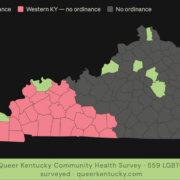
 AP