KEEP. Subject. Additive. Housing access, homelessness, discrimination in housing. Currently at zero and that is fine, it is waiting for its first story.
As trans people continue to be the topic of political ads and legislative attacks, one author delivers a powerful account of how homeownership can be one of the community’s most powerful pathways to liberation, including right here in Kentucky.
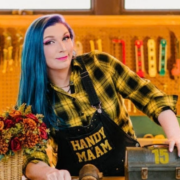
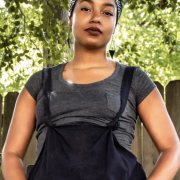
“One of the most radical things that we can do is take up space,” said Mercury Stardust, an author, speaker, DIY educator, and content creator. “For trans people specifically, we minimize ourselves for our own safety. We try to make sure that when we go out, we’re always with friends, or we’re only going to places that have safe bathrooms. We almost try to take ourselves out of society for our own safety.”
In Stardust’s brand new book, “Lost and Found: A Compassionate Guide to Homeownership,” she challenges this minimization by demystifying the path to owning your own home.
“Homeownership looks different for every single person,” said Stardust, also known to her millions of followers as the “Trans Handy Ma’am.” “And because people who are within the queer community, especially the trans community, might feel extra layers of marginalization, it can often feel like an impossibility to have a home of any kind. But homeownership is no longer the picket white fence with a two-acre yard and a dog named Lassie. Homeownership now looks different for everybody.”
From Repair Videos to a Homeownership Guide
In 2021, Stardust began her journey as a content creator focused on the support she wished was accessible to her. Stardust started making short-form videos primarily answering home maintenance questions from viewers who felt too afraid to ask these questions anywhere else, including women, trans people, and queer people. With over 15 years of experience in the maintenance field, Stardust’s compassionate guidance took off.
Stardust’s new project is a continuation of her 2023 New York Times bestseller, “Safe & Sound: A Renter-Friendly Guide to Home Repair.” The 2023 project was primarily focused on how renters can safely and autonomously accomplish home repair and renovations, while this second book is all about the process of owning your own place. According to Stardust, the books are designed for anyone who feels like they can’t find the support they need to feel safe in their home, for trans people, queer people, single moms, and countless other readers who are looking for more compassion in the rental or homeownership process.
Mercury Stardust’s Louisville Book Tour Stop Is Oct. 8
Starting in mid-September, Stardust took to the road to promote her new book project in nine cities across the country. From Seattle to Atlanta to Salt Lake City, Stardust is meeting readers at libraries and local bookstores for conversations about how her new project can support a new generation of queer homeowners.
On Oct. 8, Stardust’s tour comes to the Northeast Regional Library in Louisville, Kentucky. Stardust made it clear that stopping in red and purple states like Kentucky was a priority. Bringing her story to places where trans people are forced to feel small is in part what keeps her writing.
“I think it’s important to bring this community that I developed around kindness and compassion to all places that I’m able to,” said Stardust. “Let’s go to places that aren’t traditionally friendly to the LGBTQ community, and let’s make sure that we uplift those communities because we almost exclusively do these tours with independent bookstores that are queer-focused. So if we’re able to connect people with their local communities through the bookstore and libraries, that’s building an infrastructure that can strengthen those communities.”
Stardust’s new book revolves around her own lived experience of purchasing a home and creating a space that felt like her own. In the book, she unpacks how readers can navigate the same process that she felt alone in, from offers to inspections to renovations, and closing. Stardust hopes readers leave her writing feeling more prepared to build the futures that they deserve.
“My message to people who are like, ‘that can never be me,’ is to redefine and reexamine what homeownership might look like in the 21st century,” said Stardust. “As someone who never thought that she would see herself being a homeowner until just a couple of years ago because of my first book. You just really never know. And if an opportunity lands in your lap, I hope you’re ready for it.”
https://queerkentucky.com/wp-content/uploads/2026/09/mercury-stardust.webp6681200Nick Fultonhttps://queerkentucky.com/wp-content/uploads/2024/05/Queer-Kentucky-White-Logo-300x132.pngNick Fulton2026-10-01 08:14:442026-10-07 09:39:03Homeownership Is Radical, Says Mercury Stardust. Her Book Tour Hits Louisville Oct. 8
Kentucky’s 2026 legislative session is officially — finally — coming to a close.
Lawmakers will spend Tuesday and Wednesday in Frankfort, overriding any vetoes from Gov. Andy Beshear, passing any last-second bills and wrapping things up before heading home for the year.
Things will kick off at 10 a.m. Tuesday when the Senate gavels in, and everything must adjourn by 11:59 p.m. Wednesday (but they don’t have to stay that late).
All of this year’s anti-LGBTQ+ legislation is already dead, but Queer Kentucky will still keep y’all updated about anything you need to know about using this handy-dandy live blog. So, bookmark it now and check back frequently for the latest from the state Capitol.
Got a question on a legislative issue or want us to look into a bill for you? Drop a note in Queer Kentucky’s politics survey or contact lead politics writer Olivia Krauth directly at [email protected].
New posts will appear below this line, with the newest stuff being first. Be sure to scroll down to see any older content you may have missed.
11:35 p.m. Wednesday — It is done.
Kentucky’s 2026 legislative session is officially DONE.
This session marks the first in a few years where no anti-LGBTQ+ bills became law in Kentucky.
Signing off, y’all — it has been a gift!
— Olivia.
11:15 p.m. Wednesday — Welp, that’s it
To anyone who has been following this live blog religiously, I apologize for how boring it has been, but rest assured, it is basically over.
It looks like the Senate and maybe the House are done for the night, so lawmakers are starting to go home, with a select few left behind to basically handle legalese and paperwork.
9:05 p.m. Wednesday — We’re still here
Remember how I said the end was near? Five hours ago? Yeah, we’re still going.
In my defense, last year, things were wrapped up early in the afternoon.
Things aren’t really happening — we’ve mainly had dinner break, and then discussed a few resolutions.
4 p.m. Wednesday — Just chillin’
Since we last spoke, the legislature has done a few things like eat lunch and get a few last-minute bills through committee, but it has overall been pretty chill.
The end is near, but I’m just not sure *how* near it is.
11:55 a.m. Wednesday — And we’re back
Happy Sine Die Day to those who celebrate! That just means this is the final day of Kentucky’s 2026 legislative session, and lawmakers must wrap everything up before midnight.
The House started at 10 a.m. and the Senate at 11 a.m. They dealt with all of the veto overrides Tuesday, so today should be a rather simple, short day.
8:05 p.m. Tuesday — See you tomorrow
The House and Senate are done for the day. The Senate will be back at 11 a.m. and the House starts a bit earlier at 10 a.m.
From what I can tell, they’ve gotten through all of the veto overrides, but still have a few things left to handle before they close out session. Last year, they finished the session early in the afternoon, so let’s see what they do this year.
6:50 p.m. Tuesday — Coming back from dinner
We’re slowly coming back from dinner break to the Senate not agreeing with the House’s changes on that big housing bill — Senate Bill 9 — I mentioned earlier today.
This means they’re doing a conference committee between the House and Senate to try and reach a compromise on the topic. Who knows what they’ll come up with, or when they’ll share that info with us.
3:55 p.m. Tuesday — Still rockin’ and rollin’
We’re really moving at a brisk pace today. Both chambers are basically done with all of the veto overrides, with just a few more left in the Senate. It looks like it might be an early end for the day, because I’m not totally sure what else they have left to do.
12:50 p.m. Tuesday — And the Senate is done with overrides
With a supermajority, the veto override process is generally pretty easy — a bit time-consuming, but typically easy for the Republicans.
The Senate had 10 Senate bills facing vetoes today, and overrode all of them in less than an hour. Now those bills will head to the House for the same process. (And once the House is done with their bills, they’ll head to the Senate.)
Of the Senate bills that got vetoed, several were education related. Two changed the power and makeup of the JCPS school board, and another would make it easier for outside education service providers — those often in charge of charter schools — to run public schools.
Meanwhile, the House is working through their veto overrides. They’ve already overridden vetoes on bills that would protect firearm dealers from lawsuits tied to guns and to allow 18-year-olds to carry concealed weapons.
12:30 p.m. Tuesday — Bills to watch
Just because it is the final two days of session does not mean lawmakers can’t pass new legislation. They can definitely do that, but they won’t have a chance to override Beshear should he veto it, so basically anything they pass now needs to be uncontroversial.
One big thing to watch is Senate Bill 9 — an omnibus housing package aimed at making it easier to build housing, therefore hopefully making it more affordable. This was a Republican priority bill in the Senate, but the House added a ton of stuff to it at the last minute before the veto period and the Senate didn’t agree to their changes before the veto period started.
Typically, that spells death for a bill, but Sen. Robby Mills (R-Henderson) — the bill’s sponsor — posted on social media that he hopes to still see the bill through by the end of session.
Of course, we’re still keeping an eye on House Bill 759 — the uncontroversial teacher certification bill that got a last-second anti-trans teacher amendment. The bill never got a vote, so the amendment hasn’t formally been struck down yet, but it fully expected to be dead. There’s still a chance the original HB 759 bill will get a vote in the last two days here, so we’ll keep you posted on that.
12:15 p.m. Tuesday — Rockin’ and rollin’
Hello, friends, welcome to the second to last day of the legislative session!
The Senate has been up and at ‘em for a bit, and they’re currently running through a series of veto overrides of various bills Beshear vetoed over the last two weeks. The House gavels in at noon and should start doing the same.
OK, what is a veto override and how does it work? When the legislature sends Beshear bills to consider, he can veto them — aka basically say no and explain why. But the legislature can override him with a simple majority vote — and they have about 80% of all seats in the House and Senate.
Both the House and Senate have to vote to override a veto, so two separate votes, and then they send the bill to the Secretary of State’s office to become law.
Other resources to stay informed:
Follow Queer Kentucky for up-to-date policy and election news.
Follow your favorite advocacy groups and journalists on social media for any live updates out of Frankfort.
Turn on KET or the LRC’s livestreams of committee meetings and House and Senate proceedings to watch as things go down and listen for any changes to bills.
https://queerkentucky.com/wp-content/uploads/2026/04/gov-andy-beshear-press-conference-team-kentucky-2026-scaled.webp17072560Olivia Krauthhttps://queerkentucky.com/wp-content/uploads/2024/05/Queer-Kentucky-White-Logo-300x132.pngOlivia Krauth2026-04-14 08:30:012026-10-10 14:02:20Kentucky’s 2026 Legislative Session Is Finally Wrapping Up — Here’s What to Know
As Kentucky’s 2026 legislative session winds down, Queer Kentucky will be keeping y’all updated throughout all of it.
Lawmakers will meet Tuesday and Wednesday to pass any final legislation before the veto period begins Thursday — a two-week-ish period where Gov. Andy Beshear will be able to sort through all of the bills on his desk and decide what to do with them.
Basically all of this year’s anti-LGBTQ+ legislation is dead, which means it can’t pass this session, but Frankfort can be sneaky, so we’ll still be watching. (Plus, they have a ton of important stuff to get through over the next two days, including the next two-year state budget.)
This story will be regularly updated over the next few days with any important happenings or interesting tidbits, so bookmark it, check back frequently and share it with your friends so they can do the same.
Keep an eye on Queer Kentucky’s social media pages for any major news, and feel free to contact lead politics writer Olivia Krauth at [email protected] with any questions or thoughts you have about bills or the legislative session. You can also give us your thoughts in our 2026 politics survey.
New posts will appear below this line, with the newest stuff being first. Be sure to scroll down to see any older content you may have missed.
10:35 p.m. Wednesday — Winding down
We’re starting to wind down for the evening, and it looks like the Senate is officially NOT going to take up HB 759.
Anything can still happen, technically, but the Senate is currently taking a break and waiting on a few final things to come over to them from the House side. Typically, when they hit this phase of the session, the Senate is very uninterested in resurrecting legislation they could’ve passed by now.
The House is also taking a break. Everyone is actively taking breaks.
8:15 p.m. Wednesday — Dinner is (almost) done
The House is back and powering through legislation, but the Senate is still finishing up its dinner recess.
That big $800 million one-time spending package I mentioned? Turns out it is now $1.7 billion in spending across 300 projects. I’m still wading through what those projects are.
6:15 p.m. Wednesday — Slowing down, but not done
Things are starting to slow down a bit for dinner, but we’re still expecting a late night.
I’ve lost track of how many bills are in conference committee mode right now. A lot of contentious stuff (at least between lawmakers) is actively being decided behind closed doors.
5:10 p.m. Wednesday — Crunch time
We’ve got about seven hours until lawmakers need to shut things down for the veto period, and I can’t tell if things are starting to slow down or they’re about to speed up. Several big-deal bills are still up in the air.
After passing the budget bills, the Senate took a break for caucus meetings. They still haven’t done anything with HB 759, and they don’t look particularly poised to do so.
When they get back, they’ll need to deal with (or not, I guess) several major issues. The House just rejected their changes to this year’s big Medicaid bill, so they’ll need to either recede from those changes or push the debate on Medicaid into conference committee mode.
They’re also running out of time to handle housing reform, one of their priorities of session. The House threw several housing reform bills into one and passed it earlier today, and now the Senate needs to accept those changes or push this into conference committee mode, too.
Other things that are still a major question mark include what is included in House Bill 900 — the state’s $800 million one-time spending bill — and what they’ll do with the JCPS board.
Meanwhile, the House is debating the budget bills now.
4:10 p.m. Wednesday — Is that a budget I see?!
At long last, lawmakers in the Senate are sharing details about the next state budget. Technically, budgets, because they have separate bills to deal with different branches, but still.
The budget has been in the conference committee process for the last several days. This is when the House and Senate don’t like each other’s versions of a bill, so a group of them sit around and try to find a compromise. This process is pretty behind-the-scenes, so we’re actively learning what the final budgets look like and it may still be a bit before written copies of the final bills are online for public viewing.
The main budget is House Bill 500. Senate A&R Chair Sen. Chris McDaniel said several state agencies will see a reduction in funding over the next two years, but did not say specifically which ones.
Something important to note: Unlike with most bills, Beshear can veto just parts of budget bills. So, if he generally likes the budget, but doesn’t think a certain thing should get funding, then he can line-item veto it. The legislature, though, can still override him (and they almost always do).
1:50 p.m. Wednesday — Just chillin’ (day two)
Once again, greetings from Frankfort!
Yesterday was pretty stop-start-stop-start, with long periods of lawmakers breaking for caucus meetings mixed with lengthy sections of back-to-back bill votes. We’ve seen much of the same so far today.
The House passed a few interesting bills, including a revised bill to overhaul Kentucky State University — the state’s only public HBCU — and one that would let local school boards hire education service providers — groups that typically run charter schools, to varying levels of success — to oversee public schools.
The Senate has yet to act on HB 759.
10:15 a.m. Wednesday — Off to the races
Good morning, y’all! Welcome to the final day of Kentucky’s 2026 legislative session before the veto period! AKA one of the absolute busiest days in the entire legislative session. (And perfectly timed on April Fool’s Day.)
Reminder: They have until 11:59 p.m. tonight to pass anything they may need to override a Beshear veto of. They can still pass legislation during the final two days of session on April 14 and 15, but they wouldn’t be able to override Beshear if he says no.
The Senate just got started for the day, and the main thing we’re watching there is and has been HB 759 and its anti-trans teacher amendment. Last night, I talked with a source who said the bill and its amendment are dead, but I’ll still keep an eye on it just in case.
The Senate also needs to vote on House Bill 2, a sweeping Medicaid proposal. You can read about that bill here.
The House is slated to start at 11 a.m. I’m expecting some kind of JCPS-focused legislation to come out of that chamber today, including a bill that could shift power from the JCPS school board to its superintendent, change how many board members there are and where they represent, and create a financial advisory committee for the large district.
Oh, right, and we still haven’t seen a final written copy of the next two-year state budget, nor do we have any idea how the state wants to spend around $800 million in one-time spending.
6:25 p.m. Tuesday — Calling it an early night?
These last two days of session before the veto period typically include long days and even longer nights, but it looks like that might not be the case this time around.
The Senate adjourned for the day around 40 minutes ago, without touching HB 759 or its amendment again. (The House, meanwhile, is going on about hour four of being recessed.)
They’ll be back at 10 a.m. Wednesday. Remember: They have until 11:59 p.m. Wednesday night to pass anything remotely controversial to have a chance to override a likely Beshear veto during the final two days of session on April 14 and 15.
So, what could that mean for HB 759? They can’t touch it tonight, but if they want to pass the bill tomorrow, they’ll need to move it to the orders of the day, and then vote on it. That’s when the anti-trans teacher amendment would be withdrawn.
5 p.m. Tuesday — Bills, bills, bills
The House has been in recess for a bit now, and the Senate looks poised to join them shortly.
We’ve spent the last few hours powering through a ton of votes, including final passage for bills, agreeing with changes the other chamber made, and even a Senate override of a new Beshear veto on a bill protecting pesticide companies.
Bills on everything from child care access, to election tweaks, to the rights of protesters around ICE agents, have gotten votes this afternoon.
One thing that hasn’t: HB 759. Like I reported earlier, the bill was pulled from the consent calendar in the Senate shortly after noon. It hasn’t been assigned to the orders of the day, though, aka the spot it needs to be in order to get a full Senate vote. So, stay tuned on that.
Kentucky lawmakers undid a ban on “conversion therapy” for minors last legislative session, but they still had some reactions to Tuesday’s Supreme Court ruling to overturn similar bans in other states.
“Today, the Supreme Court of the United States has once again betrayed the LGBTQ+ Community, especially our vulnerable youth,” Rep. Lisa Willner, D-Louisville, said in a statement.
“As a licensed psychologist and the longtime sponsor of legislation to prohibit this discredited and deadly practice, I could not disagree more with this decision.
“All young people in Kentucky deserve to be safe and to be their authentic selves. As a mother and grandmother, I’m heartbroken.
“State governments have a responsibility to protect children, not put them in harm’s way. Today’s SCOTUS decision prevents states from protecting against harmful practices that abuse children and can leave lasting scars,” she said.
2:30 p.m. Tuesday — We’re just chillin’
Greetings from Frankfort!
We haven’t done a ton yet, mainly because the Senate has spent the last roughly two hours in caucus meetings — closed-door meetings with everyone in the party to get everyone in line, more or less.
Before they did that, though, the Senate pulled HB 759 from the consent calendar. This is a procedural step to allow the anti-trans teacher floor amendment to be withdrawn.
Meanwhile, the House has gotten through a lot, including giving a few bills around teacher misconduct final clearance. Those should head to Gov. Andy Beshear shortly.
11 a.m. Tuesday — What’s up with HB 759 and trans teachers?!
Lawmakers are set to gavel in at noon to formally kick off the day, but they’ve already had a pretty busy morning full of committee meetings to give some bills a quick vote.
One big thing I’ll be watching Tuesday: House Bill 759.
I wrote a whole post yesterday explaining exactly what is going on and fact-checking some other outlets who got it super wrong, but basically HB 759 has a last-second amendment to keep trans people from teaching. It is not expected to go anywhere, and the amendment’s sponsor is supposed to withdraw it before the bill itself gets a vote.
We don’t know exactly when that could happen, though, but I’ll be watching and I’ll update the live blog when it does.
Other resources to stay informed:
Follow Queer Kentucky for up-to-date legislative updates.
Follow your favorite advocacy groups and journalists on social media for any live updates out of Frankfort.
Turn on KET or the LRC’s livestreams of committee meetings and House and Senate proceedings to watch as things go down and listen for any changes to bills.
https://queerkentucky.com/wp-content/uploads/2026/03/gov-andy-beshear-2026-fairness-rally-kentucky-scaled.webp17072560Olivia Krauthhttps://queerkentucky.com/wp-content/uploads/2024/05/Queer-Kentucky-White-Logo-300x132.pngOlivia Krauth2026-03-30 21:25:062026-10-10 14:21:07Live Blog: Tracking the final days of Kentucky’s 2026 legislative session
Two organizations serving LGBTQ+ young people experiencing homelessness are partnering on a new initiative to deliver gender-affirming supplies and supportive materials to youth in Kentucky.
The Free to Be Youth Project in New York City is teaming up with Louisville-based Sweet Evening Breeze through an effort called the Rainbow Line. The program connects urban and rural queer advocacy groups with LGBTQ+ community centers across the country. The Kentucky partnership follows earlier Rainbow Line collaborations in Alabama and Tennessee.
The initiative’s first step in Kentucky will be a shipment of care packages that include gender-affirming cosmetics, queer and frequently banned books, sensory toys, art supplies, and toolkits focused on empowerment and organizing.
Amy Leipziger, director of the Free to Be Youth Project, said the effort aims to counter growing hostility toward LGBTQ+ people and cuts to social services.
“The stories we send — tales of identity, love, and community — are both a response to the isolation and anxiety so many are feeling, as well as a chance to help them imagine something brighter,” Leipziger said.
Both organizations say LGBTQ+ youth experience homelessness at disproportionately high rates and often face additional risks while unhoused. In Louisville, an estimated one in four teenagers experiencing homelessness identifies as LGBTQ+, according to Sweet Evening Breeze.
The Free to Be Youth Project launched the Rainbow Line last year by sending more than 30 care packages to a queer youth space in Nashville. Leipziger said young people there reported that receiving items reflecting their identities helped them feel recognized and supported.
Stuart Walker, program coordinator for Sweet Evening Breeze, said the Kentucky partnership will provide young people with items they otherwise could not access.
“The Rainbow Line will not only provide our young adults with joyful items they could not otherwise afford but will also provide a sense of love and support,” Walker said. “Just knowing that there are people out there who care makes a world of difference to our clients and residents.”
Walker said that support is already visible for clients such as E, a 22-year-old transgender woman who came to the organization seeking safety and stability. E now participates in programs ranging from career counseling to Sweet Evening Breeze’s transgender peer support group.
The Free to Be Youth Project shared a similar story about M, a young queer man from Haiti who came to the group seeking legal help but found a wider community and sense of belonging.
Advocates say these individual experiences reflect broader challenges young LGBTQ+ people face nationwide.
“Our lives and stories are interconnected trails of resilience and pride, woven through identity, policy, and community,” the organizations said.
The Free to Be Youth Project provides direct legal services in partnership with local LGBTQ+ youth organizations in New York City. Sweet Evening Breeze offers transitional housing, mental health support, computer and library access, and referrals for young adults in Louisville experiencing homelessness.
https://queerkentucky.com/wp-content/uploads/2025/11/1IMG_1244.webp16201080Queer Kentuckyhttps://queerkentucky.com/wp-content/uploads/2024/05/Queer-Kentucky-White-Logo-300x132.pngQueer Kentucky2025-11-28 12:00:232026-10-10 13:50:21Free to Be Youth Project, Sweet Evening Breeze Partner to Deliver Gender-Affirming Care Packages to Unhoused LGBTQ+ Youth
The views and opinions expressed in submissions to Queer Kentucky are those of the authors and do not necessarily reflect the official policy or position of Queer Kentucky. Any content provided by our submissions or regular columnists are of their opinion. As a reader, you are always welcome to submit your op-eds through our submission form.
The funniest jokes are obviously the ones you have to explain. I mean that is what I tell myself when no one laughs at my attempts at humor. See—when I said the turtle, it obviously was referencing the 1950’s era misconceptions and…never mind you don’t get it… Those kinds of jokes, super funny right? Some say that the same can be said about a presidency that issues an order then has to clarify over and over again what they were trying to do.
On the heels of the recent effort to cut funding for healthcare providers suspected of gender affirming care, the administration via the Office of Management and Budget (OMB) issued a memo to pause federal grants funding.
Critics say this isn’t good, isn’t wise, and is a dangerous and calculated move that disproportionately harms marginalized communities—particularly Black and brown, low-income, and the LGBTQ+ community. These actions can slow access to critical programs that provide assistance with housing, food, and safety.
So, a quick rundown before going any further. What is the OMB and why do we even care? The OMB is the office that handles the money that is being paid out. They quite literally handle the management of the budget…aka the name Office of Management and Budget. A common thought or question is how does this really work though? Don’t the people already have the money? The short answer to that question is the lawyerly, it depends, and the more frank—not quite.
I personally had experience managing a federal grant when I was executive director for the Kentucky Commission on Human Rights. Often, when you have a federal grant, they don’t just hand you a check or a pot of cash. You have to work for it. Once you have an agreement in place, you can log in on a secure portal and “draw down” funds. This action then initiates the payment for the previously agreed amount that you put in the request to draw down.Confusing, I know.
More confusing though is the uncertainty that comes alongside this order and who it can impact the most. Millions of people who depend on rental assistance, housing vouchers, and SNAP (food stamps) could face increased food insecurity and potential eviction. Many low-income and LGBTQ+ individuals, already facing higher rates of poverty, are now at even greater risk of homelessness.
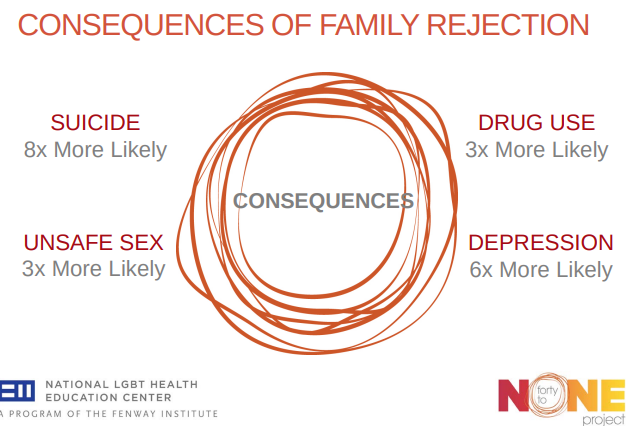
Grants also are vital in keeping shelters open for survivors of domestic violence and LGBTQ+ youth facing family rejection. The funding freeze means shelters may shut down or turn people away, leaving victims with nowhere to go and increasing the likelihood of returning to unsafe environments. On top of that, Kentucky’s beleaguered foster care system that is currently overrepresented with LGBTQ+ youth are now at risk of losing key operational funding.
Those who already feel the pressures of family and society and the LGBTQ+ youth, who already face alarmingly high rates of suicide, this freeze can also impact federally funded crisis hotlines for support. With the freeze, essential helplines like the 988 Suicide & Crisis Lifeline and LGBTQ+ specific hotlines face possible funding gaps, cutting off life-saving services when they are needed most.
Lastly, this freeze impacts the operation of Medicaid portals, potentially delaying coverage enrollment for millions of low-income individuals, seniors, and people with disabilities. Any disruption in Medicaid access disproportionately harms Black and brown communities, LGBTQ+ individuals, and those living in poverty.
But can they even do this? As with many of the recent actions from Washington this too carries a question of constitutionality. Attorneys General in more than twenty-two states (and DC) have already filed suit to challenge the order. In Kentucky, the Attorney General did not join this suit aiming to protect funding and instead penned a letter to Costco regarding their recent decision to not end their DEI programs.
Legal experts and the good Attorneys General, are pointing out the apparent separation of powers issue under the U.S. Constitution. Yeah, that old thing.
The Constitution’s Appropriations Clause (Article I, Section 9, Clause 7) explicitly states that
“No money shall be drawn from the Treasury, but in Consequence of Appropriations made by Law.” This means that once Congress approves funding, the President must ensure its disbursement. By instructing the OMB to halt funds, the Trump administration may be violating the separation of powers and defying congressional authority. Realizing this, a federal judge has temporarily blocked this order from going into effect.
Okay, enough legal stuff. The OMB tried to clarify over and over the day after the order to clarify who wasn’t part of the impacted group in the freeze. Just like a bad joke, they had to keep explaining and explaining often times confusing even more people. Maybe that is part of it, the confusion.
Building on the confusion, the Trump White House issued a rescission of the memo. This announcement was received with excitement, to quickly be clarified (one of those again) by the White House that the memo is rescinded, but not the freeze. What?
Confusion on the impact of a potential rule can do more damage than the rule itself. Groups may slow their services preemptively to circumvent inevitable cuts later. These actions have a lasting chilling effect on providing services to the most vulnerable.
If you or someone you know is struggling, call or text the 988 Suicide & Crisis Lifeline at 988. LGBTQ+ young people can press 3 to reach counselors trained in LGBTQ+ care, an option that returned on Sept. 30, 2026 after it was cut in July 2025. The Trevor Project also offers 24/7 support at 1-866-488-7386 or by texting START to 678-678.
https://queerkentucky.com/wp-content/uploads/2025/02/hiphop-1-png.webp7681366Terrance Sullivanhttps://queerkentucky.com/wp-content/uploads/2024/05/Queer-Kentucky-White-Logo-300x132.pngTerrance Sullivan2025-02-04 13:44:522026-10-10 19:18:15Thawing Out Details on the Trump Funding Freeze
In the past year, the number of our chronically homeless neighbors has increased by about 200%. While shelters and other resources are making great strides to meet the need while bearing the brunt of Kentucky’s criminalization of homelessness, their work cannot be done alone.
A lengthy anti-crime law known as the “Safer” Kentucky Act took effect in July of 2024. A portion of the law prohibits “unlawful camping,” making it illegal to sleep or camp on a street, sidewalk, area under a bridge or underpass, path, park, cemetery, or other area designated for use by pedestrians or vehicles.
The enforcement of this new law varies widely across Kentucky, reflecting attitudes of local governments and police departments. According to a state report published in October, 37 charges have been filed so far in Jefferson County and 29 have been filed in Fayette County. In Northern Kentucky, two charges have been filed in Kenton County and three charges have been filed in Campbell County.
“Thankfully in Northern Kentucky, we have a great relationship with our police departments,” Welcome House CEO Daney Amrine said. “They will call us because we can help resolve an encampment peacefully.”
Welcome House is a nonprofit organization headquartered in Covington that provides a wide range of services and programs to address homelessness across the state.
“We serve 40 different counties across the state and about 5,000 individuals a year,” Amrine said.
Housing is the first priority for Welcome House. They get folks experiencing homelessness into safe and consistent housing and then they’re able to address the root causes of homelessness through case management, securing necessary documents, workforce preparation and more.
Welcome House has seen a clear need for their services in the LGBTQIA+ community, particularly in rural areas.
“We are seeing people who are transgender, we are seeing people who are LGBTQ+ identifying and struggling in those communities because there’s not any services or support for them,” Amrine said.
She recalled the experience of a former client who had been sleeping in a park when they were physically assaulted for being trans.
“They were very, very scared, very nervous about asking for help or getting help… Our street outreach teams were able to work with that individual and unpack some of that stuff, get them connected with a primary care physician.”
Fast forward to today and that person has consistent housing and gainful employment thanks to services from Welcome House.
Amrine said she’s seen a small increase in the number of LGBTQIA+ people experiencing homelessness, and a solution is clear. “I think we can end homelessness in Kentucky, 100%. I believe that with every fiber of my being, I know we could, but we need housing.”
The Kentucky Housing Corporation, founded by the General Assembly in 1972, found each of Kentucky’s 120 counties have housing gaps. According to a recent report, parts of Northern Kentucky like Boone County have a 22% gap between the number of units needed and the number of current households.
While organizations like Welcome House are able to provide long-term solutions, there’s also a need for low barrier, emergency shelters in the region. That’s where the Emergency Shelter of Northern Kentucky comes in. Executive Director Kim Webb leads the nonprofit in its mission to provide life saving, life changing shelter and services to adults experiencing homelessness.
Webb said the shelter’s low-barrier, non-discriminatory approach has been a “natural fit” for serving LGBTQ+ folks, as they don’t require background checks, sobriety, or compliance with certain conditions to access services.
Webb also noted the number of overnight shelter guests who report being homeless for the first time was up to 44% between July of 2023 and June of 2024. They also saw a 63% increase in people accessing their shower and laundry services. In that same time period, they had 1,700 clinic visits with urgent medical needs.
Meanwhile, public funds for these services are lacking, before and after the passing of new anti-homeless legislation. 87% of the Emergency Shelter of Northern Kentucky’s funds come from private donors.
“120 counties in our state require an animal shelter to be taxpayer funded,” Webb said. “And there’s no such requirements for human beings, right? Think about that.”
https://queerkentucky.com/wp-content/uploads/2025/01/homeless-1-png.webp7681366Tom Lallyhttps://queerkentucky.com/wp-content/uploads/2024/05/Queer-Kentucky-White-Logo-300x132.pngTom Lally2025-01-17 14:37:032026-10-10 14:29:59Northern Kentucky groups tackle rising homelessness with innovative solutions
“As long as you live in this house, you’re going to act a certain way. I don’t want you embarrassing me.” The words change as they echo from parents’ mouths but the feeling is universal for children who hear them: you are not welcome.
Children like Robyn, who was fourteen years old when she came out as bisexual. “[I] immediately faced adversity from my parents,” she recalled. A vulnerable young teen working to understand her identity, Robyn was forced out of her childhood home in a small working-class city outside of the Louisville metro. After weeks away from home, her parents allowed her to return. “There were some rules,” she said, describing how they regulated her identity and ability to express herself.
By the time she turned 18, Robyn was able to spread her wings and move out. As many queer youth do, she set her eyes on the nearest big city. She found a job in the food industry, moved into a small apartment with her high school sweetheart and, finally, she was able to live freely and in her own skin.
Then, the pandemic hit. On May 16 2020, Governor Beshear announced the closure of all in-person dining at bars and restaurants. Robyn lost her job, suffered from declining mental health as she worked to further understand her gender identity as a trans person and separated from her high school sweetheart.
Over the next few years, Robyn described herself as underemployed. She took on new jobs to pay the bills but fell further and further behind until she found Sweet Evening Breeze. The affirming resource center for LGBTQ+ young adults offered Robyn a safe space, financial support and counseling services to bring a sense of security back into her life.
Honoring the legacy
The Sweet Evening Breeze we know today is the namesake of a gender-non-conforming healthcare hero who carved out a space for queer representation and inclusion in Lexington, Kentucky in the early 1900s.
Born to the name James Herdon, “Sweets” served as head orderly at Good Samaritan Hospital, when she wasn’t strutting the streets in her drag. She shepherded generations of LGBTQ+ youth and fiercely protected them. You can read more about Sweet Evening Breeze inQueer Kentucky’s article on her lasting legacy.
“She was really doing it,” Stuart Walker said. The program manager for Sweet Evening Breeze prioritizes creating an accessible and comfortable environment for LGBTQ+ young adults experiencing homelessness in Louisville.
Walker and his team at Sweet Evening Breeze said Sweets’ hospitality and compassion for others inspired their vision to provide housing and housing assistance to LGBTQ+ people who are between the ages of 18 and 24.
Housing assistance typically comes in the form of emergency housing, Walker said. “We can put them up in a hotel for a week or so to get them back up on their feet so that they can catch their appointments.” Folks are able to see case managers and therapists through Sweet Evening Breeze, get IDs, and cover their other needs.
Paving a path
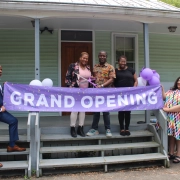
In April of 2024, Sweet Evening Breeze opened Kentucky’s only transitional housing for LGBTQ+ young adults. The four-unit facility named Trager House, offers a soft place to land for 3-12 months depending on the goals of the folks who live there.
Bedroom interior of Sweet Evening Breeze Apartment.
“As soon as I got through the door, I just cried with relief, literally just broke down and sobbed from this weight that was lifted off of me,” Robyn said. She is the first resident at Trager House. “And it’s given me the space to re-approach employment…and also having the support system of fellow queer people who understand the unique challenges that I face has been hugely instrumental and comforting.”
Bathroom interior of Sweet Evening Breeze apartment
Trager House has given Robyn the space and support she needed to pave her own path as a trans woman. “It’s almost like going through a second puberty, you know, you’re finding and figuring yourself out, figuring out what clothes fit and what looks good on you, and what you like to wear and how you want to relate to other people and see yourself into the world,” she said.
Having queer and trans people who are supporting her and pushing her to achieve her goals has made a defining difference for Robyn. She said, “Sweet Evening Breeze is like a second family.”
The additional three units at Trager House have already been filled since April, and Sweet Evening Breeze is already looking forward to a larger space.
This first space is a sort-of trial run for transitional housing at Sweet Evening Breeze. The Trager Foundation is providing the rental space for 2 years. Program Manager Stuart Walker said their end goal is to have a large facility where they can offer transitional housing to 15-20 people at a time.
Sending a message
As the Kentucky legislature passes restrictive laws and limits the rights of queer and trans children, Sweet Evening Breeze’s investment in supporting LGBTQ+ young adults offers needed resources while establishing a more supportive narrative for queer and trans people in the Commonwealth.
“This puts Louisville on the map as a welcoming place for people around the world,” Philanthropist Brett Trager said. He explained that Trager House is one of only ten resources in the country that offer transitional housing to LGBTQ+ young adults, and it helps to put Louisville on the map as an inclusive city. “Sweet Evening Breeze is filling that gap and showing America how much of a welcoming community we are.”
If you’re looking for support or would like to donate to Sweet Evening Breeze, you can visit the website sweeteveningbreeze.org.
https://queerkentucky.com/wp-content/uploads/2024/06/20240424133455_IMG_2437-1-jpg.webp12801920Tom Lallyhttps://queerkentucky.com/wp-content/uploads/2024/05/Queer-Kentucky-White-Logo-300x132.pngTom Lally2024-06-06 16:30:232026-10-10 14:29:04Sweet Evening Breeze: Honoring the legacy, paving a path and sending a message
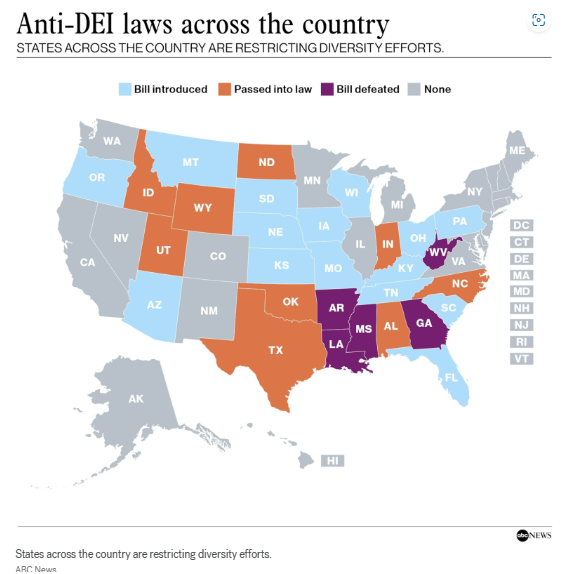
Today is the infamous sine die, which is the action that officially ends this legislative session. This legislative session has included at least 14 anti-LGBTQ+ bills, with anti-DEI bills being particularly publicly controversial. Of all of the bills, only 1 of the anti-LGBTQ bills passed.
House Bill 5, a broad-reaching crime bill, will become law despite Gov. Andy Beshear’s veto. HB 5 has been opposed by statewide and national advocacy organizations including the Fairness Campaign and the American Civil Liberties Union. Also profiled by both organizations were HB 9 and SB 6, anti-DEI bills that were dead, resuscitated at the last second, and then left to be gasping for air again. This is to say they did not pass for now, but the sponsors of these bills seek to continue advocating for this kind of policy.
Additionally, as reported by McKenna Horsley with the Kentucky Lantern, the Senate did concur with a House floor amendment to Senate Bill 191, a postsecondary funding bill, that would prohibit the use of “any race-based metrics or targets in the formulas” for the higher education funding model.
This was one area where anti-DEI language was able to be quietly implemented, which follows a national trend of conservative politicians restricting DEI efforts (below).
There were many developments with SB 6 and HB 9, the anti-DEI bills of this legislative session. SB 6 was infused into HB 9 by Rep. Jennifer Decker, R-Waddy, without consulting the sponsor of SB 6, Republican Whip Mike Wilson of Bowling Green.
This action caused controversy within the Republican Party, as they could not agree on the constitutionality of Rep. Decker’s more regulatory and extreme additions. The Senate did not go along with the sweeping changes made in the House, causing the clock to run out on the possibility of sweeping anti-DEI legislation in the 2024 legislative session.
The bill that will become law was HB 5, which proponents called the “Safer Kentucky Act.” Opponents say it criminalizes the poor and unhoused, dubbing it the “Suffer Kentucky Act.”
The Kentucky Center for Economic Policy did an analysis of HB 5, giving 5 leading effects of the potential law:
Increases criminal penalties for fentanyl in numerous ways
Criminalizes Kentuckians for being poor and unhoused
Creates harsher penalties for violent crime that do not make us safer and are not an appropriate response to current conditions
Expands felonies, enhances penalties and restricts personal liberties, among other provisions
Spends a large amount of state and local financial resources on these tried and failed approaches to public safety
These compounding impacts of discrimination and marginalization have a greater impact on Black, Brown, and Indigenous members of the LGBTQ+ community, as well as people identifying as LGBTQ+ and living with disabilities.
Further, the Trevor Project reports the key findings on how homelessness and housing instability are tied to queerness,
“Nearly half (44%) of Native/Indigenous LGBTQ youth have experienced homelessness or housing instability at some point in their life, compared to 16% of Asian American/Pacific Islander youth, 27% of White LGBTQ youth, 27% of Latinx LGBTQ youth, 26% of Black LGBTQ youth, and 36% of multiracial LGBTQ youth.
Homelessness and housing instability were reported at higher rates among transgender and nonbinary youth, including 38% of transgender girls/women, 39% of transgender boys/men, and 35% of nonbinary youth, compared to 23% of cisgender LGBQ youth.”
The Nation published an article covering Kentucky’s HB 5, and in that article the “Safer Kentucky Act” was referenced as the “cruelest criminal-justice bill in America.”
HB 5 was publicly opposed by more than 100 Kentucky groups, urging lawmakers to reject the bill. The legislation will cost Kentucky more than $1 billion over a decade, and much of that cost would come from the finances to require longer prison sentences.
If Kentucky was a country, it would have the 7th highest rate of incarceration in the world. The international scale of Kentucky’s high rate of incarceration was in a report by the Prison Policy Initiative, shared in 2021. This bill will only further populate Kentucky’s already chronically overpopulated jails.
With the amount of public controversy around this bill, more information regarding the source of the bill was requested. A Kentucky Public radio analysis exposed that many of the sources provided as support for this bill are from a policy report in Georgia, not Kentucky constituents, policy writers, or community members. Further, multiple writers of the quoted sources claim that their academic work was used out of context for political gain.
https://queerkentucky.com/wp-content/uploads/2024/04/Sign-scaled.webp23282560Belle Townsendhttps://queerkentucky.com/wp-content/uploads/2024/05/Queer-Kentucky-White-Logo-300x132.pngBelle Townsend2024-04-16 19:17:372026-10-10 16:26:28SESSION IS OVER: Costly crime bill to become law, anti-DEI bills officially dead for now
The views and opinions expressed in submissions to Queer Kentucky are those of the authors and do not necessarily reflect the official policy or position of Queer Kentucky. Any content provided by our submissions or regular columnists are of their opinion. As a reader, you are always welcome to submit your op-eds through our submission form.
Not long after I got sober, I developed a sense of urgency toward the world I’d spent so much of my life trying to escape. If I wasn’t sleeping or at work, I was facilitating trans-inclusivity workshops, writing this column, lobbying at the capitol, attending direct action trainings, organizing fundraisers, or fighting for changes in my workplace. Within five years’ time, I had burned myself out. And everywhere I looked, things were only getting worse: for trans people, BIPOC, tenants, and workers. I felt inadequate, isolated, and powerless.
Advocacy: harm-reduction or negligence?
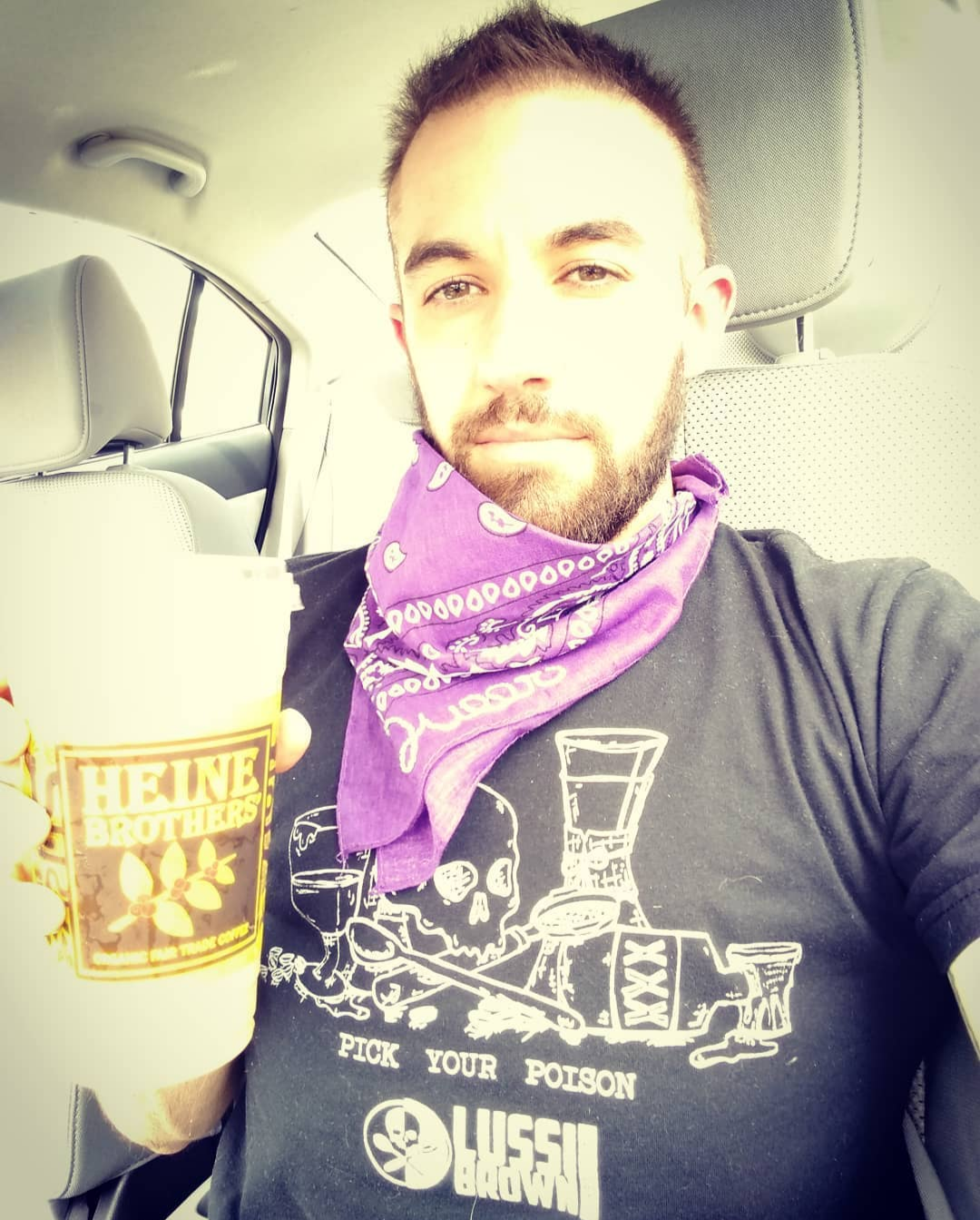
When I started managing for Heine Brothers’ in 2018, I did so believing that in a “leadership role” I would be better able to advocate for trans workers like myself. (Of course, that wasn’t the only reason I accepted the promotion. The manager position paid $13 an hour, $4 more than I was making as an AM, and like most of my coworkers, I could barely keep my head above water.) I did not yet realize that my concept of “leadership,” like so many of the concepts I had inherited from capitalism, was full of contradictions.
A leader is someone who has followers: people who look to them for direction, people they’re accountable to. If you had asked me who I was accountable to back then, I would have said “my staff.” But my staff couldn’t fire me, demote me, or shut down my store. In reality, like every manager, I was accountable to my employer.
From the moment we enter the workforce we are taught to use “leader” and “manager” interchangeably. But the terms are not synonyms. Workers who are actual leaders present a serious threat to their employers, and to capitalism in general. In the manager role, would-be leaders are severed from their fellow workers (their would-be followers) and used to exploit them for profit. This is why even the coolest, most compassionate managers are class traitors.
Enticed by a shred of security, I gave up true power and became an arm of the company. I may have been a good manager, but I wasn’t a leader.
During my five years with the company, I got good at crafting proposals that would withstand the scrutiny of everyone at the table (ops, HR, financials, etc.). Thanks to my advocacy, the company implemented a number of practices that make trans employees’ lives a little more bearable without hurting the bottom line. Which is to say: the bar was in hell, and I helped raise it an inch or two off of the floor.
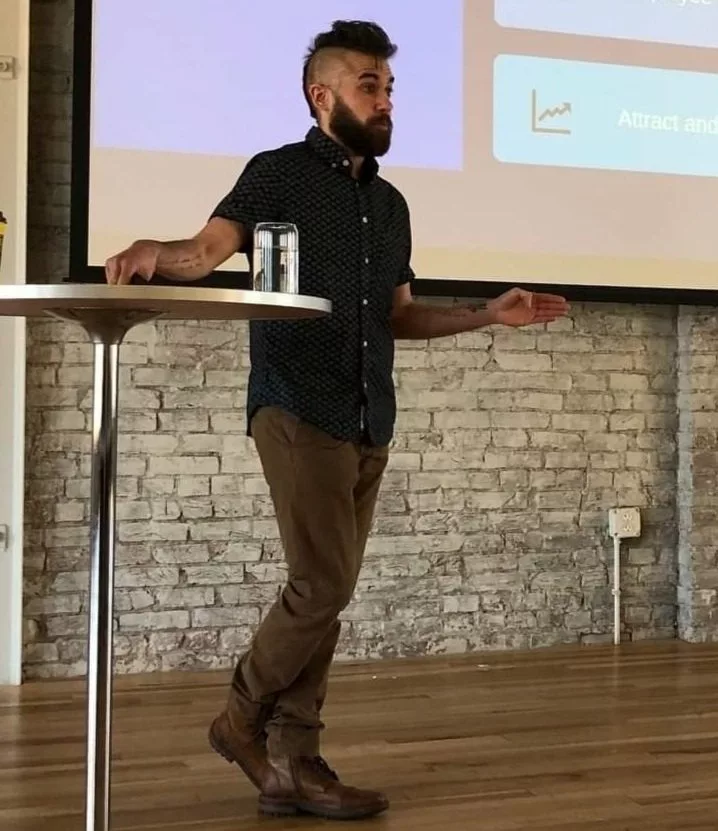
In 2019, I started facilitating trans-inclusivity workshops. As a believer in harm reduction, and as someone who transitioned in a non-inclusive work environment, I still genuinely believe in the value of these workshops. The problem lies in how (and by whom) they are funded, where those funds could be going instead, what work is being neglected by the would-be leaders who facilitate them, and what this costs the movement.
The same is true of advocacy organizations. Advocates seek to secure protections for historically oppressed groups through the courts, congress, election polls, and other approved channels. The inadequacy of advocacy lies in its relationship to power. Because advocacy orgs are usually connected to wealthy funders, they often have better relationships with investors and politicians than they do with impacted people. They are therefore likely to fold under political pressure to weaken their demands.
In hindsight, my advocacy efforts benefited my employer as much, if not much more, than the workers I was advocating for. And like the best practices I recommended to my workshop clients, the reforms won by liberal advocacy organizations necessarily enable the system to remain intact. In return, the system pays their executives’ salaries. It’s a symbiotic relationship that disincentivizes progress. When Congress passes some Draconian policy that sets progress back ten years, service orgs are flooded with grants and donations. In normal times, when we aren’t losing ground, the money slows to a trickle. The sicker society gets, the more these orgs benefit. And when we are healed, there will be no need for them.
“Well that’s why I’m an activist—not an advocate,” someone might respond; “I haven’t sold my soul to the non-profit industrial complex.”
I also said something to that effect, once, and had to eat my words.
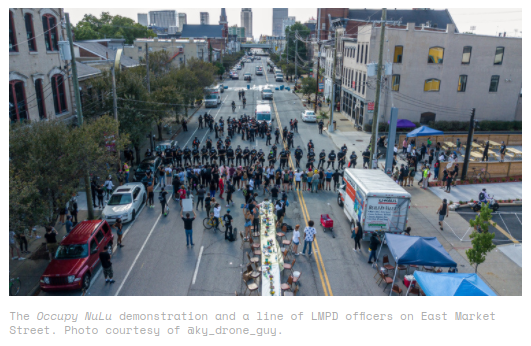
The action made waves, illuminating gentrification’s role in racial capitalism and police brutality at a moment when the whole world was watching. But that moment was short-lived. The last protestor had not even been released from jail yet when the NuLu Business Association, one of our targets, went on the record dismissing our demands and announcing that they were in the process of starting a DEI committee (as if that was the antidote to gentrification), a process that was allegedly underway before the action took place (as if that was relevant to our demands). Then “Godfather of NuLu” himself, Gill Holland, rewarded the NBA’s performative allyship with his own performative gesture, to the tune of 50 thousand dollars.
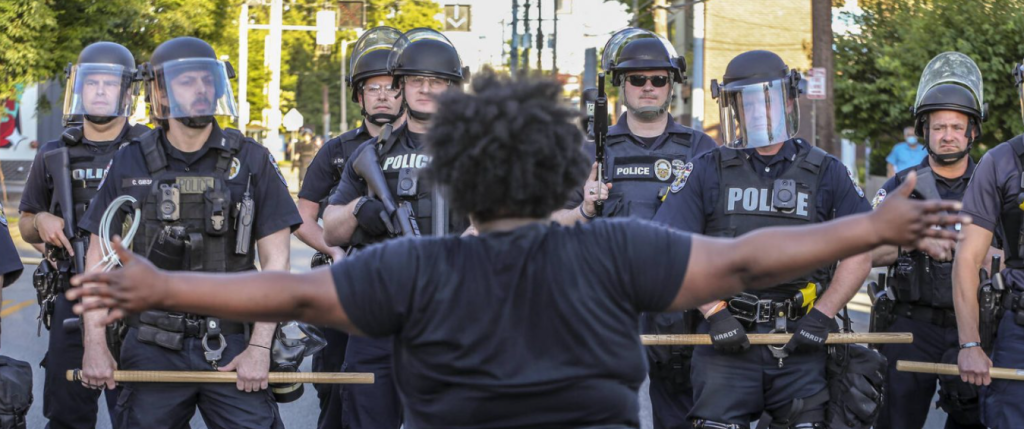
Despite 126 days of consecutive protests, which resulted in over 500 arrests, the officers who murdered Breonna Taylor walked free for over two years after her death. Not one year after the officers were arrested, Metro council approved an amended fiscal budget, the largest chunk of which will go to LMPD. Just two months prior, the Department of Justice released the LMPD investigation report. The report cites 61 incidents of alleged misconduct and states that LMPD “practiced an aggressive style of policing that it deploys selectively, especially against Black people, but also against vulnerable people throughout the city.” If activism/direct action was capable of effecting deep structural change, then there is no explaining this sequence of events.
Direct action is a tactic, not a strategy. On a scale of escalation, or as part of a campaign, it can have an impact, but once-and-done (or even 126-and-done) actions rarely yield material changes or sway those in power to concede to our demands.
The selfish/selfless binary: who benefits from it?
Why are increasingly many Americans living paycheck to paycheck, buried in debt, unable to find affordable housing, and/or being priced out of their homes? It’s not because we are all lazy, or because Republicans control the House and Senate. It’s because the ruling class is clear about their self-interest, and the rest of us are not.
From the moment we enter the workforce, we are conditioned to believe that our worth is based on our usefulness, our labor potential. We are trained to be selfless, to take one for the team, to think of the greater good. Whether it’s picking up a shift, agreeing to a coffee date, or sitting on a board or at a booth, we do what is asked of us compulsively, to avoid the guilt and shame that arises when we deny someone our time, our shoulder, or our labor without a “legitimate excuse.” The ruling class, on the other hand, is trained to be selfish: to look out for number one, to ask “what’s in it for me?”, to take more than they need when others needs are unmet, and to not feel bad about it.
In a capitalist society, selfishness and selflessness are two sides of the same coin. Paying your employees less than a living wage so that you can make a profit is selfish. Compulsively doing your employer a favor while they exploit you is selfless. We are very familiar with both sides of this coin. We are less familiar with a third concept, the concept of self-interest. Declining to do your employer a favor (when there’s no incentive, and no risk of retaliation) is self-interest.
“Self interest” is something we all possess. It’s the innate concern each person has for their material, emotional, and spiritual well-being, and that of their community. Self-interest isn’t selfishness, because as social beings, our well-being is intertwined with that of our community. Stealing from the worker co-op I’m a part of might have short-term advantages, but it would be bad for the co-op and for my comrades, on which my livelihood depends.
Helping someone move on my day off might not be my idea of fun, but I need my community to be housed, safe, and stable, because we take care of us. It’s in my self-interest to help if I am able, regardless of whether or not they return the favor.
When we’re clear on our self-interest, we start to identify others who share that self-interest: neighbors, coworkers, folks on the bus, the Uber driver, the barista. As we converse and learn more about each other, we uncover common needs, wants, and barriers. We realize we’re not alone. Maybe you find out that a lot of your neighbors have had their rent increased, while Air BnNs are popping up all over the neighborhood. So you decide to put your heads together and come up with a plan to stop the trend before you’re all priced out of your homes. This is called organizing.
Unlike advocacy and activism, the goal of organizing is to build power. Power, like self-interest, is neutral. It’s simply the ability to make things happen. Not having power means not being able to take care of yourself and your loved ones, not having a say in the decisions that affect you, or in the society to which you contribute.
The type of political organization that uses relationship building and leadership development to build power and fight for change is called a “power organization.” Unlike the other types of political organizations, power organizations are accountable to no one but their members. Their power doesn’t come from grants and donations, but from their numbers and their shared self-interest. Their independence is one of the things that makes them so dangerous.
If the thought of being powerful makes you uncomfortable, try to see what’s at the bottom of that discomfort. Do most of your experiences with power involve someone who has power over you using that power for personal gain, and benefiting at your expense? Do you associate power with selfishness, rather than self-interest? Or do you believe that you are unworthy, or undeserving, of power? Are these beliefs serving you? Who are they serving?
One-to-ones, risk-taking, and growing pains
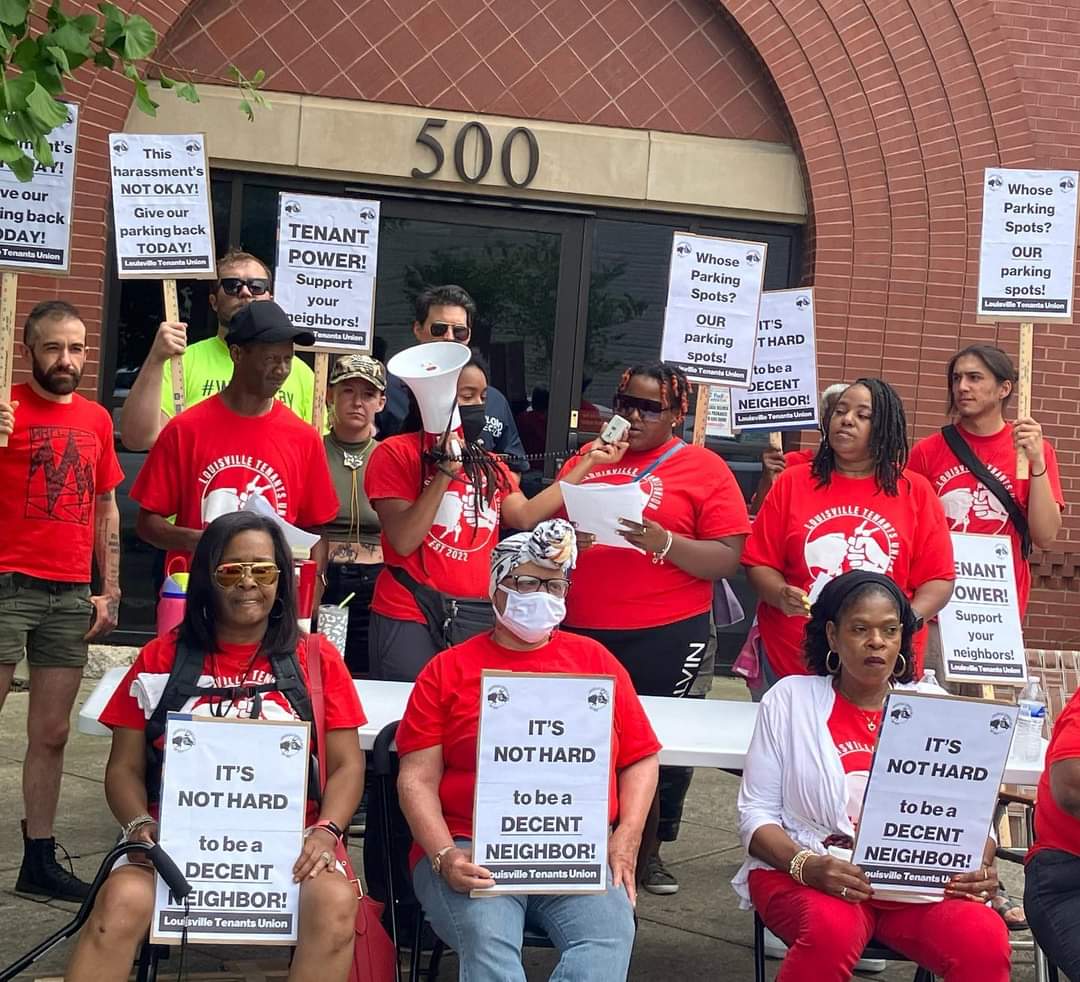
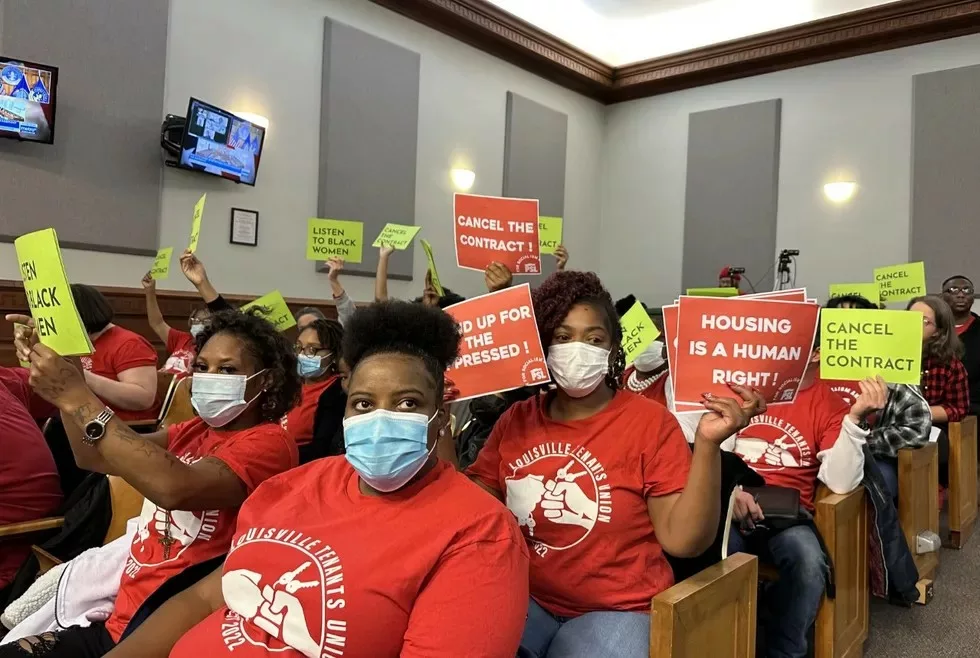
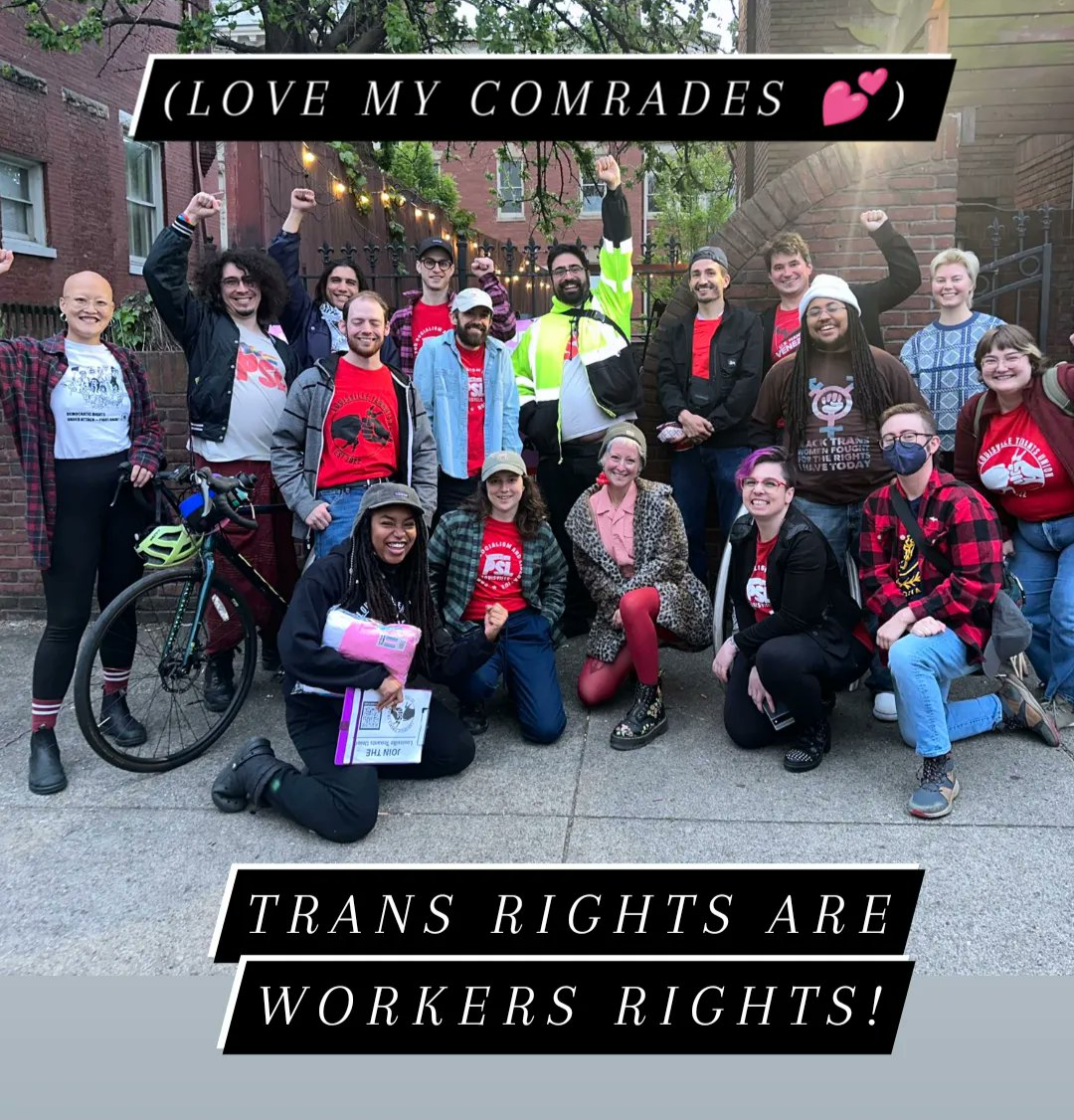
I had never heard of a “power organization” before I was introduced to the Louisville Tenants Union (LTU). One of the very few power organizations in Kentucky, LTU is a multiracial, multigenerational, member-led organization that is fighting to make housing a human right and end all evictions.
We are your landlord’s worst nightmare.
When I attended my first LTU meeting, the first thing I noticed was that the room was packed full all kinds of people. There were young kids, seniors, thirty-somethings like myself, and everything in between. There were Black, Brown, and white people of multiple ethnicities, ability levels, and gender expressions. One burly white dude rolled up on a Harley.
It took me a couple of months to get my bearings, and to understand the LTU’s method of organizing. My instinct was to look for a way to be useful, to find a task that needed to be completed and “plug in.” The organizer smiled and said “Thank you, but that’s not really how we do things.” Then he asked to schedule a 1:1 with me.
In organizing, a 1:1 is a conversation with a particular purpose: to get to know someone, and help them uncover their self-interest. I agreed to the meeting, despite not fully grasping its purpose. The organizer had asked for two hours, which seemed like an exorbitant amount of time to spend talking about ourselves. Wasn’t there some work we could be doing?
The 1:1 is the foundation of our power. It violates the norms of respectability and professionalism, shedding light on the ways we’ve been disfigured by capitalism. It disarms our enemies, bonds us to our comrades, and prepares us to take the kinds of risks that are required to win.
During that first 1:1, I found myself getting squirrelly. I hardly knew this person, and he was asking me to share things I had only ever shared with my closest confidantes. I gave a number of vague responses, said “ummm” a lot, and pleaded the 5th. It took several 1:1s before I started opening up. I was surprised to discover how many masks, filters, and scripts I needed just to get through the day. Every time I removed one of my masks in a 1:1 or training, revealing a scar, contradiction, or weakness, I’d close my eyes, hold my breath, and wait to be judged or rejected. And every time I wasn’t, I got a little bit bolder, and a little more trusting.
The process is ongoing, and it isn’t anything but comfortable, but it’s worth it.
Serious inquiries only!
Because of LTU’s organizing, Louisville is at the center of a national campaign called the Homes Guarantee campaign. The Homes Guarantee campaign is within striking distance of winning limits on rent hikes and adding tenant protections to a quarter of all apartments in the U.S.
LTU is also in the home stretch of getting Metro council to pass Louisville’s first-ever anti-displacement policy, which will: 1) prevent public resources from going toward development projects that would result in displacement, 2) create a pathway to prioritize current residents in gaining access to city programs, and 3) create a pathway to restore land that was wrongfully taken from families by the government.
Our demands are not compromises. They are not modest, nor vague. And we are not playing.
The longer I am involved with LTU, the less interested I am in projects, causes, or organizations that lack LTU’s clarity and precision, that don’t share my self-interest, or that aren’t serious about winning material changes for their base. That’s not to say I won’t continue advocating and participating in mutual aid. Those tasks are integral to everything I do, and they’re never finished, especially under capitalism. But I’m not going to make a career out of managing symptoms when I’ve found a cure.
If you are serious about winning, I encourage you to ask yourself the below questions, to get clear about whether the causes, projects, and organizations you’re invested in align with your self-interest. Because you deserve more than influencers and diplomats. You deserve comrades. And we will be here when you’re ready to start building power.
Onward.
Adrian
https://queerkentucky.com/wp-content/uploads/2023/09/Cul-rentstrike-AP_20092709811232.jpg-1.webp12801920Adrian Silbernagelhttps://queerkentucky.com/wp-content/uploads/2024/05/Queer-Kentucky-White-Logo-300x132.pngAdrian Silbernagel2023-09-17 23:03:322026-10-10 15:18:32Why I gave up on activism and decided to build power
The views and opinions expressed in submissions to Queer Kentucky are those of the authors and do not necessarily reflect the official policy or position of Queer Kentucky. Any content provided by our submissions or regular columnists are of their opinion. As a reader, you are always welcome to submit your op-eds through our submission form.
Photo by Emmett Valentin
“The first Pride was a riot.” This slogan went viral in June of 2020, after countless white queer Louisvillians were activated by LMPD’s murder of Breonna Taylor and the growing global uprising against police brutality. Its primary use was to agitate the ruling class Gays™️ who were critical of the Black Lives Matter protests by reminding them that there would be no Pride month, and no gay rights, were it not for Stonewall, and Black trans women destroying property and throwing bricks at cops. This Pride month, as legislators continue their assault on trans rights, more and more queer organizations, influencers, businesses, and platforms are adopting revolutionary messaging. But how many of them are actually serious about revolution?
All through March of 2023, Kentucky queers and LGBTQ+ allies took time off work to drive to the state capitol and fight a losing battle. They’d wait in line for an hour or more to pour their hearts out to disinterested politicians, then gather on the lawn or in the rotunda to listen to queer community leaders preach to the choir and cry into their megaphones. Meanwhile, representatives carried out business as usual, passing the anti-trans omnibus SB150 and then overturning Governor Beshear’s veto—just like everyone anticipated.
If Louisville’s queer orgs are one thing, they’re consistent. Every year, like clockwork, they rally: without a strategy, without leverage, using the same tired tactics, at the total mercy of their opponent. Why do they continue this way, when nothing has changed? Not because their leaders are lazy, dumb, or incompetent. Rather, it’s because their organizations exist to reinforce the existing power structures. If they changed their tactics and dismantled those structures, they’d be out of a career.
On March 29th, while all the other protestors rallied out of earshot of the power-holders legislating trans people out of existence, a group of twenty working class queers erupted into chants inside the chambers, locking arms and refusing to be silenced while the judge and capitol staff tried helplessly to restore order. We disrupted the proceedings for twenty solid minutes, continuing to yell our chants as the Kentucky State Police pried us one at a time from our seats and arrested us.
After we were released from jail, we learned that various queer liberal organizations who had no part in the action had been reporting updates on our arrests to their platforms, and even making demands of the governor on our behalf. If you didn’t know better, you’d have thought they had organized the action. The problem was not that they were stealing our limelight, but that they were stealing our power, and using it to advance their personal and organizational interests.
Marsha P. Johnson famously said that there can be “No pride for some of us without liberation for all of us.” Given how mutually-entrenched the nonprofit and for-profit sectors are in this stage of late capitalism, it can be tough to know which organizations are serious about winning liberation for all of us, and which ones are simply capitalizing on the posthumous fame of a Black trans femme revolutionary. Figuring this out requires understanding what power is, and how it moves.
Power is a neutral force. It is simply the ability to act and make things happen. For a lot of us, “power” carries negative connotations. This is especially true if our only experience of power has been at the receiving end of abuses of power—by landlords, employers, corporations, the police, etc.
There are two main kinds of power: paper power (money) and people power (power in numbers). The working class has a claim on the latter. The ruling class, which includes employers, landlords, and anyone who profits off of the exploitation of workers, has a claim on the former. Queer culture in Louisville, from the media to commerce to the political sphere, is currently owned and run by the ruling class. Corporate sponsors pay for our festivals, wealthy developers fund our media outlets, and our employers pay us a fraction of the value we produce for them, which if we are lucky is just enough to feed ourselves and pay our landlords’ mortgages.
Capitalism is propelled by the profit motive, which demands maximal profit, and therefore maximal exploitation, at any cost. Because capitalism is propelled by exploitation, extreme inequality is its logical consequence. Hence, anyone who is serious about liberation is organizing (building people power) to dismantle capitalism and replace it with a system that is not propelled by the profit motive, or by exploitation. This is all that a revolutionary is. Anyone who is serious about liberation is a revolutionary.
While most queer organizations today do not recruit or create revolutionaries, all queer organizations know that queer history is revolutionary history, and that the most important figures in queer history were revolutionaries, a.k.a. anti-capitalists. They also know that there is social capital, and profit potential, in that history. This is what bourgeois queer organizations are trying to cash in on when they quote Marsha P. Johnson, or align themselves with the Kentucky20.
Even while co-opting revolutionary actions, symbols, and people, the ruling class attempts to forestall the revolution by construing our “activism” as a sequence of isolated spontaneous actions, as opposed to the strategic, militant, long-term project that it is. Admittedly, a Black trans woman in the 1960s throwing a brick at a cop is a breathtaking image, and fully deserving of its own holiday. But Marsha P. Johnson did a lot more than that. In fact, the bulk of her “activism” was actually organizing: developing poor and working class queers into powerful revolutionary leaders equipped to take down the system.
Together Johnson and Rivera founded the Street Transvestite Action Revolutionaries (STAR), a revolutionary political collective consisting of queer and trans youth, drag queens and trans women of color, and survival sex workers. STAR opened the first-ever shelter for unhoused queer and transgender youth. Their manifesto was built on socialist principles such as free healthcare, and food and social services for all people. They held regular meetings, coordinated fundraisers, and organized campaigns. Most notably of all, they recruited, trained, and invested in queer revolutionaries.
Photo by Diana Davies
Image Source: New York Public Library
Like many Black trans women even today, Johnson and Rivera relied on survival sex work to meet their immediate needs. They hustled for food, clothing, and shelter. They were constantly thinking about how to source their next meal, what to do if one of “their kids” fell ill, and how they would protect themselves if a client became violent.
Over fifty years have passed since Stonewall, and queer and trans BIPOC are still burdened with material insecurity, struggling daily to meet their immediate needs, and relying on sex work and other high-risk work for their survival. This glaring lack of progress is indicative of powerless leadership: leadership that’s not organizing to win. Looking at our local queer orgs’ campaigns and demands lists (or lack thereof), it’s no wonder why SB150 passed in Kentucky, and why so few of us can break out of survival mode. Visibility, representation, and public education are all important, but what are these orgs doing about Louisville’s affordable housing crisis? That’s what Black queer scholar and tenant organizer, Jessica Bellamy, wants to know.
In 2019, Bellamy (any/all) co-founded the Root Cause Research Center, a community platform and base for subversive scholarship that works to eliminate social problems such as poverty and houselessness by attacking their root cause: racial capitalism. In the simplest terms, subversive scholarship is an organizing tool. When Bellamy and their partner Josh Poe aren’t organizing, they’re providing scientific data to steer that work – in real time. The first time I encountered subversive scholarship was in 2020, on RCRC’s website, and my mind was blown. And then I read Bellamy’s story.
Bellamy grew up in the Smoketown neighborhood in a small shotgun-style house. They describe the early years of their childhood as being rich with family and community. When they were six years old, Bellamy’s father was murdered, and their family made the painful decision to leave Smoketown by the time she was eight. Bellamy now owns the house they grew up in, but is still unable to live there due to classist and racist lending barriers, rising property taxes, and the skyrocketing costs of construction.
Like countless queer and Black Louisvillians, Bellamy is a victim of gentrification: a process whereby wealthy developers use public resources and taxpayer dollars to buy up properties in poor and working class neighborhoods, driving up the cost of living, and ultimately pricing residents out of their homes. But like her queer predecessors, Johnson and Rivera, Bellamy is fighting back, and she is fighting to win.
Bellamy is one of the authors of the Historically Black Neighborhood Ordinance: Louisville’s first anti-displacement policy, and the first anti-displacement policy in the South. When it passes, the Ordinance will do three things: 1) prevent the city from giving away public resources to development projects that would increase the cost of living in HBNs; 2) ensure that HBN residents get priority access to city programs (like the Downpayment Assistance program, the Home Repair program, and the Small Business assistance program); and 3) create a pathway to restore land that was wrongfully taken from families by the government.
Sponsored by Councilmen Jecorey Arthur and Kumar Rashad, the HBN Ordinance has gained significant support in all 26 of Louisville’s voting districts. Over 1,000 Louisvillians and nearly 50 local organizations have signed a petition in support of the Ordinance.
A petition isn’t just an organizing tool: it’s also a litmus test. A petition tells you where someone’s loyalties lie, and whose self interests they’re aligned with. Orgs that are serious about liberation for all—including workers, poor people, trans folks, BIPOC, and those who exist at the intersection of these identities, won’t just sign the petition: they’ll use their power, connections, and resources to make sure that it passes.
Has your favorite queer or “progressive” nonprofit signed in coalition with the HBN Ordinance? What else are they doing to combat gentrification, displacement, the affordable housing shortage, racist and classist lending practices, and the houselessness impacting so many in our community? Are you willing to make a phone call or send an email, and find out? Feel free to use the template below. If they say they haven’t signed, ask them why, and lean into the tension. Remember: it’s their job to serve your interests, and you don’t need paper power to hold them accountable.
Gentrification has devastated Black communities in Louisville, KY, and the most vulnerable members of the queer community – queer and trans BIPOC, queer and trans youth, and queer and trans poor people – are among those most directly impacted.
The HBN Ordinance does three things:
It prevents Louisville Metro Government from giving away public resources such as money, land, and staff support, to development projects that would increase the cost of living in Historically Black Neighborhoods.
It creates a pathway to prioritize residents of Historically Black Neighborhoods in gaining access to city programs, such as the Downpayment Assistance program, the Home Repair program, and the Small Business Assistance program.
It creates a pathway to restore land that was wrongfully taken from families by the government.
As a member/ally of the LGBTQ+ community, and as someone who believes that, to quote Marsha P. Johnson, “There can be no pride for some of us without liberation for all of us,” it’s extremely important to me and my community that you show your support of the Ordinance and sign the petition.
Thank you for your time.
[ ]
https://queerkentucky.com/wp-content/uploads/2023/06/Screen-Shot-2023-06-21-at-8.51.13-AM.png574932Adrian Silbernagelhttps://queerkentucky.com/wp-content/uploads/2024/05/Queer-Kentucky-White-Logo-300x132.pngAdrian Silbernagel2023-06-21 08:53:262026-10-12 23:03:36From Stonewall to Smoketown: Queer Leaders Who Aren’t Fucking Around
Emma Curtis grew up on her family’s tobacco and cattle farm in Woodford County in central Kentucky, and she considers herself lucky to call Lexington home. A graduate of Woodford County High School and Centre College, Curtis is an independent filmmaker who tells the stories of “interesting, amazing, and fascinating” people from the central Kentucky area.
Curtis was a visible trans activist during the 2023 legislative session, where LGBTQ+ rights brought hundreds of LGBTQ+ activists and supporters to the capitol. In fact, a video of Curtis testifying on one of the anti-LGBTQ+ bills went incredibly viral on Tik Tok, where Curtis has garnered national attention. Today, Curtis has announced to “kick pride off in a really big way.” The 26-year-old Democrat has filed a statement of spending intent for the Lexington-based 93rd District, and she has announced her intent to run for the seat left open by the recent passing of Rep. Lamin Swann, D-Lexington. Curtis intends on being the first transgender person to be in the Kentucky state legislature.
As Curtis became more visible this past session, she had people yelling at her to go back to California. She found this amusing, as she has traveled to LA, NYC, and Boston in her career as an independent filmmaker. She has spent time in those places as a queer and trans person, and she was always fed the narrative that in order for her to thrive in her identity, she HAD to go to these places. Curtis rejects this narrative based on her experience of growing up here, “I love living here and I am very proud to be a Kentuckian.”
Photo provided by Curtis’s campaign
Although Curtis’s trans identity is a factor in her political involvement and her campaign, she is passionate about championing a multitude of issues.
“I am running because I believe we are at a pivotal moment in Kentucky’s history. We are dealing with a historic teacher shortage, and I am running to address that by raising their pay instead of lowering our standards. I think we are at a historic moment in terms of reproductive rights and racial justice, and I am running to do tangible good on those fronts even in a Republican majority legislature.”
On the topic of affordable housing, Curtis shares, “As of right now, we only have one representative in the state legislature who is a renter and not a homeowner, and that is not reflective of the people who live in this district. I hope to bring that voice to the table and elevate their voices.” This was a tenet that the late Rep. Lamin Swann ran on, and Curtis is, “running to continue Lamin’s passion for affordable housing, which is an issue that impacts everyone across Kentucky, but is especially impactful for the 93rd district.”
The late Rep. Lamin Swann, D-Lexington
As Curtis was involved this past legislative session with fighting SB 150, she shares that she was, “very fortunate to have a state representative in Lamin Swann– who was incredibly encouraging of my desire to be more politically engaged.”
Swann put Curtis in contact with more people to get involved with, paired with advice and support. This led Curtis to being involved with the Kentucky Young Democrats, where she now serves on the Executive Committee as VP of Recruitment and Expansion.
Curtis says she is not running to replace Lamin Swann, but rather to succeed him.
“I have a whole world of love, respect, and admiration for him as a friend and a mentor. When he passed, members of his campaign team reached out and asked me to run for this seat. It was something I had to consider very deeply and think long and hard about. If you knew Lamin or the people he surrounded himself with, they are nothing if not consistent and persistent. After talking at length with them, I agreed I felt called to serve and carry on the legacy that he leaves behind. I am picking up the torch – where he left it for me.”
As Curtis gained increased visibility in this last legislative session, she sees the importance of providing hope to queer and trans kids out there who might not feel like they have a place in Kentucky.
Photo provided by Emma Curtis’s campaign
“I want for them to see that there is somebody like them, that they do belong here, and that this commonwealth belongs to them too.”
Curtis recognizes the narrative that has been sold to people: that trans and queer people cannot get elected into public office in Kentucky. This reminded Curtis of the 2008 presidential election, where it was insinuated that a Black man at the top of the ticket would hurt the party down ballot. But, it turned out to be the opposite. Curtis knows that LGBTQ+ voters are more energized than ever before after this legislative session. For these reasons, Curtis’s visibility is not just a potential strength for her race, but for the Democratic Party as a whole.
Providing this visibility to other trans and queer folks in Kentucky is critical in showing that this commonwealth belongs to “us” too. Curtis recognizes that there is a “huge problem” where “the people who would make the best elected officials don’t view themselves as qualified to run for office.”
Curtis believes this is due to systemic inequalities that have been around for all of this country’s existence.
“It is not unique to Kentucky, but it is especially prevalent here. What qualifies someone to run for office is if they are a member of their community and active in the community and they have good ideas they want to bring to the table and they have the desire, energy, and capacity to serve. That is the most important thing. I firmly believe that public service is about serving the public, not about serving yourself.”
https://queerkentucky.com/wp-content/uploads/2023/06/Screen-Shot-2023-06-01-at-1.50.08-PM-1.png7961030Queer Kentuckyhttps://queerkentucky.com/wp-content/uploads/2024/05/Queer-Kentucky-White-Logo-300x132.pngQueer Kentucky2023-06-01 14:00:132026-10-10 14:26:24LGBTQ+ activist Emma Curtis launches campaign to be first transgender legislator in Kentucky
Being Black is my activism. My Black joy is resistance, my purest form of protest. Black rest is an inherent right bestowed upon me by my ancestors. My enslaved ancestors will always live free, vicariously through me and the generations after me, because I will empower them with Black joy in abundance. A reclamation of my peace, my Black joy affirms that I am not a victim. I am an agent of change. I am resilient because my Black joy is revolutionary.
Phëlix
The question Phëlix asks herself is, “Where do Black people go to be together, to feel safe, to experience joy, and to thrive?”
Phëlix is a freelance creator and the brains behind Cute Ass Bar, a creative consulting agency and cocktail/hospitality lifestyle brand that focuses on diversity and inclusion, content creation, and community events. She is also the Founder and Executive Director of BO$$ x You Can’t Stop the Revolution, a nonprofit that aims to disrupt the status quo, build commUNITY & amplify systemically vulnerable voices by cultivating social and economic power to the people, by the people.
During the 2020 pandemic, Phëlix was involved with a lot of community outreach programs in Louisville, including collaborations with The Coalition for the Homeless and Trouble Bar, a female-owned bar in the city’s Shelby Park neighborhood. Despite her love for the community, there came a point where the opportunities for growth in Louisville plateaued, which left Phëlix feeling called to search for a BlackUtopia where she could continue to grow as an organizer and advocate for Black liberation.
Her search led her to a crossroads: Harlem or Bed-Stuy, two historically Black neighborhoods each with their own rich history of Black resistance and resilience. She ended up moving to a street in Bed-Stuy named after the prominent revolutionary civil rights leader Malcolm X. “It wasn’t intentional, it was serendipitous,” says Phëlix, “He’s one of my favorite historical figures, so it felt like the universe was affirming my choice, giving me signs that I was meant to be in this space.”
But the tint on Phëlix’s rose-colored glasses started to wear off when, instead of an abundance of Black joy, she saw an invasion of white girls sipping from coffee cups. “Now don’t get me wrong, the Black joy is absolutely still there, but you have to be intentional about the ways in which you find it, because what we have is a neighborhood under siege. As queer folks we don’t always get the luxury of acceptance from family and loved ones, so we create chosen families,” she says, going on to describe her own experience of migration while growing up. “Because of the Black diaspora and the ways in which many of our ancestors were taken from their native lands, many of us don’t know our authentic roots. There are many places that will always feel like home to me. My intersections of Blackness and queerness are what gave me the idea that we can also have chosen roots.”
Phëlix moved from Louisville back to the Bedford-Stuyvesant neighborhood of Brooklyn in 2021. Bed-Stuy, as it’s referred to by locals, is a proud Black-majority section of New York City, with a history of Black resistance that dates all the way back to the Great Migration of the 19th century, when thousands of formerly-enslaved people traveled north to escape violent discrimination in the South.
In the late 1960s, Bed-Stuy became one of NYC’s quintessential cultural lifelines and a hub of flourishing Black culture. At that time, nearly a quarter of the neighborhood’s residents owned their own homes, making it the largest accumulation of Black homeowners in North America. The neighborhood’s demographics began to shift from 1990 to 2010. With the influx of younger, more affluent, white residents staking claim on the area, rent increased almost 40% during those years. From 2012 until 2022, over 20,000 Black residents were pushed out from Bed-Stuy and replaced by 30,000 white residents. Once a safe haven for housing equality, Bed-Stuy has only grown increasingly gentrified, white-washed, and unaffordable, as rents continue to rise.
At first glance, a rehabilitated neighborhood looks very appealing: infrastructure updates, contemporary businesses, and new life. These improvements often come, however, at a great social cost. Rapidly increasing property values quickly mushroom into skyrocketing rental prices, foreclosures, and mass evictions. Long-time residents, displaced from their homes, oftentimes end up on the streets or leaving New York altogether.
“A lot of people don’t know until they have to know,” Phëlix observes, “There is a direct correlation between the houseless population and gentrification. Actually, a better word for what we’re seeing happen to many neighborhoods like Bed-Stuy is not ‘white-washing’, but sanitization,” says Phëlix, offering a visual, “You’ll see the closure of a Black-owned restaurant, but the white-owned coffee shop that takes its place keeps a mural of Biggie on the wall. It’s a double slap in the face because not only is it demographic displacement, it’s cultural appropriation at the same time.”
Phëlix identifies gentrification as one of the primary factors impacting the erasure of contributions Black people have made in America. “We start combating gentrification by first learning about and knowing the history of these neighborhoods and why their survival is so important,” Phëlix explains, “These are not rare stories. They are not exclusive to New York or to Louisville. This happens in thriving Black communities consistently, repeatedly, and deliberately. It’s not just the rent going up. There are so many other systemic and strategic tactics city and housing officials use to cripple a community to lower its value and make it seem undesirable.”
“What if Bed-Stuy was a BlackUtopia?” Phëlix asks herself, “What if the rich cultural history that our neighborhood was built upon was never interrupted by the forces of white supremacy and gentrification?” She is dedicated to exploring these questions, in collaboration with the community, because the stories she’s trying to excavate and create are about and of this community.
“These constant reminders of how Black pain has inevitably become an unrelenting spectacle loom over the deterioration of my mental health. Never one to suffer in silence, I decided to once again utilize my skills to create a space where I could consciously address and effectively respond to these generational curses and traumas plaguing, thus my new initiative LoveBlackually was born,” says Phëlix. This immersive experience celebrates Black healing, Black creativity, and of course Black love. LoveBlackually incorporates hybrid digital content, visual art, and interactive viewer participation while deliberately amplifying and exploring the untold stories of Black (POC, femme, LGBTQIA+) entrepreneurship, ingenuity, and courage in the face of overwhelming odds.
“I’m back in Brooklyn to continue this same advocacy, which has led me to expand on my anti-gentrification work. The displacement of the residents of color and the mom & pop shops, specifically in Bed Stuy is extremely alarming,” Phëlix says, “In particular, my LoveBlackually project that explores Bed-Stuy as the site of a BlackUtopia, reimagines the endless possibilities that could be realized if this space was afforded the opportunity to remain the hub of an ever-expanding cultural revolution that it once was.”
To this end, Phëlix is working to effectively and accurately honor, uplift, and preserve the legacies of the Black and Brown residents who came before us here in Bed Stuy while working together to bring about a radically different future that makes it possible for this community to reach its full untapped potential. United, we can create a richer and more detailed picture of the chosen roots Bed Stuy was, is, and can continue to grow upon.
Another way Phëlix is addressing the gentrification crisis is by combining her expertise with community organizing and the service industry. In November of 2022, she was one of six Black bartenders selected by Brown and Balanced, an organization that celebrates Black bar and hospitality professionals, to participate in the premiere event for Portland Cocktail Week hosted by Lush Life. After a transformative experience attending a four-day course on sustainable business models for bar startups, Phëlix conceived of a new community-building initiative, which she called BRiC (Building Resistance in Community).
BRiC is an immersive popup experience that reimagines the meaning and functionality of a progressive bar culture by transporting guests to the front lines of social justice movements. “I understand that not everyone feels empowered on the front line. That’s why I wanted to curate a space where they can still feel impactful. The idea is that folks will unwind in a fun and relaxed social setting while simultaneously learning about important systemic issues from the comfort of a bar stool,” says Phëlix. Profits will benefit social justice organizations, mainly the preservation of historically Black communities like Bed-Stuy.
Both programs will launch in 2023 under the BO$$ x Cute Ass Bar umbrella, and are designed to serve Bed-Stuy and beyond. So, with all that in mind, where can Black people go to be together, to feel safe, to experience joy, and to thrive? Phëlix isn’t sure, but she’s determined to curate those spaces.
“I honestly don’t know where Black people can go to feel safe and experience joy, because America has shown us time and time again that we aren’t safe, that white folks will invade our spaces without warning. But what I do know is that I’m optimistic, and that even if I can’t find that joy, with the proper resources, I can create it.”
https://queerkentucky.com/wp-content/uploads/2023/06/Screen-Shot-2023-06-19-at-9.32.39-AM.png390750Aaron Thomashttps://queerkentucky.com/wp-content/uploads/2024/05/Queer-Kentucky-White-Logo-300x132.pngAaron Thomas2023-04-05 11:30:002026-10-10 19:19:31Phëlix Cultivates Black, Queer Joy while Sprouting Roots in New Places
The University of Louisville Trans Rights Alliance, or ULTRA, has been bringing attention to policy and culture promoting transphobia on the college campus. The student organizers leading this group include juniors Miles Lanham and Calvin Silver, with senior Parker Albro.
According to University of Louisville students and activists associated with ULTRA, there have been lasting issues with housing for students who are gender non-conforming or transgender. According to Calvin Silver, a junior political science major who works in the library and school food pantry, “The main issue with housing is the binary structure, which makes it a struggle for non-binary and trans folks to find housing that comfortably aligns with their gender.” Calvin and other students designated a gender different from their assigned gender at birth on their housing paperwork, and their choice was not honored by U of L housing.
If students are not comfortable with their housing designation, they can change it. However, it is a “drawn out process” to do so according to the students. According to ULTRA, housing at U of L has made it clear that this is due to “not wanting to make people uncomfortable.” Parker Albro made it clear that “this prioritizes cis comfort over trans comfort.” Thus, the culture created is one that implies trans existence as uncomfortable to exist around.
There is a queer living and learning community available for students at U of L, and U of L housing has a habit of recommending that trans and gender non-conforming students live here because it is “safer.” This effectively points out and differentiates those students who are deviating from the gender norm, which again creates a culture that trans existence is not normal. Many trans students do not wish to live in these quarters, including Calvin. He said, “for some people, this is a genuine and good living experience they need, but it was not what I wanted.”
Many other LGBTQ+ students, namely trans, came forward to ULTRA with complaints of the housing process being uncomfortable, demeaning, and flat out weird. Students have organized a meeting with housing higher ups to hopefully create some changes to the system and overall culture.
Students from ULTRA came together to do a chalk protest against transphobic happenings in a frat, and the chalk was washed away despite other chalk being unwashed and remaining. This was when Parker started the ULTRA Instagram to highlight their message’s erasure, and ultimately the students continued to organize through chalking as protesting. U of L police have gotten involved multiple times, assumedly called by higher ups, theoretically Michael Mardis or someone from groundskeeping. Miles, one of the student organizers, was sought once by police. Shortly after, students spit on him as he chalked. Police did not get involved for Miles’ protection or that of any other chalking students.
The students recently had over 75 people together for a chalking protest, wherein students ran into Dr. Kim Schatzel, the president of the university. When confronted with the situation, she said she was following the situation and “the social medias.” Schatzel was quoted to say that what ULTRA was doing was good, but that she had not been at U of L long enough to know how housing policy works. She wrapped up with, “I don’t want to make any commitments.”
Among issues with housing, issues with the Student Affairs office arose for many trans students at U of L. Student Affairs and Dean Michael Mardis were also named as being transphobic, with repetitive issues with not letting trans students start clubs due to not yet having a changed birth certificate that matches their preferred name listed in the academic system.
With all of these issues, ULTRA is continuing to organize for trans rights in housing and administration. As the most LGBTQ+ friendly university in the state of Kentucky, students are calling on U of L to do better for our trans youth. They deserve better, and it’s clear that they are going to fight to get it.
https://queerkentucky.com/wp-content/uploads/2023/03/ultra-2-1.jpeg5661006Queer Kentuckyhttps://queerkentucky.com/wp-content/uploads/2024/05/Queer-Kentucky-White-Logo-300x132.pngQueer Kentucky2023-03-09 09:25:352026-10-10 16:51:18Students Organizing at the University of Louisville for Trans Rights in ULTRA
Note from Editor-in-Chief and Executive Director of Queer Kentucky, Spencer Jenkins: Queer Kentucky has had past relationships with some of the subjects within this article. Gill Holland previously donated $1,000 to Queer Kentucky in 2020 and also donated $1,000 to TAUNT, an archived project under the Queer Kentucky umbrella. We have also attempted to work with Access Ventures, Bryce Butler, and his team several times throughout the years. Scarlet’s Hope’s Rachelle Starr (whom we have not attempted to work with), and Bryce Butler have been reached out to, but have not responded for comment.We understand that those mentioned in the article have done some great work for Louisville, and they also embody ideologies that harm the LGBTQ+ community. During a coffee meeting in 2019, Bryce and I met at Please & Thank You. When I asked him about his time at Sojourn Church as lead pastor, I said, “Was the conversion therapy under your watch?” His response was, “Be more specific.”
We hope people and organizations that evangelize harmful ideologies will choose to work with organizations like us, to at least make strides of inclusion in their workplace.
This is part four of “Class Struggle and Religious Bigotry: Field Notes on Louisville’s Coffee Scene.” In part two, we mapped out the ties between two powerful local coffee chains and two powerful religious institutions in Louisville: Sunergos and Quills and Sojourn Church and Southern Baptist Theological Seminary. In the present and final installment, we will map the ties between those same religious institutions and Access Ventures, another tentacle of the local Southern Baptist Empire that’s out here doing the Lord’s work: gentrifying neighborhoods and funding white ladies’ anti-sex work crusades.
If this segue into redlining, gentrification, and the non-profit industrial complex seems to deviate from the rest of the series, I challenge you to ask why that is. Could it be that we are programmed, as individuals and organizations, to zoom in on particular social issues and address them as if in a vacuum, like a scientist whose job is to research the mating habits of a particular bug? Homophobia, transphobia, misogyny, racism, classism: these are not isolated events in nature. They are interlocking structures that were produced and maintained, for a particular reason: to preserve the capitalist and white supremacist social order. Approaching them in isolation, like areas of specialization in academic research, is not just ineffective, it’s counterproductive. This is precisely why we are encouraged to approach them this way: it allows us to feel like we are making a difference without actually becoming a threat to the powers that be.
A brief history of plantation capitalism in Louisville
Just as Sunergos conceals its ties to religious institutions like Sojourn, and just as Sojourn conceals its ties to racist and homophobic institutions like the Southern Baptist Convention, so do the leaders within those institutions conceal their roles in racial capitalism. A concept based on Black Marxist Cedric J. Robison’s assertion that “racial ideologies shape every aspect of capitalism,” racial capitalism is “the process of deriving social and economic value from the racial identity of another person.” The exact shape that racial capitalism takes depends on a place’s demographics and history. In Southern cities, like Louisville, that were hubs of the slave trade in the antebellum era, racial capitalism takes the shape of plantation capitalism.
The researchers at Root Cause Research Center (RCRC), a team of investigators and tenant organizers based in Louisville, KY, define plantation capitalism as “a social and economic management system in Southern cities where the descendants of planter families maintain political and economic dynasties largely by keeping Black workers in extreme poverty, landless, and without political power through extractive policies and police terrorism.” According to RCRC, the way that, for example, private developers launch nonprofits to access philanthropic capital and government support, is an example of how aforementioned dynasties hoard resources and exercise political control over time. For a clear understanding of how Sojourn fits into this regime, we need to go back to the beginning.
In 1914, Louisville passed a residential segregation ordinance that dictated that white people and Black people could not occupy properties on streets where a majority of the other race already lived. This ordinance was passed in response to the influx of African Americans who were fleeing the deep South. When the U.S. Supreme Court overturned the ordinance in 1917, homeowner associations in Louisville began implementing discriminatory restrictive covenants to keep their neighborhoods white. Police took it upon themselves to help enforce racial boundaries. From 1924 to 1950, the Realtor Code of Ethics read “a realtor should never be instrumental in introducing any race whose presence would be a detriment to property values.”
Segregation, coupled with economic divestment and political disenfranchisement, devastated Black neighborhoods, depriving residents of access to public resources and amenities, transportation, and opportunities, decreasing property values, and further entrenching the community in generational poverty. In 1932, Louisville hired a famous urban developer to conduct a study called “The Negro Housing Problem in Louisville” which blamed Black people for their impoverished living conditions. “If it were possible to create among the Negro masses a real desire for decent accommodations, the slums would automatically eliminate themselves,” it said. A year later, the city started demolishing parts of Louisville’s Russell neighborhood and constructing the Beecher Terrace Housing Projects and the six-lane thoroughfare separating downtown from the West end, which came to be known as the 9th street divide.
Meanwhile, a new form of housing discrimination was on the rise: redlining, the discriminatory practice of denying housing loans to an area based on its class and racial makeup, a practice which began during the Great Depression when the Home Owners Loan Corporation was created to make homeownership more available to Americans. Josh Poe, former urban planner and founder of Root Cause Research Center, uncovered redlined maps of 1930s Louisville in the National Archives in Washington D.C. (which had been kept private for decades) and paid to have copies sent to Louisville. As Anne Marshall explains in “Dividing Lines,” a 2017 article on redlining in Louisville that features Poe, red clusters on those maps indicate areas that banks channeled money away from, namely poor, Black, and/or Jewish-occupied neighborhoods, including Russell, Portland, Smoketown, and Shelby Park. Green and blue neighborhoods, primarily in the East end, were coveted for their good housing stock and lack of Black or Jewish populations. Yellow areas were of neutral value and seen as a cushion between the red and blue/green neighborhoods.
Though redlining officially ended in 1951, it would be followed by urban renewal, or as it is known in Black communities, “negro removal.” As cities started to experience the social costs of redlining (increased rates of poverty and crime) they responded by increasing police presence in redlined areas and demolishing buildings that they didn’t believe to be worth restoring. As Poe and Bellamy note in their paper Plantation Urbanism: Legacy, property and policing in Louisville, Kentucky, though 60% of the housing in Louisville’s Russell neighborhood was not dilapidated enough to justify demolition, the city determined that the social status of the residents justified complete demolition of large sections of the neighborhood. Here “social status” was based largely on qualitative observations made by police (i.e. subjective perceptions of poverty and crime) rather than on the physical condition of dwellings. This became the basis for the wholesale destruction of the entire eastern portion of the neighborhood. The same principles and practices were used to justify the demolition of the Clarksdale Housing Project and the gentrification of the part of Phoenix Hill that is now known as “NuLu,” and the ongoing gentrification of the Portland and Shelby Park neighborhoods.
Phoenix Hill (now known as “NuLu”)
Phoenix Hill (now known as “NuLu”)
Clarksdale Housing Projects
“NuLu” – formerly known as Phoenix Hill
Gentrification isn’t about reversing the damage caused by divestment and systemic neglect for the people who were directly impacted by it, nor is it an effective method of reducing violent crime rates, which overall have risen to an all-time high in Louisville. It’s about relocating poverty and crime from areas deemed as having wealth-building potential. This is done at the continued expense of Black and poor people, who are forced out of their homes and relocated to low-income housing in other divested neighborhoods, frequently resulting in tensions with the existing residents and the subsequent increase in violent crime in those neighborhoods. Similar motives (and rationalizations) were at play in the 2002 Louisville/Jefferson County Merger: to hide Louisville’s poverty so as to make the city more appealing to attract outside capital. After the merger, the Greater Louisville Project was formed for the same purpose: to use research and data to improve the city’s optics and thereby, as RCRC puts it, “lift census tracts—not people—out of poverty.”
As of 2020, the overall median household income for the Russell neighborhood was below $20,000 per year. The population of the Russell neighborhood was over 90% Black, while only 18% of the land in Russell was owned by Russell residents. Most of this land is controlled by out-of-state development companies, meaning that the rents paid by Russell residents are essentially extracted as passive income for white absentee landlords. This situation is only getting worse as the housing market becomes more and more privatized, and the public sector more and more gutted.
In 2022 America, housing is not a human right, but a form of passive income for the rich. When rent becomes too high to afford, low-income renters are coerced into buying homes through predatory inclusion models, putting them further into debt while private lenders profit off of their loan interest. In low-income areas where private capital is more risk-sensitive, investors rely on government subsidies and philanthropy to protect their investments. Since the majority of public funds are now used as collateral by private investors looking to “strategically invest” in low-income areas, the only remaining safety net for poor people comes from non-profits and philanthropists: neither of which are reliable in a true crisis. Meanwhile, the same investors create or invest in (sometimes incredibly problematic) non-profits to hide private capital and avoid taxation. Philanthropists are taken care of by this setup as well since what they lose in private capital, they gain in political power and influence.
Only the wealthy benefit from the privatization of the housing market, and in Southern cities like Louisville, most of that wealth is hoarded by plantation dynasties and stained with the blood of victims of police brutality. Take Louisville’s Brown Family, which owns the Brown Forman whiskey distillery and is listed on the Forbes list of US wealthiest families. Root Cause Researchers found that J.T.S. Brown was a major in the Confederate army, and his father, William Brown, enslaved many people. The Brown Family has also played a major role in urban development in Louisville.
Brown Family OGs
Real estate developer and Brown Family member Gill Holland, also known as the “Godfather of NuLu” and the “Prince of Portland,” is behind the demolition of the Clarksdale Housing Project, the expansion of NuLu, the redevelopment of Portland, and the redevelopment of Russell, for which he leveraged a thirty million dollar grant from the Department of Housing and Urban Development along with investments from Louisville Metro Government and many large philanthropic donations. The Brown Family remains complicit, if not actively involved, in the displacement of Black Louisvillians and Louisville’s reputation as a city known for its police brutality. There is mounting evidence that the Vision Russell initiative contributed to the deadly police raid on Breonna Taylor’s home as just one example.
The displacement of Black residents is not an accident, an unforeseen and unfortunate consequence of gentrification. As former Louisville Mayor Charles Farnsley said on TV back in the seventies, it’s a process that is “designed to drive the Negro back from the central [business district].” Not a lot has changed.
1968 Louisville Protests
2020 Louisville protests
Sojourn descends on Shelby Park
In 2012, Sojourn Church moved its midtown location from the Germantown neighborhood to Shelby Park. Kaitlyn Soligan Owens, a queer and Jewish writer and activist who grew up experiencing the effects of gentrification in Boston, and who now lives and co-owns a bar in Shelby Park, describes Sojourn’s entrance into the neighborhood as “the clear push by a white evangelical church that began in the East End to move into a low-to-moderate income neighborhood that at least some of them held in fairly obvious disdain….correctly identified by residents as gentrification.”
Sojourn Midtown in Shelby Park
Inside Sojourn
As Sojourn Church settled into its new surroundings, it encouraged its (predominantly white) congregants to buy homes in Shelby Park. Sojourner Nathan Ivey told WAVE 3 News that the church was “literally calling members of our congregation to move into these restored homes and to engage the neighborhood residents to enter into deep relationships and have them over for meals and journey with them over the long haul.” The white saviorism in this statement echoes through the media quotes from Sojourners who “followed the call” to move to Shelby Park:
“It’s a hard thing to ask a young family to do this … to move into an iffy neighborhood. But we’ve been given everything in Christ and have nothing to lose.”
“They’re from here, they live here, they have a heart for this neighborhood. If we begin to listen to them and empower them, we want to help them reach their goals.”
“We’re gonna do this cool event on my street and we’re gonna do that cool thing, and I’m gonna bake bread for sixteen neighbors in order to get sixteen prayer requests”
The last quote comes from a woman named Jordan, who is featured on a podcast episode called Where the Gospel Meets Gentrification. The episode is hosted by Love Thy Neighborhood, a Louisville-based Southern Baptist Christian non-profit founded and directed by Sojourner Jesse Eubanks. The website describes Love Thy Neighborhood as an “urban missions gap year program” that seeks to “provide young adults ages 18 to 30 with social justice internships and Christian community.” In the gentrification episode, Jordan dialogues with Eubanks and a woman named Rachel Szabo: all of whom were some of the first Sojourners to move to Shelby Park.
When Jordan was in her early twenties, she and her husband decided to “embody God’s call to justice” and buy a home in Shelby Park. Though her family and friends had concerns about them living in such a “rough” neighborhood, Jordan believed they’d been called there by God. As Eubanks puts it: “God cares about ‘the least of these,’ and she wanted to model that.”
At first, Jordan felt out of place in Shelby Park. “At that time I was the only one coming home with Trader Joe’s shopping bags…everyone else would buy groceries at the neighborhood corner store,” she says. But then one morning she took her first walk through the park that the neighborhood is named after (which, Eubanks adds, was designed by Fred Olmsted, the famous landscape architect who also designed Central Park in New York City) and she was astonished by just how beautiful it was. At that moment, Jordan “just felt just so assured, even amidst the push-back we had received, that this is my home.”
Back at home, Jordan “was just like, you know….we’re gonna do this cool event on my street, and we’re gonna do that cool thing, and I’m gonna bake bread for sixteen neighbors in order to get sixteen prayer requests….and I was gonna be—I don’t know what I was gonna be, but something was gonna happen because I showed up.”
Here Eubanks inserts this commentary: “It’s important to remember that Jordan’s intentions—they’re good. She genuinely wants to love her neighbors. She genuinely wants them to know Jesus. There is no ulterior motive there. But growth doesn’t come without change, and in order for there to be growth in Shelby Park, there’s gonna have to be change. And Jordan wasn’t the only one who wanted to bring about this good change to her neighborhood. Part of the incoming change came from another Christian: Bryce Butler.”
Bryce Butler and Access Ventures
“Gentrification…seeks a mandatory peace: neighborhoods with clean streets and neatly contained trees; benches that suit a harried secretary on their lunch break but prevent the homeless from lying down to sleep…certainly nothing for truly queer folx who play with and problematize gender, their very existence a challenge to gentrification’s normative capitalist project.”
– Kaitlyn Soligan Owens
One of the major forces behind the gentrification of Shelby Park is Bryce Butler, co-founder and managing director of the venture capital investment firm Access Ventures, and former pastor at Sojourn. He’s now a member of Hurstbourne Baptist Church. Like Sojourn, Hurstbourne Baptist belongs to the notoriously homophobic Southern Baptist Convention. Butler is also a former-U.S. Army Officer (as all his online bios highlight) and a Southern Baptist Theological Seminary alumnus.
Bryce Butler with his tank platoon in South Korea (2004)Excerpt from a speech Butler gave at the 2018 Indiana University Southeast Veteran’s Day Luncheon
In an article on Southern’s website, Butler says that Access Ventures “strategically invests in businesses and initiatives that create community value and human flourishing.” According to Butler, a crucial part of this “strategy” is the shift from traditional investing (which he calls “two-pocket investing”) to the “one-pocket model.” If investors traditionally treat philanthropy or charity as an afterthought, something one does with the money that’s left over after investing, then one-pocket investing does both things (investing and philanthropy/charity) in the same transaction. If this seems like a contradiction in terms, that’s because it is. Investment implies a monetary return; philanthropy and charity are donations. What Butler actually means is that he takes the aim of philanthropy (the elimination of social problems) and the aim of charity (the elimination of human suffering) and invests with those things in mind. “Organizations and individuals don’t have to compromise their missions and values to achieve a financial return,” he says. According to Butler, this new approach to investing involves “Moving beyond understanding money as a tool and towards understanding money as an expression of our core identity.”
What Butler calls “one-pocket investing” I would call a marketing model for ethical consumerism or corporate allyship. It brings to mind rainbow capitalism, or how businesses that have no real involvement with the community (aside from exploiting poor queer workers) appropriate queer symbols to make a profit. It also brings to mind certain coffee shops that broadcast the fact that their coffee is Fair Trade (which is better than nothing, but also nothing to write home about) all the while severely underpaying their workers and sabotaging their unionizing efforts.
Over a two-year period, Access Ventures invested $4 million in efforts to help gentrify Shelby Park, a process which by then was well underway thanks to Sojourn, where, again, Butler used to be a pastor. By 2014, the firm had purchased 17 units in the neighborhood, including apartments, houses, and commercial properties, and five venture capital companies. One of the commercial properties became home to The Park, a members-only shared workspace with complimentary wine and Four Roses on every floor. Another commercial property was inhabited by Scarlet’s Bakery, a Christian non-profit bakery (more on that shortly) whose purpose is to minister to (i.e. save/convert) sex workers. Both The Park and Scarlet’s Bakery have since closed. Blessed be the fruit.
Access Ventures’ five-year progress report, which was published before said closures, describes the various “creative solutions” they used to cut costs and mitigate the risks of investing in distressed real estate properties. These solutions included enlisting a “nontraditional workforce” from whom they were able to extract $89,000 worth of free manual labor. Additionally, they “partnered” with halfway houses to provide “jobs and training for people who needed an on-ramp to employment.” But in retrospect, they realized that “changes to this system are needed in order to ensure we do not inappropriately burden these individuals and continue to encourage ‘off-the-book’ employment or uninsured contract work.”
It is worth noting that these so-called “creative solutions” (which I would call good old-fashioned exploitation) are what allow Butler to occasionally put other values ahead of profit, or appear to anyway. In reality, the losses he appears to be taking for the greater good are actually just being passed off to other, less privileged people. And there is nothing new, creative, or nontraditional about manipulating people to do free labor or exploiting the labor of people who have no other option.
All in all, Butler believes that Shelby Park has been “a successful effort,” and he looks forward to “replicating our success across other neighborhoods.” The police are no doubt here for this. “The issues go hand-in-hand because abandoned homes can attract crime,” said Chris Kitchen, Louisville Metro Police’s direct resource officer for Shelby Park’s division. “It’s the broken window theory. We need to get them boarded up so that they don’t have a place to hang out. It helps move crime along.” You hardly have to read between the lines to know that “move crime along” just means “get rid of the poor and/or Black people.” Perhaps that’s what Butler means by “a successful effort.”
Five years later
In June of 2019, an article ran in Louisville Magazine titled, “Shelby Park Real Estate Is ‘On Fire.’ Is That a Good Thing?” By that time, home prices in Shelby Park had risen by 67 percent, the white population by 40 percent, and all sorts of new businesses were popping up.
By the end of the podcast, Jordan is unable to hide (or hide from) her white guilt. “Everything is just getting a lot more swag, I guess,” she says, noting the increase in businesses, white people, and cost of living in Shelby Park. She mentions that only two of her original neighbors still live in the neighborhood, and they may not be there too much longer because the property taxes have gotten so high. “Yeah sure it all seems positive…but the reality is it comes at a cost—especially when it comes to housing. Now those houses have been, you know, owned by some development company and flipped and resold for more money….at the end of the day it was more middle-class white folks moving into the neighborhood, and in its most basic definition that is gentrification.”
Inside Sojourn
Inside Sojourn
Eubanks continues to rationalize that it’s not all that bad: “the ongoing concern is not about these new wonderful businesses. It’s just, where does somebody who’s grown up without an education, and you know, doesn’t go to coffee shops, like where do they fit in this picture.” The answer, of course, is that they don’t fit. In a moment of transparency, Eubanks tells a story about a neighbor who sold popcorn on the side to make money. Sojourn was throwing an indie film festival, and his wife thought it would be a cool idea to have their neighbor sell popcorn at the festival. It was a resounding “no” from the other congregants. Eubanks recalls: “the bottom line was she wasn’t cool enough…it was not the right aesthetic. We didn’t want her selling her, you know, cheap popcorn from the corner store when we’re trying to portray a certain kind of hipster image.” Here we see a glimmer of remorse, but he doesn’t dwell on it. He abruptly redirects the conversation to the corrective actions the church has since taken.
Eubanks explains that, in an effort to do better, Sojourn enlisted a non-profit called Seed to Oaks that trains and equips churches to be involved in their communities, and in addition helps them conduct neighborhood surveys to find out what the residents wants and needs are. Spoiler alert: the founder and director of Seed to Oaks is a white straight male Sojourner, an SBTS alumnus, and the co-founder of Access Ventures. It appears the acorn didn’t fall too far from the tree.
Nathan Ivey, founder of Seed to Oaks
From Seed to Oaks’s Facebook page
Nathan Ivey with other members of the Southern Baptist Convention
Jordan recalls another event that still haunts her. There was a historic church on her street whose attendance was declining when she moved in. She’d always intended to visit the church, to get involved and show her support, but she never followed through with it. Then one day, the church was gone. It had been bulldozed over and was now an empty lot where three brand new houses would sell for 300k a piece. “I don’t know that you can say that there is a good point to that story. There’s not a happy ending. Gentrification is displacement… and displacing people from their homes…is not good.”
By 2016, Access Ventures had intentionally slowed down property renovation projects in order to evaluate how their work has affected the area. “We could dump more money, so to speak, into real estate,” Butler says. “But that’s not the end goal. What I would love to see is a preservation of the diversity that already exists and a better recognition that Shelby Park is here.” Alas, that ship has sailed, for now anyway. There have been no major updates about the renovations on the website or in the news since Butler made this statement in 2016. As we saw, the neighborhood’s demographics have already changed significantly, and the only noteworthy stories I can find are think pieces on gentrification.
Louisville’s cringiest non-profit comes to Shelby Park
Scarlet Hope was born in 2007, when founder Rachelle Starre called her husband, elated, to announce: “The Lord has called me to serve women in the sex industry!” According to the ministry’s website, Starre—who also goes to Soujourn—has made a career doing this very thing, namely going into strip clubs and “sharing the hope and love of Jesus, leading them [sex workers] through discipleship, providing career development in our social enterprise, and equipping a network of churches, ministries, and individuals to reach and empower women in their own communities.”
Scarlet Hope volunteers “reach out to prostitutes by handing out roses, business cards and gift bags with hygiene products that include shampoo, deodorant, and toothpaste” and by “texting phone numbers prostitutes place in online ads and [telling] them Jesus loves them.” This incorrect use of “prostitute” as an umbrella term for all types of sex workers is just one of countless microaggressions that Starre and her team are guilty of. Other offenses include: treating sex workers as a monolith, categorically referring to their workspaces as”dark” and sinful places and their career choice as a “lifestyle;” assuming that every sex worker is lost or broken and needs, not just support, but to be rescued and rehabilitated (and born again of course); continuously referring to sex workers at large as women, only mentioning male sex workers as an afterthought, and completely overlooking (or intentionally leaving out) the many trans and non-binary people who do sex work; cold calling and texting the work phones that sex workers list in their ads to proselytize to them; showing up in their workplaces with the same agenda, without the intent of paying for their services (I highly doubt they tip the strippers they minister to) and calling the workers who do not gratefully receive their help “rude.” And then there’s that whole gentrification thing.
Rachelle Starre (second from left) with Scarlet Hope staff
Rachelle Starre (fourth from left) with Scarlet Hope staff
Scarlet’s Bakery—an offshoot of Scarlet Hope— opened its first location in Shelby Park in 2015, just two years after Sojourn (which Starre attends) made itself at home. Starre received private investments from Access Ventures, who strategically placed the bakery at a busier intersection near several other new businesses. Starre also managed to raise $200,000 in starting funds thanks to Southern Seminary.
Starre would go on to open a second storefront in St. Matthew’s. Both locations closed during COVID, and their Facebook has been inactive since January 2021. Kaitlyn Soligan Owens, the queer writer and business owner quoted earlier, describes the event: “Scarlet’s Bakery has closed, leaving an empty building across the street from my bar. It has a for-lease sign, but we suspect the owners are considering a sale. My partner told me that one recent weekend, she watched a series of cars pull up, black car after black car, more than one a Mercedes or a BMW, as white people got out and shaded their eyes, then followed someone inside, to look around.”
This is just a theory, but maybe the reason the stores didn’t make it is because working at a cookie bakery isn’t the career opportunity Starre thinks it is, especially for a single parent who is used to making $30-70k annually as a sex worker. Scarlet Hope’s career development programs are “30 hours/week for 12 months and each woman in the program receives an hourly wage for her time spent working in the classroom and on-the-job training.” As of 2017, Starre paid the workers $10 an hour. At $10/hour and 30 hours per week, their annual salary is $15,600. A liveable income for a single adult in KY is almost twice this amount. A liveable income for a single mother with two children in Kentucky is $76,620.
There is virtually no financial information on the website, so it’s unclear how many people Scarlet Hope employs, and what the return is for the non-profit. However, you can find roughly $75,000 of grants that have come through via the Gheens Foundation. There are also no targets or metrics available, no outcomes or standards of evaluation, no detailed information about what participants do in the program or how they are evaluated, who qualifies for the program, what sorts of contracts they have to sign, what skill sets are taught to them, what the teacher’s qualifications are, how childcare is handled, whether trans or queer people are welcome, whether people of other faiths or no faith are expected to convert, how payroll works. One thing we do know for certain is that Scarlet Hope claimed over a million dollars in contributions each of the past two tax years.
As we have seen, both Rachelle Starre and Bryce Butler are deeply entangled with Sojourn and Southern, two white institutions that are the literal products of slavery and segregation. As such, they serve as another example of how plantation capitalism works. By “strategically investing” and only sharing their wealth with others who belong to their small, incestuous network, they are able to expand their empire.
Rachelle Starre, founder of Scarlet Hope and Scarlet’s Bakery
White Sojourners grapple with white guilt
“Christians don’t know how to do diversity, all we know how to do is to come in and become an infestation…we don’t play well with others; we tell ourselves we’re going to but when push comes to shove we just think we’re the stuff, you know, we just think we know best, and we think we know the way to get things done.” laments Jordan, adding that while she didn’t want her neighbors to be pushed out, “sadly that seems to be exactly what has happened.”
I was pleasantly surprised by the moments of self-awareness that the Sojourners on the podcast demonstrated regarding their contribution to the gentrification of Shelby Park. Unfortunately, this burgeoning self-awareness didn’t catalyze an anti-capitalist awakening.
Eubanks remarks that just as Jordan had to “grieve for the loss of her neighbors…she also grieves over her own role in perpetuating this narrative of displacement”—and from there we lose them.
Szabo chimes in: “I think it can be so easy for us to just spend time trying to point out the villains in the narrative…all these rich white people that are moving in and pushing people out, right. Like that’s not what God has called us to do…God has prepared good works for us to do and Jordan is not sugarcoating this narrative at all, but she’s also not going to sit around and point fingers, like, instead, she’s going to live out her Christian Faith by loving God and loving the people that are around her.”
Jordan: I was sitting with my long time next door neighbor Tandy we are just having coffee and talking and it hit me that he and I have been doing that together for 13 years now and he has watched my kids grow…and all of a sudden I just had, like, this coming home moment…coming home to myself and to God, like, yeah, he did actually call me there thirteen years ago. He did actually plant me there. I’m still home in my neighborhood and I’m excited to be planted in this place.”
This conclusion, which you were probably anticipating, cancels out all of the grappling and reckoning that preceded it. The entire episode now seems disingenuous: an opportunity for these Christians to feign concern for the poor Black people they helped displace, instead of sitting with their guilt and interrogating their allegiance to Sojourn and the other institutions that are driving the gentrification. I used to drive myself crazy trying to understand how this was possible.
And the original residents of Shelby Park—how do they think Butler’s project is going? For some reason, very little documentation exists of their perspective. Maybe it’s because so many of them don’t live there anymore. Or maybe, as the researchers at RCRC argue, their silence serves another purpose:
Central to these patterns are narratives that service plantation urbanism’s practitioners as the paternal benefactors of Black and poor communities, meanwhile corralling dissent, co-opting resistance through philanthropic donor relationships, gatekeeping and erasing counter-narratives of Black lead initiatives.
Organizer Talesha Wilson in front a line of LMPD officers at the Occupy NuLu demonstration (2020)
https://queerkentucky.com/wp-content/uploads/2022/12/Screenshot-2022-12-26-3.58.44-PM.png522860Adrian Silbernagelhttps://queerkentucky.com/wp-content/uploads/2024/05/Queer-Kentucky-White-Logo-300x132.pngAdrian Silbernagel2022-12-30 10:26:532023-08-23 20:57:45PART 4. Gentrifying For Jesus: Louisville’s Southern Baptist Empire and Faith-Based Investing
Coming out as queer as a young adult was my first step into the world of financial insecurity. Thanks to my white middle class upbringing, I knew little about systemic injustice and the evils of capitalism. I couldn’t have guessed that trans people are twice as likely to be unemployed, and four times as likely to live in poverty, as the general population, or that 79% of trans people in the southeast are food insecure. (1) I barely knew what “transgender” meant. I knew I wasn’t straight, and that coming out would have implications for my relationships and finances. But I didn’t foresee how a lack of robust support systems would increase my risk of domestic violence, substance abuse, and job and housing precarity. I knew nothing of the long road ahead.
I. The Beginning
The first nine years of my life were spent a mile outside of Horace, North Dakota, a tiny town of a few hundred people. In ’96 my family moved to Casselton, a slightly larger North Dakota town that had a highschool and a population of 2,000. My two brothers and I had everything we needed: food, clothes, a warm home, a safe neighborhood, good education and healthcare. My parents worked hard to provide a good life for us, one that was grounded in faith, Christian morals, and traditional family values. They did this by embedding us deeply in the church, keeping close tabs on us, and restricting our exposure to secular culture. We had plenty of school and church activities to keep us busy, and plenty of Christian media to consume. I had various part-time jobs through junior high and high school.
My parents were also generous with their time, and money. They helped my brothers and I with our homework, and came to our ball games and school concerts. They paid for treatment when I developed an eating disorder, which I’m sure made them hit their insurance deductible several times over. They encouraged me to go to college after high school, and paid my undergrad tuition. Their dedication to my happiness and success is a huge part of why I am where I am today. It is also the source of a lot of guilt: for growing up to embody the antithesis of their beliefs and values as a (highly visible) queer and transgender man, and for being unwilling to compromise my mental health and happiness for the sake of our relationship.
Forget queer role models, I barely knew what it meant to be gay until 8th grade confirmation, one component of which was a course on Christian Sex Ed. When my parents came to learn that our pastor, who taught the class, took a neutral-to-accepting stance on homosexuality, they left the church. Despite what they said about “all sins being equal,” I knew that homosexuality was special. It was more than sinful; it was taboo, foul even. I knew this because, like sexuality in general, we never talked about it–not that it would have been much of a conversation. When it came to right and wrong, there could be no civil dialogue. Right was right and wrong was wrong, end of discussion. I grew to question, and then resent this dogmatic authoritarianism. I developed an eating disorder, which became the obsession that would dominate my teenage years. Anorexia is a private hell, defined extreme interiority and delusions of control. Wholly absorbed in its elaborate rules, I had no room to think about religion or politics, much less my own deviant desires.
I left home at eighteen and experienced my first taste of freedom. I got a job where I was surrounded by artists, anarchists, and all variety of free thinkers. At work and in school, I discovered whole belief systems and worldviews I didn’t know existed. I drank my first beer with my coworker, smoked my first joint with my roommate. I had my first kiss, and then my first kiss with a girl. I started inhabiting my mind, and then my body. As I did this, anorexia loosened its grip on me.
This should have been something to celebrate, but instead I was wracked with guilt and anxiety. I knew that my parents wouldn’t approve of the person I was becoming. For a while I lived a double life, putting on a mask when I was with my family. But by my second gay relationship, the cognitive dissonance started to wear on me. If I loved my partner, why was I hiding her? I started to think more seriously about coming out, and preparing myself for the potential consequences of doing so. I got a full time job with good pay and benefits, working third shift at a group home for disabled adults. I applied to grad schools, crossing my fingers for a full ride somewhere out of state. One cold winter day, I finally made the dreaded trip back to my childhood house. The conversation went about as well (or as terribly) as I expected it to. I knew, as I drove away, that I would never again reach out to my parents for advice or guidance, financial or emotional support. That is where this story starts.
II. The Scarcity Principle
A recent study on family bonds between queer adult children and non-affirming parents found that many queer adults maintain relationships with their biological families “despite conflict and heartbreak.” The authors discovered among the respondents a sense of what they term “compulsory kinship,” the idea that family bonds should be maintained at all costs. Some respondents expressed a feeling of social obligation, some repeated the language we commonly associate with family, but had a hard time explaining how they personally related to it, and some had financial or practical reasons for maintaining ties. I can definitely empathize with all of these responses, but for me, being able and willing to cut ties if I needed to was the only way I could safely keep a line of communication open. Any degree of dependence on my parents resulted in enmeshment (an absence of boundaries) and regression (backsliding into a headspace where I feel powerless, without privacy or control).
I graduated in the winter and the next fall I moved to Lubbock, Texas (think North Dakota but dustier and even more conservative) for a masters program that had awarded me a tuition waiver and $1300/month living stipend. I lived in a run-down studio apartment and took out student loans to supplement my stipend. I lived on canned food and cheap booze. I started drinking more, drinking alone more, and drinking to black out. I slept with a lot of “straight” and curious women, and started questioning my gender.
The summer between my masters and PhD, I started dating a woman who, after knowing me for just a few months, would uproot her life and follow me to Kentucky. To say our relationship was dysfunctional would be an understatement. We both had all the indicators of insecure attachment (and at least in my case, addiction), which quickly entrenched us in patterns of abuse and retraumatization. She would later say that moving to Kentucky was the worst decision she’d ever made. I believe her.
At the end of my first year in the PhD program, I decided I was miserable in academia, and dropped out. Philosophy degrees don’t have much use outside of academia, so I went back into the field where I had the most experience: the service industry. My first job was at a coffee shop where starting pay was $7.25 plus tips. My girlfriend’s job, at the dog daycare, started at $9 an hour.
We had different spending habits, which bothered me as much as it did her. She wasn’t frivolous, but she wasn’t frugal either, at least not by my standards. She loved a nice dinner out, and when she could, she liked to treat herself. She grocery shopped on a budget, but generally bought quality ingredients and no item was inherently off limits. In other words, she was reasonable. I, on the other hand, was militantly frugal (some might say cheap), only willing to pay for the barest essentials: rent, electric, cheap booze, and the cheapest foods on the shelf. Whether I was looking at produce, a menu, or a pair of shoes at Goodwill, all I could see were price tags.
The National Center for Healthy Housing and APHA defines a healthy home as a “dwelling that is clean, safe and sanitary; without hazards or pests; and with safety and security measures in place to maintain occupants’ well-being.” (2) For my girlfriend, this was the bare minimum. Needless to say, she was not impressed with my living conditions when she got to Kentucky. The apartment had roaches, blood stains in the hallway, bullet holes in the windows, and serious structural issues that were lawsuits waiting to happen. There was no decor, no TV, and no furniture but a bed and a kitchen table. The neighbors were always fighting (but then, so were we) and the police showed up on a regular basis. I witnessed more than one drug bust in our building and tripped over garbage and syringes that littered the parking lot.
For reasons I could not understand, she insisted on us moving at the end of our lease. Technically, yes, we could afford a higher rent. But why would we spend money that we could save? This principle–the scarcity principle, let’s call it–at this point determined all of my financial decisions, however large or small. But she wasn’t budging. I offered a compromise: I would move with her to a nicer place–if I could sell my vehicle and share hers. I was a real charmer.
We moved into a nicer one-bedroom in a nicer part of town. I sold my car and got a job at the bar across the street: a setup that made drinking to the point of oblivion even easier. I worked there for two years, the darkest two years of my adult life. I was on Medicaid, which paid for therapy, but I was far from ready to acknowledge my drinking problem, my gender dysphoria, or my unresolved family issues, so that was mostly a waste of time. Our fights raged into the early morning hours, or until I blacked out, whichever came first.
I had started to research transitioning, a dirty secret that soon became all-consuming. When I finally came out as trans, my girlfriend tried to be supportive, but felt like she was grieving the loss of her girlfriend (a title I detested) and thus her lesbian identity. I tried to be patient, but it hurt to hear these things, and I was desperate to start transitioning. Like so many poor and working class couples, financial insecurity was the glue that held us together. In our case, it held us for nearly three years.
III. (Stress) Hormone Therapy
We broke up in the winter, with six months left on our lease. Because I was the one to initiate the breakup, I agreed to move out while we sorted out housing. I crashed on friends’ couches, hauling my overstuffed duffel bag across town, through snow banks and over icy streets. Not knowing where I was going to sleep from day to day, combined with my ex’s hostility, my lack of transportation, my transphobic employer, and the daily onslaught of microaggressions kept me locked in survival mode. Meanwhile, I was also in the midst of a legal name change: a process consisting of endless red tape, appointments I traveled to on foot, and stressful encounters with customer service representatives who made little effort to gender me correctly.
I was too stressed to eat or sleep, a recurring theme throughout my twenties. Chronic insomnia and poor nutrition resulted in weak immunity, neuropathy, chest pain and heart palpitations, among other health issues. Later I’d learn that these were effects of minority stress (effects that were certainly made worse by heavy drinking), a type of chronic stress that’s caused by frequent or prolonged prejudice-based adversity.
Because the stressors that minorities face are not random, but symptoms of larger structural inequalities that they can’t escape, minority stress is chronic and damaging to both one’s mental and physical health. (3) It is well documented that prejudice events (like assault, homelessness, or being fired from a job) predict the onset of physical health problems such as influenza, hypertension, tendonitis, and cancer. (4) Hence the many health disparities that inflict minority populations. For example, 42% of trans and gender diverse people meet criteria for PTSD and 41% of have attempted suicide; while the rates for the general population are 4.7% and 1.6%. (1) In a 2021 survey, 70% of trans respondents had elevated blood pressure levels, 29% had high or acute levels of chronic inflammation, and asthma was almost three times more prevalent among trans respondents than cis respondents. (5)
For transgender people, social determinants have concrete effects on health. High rates of poverty make medical care unaffordable. High rates of housing instability disrupt the continuity of care. Discrimination by medical providers leads to mistreatment and avoidance of care. Discrimination by employers leads to unemployment and consequent uninsurance. Criminalization and incarceration disrupt the continuity of care and expose transgender people to violence and trauma.Addressing the health disparities faced by transgender people requires addressing the many structural forms of exclusion, discrimination, and violence they endure
As I struggled to stay afloat on a single income, I quickly realized just how financially independent I wasn’t. I started having spontaneous panic attacks, sometimes at work. Work was its own nightmare. My boss, the owner, was a transphobic bully who misgendered me relentlessly, and found countless other ways to erode my self esteem and invalidate my identity. He was a master manipulator, exploiting my vulnerability and capitalizing on my precarious housing situation. Like any skilled abuser, he managed to convince me that I needed him, that my transition was a burden no employer would want to put up with, and that his shitty pub and grill was the best I could do for myself. In a way, he wasn’t wrong: I did need him, in the sense that I needed one thing to remain stable while my personal life turned upside down. I also couldn’t afford a pay cut, and while I wasn’t making a lot in my current role, I knew how to make it work.
In the past, when my mental health suffered, I’d turn to alcohol. But now I was afraid to drink. I needed to stay in control. Finally, after weeks, my ex found a place, brought me her keys, and moved out. I didn’t have time to feel relieved. I had to figure out how I was going to pay rent this month, and fulfill the rest of my lease.
I had three separate roommates over the course of those six months. I also started hormone replacement therapy, in the form of testosterone injections, but I’m pretty sure the main hormone I was running on was the primary stress hormone, cortisol. The first roommate stopped paying rent after the first month. The second roommate, after getting settled, started exhibiting signs of heroin addiction, nodding out while sitting up and standing, regularly oversleeping and missing work. I wasn’t in a mental or financial place to deal with this at the time, especially once they got fired and I couldn’t rely on them to make timely payments anymore. The third roommate was my new girlfriend (third time’s the charm), who is still a foundational part of my chosen family, and one of the reasons I’m alive and well today.
IV. A Transphobe and a Plastic Surgeon Walk into a Pub
Around 20% of trans people are uninsured in the U.S., where gender transition can cost over $100K even with insurance. Despite the fact that most major medical organizations confirm the existence of an “established body of medical research” that “demonstrates the effectiveness and medical necessity” of transition-related treatments (6), many health insurance plans exclude these treatments, stating that they are “elective” or “cosmetic.” Lack of access drives many trans people to seek out dangerous alternatives, like buying hormones on the black market, having surgeries performed by non-professionals, and misusing or overusing body modification equipment and apparel.
Doctors recommend binding (using compression garments to flatten the chest) for no more than eight hours a day, as wearing a binder for any longer than that can cause sores and infection, chronic chest and back pain, bruising and fracturing of the ribs, shortness of breath, nerve damage, and overheating. I’d been living with chest dysphoria for years, and was now binding 24/7, taking my binder off only to shower. Between my dysphoria, the physical discomfort, and the permanent damage I was likely causing, I was in urgent need of top surgery.
I lay awake, mentally calculating and recalculating surgery expenses. I was devastated to learn my insurance would not cover it. Even with a successful GoFundMe campaign, I would be forced to use my savings. I had spent the last two years busting my ass and pinching pennies to grow my emergency fund, which was the one thing standing between me and a nervous breakdown most days. The idea of seeing its balance decrease, even by one dollar, was like seeing the number on the scale go up, even by one ounce, in my anorexic days. I planned on moving to Louisville in a year, where my girlfriend would start grad school. Money and schedules would be tight once we got there, which would make surgery even harder to coordinate and finance. In my world, requesting time off was a fireable offense, and I wasn’t about to risk upsetting my new employer. It was now or (what felt like) never.
My first consultation was with a plastic surgeon in Lexington. At the time, he was the only surgeon in Kentucky who performed top surgeries. My gut told me something was off about him, but having surgery locally would be significantly cheaper, so I decided to ignore the red flags. Besides, as a trans person, bad experiences in medical settings were commonplace. According to the 2022 National Transgeder Discrimination Survey, which was released last month, one in five trans folks has been refused care outright because they were transgender or gender non-conforming. Half of us have had to teach our medical providers about transgender care. And nearly a third of us have been subject to harassment in medical settings. So yeah, the guy was a little weird, but I was used to that.
When I called to schedule my surgery, the nurse informed me that there would be no general anesthesiologist fee. “Oh–that’s included?” I asked, surprised. “No,” the nurse clarified, “Dr. Gerstle won’t be putting you under.” Her words stunned me. I became instantly queasy. “Are you still there?” she asked. “Uh, yes. What dates do you have available?” My therapist urged me to get a second opinion. I didn’t want to. I didn’t wanted to get this surgery done as soon as possible. But thankfully I listened. The second opinion concurred with the third: Dr. Gerstle was trying to attract desperate trans clients by cutting out that large “extra” cost, anesthesia. This was medical negligence, if not malpractice. A year later, he went to jail after showing up to surgery drunk.
I was back to square one. The next closest surgeon was in Cincinnati. I booked a consultation, and waited anxiously for the day to come. The consultation went well, and I was able to schedule my surgery at the end of the next month. It seemed too good to be true, and unfortunately, it was. Due to a mention of seizures on my medical record, the nurse practitioner who performed my pre-op assessment wouldn’t clear me until I saw a neurologist. I’d have to postpone surgery.
I wept myself to sleep that night. In the morning I got up, washed the dried snot off my face, and started calling neurologists. The next available appointment was months out. I called the hospital twice a day everyday for the next two weeks. Finally, I got lucky. There had been a cancellation that day, and I was able to get in.
My girlfriend cheered me to the finish line. She drove me to my pre-op and follow-up appointments, stayed the night in the hotel with me after surgery, and cared for me as I recovered, dressing my wounds, bringing me food, helping me shower. We aren’t together anymore, but I am eternally indebted to her. I can’t overemphasize how essential it is to have reliable assistance in the days and weeks following an invasive procedure like top surgery, and how few trans people have access to that kind of support. It is the reason why the majority of trans people have not had gender affirming surgery, despite wanting it someday. (7)
I still had no furniture except for a bed and kitchen table, so my girlfriend lent me a bedside table to hold my meds, snacks, and other necessities. I was completely bed-ridden the first week following surgery. I recovered in the makeshift bedroom I’d set up in the “living room” of my shotgun one-bedroom. Roommate #2 stayed in the actual bedroom, which I had to walk through to get to the bathroom and kitchen, and which housed the apartment’s only window unit AC. My room stayed between 75 and 80 degrees. I had to wear a compression vest (essentially a poorly designed binder) 24/7 for the next six to eight weeks, which the heat made insufferable. But I had no right to complain. I got to have surgery. It was over. I was free.
During my recovery, a fluid sac formed on the left side of my chest. My surgeon wanted to see me again before approving my return to work. This greatly irritated my boss, who was filling in for me while I was out. He was starting to suspect that, with surgery now behind me, I wouldn’t stick around to put up with him. I hadn’t intended to quit before the move, but his suspicion became a self-fulfilling prophecy. When I returned to work, his harassment escalated. With my therapist’s help, I decided I deserved better, and wrote my letter of resignation.
V. Letting Go of Scarcity
When I quit my job at the pub, I went from making $12 an hour plus tips, to working two minimum wage jobs that paid under $8 an hour after taxes. The next six months were exhausting, but filled with hope. I worked as many shifts as my employers would give me, and my girlfriend and I took one day off a week to go apartment and job hunting in Louisville. It’s a miracle we found a place, considering we couldn’t afford any overlap in rent. The apartment we found was small, old and drafty but to us, it was perfect. We started at our new jobs the day after we moved in.
I had decided to to “go stealth,” or intentionally conceal my transgender status. I could not afford to have panic attacks on the job, which meant I couldn’t risk my new employer discovering I was transgender. I kept my head down and climbed that corporate ladder like my life depended on it. Unfortunately, as studies show, successful passing does not necessarily alleviate minority stress. (2) In my case, it resulted in a preoccupation with hiding, which itself became a significant source of stress. I have elsewhere heard of this referred to as “trauma of concealment.” After nine months I was tired of the double life, and decided I was ready to be visible.
My bosses were nothing but supportive. They promised to have my back, and they did. They even fired one of my coworkers for refusing to gender me correctly once he learned I was trans. According to him, I’d deceived him about my gender. He told me that despite my appearance I was really female, and that using my pronouns would violate his religious beliefs. I will always remember the day my boss terminated him. I cried from relief, and from disbelief. It was the opposite of how I was used to my boss treating me. Instead of gaslighting, it was justice.
Eventually I’d be promoted to a manager position that provided stable income for the next four years. I was no longer living paycheck to paycheck. My mental health improved significantly in that time. With job security, I slept better. I had an easier time relaxing. With my benefits, I could afford therapy. I started to heal from my trauma and learned to better manage my social anxiety. I regained confidence. I found multiple avenues in which to advocate for trans employees in my workplace. I made friends. I started writing again. I started working for QueerKentucky. I got sober. Thanks to sobriety and my side hustles, I was actually saving quite a bit of money. Within a couple of years, I was financially stable enough to buy a used car. Two years after that, I put down a down payment on a condo. I struggled to justify these large expenses (which were actually investments) since technically they were unnecessary: I could live without them. But I’m so glad I went forward with it, just for the sense of security they provide alone.
As most Americans know, renting in the U.S. is a nightmare that is only getting scarier, especially for renters, and buying is less affordable than ever. Nearly everywhere in the country, rents are too high to be affordable to low-paid workers, seniors, and people on disability. The price of a safe and clean place to lay your head costs the majority half their income, forcing the urban poor to “double up” and share housing with other families or other disposable ties to split the cost. Even then they are subject to the whims of their landlord, out-of-the-blue notices to vacate and hikes in rent. The standards are even lower if you are trans, especially in states like Kentucky, where landlords have the right to evict you at any time, for virtually any reason. At least 30% of us have experienced homelessness, a number that increases to 51% among Black trans women, and trans people are four times less likely than the general population to own a home. (10) These odds don’t stem from a lack of hard work, but from an economic system that rewards greed and systemic discrimination. It’s no wonder the trans community is known for its resilience.
VI. Toward Revolution
figure a.
Today, I still carry trauma. It manifests as anxiety dreams about public restrooms or my old employer; as the multiple hustles I require to feel secure; as the belief that I don’t deserve the same respect and consideration that others deserve. It masquerades as thriftiness and minimalism, traits that are nearly universally regarded as positive. It’s is why I find myself working when I’m sick; why I struggle to relax or be “unproductive;” and why I’ve only taken two brief vacations in the last decade, both of which were gifted to me. It’s why I still panic and fear for my livelihood when I drop the ball at work, even though I now work for myself and cannot get fired. It’s how even though I’m making the most I ever have, and am the most financially secure I’ve ever been, I still automatically scan the grocery store shelves for the cheapest item, without considering what I actually want to eat. My relationship with money is a bit like my relationship with food: functional but still a bit compulsive, a bit disordered.
I’ve made strides in detaching from the scarcity mindset, and my mind and body thank me for it. But it’s impossible to detach completely when the cause of that mindset, insecurity, is all around me, in my community and beyond. The real task is to eliminate insecurity itself. This is no small feat, since those in power–our bosses, landlords, government leaders, even scientists (see figure a), our oppressors–know that their wealth depends on our insecurity. They praise our resilience to deflect suspicion about their role in . And while we wait for the reforms they promised, they wait for us–to adapt, to give up, to die off.
Why do diversity-equity-inclusion workshops focus on interpersonal injustice (microaggressions, misgendering) and never systemic injustice? After all, many systemic injustices are connected with employment. For example trans people in the U.S. are paid 32% less than cisgender people on average. We are twice as likely as cis people to be unemployed, 42% more likely to work part-time jobs, and 2.4 times more likely to work in food or retail industries where workers often make minimum wage, or less for tipped positions. (8) 90% of transgender workers have experienced harassment or mistreatment on the job, and 47% have experienced an adverse job outcome because they are transgender. (9) Where are the employers who are putting their money where their mouths are to correct these and other systemic injustices?
“That’s out of our wheelhouse–we’re business people, not social workers” they say, which is corporate for “not our fault, not our problem.” But then whose problem is it?Who is responsible for changing these outcomes, if not those who set the prices and wages, who choose the policies and benefits, and who steal from their workers in the name of maximal profit? Here the capitalist will respond: “To survive as a business you have to maximize profit. We didn’t choose capitalism, but we do operate under it.” Again I ask: Who could possibly be responsible for the continuance of capitalism if not the few who benefit from it, who possess the vast majority of the wealth, land, buildings, machinery, and goods in this country, and therefore control everything from election outcomes to the media to the dominant narratives about our role in foreign affairs? And if these power-holders are so quick to blame capitalism (which they did not choose, mind you) for the world’s problems, then why do they participate in it? Why do they not take their wealth and resources, their power and privilege, and create an alternative?
If those in power praise our resilience for self-serving motives, those without power praise our resilience because doing so is easier than standing up to the boss or landlord, or organizing their neighbors or coworkers to demand real change. They don’t want to rock the boat or put too much skin in the game. This approach just prolongs everyone’s suffering, including their own, since, as studies show, it’s not just trans people, or even minorities that suffer under capitalism. It’s the working class as a whole.
We all know the saying: “If you give a man a fish, you feed him for a day. If you teach a man to fish, you feed him for a lifetime.” But what if the man fishes for 12 hours a day, six days a week, and barely catches enough to feed his family? How can he help is neighbor, a homeless trans woman of color who hasn’t eaten in days? By lending her his fishing rod for an afternoon? No. If he really wants to help her, and help his family, and help himself, he should be asking what’s going on upstream.
Like many in my community, and like many poor / working class people in America and across the globe, I am resilient. But resilience implies hardship. Collective resilience implies structural hardship. It cannot be the case that structural hardship (e.g. gender or race or class-based hardship) is necessary or inevitable for the majority of Americans. It is, however, inevitable under capitalism. A better world is possible, and everything we need to build is is within reach. We just have to take it.
If you or someone you know is struggling, call or text the 988 Suicide & Crisis Lifeline at 988. LGBTQ+ young people can press 3 to reach counselors trained in LGBTQ+ care, an option that returned on Sept. 30, 2026 after it was cut in July 2025. The Trevor Project also offers 24/7 support at 1-866-488-7386 or by texting START to 678-678.
https://queerkentucky.com/wp-content/uploads/2022/10/Untitled-design-1-1.png6751200Adrian Silbernagelhttps://queerkentucky.com/wp-content/uploads/2024/05/Queer-Kentucky-White-Logo-300x132.pngAdrian Silbernagel2022-10-31 06:19:002022-10-31 06:19:00What’s the damage? Trans resilience through the lens of class struggle
Does discrimination enrage you? Want to be a part of one of the best side gigs ever AND help fight illegal housing practices at the same time? Then this opportunity is for you! The Lexington Fair Housing Council, Kentucky’s only civil rights office dedicated to advocating for victims of housing discrimination, is looking for volunteers of all demographics to help investigate allegations of housing discrimination!
Recently passed fair housing laws now protect ALL queer and trans folks in Kentucky from housing discrimination just like the federal laws that already protect race, religion, disability, and family status among others. Unfortunately, though, many housing providers in Kentucky aren’t aware or don’t care about this legal update. What’s worse, even when discrimination does happen, it’s often very difficult for residents to legally prove that what happened to them was, in fact, discriminatory.
This is where volunteering for LFHC comes in! Volunteers gather information and evidence for allegations of housing discrimination that directly supports the cases of LFHC clients.
All LFHC volunteers are financially compensated for their time and work. Payment ranges from $30-$70 per investigation depending on the type of info you’re asked to collect on behalf of the agency.
Volunteers are trained and prepared so that they can confidently complete the tasks they’re asked to do. If this sounds like a good fit for you, go ahead and fill out our online form here to get started: https://lexingtonfairhousing.com/volunteer/
https://queerkentucky.com/wp-content/uploads/2022/08/download.jpeg7201280Queer Kentuckyhttps://queerkentucky.com/wp-content/uploads/2024/05/Queer-Kentucky-White-Logo-300x132.pngQueer Kentucky2022-08-16 10:07:542022-08-16 10:07:54Lexington Fair Housing Council seeks volunteers to investigate housing discrimination
Two Louisville nonprofits announced today that they will open new facilities to serve the LGBTQ+ community in the coming months.
The Louisville Pride Foundation will open an LGBTQ+ Community Center at 1244 South Third Street in the Old Louisville Neighborhood. Sweet Evening Breeze serves LGBTQ+ youth (Ages 18-24 years old) experiencing homelessness and will be setting up shop at 801 Barret Avenue. Both organizations have signed leases and the move-in process slowly started. Early 2022 is the expected date for fully operational facilities.
The Louisville Pride Foundation will be occupying the second and third floor of the building that is currently home to Asia Institute – Crane House.
“The building is perfect for us. It was love at first site,” said Mike Slaton, executive director of the Louisville Pride Foundation. “The space meets all the criteria that the community have identified as being important, and it only needs a little bit of work before it will be ready. We anticipate a phased opening, with limited activity starting very soon, and full operations sometime next year.”
Slaton added that multiple groups and organizations have worked since 2016 or longer to try and get a community center together. The Louisville LGBTQ+ Community Coalition conducted a lot of research, hosted several town halls in 2016, and gathered a lot of input from the community. That process built up interest and momentum for the Center and really showed the desire in the community. But there was no one organization that was really able to step up and own the process.
“I recently found a proposal I wrote back in 2008 titled “Action Plan to Develop an LGBTQ Community Center in Louisville, KY,” Slaton said. “That plan didn’t go anywhere… this has not been a secret 13-year project for me. But it has been something I have cared about for a long time and I’m kind of in shock still that it is finally actually going to happen.
The Center’s initial focus will be three-fold: providing a safe and welcoming place for LGBTQ+ people and their friends, family, and allies to gather; providing space and support for existing LGBTQ+ organizations, and closing the service gap by connecting LGBTQ+ people to existing resource providers. This will be the first LGBTQ+ Community Center in Louisville since the CommTEN Center operated in the 1980’s. The new center does not yet have a permanent name.
Sharing a building with an existing community organization will present opportunities for partnership, and the two organizations are already collaborating to start an Asian American Pacific Islander LGBTQ+ group, supported by a grant from the Prism Foundation.
“We see our two organizations as partners offering a complimentary set of services, programs, and events for the community. We’ll be working together closely, and we think the entire community will benefit from having these two facilities open,” said Slaton.
“Asia Institute – Crane House is so excited to have Louisville Pride Foundation as our new neighbors,” said Joel Buno, executive director of Asia Institute – Crane House. “We look forward to sharing networks and resources for the greater good for both of our underrepresented communities. We have had joint success with our recent Covid-19 Vaccine Drives and hope to plan many more collaborative ventures. Kicking off our Queer and Trans Asian Pacific Islander Initiative with the investment of Oakland California’s Prism Foundation is a great project we look forward to kicking-off with Louisville Pride Foundation.”
Sweet Evening Breeze, Highlands
Sweet Evening Breeze’s new home sits at 801 Barret Ave., in the Highlands Professional Plaza building on the second floor. The new space is large and free-flowing with plenty of office, classroom, and programming space that will allow for individual and group support, while providing plenty of room for support services.
“Sweet Evening Breeze looked for a location for about three years,” said Glenn Martin, executive director of Sweet Evening Breeze. “When I came on as executive director, they thought they had a location within a church in Old Louisville — that fell through.”
Being new to Louisville, Martin said he was very surprised at how difficult it was to find property that wasn’t too expensive. Because of this, SEB backed off finding a building for a while and focused on internal operations, sustainability, and board development.
It is important to note this building will not house people experiencing homelessness, but they will be providing support services, programs, and community outreach. Some of these services will include STI testing, needle syringe exchange, Trans education, mental and emotional support services, and so much more.
“Prior to Sweet Evening Breeze residing in the space, it was formerly used as a dental office so there is a lot of room for creativity as we build out the use for operating,” Martin said. “Like LPF, we will need to update the space a bit, add some furniture, and some of our own finishing touches. Once we make it our own, we will be ready for full operation. Until then, we also expect to open with limited access and programming in the first few months, but will gradually increase to full operation as we get further into the new year[2022].”
SEB and LPF stressed that they are partnering to serve the LGBTQ+ community with impact intentionality. Martin added that he thinks it’s a big milestone for SEB and great milestone for him too because he will be celebrating his work anniversary with a brand new SEB home.
“We discussed the idea of finding a building we both could share, but ultimately we found great locations that met our different needs. For our clients in particular, having a separate location makes it easier to respect their confidentiality and privacy,” Martin said.
The two organizations are both in need of sponsors, donors, and volunteers.
For more information about Sweet Evening Breeze or to get involved, email [email protected] and follow @sweeteveningbreeze on Facebook or Instagram
The Louisville Pride Foundation (LPF) promotes Louisville as one community that celebrates diversity, fosters inclusion for all and embraces the LGBTQA community. The foundation seeks to promote this unity between LGBTQ and straight allies by engaging in a conversation with the broader community about what makes us one while celebrating what makes us different. It is best known for the annual Louisville Pride Festival on Bardstown Road. The festival, which is free and draws 20,000 attendees, was cancelled in 2020 and 2021 due to COVID-19.
Sweet Evening Breeze, Inc. is committed to providing affirming shelter and support services to LGBTQ+ youth 18-24 years of age who are experiencing homlessness, including mental and emotional counseling, career and educational coaching, and other programs that go beyond the expectations of a shelter – in providing housing, hope, and healing.
Asia Institute – Crane House (AICH) celebrates and brings to life the cultural diversity of Asia to Kentucky and southern Indiana residents and visitors. AICH provides educational and cultural programs and services to the public and works to increase the capacity of our local Asian communities to share and preserve their heritage. Founded in 1987 as Crane House, The China Institute, Inc. by Helen Lang, the Institute developed into the premier Asian cultural center in mid-America. In 1996, the name was changed to Asia Institute to recognize and enfold all Asian cultures. Asia Institute-Crane House now provides programs on China, Japan, India, Korea, Vietnam, Myanmar, Thailand, Malaysia, Indonesia, Bhutan, Nepal, Taiwan, the Philippines, and Central Asia.
https://queerkentucky.com/wp-content/uploads/2021/11/CFRANE.jpeg183275Queer Kentuckyhttps://queerkentucky.com/wp-content/uploads/2024/05/Queer-Kentucky-White-Logo-300x132.pngQueer Kentucky2021-11-11 18:37:032026-09-27 14:10:18LGBTQ+ Community Center and resource center for homeless LGBTQ+ youth to open in 2022
Jaison Gardner continues to push our community to face the divides that exist, from race to socio-economic, and to spur public dialogue to support moving the LGBTQ+ community forward – both through social media, in person, and through the Strange Fruit podcast. He is part of the leadership for Sweet Evening Breeze, which is currently being developed as housing for homeless LGBTQ+ youth.
Jaison Gardner
What do you identify as? Why? Or why don’t you identify as anything?
The primary descriptor that I use for myself publically is a Black Queer Man. As for why: my race is Black, my sexual orientation is gay, although I am intentional about publically using the term queer rather than gay because Queerness represents not only a sexual orientation but expresses a radically inclusive and progressive political identity. And then, I’m a cisgender male who very much identifies with being a man – not in an obnoxious hyper-masculine patriarchial way, but rather, as a cis person, being a boy and then a man is very much an intricate part of my formed identity, as it’s has informed and influenced how I have navigated the world, how I have been seen, judge and treated by others and how that made me see, judge and treat myself in various ways at various times, much like with my race.
I am particularly fascinated by the ways that men of all kinds either subscribe to or disrupt traditional and rigid notions of masculinity and what makes a “real man.” And although my particular embodiment ad performance of manhood is masculine-leaning, I understand and appreciate that masculinity does not belong to or reside exclusive in men or male-identified folks. And that one doesn’t have to perform masculinity to be a man.
What does the word Queer mean to you?
To be Queer is to be radically inclusive of all others who mean you no harm. It’s the Philly version of the rainbow gay pride flag with the black and brown stripes included, it’s the never-ending addition of letters and numbers to the alphabet soup of identity that has historically began with “LGBT.” It’s moving from the tokenizing “inclusive” of trans people to intentionally placing them in positions of paid leadership. It’s a local and national gay agenda that includes more than just the issues and interests of well-to-do gay cisgender white folks. It is a recognition that our community is diverse and intersectional and that any issue that affects a queer or trans person is a “gay issue,” including reproductive justice, immigration, racism and sexism, housing instability, access to health care.
Where are you from and explain what it was like growing up/living in Kentucky?
I was born and raised in Louisville. I attend Black Catholic schools for most of my grade school years, including a school called West End Catholic for elementary and All Saints Preparatory Academy for middle school, both of which are now defunct. I graduated 8th grade as Salutatorian before heading off to St. Xavier for my first two years of high school before my mother transferred me to Central for the last two years of school, partly because she thought the wealthy white kids at St. X were making me rebellious and disrespectful (she probably thought they were making me gay too) and partly because, while I was thriving socially, I simply wasn’t performing as well enough academically to justify the money it cost her to send me there, even with the financial aid.
I spent one lousy, horrible year in a public middle school for 7th grade before switching back, as my mom tried to save on tuition money. In a nutshell, it was one of the most trying and traumatic periods of my life, as I went from the safe, protecting environment of the small Black private school where all my peers knew me and accepted me just as I was (even the macho straight boys), to the treacherous, largely unsupervised circus that was Johnson Middle School in the early 90s. I didn’t really fit in, I didn’t enjoy any of the classes, and I was relentlessly bullied by one girl in particular we always referred to me pejoratively as “Sweet Thang,” after the Mary J. Blige remake of the Chaka Khan song that was popular at the time. Interestingly enough, this bully and I randomly reconnected a several years ago at a social event for a mutual friend and, although I never confronted her about how she tormented me, I’m glad to report that she seems to no longer be a mean girl.
Otherwise, there were some really awesome and exciting parts and some really difficult parts regarding coming of age as a black queer boy in the South during the 80s and 90s. It’s far more than there is space for in this column, but I frequently share many of my childhood experiences on my podcast Strange Fruit and as Facebook posts.
What would you say to anyone struggling to come into their own identity?
The road to self acceptance is a different journey for everybody and some of us arrive at acceptance more easily than others. I’ve known I was gay since I was six years old. Luckily for me, despite growing up in a homophobic and heteronormative culture,n I never ever felt that my being gay was wrong or sinful.
In fact, I realized very early on that it was the homophobes who were in the wrong, and those folks who policed or objected to my perceived queerness as a child were the ones who needed to be fixed. I didn’t grow up in a church or family that espoused homophobia or spewed anti-gay rhetoric, so that’s a struggles that I can’t necessarily relate to, but I can certainly empathize with and I have no doubt that I’d have run as far away from a homophobic or transphobic church, family or community as soon as I could if that was my reality. So, that’s my advice to anyone struggling under the weight of the condemnation or persecution of others – Run as soon as you can. Don’t feel pressure to come out unless it’s safe for you – financially (like not depending on parents for money) and physically. But if it is safe, run and find your tribe. Find some happy, thriving and free queer and trans folks who can model for you just how great life can be on your own terms. As author Toni Morrison wrote in Song of Solomon, ““If you wanna fly, you got to give up the shit that weighs you down.”
How does your own identity run how you carry yourself? Or does it?
It doesn’t. I am a proud Black queer man from the South at all times.
What issues do you see in the queer community?
Gay racism is very much still a thing, nationally and locally. Perhaps a better way to describe it would be white gay privilege – that is, a gay culture and community that prioritizes white cis gay men (and by extension, white lesbians and trans folks) above queer and trans folks of color, especially black LGBTQ people.
White gays who “get it” have to talk to other white folks about concepts like white privilege and gay racism and they have to speak out publicly against racist things that happen in our community, and white folks have to be willing to listen to and learn from queer People of Color when we talk about our experiences, rather that becoming defensive and dismissive.
Who influenced the life you live now?I’ve had some wonderful influences, both folks I know personally and folks I’ve never met.
Famous names like Bayard Rustin, Marlon Riggs, Essex Hemphill, Audre Lorde, Marsha P. Johnson and E. Lynn Harris were all out and proud queer Black queer folks who changed the world and inspired me to do the same.
Personally, my life is better because of the love and support I get from local queer and trans people like my best friends Dr. Kaila Story, Lisa Gunterman of the LGBTQ Center at UofL, my “auntie” Dawn Wilson, Chris Hartman of Fairness and my gay children – my chosen family.
https://queerkentucky.com/wp-content/uploads/2020/02/img_6354.jpg640818Queer Kentuckyhttps://queerkentucky.com/wp-content/uploads/2024/05/Queer-Kentucky-White-Logo-300x132.pngQueer Kentucky2020-02-03 08:29:322023-09-01 19:41:30Black, Queer advocate to be honored at Queer Kentucky Awards in June
During the month of June, Proof on Main at 21c Museum Hotel Louisville will donate all proceeds from the sale of its Sweet Evening Breeze mocktail to the Sweet Evening Breeze LGBTQ+ shelter, which is expected to open as early as this winter.
Proof will also host a drag brunch at 11 a.m. on Saturday, June 29 to raise funds for the LGBTQ+ facility, which is expected to be the first of its kind in the state.
Maurice Gattis, chair of the board of directors for Sweet Evening Breeze Inc., told Queer KY that organizers are still scouting suitable sites for the shelter in the Russell neighborhood after abandoning previous plans to locate the facility in the Plymouth Settlement House at Chestnut and 17th streets.
Gattis said it’s premature to put a price tag on the project, but said the homeless shelter could provide temporary accommodations for up to 20 LGBTQ+ residents between the ages of 18-24. Staff at the center also plan to provide mental health services and case management for residents, he said.
Gattis, an assistant professor at the Kent School of Social Work at the University of Louisville who’s researched and published academic papers on the topic of homelessness, health disparities, adolescent risk behaviors and other LGBTQ+-related issues for more than a decade, said LGBTQ+ youth are overrepresented in the homeless population.
While LGBTQ+ individuals make up roughly 5 percent of the total youth population, they account for an estimated 25 percent of homeless teens in Louisville, according to Melissa Raley Kratzer, director of development at Coalition for the Homeless, which relies on anecdotal data from local partners since the organization does not officially track the sexual orientation of its clients.
“That equates to roughly 225 LGBTQ+ youth and young adults who experience homelessness in Louisville and are served through our system each year,” Kratzer said. “We know that these young people often endure strained familial relationships, violence, sex trafficking and severe trauma.”
A 2012 study conducted by the Williams Institute at UCLA Law found that 46 percent of homeless LGBTQ+ youths ran away because of family rejection of their sexual orientation or gender identity; 43 percent were forced out by parents and 32 percent faced physical, emotional or sexual abuse at home.These young people often are at a greater risk for substance abuse, depression and suicide.
“Housing helps mitigate a lot of these risks,” Gattis said.
But Gattis and Kratzer agree that more resources are needed for the LGBTQ+ homeless community.
“Currently, [the coalition has] only a few shelter beds for young adults (18-24 years old), and they are in a room that is not entirely segregated from the general adult population,” Kratzer said. “We need far more youth-centered shelter beds, especially those that are LGBTQ+ inclusive.”
If you or someone you know is struggling, call or text the 988 Suicide & Crisis Lifeline at 988. LGBTQ+ young people can press 3 to reach counselors trained in LGBTQ+ care, an option that returned on Sept. 30, 2026 after it was cut in July 2025. The Trevor Project also offers 24/7 support at 1-866-488-7386 or by texting START to 678-678.
https://queerkentucky.com/wp-content/uploads/2019/06/img_3180.jpg8901140Queer Kentuckyhttps://queerkentucky.com/wp-content/uploads/2024/05/Queer-Kentucky-White-Logo-300x132.pngQueer Kentucky2019-06-12 14:59:282026-09-27 14:10:24How you can help support Louisville’s homeless youth LGBTQ+ population? Hint: Drink up
Sweet Evening Breeze Inc., is committed to Louisville’s youth experiencing homelessness by going beyond the expectations of shelter, hope, and healing. It was James Herndon “Sweets,” a Kentucky historical figure whose hospitality and compassion for others inspired our purpose and vision to offer LGBTQ+ affirming emergency shelter, food and supportive services for youth who may experience homelessness and find themselves in need of inclusive resources.
The youth shelter strives to provide Louisville’s youth experiencing homelessness with an open and affirming environment, and are committed to empowering and connecting their residents to vital resources while facilitating their community engagement through the promotion of socially just services, education, and care.
Planned services include a day program, shelter, case management, referrals, and mental health services for youth ages 18-24. Additionally, we will in engage in research to develop and promote promising practices to help inform interventions for the population.
Today, the organization announced that they have secured an administrative office space at the corner of Fourth and Oak streets in Old Louisville.
The office opens in June, but Sweet Evening Breeze will not be offering services through this office.
According to an email, the non-profit is still pre-operational, however the administrative space allows the board of directors to continue their planning efforts. They have submitted their 501c3 application for review, but until then, The Community Foundation of Louisville will act as their fiscal sponsor.
The board also stated in their email that Plymouth Congregational Church offered the Plymouth Settlement House as a location for the shelter, but Sweet Evening Breeze will be pursuing another location.
Directors are working with a realtor to identify a location and are open to ideas from the public.
“As a part of our continued development, we are eager to find a space where we may begin providing LGBTQ+ affirming services and support for youth experiencing homelessness,” the email said.
WHO IS SWEET EVENING BREEZE?
James “Sweet Evening Breeze” Herndon, was a pioneer in the LGBTQ community. Sweet Evening Breeze was born in Scott County, KY in 1892 and was considered by some to be the originator of the Lexington drag scene. After growing up in the Good Samaritan Hospital, Sweet Evening Breeze worked as an orderly for more than forty years.
Sweet Evening Breeze was well liked in the Lexington Community and known to participate in random acts of kindness such as baking cookies for people or giving poorer families shoes. During the 1940s and 50s when cross-dressing in public was very rare, Sweet Evening Breeze dressed in women’s clothes. Sweet Evening Breeze enjoyed playing the piano, attending church regularly and loved church music. Later in life, Sweet Evening Breeze lived at the Homestead Nursing Center where Sweet Evening Breeze passed in 1983. (Sweet Evening Breeze information cited from the following website: https://nkaa.uky.edu/nkaa/items/show/2391)
Dr. Emma
Sterrett-Hong, LMFT, Licensed Psychologist
Samantha
Reams, CSW – Secretary
Nikki Thornton Brian Wilson
For inquiries, please contact our board chair, Dr. Maurice Gattis at [email protected]
https://queerkentucky.com/wp-content/uploads/2019/05/img_2941-1-jpg-webp.webp479432Queer Kentuckyhttps://queerkentucky.com/wp-content/uploads/2024/05/Queer-Kentucky-White-Logo-300x132.pngQueer Kentucky2019-05-28 17:56:362019-05-28 17:56:36LGBTQ+ Homeless Youth Shelter amping up during Pride month